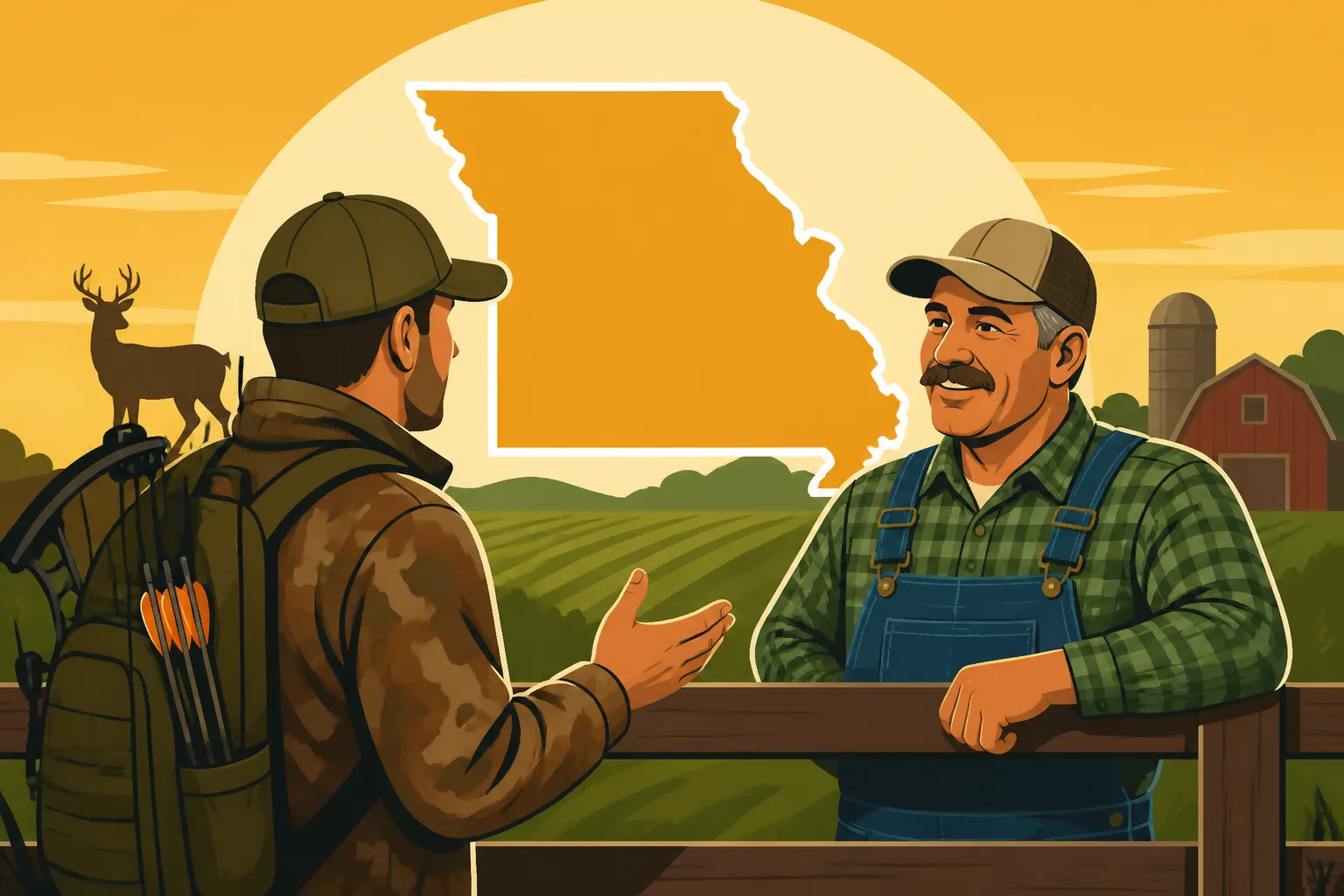
Asking a Missouri Farmer for Permission
It’s a common frustration for many hunters in Missouri: you’ve scouted a promising area, seen deer signs or heard turkeys gobbling, only to realize it’s private land. The thought of knocking on a stranger's door can be daunting, bringing up anxieties about rejection or feeling intrusive. But securing private land access in Missouri is still possible, and this guide will walk you through the respectful, strategic approach to asking a farmer for permission, increasing your chances of finding that coveted hunting spot.
Understanding the Challenge: Why Asking for Permission Matters More Than Ever
For generations, hunting private land often felt like an informal agreement, sometimes just a wave to a landowner you knew. But those days, for the most part, are behind us. The landscape of land access has changed dramatically, and understanding why farmers are often hesitant can help you frame your request more effectively.
The Vanishing "Open Door" of the Past
There's a nostalgia among many seasoned hunters for a time when knocking on a door almost guaranteed a "yes," especially in rural Missouri. Farmers often had vast acreages, fewer hunters, and perhaps a more communal view of the land. Now, things are different. Landowners face increased liability concerns, greater numbers of hunters vying for fewer available acres, and unfortunately, a history of bad experiences with disrespectful individuals. They've seen gates left open, trash discarded, and boundaries ignored. This isn't just about finding a spot to hunt; it's about building trust in an environment where trust has often been eroded. Approaching a landowner today requires a recognition of these challenges and a commitment to being part of the solution, not adding to the problem.
The Reality of Missouri's Landscape
While Missouri boasts a fantastic network of public hunting grounds, from Conservation Areas to portions of the Mark Twain National Forest, the reality is that some of the most productive and least pressured hunting often lies on private property. Public Hunting Land in Missouri is a fantastic resource, but it can also be crowded, especially during peak seasons like the November firearms portion. You might find yourself walking miles back into public timber only to bump into another hunter. Farm ground, with its rich food sources and diverse cover, holds significant deer and turkey populations, and much of this lies squarely in private hands. Learning how to respectfully ask for access means unlocking opportunities you simply won't find on public land, giving you a chance at a more secluded, potentially more successful, hunting experience.
The Preparation: Laying the Groundwork Before You Knock
You wouldn't head into the deer woods without scouting, and the same goes for asking permission. Showing up unprepared can quickly lead to a polite but firm "no." Proper preparation demonstrates respect for the landowner's time and property, and it vastly improves your chances.
Researching the Right Properties
Before you even think about approaching someone, you need to identify potential properties and their owners. This is where modern technology truly shines. Gone are the days of guessing property lines or digging through plat books. Tools like onX Hunt or GoHunt have revolutionized this process, allowing you to instantly see property boundaries, landowner names, and even parcel numbers right from your smartphone or computer. You can use these apps to pinpoint timber blocks adjacent to crop fields, identify pinch points, or find hidden hollows. Beyond just identifying the owner, use the aerial photos to do some virtual scouting. Look for obvious signs of potential hunting quality: creek bottoms, old fencerows, standing timber, or brushy draws. This initial research helps you target properties that not only look promising but also allows you to speak intelligently about their specific piece of land when you finally meet the owner. Remember, Reading Aerial Photos for Ozark Deer can be just as valuable from your couch as it is in the field.
What to Bring and What to Wear
First impressions matter, especially when you're asking for a favor. Your appearance and what you bring (or don't bring) speak volumes before you even say a word. When planning to knock on a door, dress neatly and conservatively. Think clean jeans, a button-down shirt, or a simple polo. Avoid wearing hunting camouflage; it can come across as overly eager, presumptuous, or even intimidating. You're not there to hunt yet; you're there to introduce yourself and make a request. Always carry a valid form of identification, your current Missouri hunting license, and a neatly printed map of their property, perhaps one you generated from onX Layers for Missouri Land Status with the property lines clearly marked. This map shows you’ve done your homework and can be a valuable tool for discussing specific areas of their land where you'd like to hunt, or areas they'd prefer you avoid.
Crafting Your "Pitch" – What to Say
Walking up to a stranger's door and asking to hunt their land can feel like a job interview, and in a way, it is. You need a clear, concise, and respectful pitch. Start by introducing yourself and immediately state your purpose, without beating around the bush. For example, "Hello, my name is [Your Name], and I'm a hunter from [Your Town]. I noticed you have some lovely timberland adjacent to your fields, and I was wondering if you ever allow respectful hunters like myself to deer hunt/turkey hunt here?" Be ready to elaborate on your commitment to safety, adherence to rules, and respect for their property. Offer to provide references if they like, and always emphasize that you understand if the answer is no. Having a clear idea of what you're asking for – whether it's solely bowhunting deer, or only during Missouri Spring Turkey Season Dates, or specifically for small game – shows you've thought it through.
The Approach: Making the Ask and Building Trust
The moment of truth arrives when you actually approach the farmhouse. This isn't a time for improvisation; having a thoughtful strategy for the conversation itself is crucial for success.
Timing is Everything: When to Approach a Farmer
Respecting a farmer's time is paramount. Their days are often dictated by weather, livestock, and crops, and interrupting them at a critical moment can sour any chance of permission. Avoid approaching during busy periods like planting season in spring, hay harvest in summer, or crop harvest in fall. Likewise, steer clear of early mornings, when chores are in full swing, or late evenings, when they're winding down with family. The best window is usually a weekday afternoon, perhaps between 1 PM and 4 PM, when the morning's tasks are done and evening chores haven't ramped up yet. If you see them out on a tractor or tending livestock, resist the urge to wave them down. Drive on, and try another time. A brief, polite knock on the door or a wave if they're close to the house, can open the door to a conversation, but never interrupt their work.
The Conversation: What to Emphasize and Avoid
When you finally get to speak with the landowner, remember your goal is to build trust. Start by being genuinely friendly and conversational, not just transactional. "Good afternoon, Mr./Mrs. [Last Name]. My name is [Your Name], and I live over in [Your Town/Area]. I apologize for bothering you, but I was hoping to speak with you for just a moment about the possibility of hunting your land." Emphasize your commitment to safety – yours and theirs. Explain that you respect their property, will leave no trash, close all gates, and will be mindful of their livestock or crops. Offer to share your harvest, perhaps saying, "If I'm lucky enough to take a deer, I'd be happy to share some of the meat with you and your family." This gesture can be incredibly meaningful. Discuss how you plan to access the property, what vehicle you'll drive, and where you'll park. Proactively address their concerns about liability by mentioning that you understand Missouri Trespass Law Requires certain precautions and that you carry insurance. Show them your hunting license and ID. Avoid sounding entitled or demanding, and never push for a "yes" immediately. Give them time to think, and offer to leave your contact information.
Handling a "No" with Grace
The hardest part, but also one of the most important for future opportunities, is handling a "no" with dignity and grace. Not every farmer will say yes, and that's perfectly okay. They might have existing hunters, plans for the land, or simply prefer no one on their property. If they decline, thank them sincerely for their time and understanding. "I completely understand, and I appreciate you taking the time to speak with me. Perhaps another time. Thank you again, and have a good day." Don't argue, don't try to change their mind, and definitely don't act disappointed or angry. A gracious acceptance of their decision leaves the door open, even if just a crack, for a future approach. You never know when circumstances might change, and they might remember your respectful demeanor. Consider leaving a small card with your name and number, just in case.
Nurturing the Relationship: Beyond the Initial "Yes"
Getting a "yes" is just the beginning. The real work of maintaining private land access lies in consistently proving yourself to be a trustworthy and respectful hunter. This is how you turn a one-time permission into a lasting hunting relationship.
The Follow-Through: Living Up to Your Word
This is where your actions speak louder than any promises you made at the door. Every time you step onto that property, you are being evaluated. Stick to the agreed-upon areas and species. If you said you'd only hunt the back timber, don't wander into the front pasture. Always close gates, even if you found them open. Pick up any trash you find, even if it's not yours. Drive slowly on farm roads, especially if there's livestock or children. If you see anything out of the ordinary—like a downed fence, signs of trespassers, or a sick animal—report it to the landowner immediately. Being a set of extra eyes on their property adds value beyond just hunting. Communicate your hunting schedule: a quick text or call before you head out, "Hey Mr. [Last Name], planning to be out in the north timber for a few hours this afternoon," goes a long way.
Showing Appreciation: More Than Just a Thank You
A verbal thank you is a good start, but sustained appreciation cements the relationship. After a successful hunt, a share of the processed venison is a fantastic gesture. Consider the Share the Harvest Program Numbers if you harvest more than you need, and still offer a portion to the landowner. Beyond game meat, think about what might genuinely help them. Offer to help with chores during non-hunting times: mend a fence, stack firewood, or even just run an errand into town. Small gifts, like a gift certificate to a local restaurant or a bushel of fresh produce from your garden, can also show you appreciate their generosity. Regular, positive communication, even outside of hunting season, helps build a genuine connection.
Establishing Clear Expectations
To avoid any misunderstandings, it's wise to establish clear expectations from the outset and periodically review them. Discuss specific boundaries for hunting and vehicle access, preferred parking spots, and any areas that are strictly off-limits (e.g., near the house, livestock pens). Talk about specific hunting days or times—are weekends okay? Only certain portions of the season? Clarify if anyone else will be hunting the property, and if so, how you can avoid conflicts. This might seem overly formal, but a clear understanding protects both you and the landowner. While not always required, having a written permission slip, as discussed in Do You Need Written Permission in Missouri?, can be a useful tool, outlining these details and protecting everyone involved. It doesn't have to be a legal contract, just a simple document stating the terms of access.
Here's a quick summary of dos and don'ts when asking for permission:
| DO's for Asking Permission | DON'Ts for Asking Permission |
|---|---|
| Research property and landowner info. | Show up unannounced without prior research. |
| Dress neatly, no camo, for the first visit. | Wear hunting clothes or look disheveled. |
| Be polite and respectful from the start. | Be demanding, entitled, or pushy. |
| State your intentions clearly and concisely. | Ramble or waste their time. |
| Emphasize safety and property respect. | Make vague promises about behavior. |
| Offer references or proof of good conduct. | Forget your hunting license and ID. |
| Proactively address liability concerns. | Ignore or dismiss their concerns. |
| Offer to help or share your harvest. | Expect free access without offering anything in return. |
| Accept a "no" gracefully and thank them. | Argue, get angry, or leave a bad impression. |
| Leave contact info if they're considering. | Linger if the conversation is clearly over. |
Disclaimer
This article is for general informational purposes only and does not constitute professional advice. Laws, prices and regulations vary by location and change over time. Consult a qualified professional for guidance on your specific situation.