Finding Areas That See Fewer Hunters
It's a familiar scenario for any Missouri hunter: you've planned your hunt, woken up before dawn, and pulled into the public land parking lot with high hopes, only to find it packed solid with other vehicles. The heart sinks, doesn't it? It feels like every good spot has already been scouted, claimed, and hunted into oblivion. But don't despair – finding those quieter, less-pressured areas where deer and turkeys behave more naturally isn't impossible. This guide is all about equipping you with the knowledge and tactics to bypass the crowds and discover the secluded havens where wildlife thrives.
Understanding Hunter Behavior and Pressure Points
Before we can effectively avoid other hunters, it helps to understand why certain areas become pressure cooker zones in the first place. Hunters, like deer and turkeys, often follow predictable patterns. Identifying these patterns is the first step in breaking free from them.
The Allure of Easy Access and Well-Known Spots
Let's be honest, we all appreciate convenience. The path of least resistance often dictates where many hunters choose to spend their time. This means parking lots that are easily accessible from main roads, well-maintained trails, and designated walk-in access points on conservation areas tend to see the highest traffic. Think about it: if you can park your truck and be in your stand within a 15-minute walk, chances are, a dozen other hunters have the exact same idea. Many public hunting lands in Missouri have established infrastructure, such as mowed lanes, old logging roads, or even gravel trails, designed to help hunters get in and out. While these are convenient, they also act like a giant beacon, drawing hunters to the same general vicinity.
Popular features like prominent ridge tops, easily accessible creek bottoms, or visible food plots located near these access points become highly sought-after. Deer and turkeys quickly learn to associate these areas with human presence and adjust their behavior accordingly. When you're scouting, if you see a well-worn path leading from a parking area directly to a seemingly ideal funnel or bedding area, that's a good indicator it's probably being hunted heavily. The desire for a quick, comfortable hunt, while understandable, inadvertently leads to these areas being overpressured.
How Opening Weekends Shape Pressure
There's no denying the excitement that builds for opening day, whether it's the start of archery season, the much-anticipated November firearms portion, or the first youth turkey weekend. Everyone wants to be out there, and this collective enthusiasm translates into peak hunter density. Many hunters have their traditional "milk run" spots – those reliable stands or blinds they've used for years, or even decades, on the same public land. They’ll head straight to these familiar haunts, creating a concentrated surge of activity.
This initial wave of pressure on opening weekends has a profound impact. It essentially acts as a giant reset button for wildlife behavior. Animals that might have been moving freely in the days leading up to the season are suddenly exposed to a high volume of human scent, sound, and visual disturbance. They learn quickly, often retreating into the deepest, thickest, and most overlooked cover they can find. This behavioral shift, while frustrating for those sticking to high-pressure areas, creates an incredible opportunity for the hunter willing to adapt and pursue these displaced animals in their new, secluded sanctuaries. After the initial rush subsides, and many hunters return to their regular work schedules, the woods can open up for those willing to put in the effort.
Pressure's Impact on Deer and Turkey Behavior
The direct consequence of heavy hunting pressure is a dramatic change in wildlife behavior. Deer, being incredibly intelligent and wary creatures, quickly become largely nocturnal in pressured areas. They'll restrict their movements to the cover of darkness, only venturing out into open fields or feeding areas after sunset and retreating to thick bedding cover before sunrise. Their daytime activity shrinks to almost nothing, as they become hyper-aware of human scent and sound. A buck that might have been freely cruising rub lines during the pre-rut can become a phantom once the orange army hits the woods during Missouri's November Firearms Portion, sticking to the nastiest tangles and rarely showing himself during daylight hours.
Turkeys are no different. In heavily hunted areas, gobblers become incredibly call-shy. They've heard every setup, every yelp, and every cluck a hundred times over. They may gobble on the roost but often sail down and head straight for hens, ignoring even the most enticing calls. Decoys, which can be highly effective in unpressured situations, might spook them if they've seen too many fake birds surrounded by human activity. Their escape routes become ingrained, and they'll quickly slip away at the first hint of perceived danger. Understanding this shift is critical; to find success, you need to find areas where animals haven't been constantly harassed, allowing them to maintain their natural, more predictable patterns. This means heading to spots where this constant "education" hasn't taken place.
Leveraging Maps and Technology to Identify Seclusion
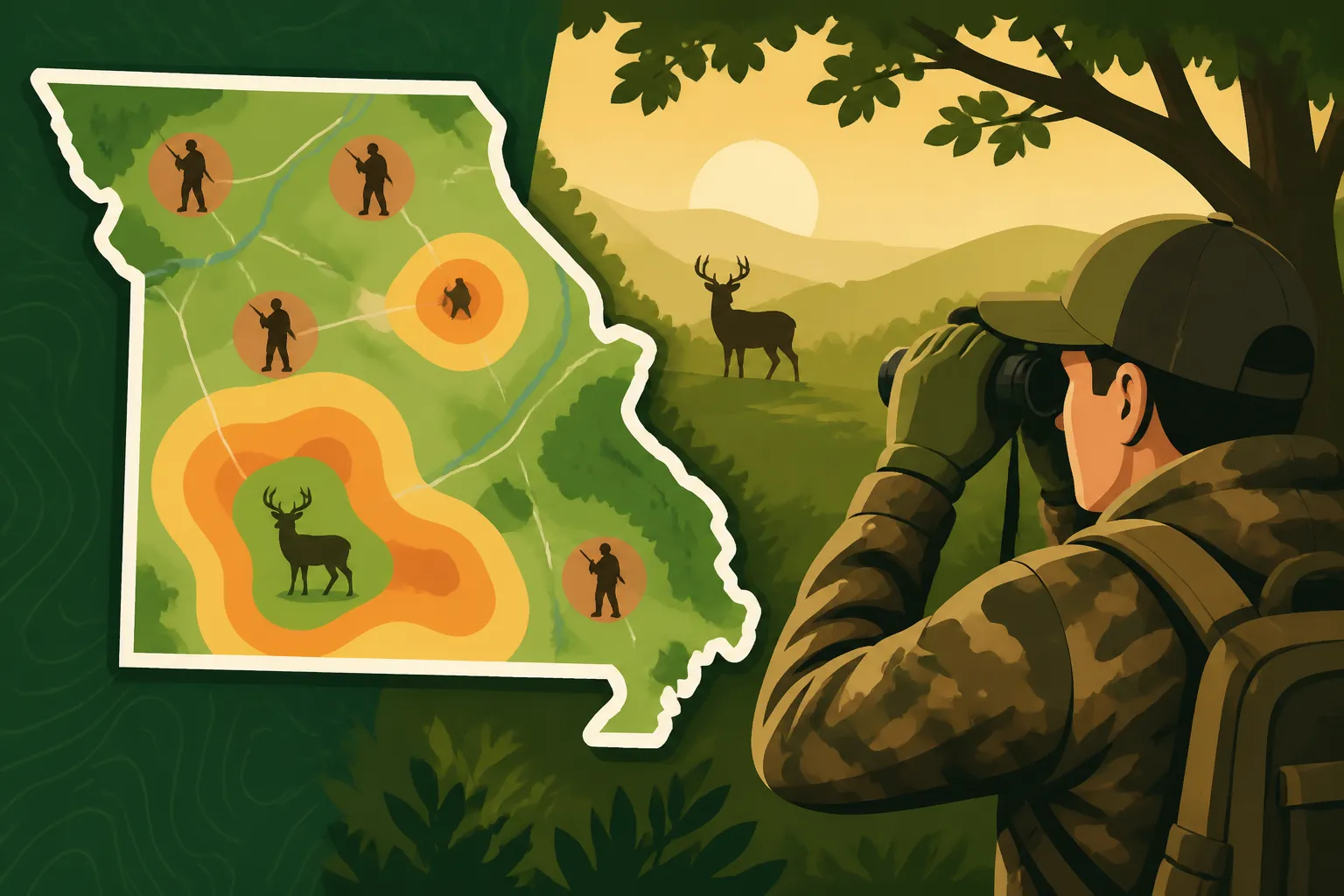
In today's hunting world, digital maps and scouting tools are your greatest allies in finding those elusive, unpressured spots. They allow you to "walk" the landscape from your living room, identifying features that others might overlook or simply deem too difficult to access.
Decoding Topographical and Aerial Maps
Forget just looking at a flat, two-dimensional map. Topographical maps, with their contour lines, are absolutely crucial for understanding the lay of the land without ever stepping foot on it. These maps reveal changes in elevation, steepness, and the presence of hidden benches, saddles, and drainages – features that can either deter casual hunters or act as natural funnels for wildlife. A steep hillside with a subtle bench halfway down might be a perfect bedding area, often overlooked because it requires a more strenuous hike. Look for tight contour lines indicating steep terrain, which naturally pushes hunters towards easier paths.
Coupled with topo maps, high-resolution aerial photographs provide an incredible amount of detail about vegetation and cover. You can spot dense cedar thickets, large blocks of mature timber, regenerating clear-cuts, or even subtle changes in canopy height that suggest different types of cover. Look for areas where dense cover meets open timber, or where a thicket provides a natural sanctuary adjacent to a food source. By combining both topographical and aerial views, you start to build a three-dimensional understanding of the terrain. This allows you to identify areas that are naturally difficult to access or navigate, making them less appealing to the majority of hunters, and therefore more likely to hold unpressured game. Many times, you’ll find that public lands tucked behind private property with no direct access road often hold significant numbers of deer simply because they require a longer walk-in or permission to cross private ground.
Using Digital Scouting Apps Effectively
Modern digital scouting apps are nothing short of revolutionary for the serious hunter, especially when it comes to locating less-pressured ground. Tools like onX Hunt are game-changers. With these apps, you can layer public and private land boundaries, see landowner names (which can be invaluable for seeking permission), and map out potential entry and exit routes. You can drop pins for potential stand locations, mark bedding areas, identify pinch points, and measure distances, all before you ever leave your house.
Think about using the various layers these apps offer. Turn on the topography layer to identify steep ravines or bluffs that create natural barriers. Switch to the timber cut layer to find areas of recent logging that might provide new, thick cover. Look for old power lines or gas lines that create linear openings, often overlooked, that might funnel deer. Many public lands in Missouri have walk-in access points that, on a map, might look like a short stroll. But when you overlay the topography, you might find it involves a significant elevation change, which deters many. These apps also allow you to track your movements, ensuring you don't get turned around deep in the woods, and can help you identify exactly where you are in relation to property lines, an essential feature when hunting tracts that border private land. For broader strategy, you might find value in resources from GoHunt that discuss general patterns, but for granular, on-the-ground (or rather, pre-ground) Missouri scouting, onX Hunt excels. Don't underestimate the power of spending hours digitally scouting; it can save you countless hours of unproductive walking.
Pinpointing Natural Barriers and Funnels
When you're poring over those maps, specifically look for natural barriers that make areas less accessible or less appealing to most hunters. These could be steep, impassable bluffs, wide rivers or major creeks, large bodies of water, or even busy highways that create a psychological barrier. Animals, however, often find ways around or through these barriers, creating predictable travel corridors or "funnels." For example, a narrow strip of timber connecting two larger blocks of woods across an otherwise open field is a classic funnel. A saddle in a ridge, or a subtle dip in a steep bluff line that allows for easier passage, can also concentrate animal movement.
The key is to find these funnels and barriers in conjunction with areas that are naturally protected from easy hunter access. A creek crossing that's a mile-and-a-half deep into a block of timber, requiring a significant hike, is far less likely to be pressured than one just off a gravel road. Focus on areas where topography or dense vegetation creates natural bottlenecks that force animals into specific travel paths, especially if these bottlenecks are a good distance from common entry points. These are the places where deer feel secure moving during daylight hours, knowing that most human disturbance won't reach them. Reading an Ozark Hollow for Deer Movement can give you even more insight into how deer use these natural features.
Strategies for Deep Woods and Overlooked Cover
Once you've identified potential low-pressure areas on your maps, the next step is to physically get there. This often means embracing tactics that many hunters shy away from, pushing past the comfort zone to find where the animals truly live undisturbed.
The Art of the Long Walk-In
This is, perhaps, the single most effective strategy for escaping hunting pressure. The vast majority of hunters on public land won't venture much further than a half-mile, or perhaps a three-quarter mile, from their vehicle. This creates an immediate advantage for those willing to put in the extra effort. By focusing on areas a mile, two miles, or even further from the nearest parking lot or access road, you dramatically increase your chances of finding unpressured animals. These are the deer and turkeys that haven't been constantly bumped, spooked, or had their patterns disrupted by human activity.
A long walk-in requires preparation. You'll need comfortable, durable boots that can handle varied terrain, along with a lightweight yet functional pack. Boots and Packs for Ozark Country highlights some considerations for gear for these longer treks. It's not just about the distance, but the efficiency and stealth of your journey. Plan your entry and exit routes meticulously, using topography and cover to minimize your disturbance and keep your scent away from where you expect to find game. This might mean starting your walk even earlier than usual to reach your spot before daylight or staying a bit longer in the evening to allow for a quiet exit. Remember, every step you take further from the road increases your odds of encountering an unpressured animal.
Focusing on Smaller, Isolated Pockets
While sprawling conservation areas get a lot of attention, don't overlook the potential of smaller, isolated blocks of timber or brush. These might be small public land tracts, forgotten corners of larger state parks that allow hunting, or even timbered islands surrounded by agriculture or urban development. Many hunters gravitate towards the vastness of places like the Mark Twain National Forest, but these smaller pockets, often just 10-20 acres, can act as crucial sanctuaries for deer, especially if they are difficult to access or have high-density cover.
These areas are frequently ignored because they don't seem "big enough" or might be bordered by non-hunting zones, industrial areas, or housing. However, the lack of consistent hunting pressure means the resident deer and turkeys often feel very secure there. Think about a small, brushy draw on the very edge of a subdivision that funnels into a larger timber block, or a dense fencerow connecting two small patches of woods in row-crop country. Hunting a Missouri Fencerow Between Fields can show you how to maximize these smaller linear features. Animals learn these spots are safe havens, especially during high-pressure times, and they can offer exceptional hunting opportunities for the observant and adaptable hunter.
Hunting the Uncomfortable: Steep Hills and Thick Brush
This strategy is simple: go where others won't. Most hunters prefer the comfort of flat ground, open timber, or well-defined trails. To find less-pressured animals, you need to embrace the uncomfortable terrain that deters the majority. This means steep Ozark hillsides, particularly those riddled with rock ledges, boulder fields, and dense cedar glades. These areas are physically demanding to navigate, but they offer incredible cover and security for deer. Animals will often bed on these steep, south-facing slopes, catching the sun while remaining hidden in thick cedars. Deer Hunting the Missouri Ozarks provides more context on this challenging but rewarding terrain.
Similarly, dense plum thickets, thorny multiflora rose patches, and regenerating timber clear-cuts are often ignored due to the sheer difficulty of moving through them. You'll get scratched, your clothes might get snagged, and visibility will be limited, but these are exactly the places where pressured animals vanish. Deer and turkeys know these thickets offer near-impenetrable refuge. Hunting these areas often requires still-hunting very slowly, crawling, or even using a ground blind brushed into the cover. It demands patience and a willingness to embrace the challenge, but the rewards—an encounter with a truly unpressured animal—are often well worth the effort.
Here’s a quick overview to help distinguish these areas:
| Characteristic | High-Pressure Areas | Low-Pressure Areas |
|---|---|---|
| Access | Easy, close to roads/parking, established trails | Long walk-ins, difficult terrain, no clear trails |
| Terrain | Relatively flat, open timber, gentle slopes | Steep hills, bluffs, thick brush, rocky outcrops |
| Vegetation | Open woods, mowed fields, clear lines of sight | Dense cedar thickets, plum brush, regenerating timber, swamps |
| Sign | Old rubs/scrapes, sign concentrated near access | Fresh, active sign, rub lines deep in cover |
| Animal Behavior | Nocturnal, wary, quickly flee human scent/sound | More diurnal, less skittish, follow natural patterns |
| Hunter Presence | High, many vehicles, frequent encounters | Low, few vehicles, rare hunter encounters |
| Scouting | Easy to scout from vehicle/short walk | Requires extensive mapping and strenuous on-foot exploration |
Timing Your Hunts for Solitude and Success
Beyond location, when you choose to hunt can dramatically influence the amount of hunter pressure you encounter. Strategic timing can put you in the woods when most others are at home, leaving you with more elbow room and potentially more active wildlife.
Mid-Week and Late-Season Opportunities
If your schedule allows, hunting mid-week (Tuesday through Thursday) is one of the most straightforward ways to avoid crowds. Weekends are inherently the busiest times on public land, as most people are off work. By shifting your hunts to the middle of the week, you'll find parking lots significantly emptier and the woods much quieter. Animals, especially after a weekend of pressure, might start to resume more natural movement patterns when the human disturbance dwindles.
Similarly, don't overlook the late season. After the hustle and bustle of the main firearms season, many hunters pack away their gear. However, the deer and turkey seasons in Missouri extend well into winter for deer and offer Hunting Missouri Deer After Christmas opportunities, and the spring turkey season has a good run. The late archery, muzzleloader, and antlerless portions for deer, as well as the latter weeks of spring turkey season, can offer fantastic hunting with minimal competition. By this point, animals have settled into more predictable winter patterns centered around remaining food sources, and if you're one of the few hunters still out there, you stand a much better chance of patterning them without interference. Scouting Missouri Public Land Before Season is always important, but late-season scouting can be particularly fruitful for identifying these often-overlooked opportunities.
Hunting During Inclement Weather
This strategy isn't for the faint of heart, but it's incredibly effective. Most hunters prefer comfortable, sunny days. However, conditions like steady rain, light snow, high winds, or extreme cold can dramatically reduce hunter numbers. While these conditions can be challenging for you, they often coincide with increased animal movement. Deer, for example, might move more during a light rain, using the falling water to mask their sounds and scent. A fresh blanket of snow reveals clear tracks, and strong winds can make deer feel more secure moving during daylight, as the wind covers their own movement and makes it harder for predators (including humans) to pinpoint them.
To make this strategy work, you absolutely need to be prepared with the right gear. Invest in high-quality rain gear to stay dry, and Clothing for a Missouri November needs to be layered effectively to ensure warmth during cold snaps. Staying comfortable will allow you to stay on stand or still-hunt effectively when others have retreated to their warm homes. Not only will you face less competition, but you'll often find animals more active and less wary, making for a truly memorable hunt.
Off-Peak Hours and Early Morning/Late Evening
Even on busy days, you can find windows of solitude by adjusting your hunting hours. Many hunters follow a predictable schedule: they're in their stands by legal shooting light, might get down for a break around mid-morning, and then head back out for an afternoon sit, leaving before full dark. This means the woods are often quiet during the mid-day lull. Consider pushing deeper into areas after the initial morning rush, or planning an all-day sit when others are rotating out.
Furthermore, focusing on the first and last hour of legal shooting light, when animals are most naturally active, can be highly productive with reduced human interaction. You might choose to still-hunt your way to a stand location during the last hour of daylight, catching deer moving from bedding to feeding. Conversely, arriving at your spot an hour or more before dawn and setting up in the dark, then staying put until well after sunrise, can catch animals moving before most other hunters are settled. Still-Hunting a Missouri Ozark Hollow can be particularly effective during these fringe hours, allowing you to move quietly and deliberately. The key here is patience and discipline – being in your prime spot when the animals are most likely to move, and when other hunters are least likely to be present.
Disclaimer
This article is for general informational purposes only and does not constitute professional advice. Laws, prices and regulations vary by location and change over time. Consult a qualified professional for guidance on your specific situation.