Still-Hunting a Missouri Ozark Hollow
The Missouri Ozarks, with their endless ridges, steep hollows, and dense timber, can feel like an overwhelming puzzle to even the most seasoned deer hunter. Many of us have trudged through these beautiful but challenging landscapes, feeling like we’re just pushing deer around, hearing them bust out of sight long before we ever catch a glimpse. This comprehensive guide is here to unravel the mysteries of still-hunting these deep Ozark hollows, helping you move with purpose, read the subtle signs, and increase your chances of encountering one of Missouri’s elusive whitetails on its own terms.
Understanding the Ozark Hollow Ecosystem
Hunting in the Missouri Ozarks isn't like hunting the crop fields of northern Missouri. It's a whole different ballgame, defined by unique terrain and how deer adapt to it. You’re not just walking through woods; you’re entering a complex, three-dimensional environment where gravity and water have carved out distinct features that funnel deer movement.
The Anatomy of a Hollow
When we talk about an Ozark hollow, we're picturing those deep, V-shaped valleys nestled between two ridges. These aren't just ditches; they are micro-ecosystems. At the very bottom, you often find a wet-weather creek bed, sometimes dry and rocky, sometimes holding a trickle of water. The slopes rise steeply from this drainage, typically covered in a mix of oak, hickory, and often dense cedar thickets on the south-facing slopes, offering thermal cover in winter. These hollows can be incredibly long, winding for miles, with smaller feeder hollows branching off like veins. Learning to Reading an Ozark Hollow for Deer Movement is paramount to success.
The terrain here is notoriously unforgiving. Rocky outcrops are common, creating natural benches and shelves that deer will use as travel routes or bedding spots. Down timber, fallen leaves, and thick undergrowth mean that every step you take can be a potential giveaway. The beauty of a hollow is also its challenge: it often feels like you're in a bowl, with deer potentially above, below, or directly across from you, making wind and thermals a constant, tricky puzzle. This ruggedness naturally pushes deer into predictable patterns if you can decipher them.
Deer Behavior in Steep Terrain
Deer in the Ozarks are experts at using the topography to their advantage, and their patterns are dictated by survival instincts. They love elevation changes because it gives them security. During daylight hours, you'll often find them bedded on benches or points along the side of a hollow, typically where they can see downwind or hear anything approaching from below, while the prevailing wind carries scent from above. This allows them to detect threats from multiple directions. They rarely bed directly on the very bottom of a hollow, as it offers little escape route or visual advantage.
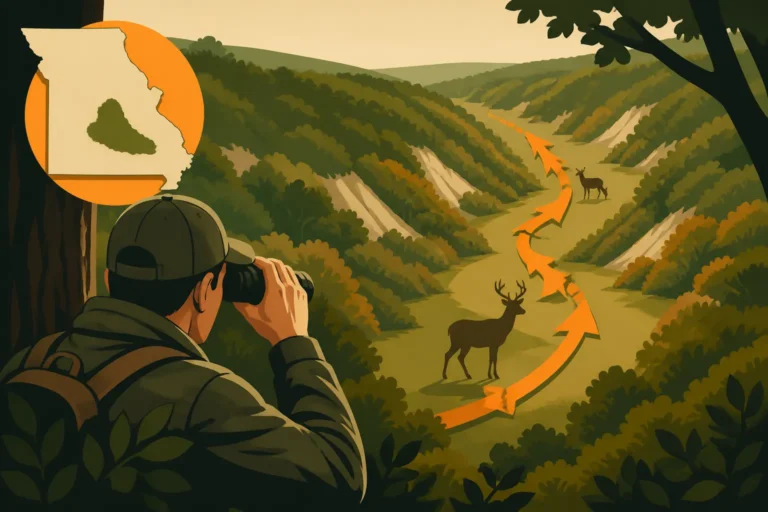
Movement within these hollows is often along the contours – deer will walk parallel to the creek bed, sometimes on a distinct bench or shelf that might be barely visible to the untrained eye. They utilize these natural travel corridors to move between bedding areas on higher ground and feeding areas, which might be acorns on the opposing slope or even small food plots on ridge tops. During the rut, bucks will cruise these hollows, especially the edges of thick cover, scent-checking for does. Understanding these subtle movements is key to still-hunting effectively.
Essential Gear and Preparation for Still-Hunting
Still-hunting the Ozarks is a commitment, and being properly outfitted can make or break your day. It’s not just about comfort; it’s about stealth, efficiency, and safety in rugged, often isolated terrain.
Clothing and Footwear for Stealth and Comfort
When you're still-hunting, every rustle, every crunch, echoes in the quiet woods. Your clothing needs to be silent, first and foremost. Opt for fleece, wool, or soft-shell materials that don't make noise when you move or brush against branches. Layering is critical in Missouri, where temperatures can swing wildly from morning to afternoon, even in prime hunting season. Start with a moisture-wicking base layer, add insulating layers like a fleece jacket, and top it with a quiet, wind-resistant outer shell. This allows you to shed or add layers as your activity level and the temperature change, preventing overheating during exertion and chilling during periods of stillness. For a deeper dive into managing cold weather, consider reading about Layering for a Missouri Deer Stand.
Your feet are your most important tool in a still-hunt, so proper footwear is non-negotiable. You need boots that provide excellent ankle support for navigating uneven, rocky terrain and that offer good traction on slick leaves and wet ground. Waterproof boots are a must, as you’ll inevitably cross wet creek beds or encounter damp conditions. Pay attention to the sole – a softer sole can sometimes provide more "feel" for stepping over twigs silently, but you'll still want a durable, stiff sole to protect your feet from sharp rocks. I’ve found that a good quality hunting boot like those from Irish Setter or Kenetrek, paired with quality wool socks, makes a world of difference in preventing blisters and fatigue after miles of slow, deliberate walking.
Optics and Navigational Tools
In the dense Ozark timber, your eyes are often limited by cover. A good pair of binoculars, like a 10×42, becomes an extension of your vision, allowing you to pick apart shadows and branches for a flick of an ear or the horizontal line of a deer's back. Don’t skimp here; quality glass will shine in low-light conditions often found in deep hollows. Use them constantly, scanning ahead and around you, especially when you pause. For more insights, check out Binocular Choice for Missouri Whitetails. A rangefinder is also incredibly useful, especially when shooting through timber, to accurately judge distances to potential shooting lanes or targets, which can often be deceiving in hilly country.
For navigation, a GPS unit or a reliable mapping app on your smartphone, like GoHunt, is absolutely essential. These apps allow you to mark your starting point, track your path, identify property lines, and drop waypoints for areas of interest like fresh sign or potential bedding locations. The detailed topographical maps available through services like GoHunt are invaluable for understanding the contours of the hollow, identifying benches, and planning your next move. Always carry a portable power bank to keep your devices charged, as cell service can be spotty in the remote Ozarks. Being able to visualize the terrain in 3D beforehand can dramatically improve your in-the-moment decision-making.
Weapon Choice for Close-Quarters Hunting
Still-hunting in a hollow often means close-range encounters, where quick, accurate shots are paramount. This isn't long-range shooting. A fast-handling rifle in a reliable caliber is often preferred. Cartridges like the .30-30, .308, or even a .45-70 are excellent choices for the Ozarks, offering ample power for deer within typical timber ranges, usually under 150 yards. Lever actions or compact bolt actions are popular for their maneuverability in tight cover. For a deeper dive into rifle choices, consider reading about Rifle Setups for Missouri Timber and Fields.
If you prefer archery, a compound bow or crossbow is ideal. The key here is to practice shooting from awkward positions – kneeling, leaning around trees – because still-hunting rarely offers perfectly open, flat shots. Short, compact bows are easier to manage in thick undergrowth. Ensure your broadheads are sharp and reliable for clean pass-throughs, especially important when facing the prospect of Tracking a Deer in Ozark Rock. The most important aspect, regardless of weapon, is comfort and proficiency. You need to be able to get it into action quickly and quietly.
Reading the Terrain and Deer Sign
The Ozarks are constantly speaking to the hunter, if you know how to listen and, more importantly, how to see. Deer sign here tells a story of movement, security, and sustenance. Your still-hunt becomes a slow, deliberate reading of this story as you move through each contour of the hollow.
Identifying Key Movement Corridors
Deer, like people, often take the path of least resistance or the path that offers the most security. In a hollow, this often means specific travel corridors. Look for subtle benches or shelves running along the side of the hollow, sometimes just a foot or two wide, where the slope moderates briefly. These are natural highways. Deer will also use faint trails that parallel the dry creek bed, usually just up the slope a bit, giving them a slight elevation advantage. Pay attention to how these trails intersect with smaller feeder hollows or connect to points extending from the main ridge.
Another critical corridor is the "lip" or the transition zone between the bottomland of the hollow and the steeper slope leading up to the ridge. Often, this area will have slightly denser cover, offering deer a feeling of being concealed while still having good visibility. Look for areas where the vegetation changes, perhaps from open hardwoods to a dense cedar thicket or honeysuckle patch. These transition zones are high-traffic areas, especially during periods of lower light or when deer are moving from bedding to feeding. Using mapping software like GoHunt can help you visualize these subtle terrain features and plan your route.
Deciphering Fresh Rubs and Scrapes
Rubs and scrapes are like neon signs in the deer woods, especially during the pre-rut and rut. Rubs, where bucks strip bark from saplings and small trees, indicate aggression and are a way for bucks to leave scent. In a hollow, look for rubs lining potential travel corridors or at the mouths of smaller feeder hollows, marking areas where bucks are cruising. A line of rubs leading up a specific bench or point can tell you exactly how a buck is moving through the terrain. Fresh rubs, with shiny wood underneath, are key.
Scrapes, on the other hand, are communication hubs. Bucks paw away leaf litter, urinate on the exposed dirt, and often chew on an overhanging branch (the "licking branch"). These are typically found in more open areas along travel routes or near the edges of cover. In a hollow, a scrape might be found on a small flat spot along a contour, or at the intersection of two faint deer trails. The fresher the scrape (wet dirt, strong scent, fresh chews on the licking branch), the more recently a deer has been there. Both rubs and scrapes give you valuable clues about a buck’s size, activity level, and preferred routes, helping you predict where he might be next.
Locating Bedding and Feeding Areas
Finding bedding and feeding areas is crucial to understanding a deer's daily pattern in a hollow. Deer typically bed in areas that offer both security and a strategic advantage. This often means south-facing slopes in winter (for warmth from the sun), or dense cedar thickets year-round for concealment. Look for benches or points along the side of a hollow, especially those with thick cover, that allow deer to see and hear downhill, while the wind carries scent from above. The presence of deer beds, often oval depressions in the leaves, along with scat, confirms a bedding area. Knowing Where North Missouri Bucks Bed can offer comparative insights, though Ozark bedding is distinct.
Feeding areas will shift with the seasons, but in the Ozarks, acorns are king. White oaks drop their acorns earlier and are preferred, while red oaks drop later and are a crucial late-season food source. When still-hunting, scan the ground for fresh acorn cuttings – broken acorn shells indicating deer have been feeding recently. In addition to acorns, deer will browse on various plants and saplings. Look for areas with fresh browse lines or clipped twigs. The convergence of a secure bedding area, a reliable food source, and efficient travel corridors through the hollow is your sweet spot for a successful still-hunt.
Mastering the Art of Silent Movement
Still-hunting is less about "hunting" and more about "stalking slowly" combined with intense observation. It's a meditative practice that requires immense patience and discipline, especially in the noisy, leaf-covered Ozark woods.
The Pace and Rhythm of a Still-Hunt
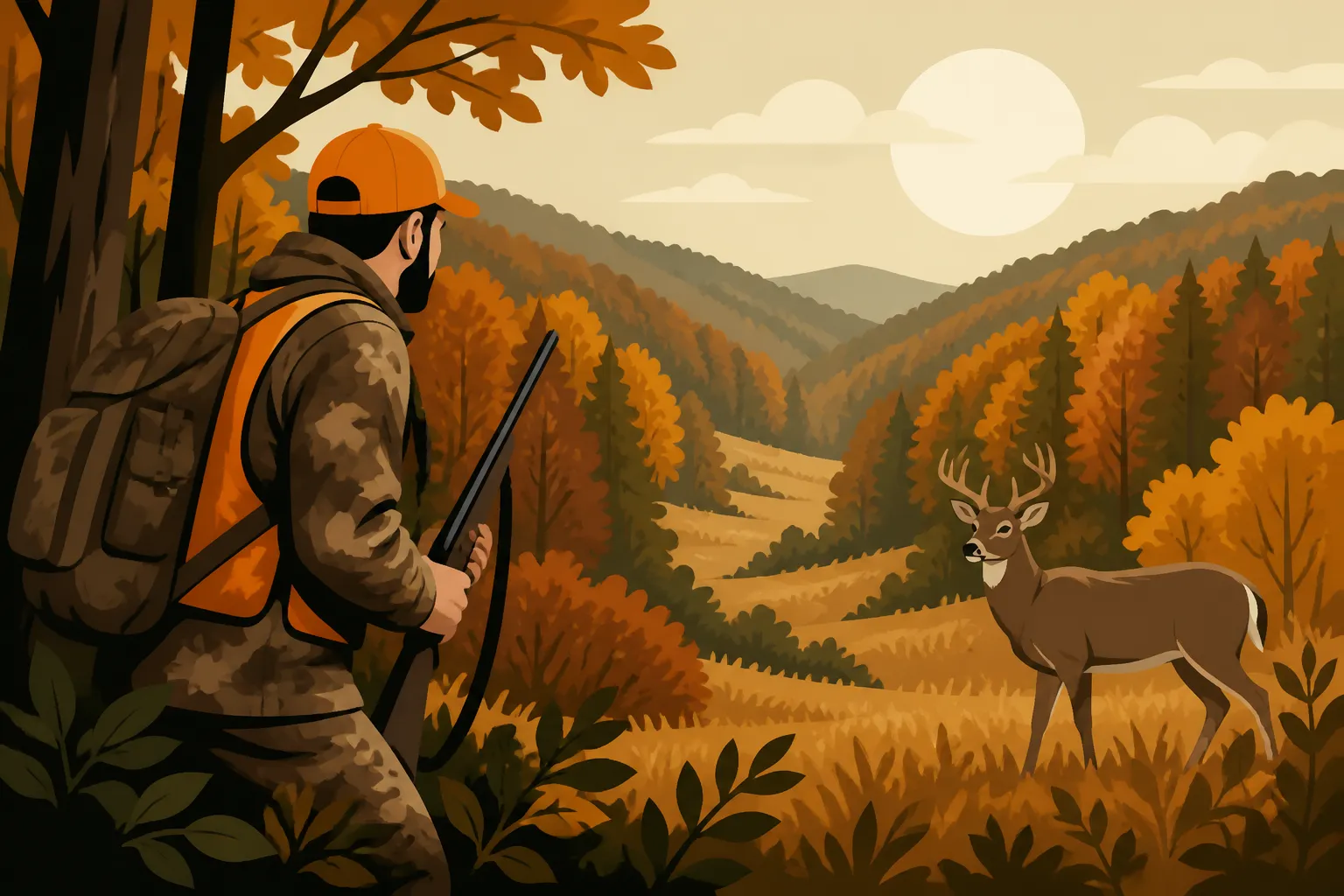
This is where many hunters go wrong in the Ozarks. A still-hunt is not a walk. It’s a crawl, a pause, a scan, a step. Imagine taking 10 to 15 steps, then stopping for 5 to 10 minutes (or even longer) to scan every detail of your surroundings. This allows you to pick apart cover, identify deer before they see you, and most importantly, let the woods settle after your movement. It’s during these long pauses that you'll often spot deer that might have been motionless, watching you, or moving slowly through the timber.
Your pace should be dictated by the terrain and cover. In very thick cover, you might only take a few steps at a time. In more open timber, you can cover a bit more ground between pauses. The key is to match your speed to your ability to detect deer. If you feel like you're rushing, you probably are. Think of it as painting a room with a tiny brush – slow, methodical, and covering every inch. This method also allows you to adjust your approach if you spot movement or fresh sign.
Utilizing Cover and Topography
The Ozark hollows offer a wealth of natural cover, and a skilled still-hunter learns to melt into it. Always try to keep a tree trunk, a thick cedar bush, or the contour of the land between you and where you expect deer to be. This breaks up your outline and provides concealment for your slow movements. Instead of walking in a straight line, weave and zig-zag, moving from one piece of cover to the next. Use the topography to your advantage – if you're on a bench, stay just below the crest to avoid silhouetting yourself against the sky.
When moving, focus on lifting your feet and placing them down heel-to-toe, feeling for twigs or rocks with the front of your boot before committing your weight. This is incredibly difficult in a leaf-strewn hollow, but practice makes perfect. Try to anticipate noisy spots and plan your steps around them. A small dry creek bed might seem like an easy path, but the loose rocks can be incredibly loud. Sometimes, going slightly out of your way to stay on softer ground or behind a natural screen is the quieter, more effective option.
Managing Scent and Sound
Deer have an incredible sense of smell, far superior to ours. In a hollow, with its swirling thermals, managing your scent is even more critical. Always hunt with the wind in your favor, or at least across you. However, as we'll discuss, thermals can make this tricky. Using scent-eliminating sprays or wearing scent-controlled clothing from brands like ScentLok or Sitka can help, but nothing replaces playing the wind correctly. Bathe before your hunt, wear clean clothes stored in airtight containers, and avoid strong-smelling foods or colognes.
Sound is your other major enemy. Besides silent clothing and careful foot placement, minimize any metallic clicks or rubs from your gear. Tape up anything that might clank. Keep your calls (grunt tube, rattling antlers) quiet and secured. Even the rustle of a backpack can alarm a deer. Practice drawing your bow or raising your rifle slowly and silently. The goal is to become as inconspicuous as possible, blending into the environment as much as any other natural element.
Wind, Thermals, and Your Approach
This is arguably the most challenging aspect of still-hunting any mountainous or hilly terrain, and the Ozarks are no exception. The wind you feel on the ridge top can be vastly different from the air currents swirling in a deep hollow, making your approach critical. Knowing how to adapt to Wind and Thermals in Ozark Hills is crucial for success.
Understanding Thermal Air Currents in Hollows
Thermals are localized air currents caused by temperature differences. As the sun rises and warms the earth, air in the hollows begins to warm and rise – this is an "updraft" or rising thermal. Conversely, as the sun sets and the air cools, it becomes denser and flows downhill – this is a "downdraft" or falling thermal. These thermals act like miniature weather systems, often overriding the prevailing wind direction, especially in the morning and evening.
In a hollow, this means that in the early morning, scent will typically be carried down into the hollow, settling at the bottom. As the sun climbs, the hollow warms, and scent will begin to rise up out of the hollow. In the afternoon, as temperatures start to drop, the thermals will reverse, and scent will once again begin to fall. This creates a challenging scenario where your scent cone is constantly shifting. You need to visualize these air movements and understand how they will carry your scent, not just the general wind direction.
Adapting Your Hunt to Changing Winds
Because of these thermals, a straight shot up or down a hollow might not be your best bet, especially if you're trying to sneak into a bedding area. For a morning hunt, starting lower in the hollow and slowly working your way up as the thermals begin to rise can be effective. This allows your scent to rise behind you. In the afternoon, the opposite is true: start higher on the ridge and work your way down into the hollow as the air cools and thermals fall.
Always position yourself so that if a deer is ahead of you, your scent is being carried away from it. This might mean making a wider arc to stay on a downwind side of a point or taking a convoluted route to use the terrain to funnel your scent away. It takes discipline to walk a long, indirect path when you see a more direct, but ill-advised, one. But ignoring thermals and wind in the Ozarks is a surefire way to spook deer before you ever get close.
Executing the Shot and Recovery in Tough Terrain
All the stealth and skill in the world culminate in a single moment: the shot. In the rugged Ozarks, this moment is often complicated by steep angles and challenging recovery scenarios.
Ethical Shot Placement for Steep Angles
Still-hunting in hollows means you might be shooting downhill, uphill, or across a ravine. Each of these angles changes the apparent point of aim for the vitals. When shooting significantly downhill, your arrow or bullet will hit slightly higher than your aiming point because gravity has less time to pull it down. Conversely, shooting uphill will result in a slightly lower impact. More importantly, the internal organs of a deer are aligned differently relative to your line of sight when shooting at steep angles.
For steep downhill shots, aim slightly lower on the body to account for the internal anatomy. For uphill shots, aim slightly higher. The key is to visualize the vitals within the deer’s body at that specific angle. If you have any doubt about a clean kill, let the deer walk. Practice shooting at various angles before the season to understand how your weapon performs and where to aim. Remember, an ethical kill is paramount, especially when the recovery will be difficult.
Tracking and Recovery Challenges
You’ve made a great shot, but now the real work begins. Tracking a deer in an Ozark hollow presents unique challenges. The leaf litter can make blood trailing incredibly difficult, as leaves soak up blood or get kicked over. Rocky terrain can mean a sparse blood trail, or sometimes no blood at all if the deer ran across a large rock slab. The steepness of the terrain means a wounded deer can cover ground quickly, often crashing down into the thickest part of a hollow.
Take your time. If you suspect a good hit, give the deer at least 30 minutes, or longer for a gut shot, to bed down and expire. Mark the spot where the deer was standing when you shot and the last place you saw it. When tracking, move slowly, looking for splashes of blood, disturbed leaves, broken twigs, or even overturned rocks. If the trail goes cold, expand your search in ever-widening circles. Consider recruiting a friend to help or even calling in a tracking dog if legal in Missouri. And remember, once you find your deer, getting a deer out of a hollow alone can be an immense physical challenge, often requiring creative solutions like game carts, sleds, or even quartering the animal for easier packing.
Disclaimer
This guide offers information for educational purposes only and is not a substitute for professional instruction. Hunting involves inherent risks, and adherence to all Missouri Department of Conservation regulations, local laws, and ethical hunting practices is the responsibility of each individual hunter. Always prioritize safety, respect wildlife, and obtain all necessary permits and licenses before hunting.