Tracking a Deer in Ozark Rock
Few things can drop your heart faster in the deer woods than making what feels like a good shot, only to find a sparse, disappearing blood trail on the unforgiving, rocky ground of the Missouri Ozarks. It’s a frustrating reality many of us face, turning what should be a celebratory recovery into a nerve-wracking search. This guide is here to walk you through proven strategies and tips for successfully tracking a deer even when the rocks seem determined to swallow every drop of sign.
The Unique Challenges of Ozark Tracking
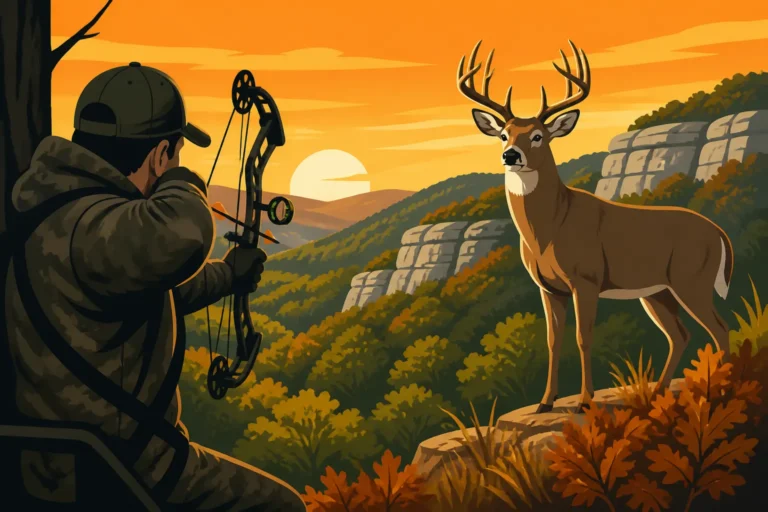
Tracking a wounded deer is rarely easy, but the rugged, rocky terrain of the Missouri Ozarks presents a whole different level of difficulty. It's not like the soft, loamy soil of northern Missouri crop fields where a deer leaves clear tracks and a steady blood trail. Down here, the ground actively conspires against you, making every step a challenge.
The Elusive Blood Trail on Rock
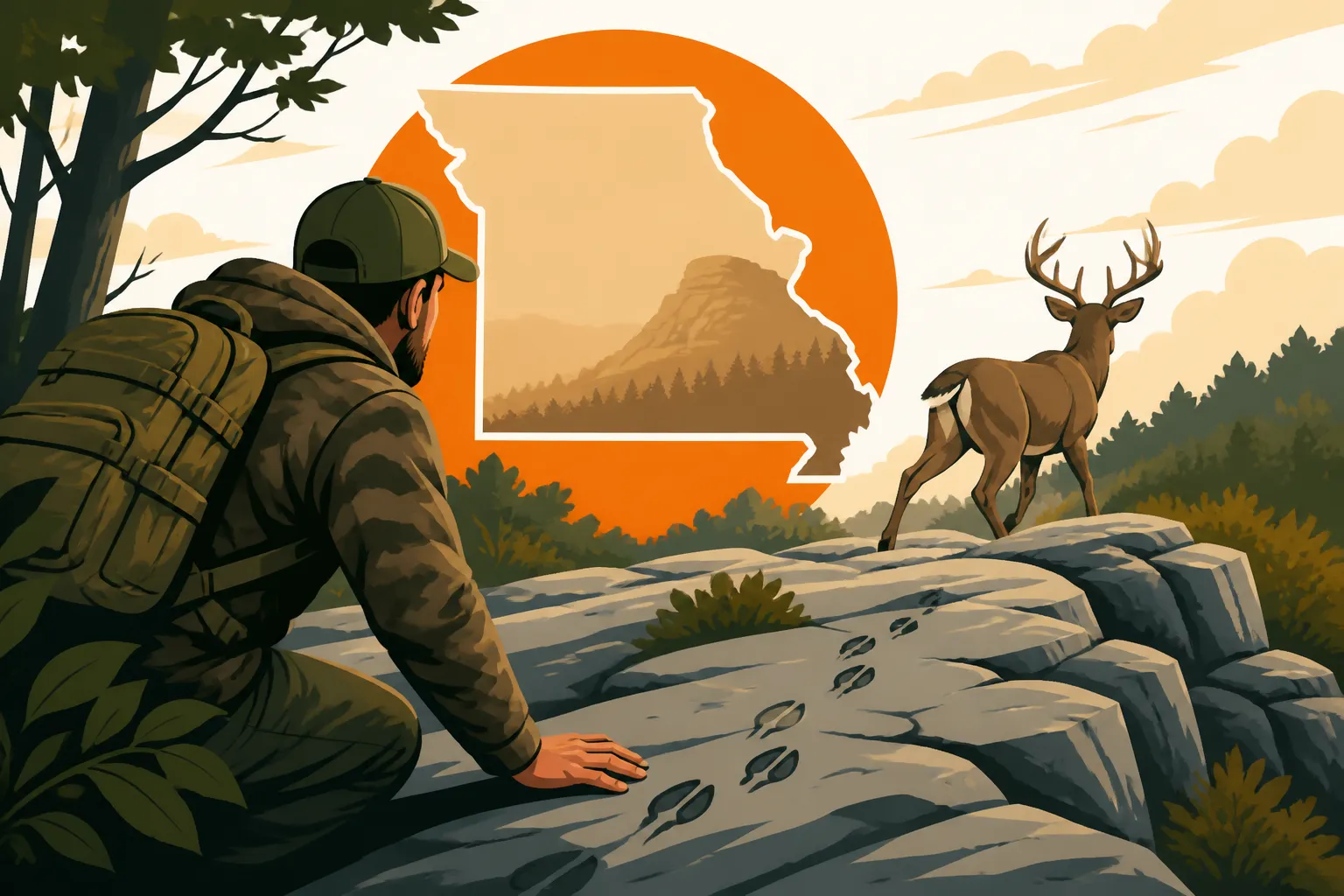
When a deer is hit, especially with an archery setup or a rifle round that doesn't exit, the blood trail can be maddeningly sparse. On soft earth, you might see a clear spray or a steady drip. In the Ozarks, however, you're often dealing with a combination of hard limestone outcroppings, loose chert rocks, and thin, dry topsoil.
Blood, when it does hit these surfaces, behaves differently. On a light-colored limestone rock, a fresh, bright red spot might be visible, but it can quickly dry and turn dark, blending in with the rock's natural hues. On dark, damp soil or mossy rocks, the blood can be absorbed or simply appear as a dark, wet spot that's hard to distinguish from natural moisture. Then there are the millions of small, loose chert rocks – sometimes called "Ozark gravel" – that make up much of the forest floor. Blood can fall between these rocks, vanish into the cracks, or simply be too small to register amidst the natural clutter. Furthermore, the sparse vegetation means there aren't many leaves or soft plant matter to catch and hold blood, forcing you to rely on less obvious signs. It's a constant battle against camouflage and absorption, demanding extreme patience and a keen eye.
Topography and Its Deceptions
Beyond the rock itself, the topography of the Ozarks plays a huge role in complicating a track. You're not tracking across a flat plain; you're navigating steep hollows, sharp ridges, and winding benches. A wounded deer often follows the path of least resistance, which can be downhill, but it might also try to put a ridge between itself and perceived danger.
Injured deer frequently seek thick cover, often heading into the nastiest briar patches, dense cedar thickets, or deep draws where visibility is minimal. They might bed down in an unexpected spot just over a rise or tucked into a rock overhang. The rolling nature of the terrain also means that line of sight is constantly changing. What looks like a straight line on a map might involve climbing over several small knolls or traversing a steep sidehill. Learning to anticipate how a deer might use this complex terrain is crucial. For instance, knowing how deer move along benches or through saddles can guide your search even when blood is absent. Consider how they utilize specific features when Hunting Missouri Ridge Saddles and Benches. These natural funnels often hold clues even when blood dries up.
Essential Gear and Preparation for Rock Country
Successfully tracking a deer in the Ozarks isn't just about sharp eyesight; it's also about having the right tools and knowing how to prepare. The right gear can turn a desperate search into a systematic recovery, especially when conditions are less than ideal.
Lighting and Vision Aids
When the light starts to fade, or if you're tracking into the evening, good lighting is non-negotiable. A powerful headlamp with a broad beam is essential, freeing up your hands for navigating the terrain or marking the trail. Many trackers swear by a headlamp with a red light option. While a red light can sometimes make blood appear darker, it's excellent for preserving your night vision, allowing your eyes to adjust to the subtle changes in light and shadow that might reveal a faint trail. Always carry a secondary, handheld flashlight as well – sometimes a different angle of light can reveal a blood speck that your headlamp missed.
Beyond direct lighting, consider how you use your optics. Binoculars or a rangefinder aren't just for scouting or shot placement. They can be invaluable for scanning ahead when the blood trail peters out. Sometimes, you can spot a patch of disturbed leaves, a broken branch, or even the deer itself, tucked away in cover, from a distance, saving you precious time and unnecessary walking. Looking for these subtle signs is a key part of Scouting Missouri Public Land Before Season and applies just as much to tracking.
Marking the Trail and Communication
Keeping track of the last known sign is paramount, especially on hard ground. You can't just follow a continuous line of blood. Bright flagging tape, toilet paper, or even small pieces of brightly colored cloth are your best friends. Every time you find a spot of blood or a clear sign of movement, mark it. Place your marker before you move on, looking for the next sign. This prevents you from losing the last spot if you get off track, and it helps you visualize the deer's direction of travel.
Technology also plays a huge role. GPS devices or mapping apps like GoHunt are incredibly useful for marking waypoints at each blood drop. This creates a digital breadcrumb trail that allows you to see the deer's path and backtrack if needed. Many hunters rely on GoHunt's detailed satellite imagery and property line overlays to understand the terrain and avoid trespassing. For communicating with a tracking partner, especially in deep hollows or remote areas where cell service is unreliable, two-way radios are a lifesaver. This allows you to coordinate your search, share findings, and ensure everyone's safety without shouting and spooking a potentially still-alive animal. Learning how to effectively use Two-Way Radios in Ozark Hills can make a huge difference in coordination and safety.
Step-by-Step Tracking Techniques in Rocky Terrain
When the blood trail is difficult, you need a systematic approach. Panic and rushing are your biggest enemies. Slow, methodical effort combined with an understanding of deer behavior will give you the best chance of recovery.
Initial Assessment and Patience
The moment you make a shot, force yourself to analyze it. Did it sound solid? Was the deer reacting in a way that indicates a good hit or a superficial wound? Observe the deer's reaction, direction of travel, and any visible signs immediately after the shot. This initial assessment helps determine how long you should wait before tracking. For a solid lung hit, a typical wait of 30-60 minutes might suffice. For a gut shot, waiting 4-6 hours, or even overnight if conditions allow, is crucial to prevent pushing the deer further.
When you do approach the shot site, walk slowly and methodically. Look for the "first blood." This is often the most significant sign and can tell you a lot about the hit. Is it bright red and frothy (lung)? Dark red (liver)? Greenish or brownish with stomach contents (gut)? Once you've found first blood, mark it immediately. If the blood trail is immediately sparse, start a grid search from the shot location, expanding outward in ever-larger circles. Don't assume the deer went in a straight line. They might quarter away, turn sharply, or even circle back.
Slow, Deliberate Progress
This is where your patience will be truly tested. You can't just walk and look down. You need to become a bloodhound yourself, picking apart every inch of the forest floor. The "four-leaf clover" or "spiral" method is very effective in rocky terrain: find a speck of blood, mark it, then move forward a few feet and carefully search a small circular area. If you find nothing, expand your circle, or go back to your last mark and try a different direction.
Remember, you're not just looking for blood. A wounded deer leaves a myriad of other subtle signs. Look for:
- Disturbed leaves or moss: A dragging leg or a stumbling deer will scuff the ground.
- Broken twigs or branches: A deer crashing through brush might leave snapped branches at an unnatural height or angle.
- Hair: Often, a solid hit will dislodge hair from the deer's coat. Pay attention to the color and length—it can indicate body location.
- Gut contents or bone fragments: These are obvious signs of a severe hit and often mean the deer won't be far.
- Scrapes or drag marks: Even on hard ground, a hoof might scrape, or a leg might drag, leaving faint lines.
When the blood trail vanishes completely, don't keep plowing forward blindly. Go back to your last known sign, mark it, and fan out in ever-widening circles. Sometimes, it helps to have multiple trackers. One person stays on the last sign, while others slowly spiral out from that point, looking for the next piece of evidence. This systematic approach is especially important when Blood Trailing After Dark in Missouri, as fading light makes things even tougher.
Utilizing Terrain and Deer Behavior
Understanding how wounded deer behave and interact with the Ozark terrain can significantly aid your search. If you suspect a liver or gut shot, the deer is likely to seek water to cool itself down. Checking nearby creeks, ponds, or even damp depressions can sometimes reveal a downed animal or renewed signs of its passage.
Wounded deer also gravitate toward the thickest cover available. Look for dense cedar thickets, brushy draws, or areas with heavy briar growth. These places offer concealment and a sense of security. Pay close attention to changes in elevation. Deer often use the downhill side of a ridge for travel, seeking shelter from the wind and using the slope to their advantage. Learning to interpret these natural travel corridors is invaluable, much like when you're Reading an Ozark Hollow for Deer Movement. Remember, a deer might try to hide itself rather than flee endlessly, so look into dense cover rather than just walking past it. Also, be mindful of Wind and Thermals in Ozark Hills as deer will often try to bed with the wind at their back, or use thermals to detect danger. This can give you clues as to their likely bedding location.
When to Call for Help and Who to Call
There are times when despite your best efforts, the trail goes cold, or the terrain becomes too daunting. Knowing when to call for backup isn't a sign of weakness; it's a smart, responsible move that can save an animal and prevent wasted meat.
Recognizing Limits and Seeking Assistance
It's okay to admit when you've done all you can alone. Trying to push a cold trail in the dark, especially in rough Ozark terrain, can be dangerous and ultimately less effective. If you've spent hours meticulously searching, exhausted all signs, and feel truly stumped, it's time to bring in reinforcements.
The first call should be to trusted hunting buddies or family members. More eyes on the ground can make an incredible difference. A fresh set of eyes might spot a sign you've overlooked. Assign specific roles: one person stays at the last known sign, another searches, others can fan out in broader arcs. If the deer crosses into private land, absolutely do not proceed without contacting the landowner first. This is not only a matter of courtesy but also a legal requirement in Missouri. Ignoring this can lead to serious legal issues and tarnish the reputation of hunters.
Another excellent resource, depending on the circumstances, is a tracking dog service. Missouri has specific regulations regarding the use of tracking dogs for deer recovery, often requiring them to be leashed. Many experienced dog handlers specialize in blood trailing and can follow faint scent trails that human eyes would never detect. This can be a game-changer for a seemingly lost animal. Do a quick search for "Missouri tracking dog services" to find local handlers before you even hit the woods, so you have contact information ready.
Legalities and Recovery Efforts
When you do recover a deer, whether it's hours or even a day later, remember that all Missouri hunting regulations still apply. You'll need to properly tag your deer with your permit and then complete the Telechecking a Missouri Deer process by the legal deadline (usually 10 PM on the day of harvest). Even if the meat isn't salvageable, the harvest still needs to be reported.
If you recover the deer in warm weather, prompt attention to cooling the meat is critical. Even a few hours in mild temperatures can cause spoilage. If you're faced with a downed deer in early season heat, be prepared for Field Dressing and Cooling in Early-Season Heat. Getting the animal field-dressed quickly and packed with ice is paramount. If you're deep in a hollow or on steep ground, getting the deer out can be a significant challenge, especially if you're alone. Learning strategies for Getting a Deer Out of a Hollow Alone or with minimal help can save you a lot of back pain and effort. Always prioritize safety, especially when handling a large animal on uneven ground. And speaking of safety, remember to still comply with Missouri Hunter Orange Square Inches rules, even when tracking, if you are during a firearms season.
| Tracking Sign Category | Examples in Ozark Rock Country | What it Indicates |
|---|---|---|
| Blood | Sparse drops on limestone/chert, dark spots on damp ground, flecks on leaves/moss | Presence of a wound; color and froth indicate severity/location |
| Physical Disturbance | Scuffed leaves, scraped rocks, broken twigs, disturbed moss/lichen | Deer's path, struggling, stumbling, or crashing through cover |
| Hair | Small clumps, individual strands on brush or ground | Site of impact, color helps identify body location (e.g., white belly hair, dark back hair) |
| Contents/Fragments | Stomach contents, bone chips, fatty tissue | Severe hit, likely gut or bone impact; deer is typically close |
| Tracks/Scrapes | Faint hoof prints in soft dirt patches, drag marks, scuffs | Direction of travel, injured leg (drag mark) |
| Deer Behavior | Thick cover, water sources, downhill travel, using ridgelines | Likely bedding areas, escape routes, or attempts to evade |
Disclaimer
Please note: This article is intended for informational purposes only and does not supersede official regulations from the Missouri Department of Conservation (MDC). Always consult the current MDC hunting regulations prior to any hunting activity. Hunting is an inherently risky activity, and safety should always be your top priority.