Getting a Deer Out of a Hollow Alone
It’s a situation many of us solo hunters have faced: you’ve made a great shot on a magnificent Missouri whitetail, the excitement is coursing through your veins, and then reality sets in. That deer, which looked so much smaller through your scope, is now lying at the bottom of a steep, rocky Ozark hollow, or perhaps deep in a dense cedar thicket miles from the nearest road. Getting a deer out alone, especially a big mature buck or a hefty doe, can feel like an impossible task, turning triumph into an exhausting ordeal. This comprehensive guide is dedicated to easing that burden, offering practical strategies, essential gear recommendations, and crucial safety tips for single-handedly recovering your harvest from even the most challenging Missouri terrain.
Pre-Hunt Planning for Easier Deer Recovery
The best way to handle a tough recovery situation is to plan for it long before you ever step foot in the woods. Proactive scouting and strategic thinking can drastically reduce the physical toll and stress when you finally drop a deer.
Scouting Your Extraction Routes Before the Shot
Before opening day, or even before each hunt, take the time to really study the landscape, not just for deer sign, but for how you’d get a deer out. Many of us use tools like the Missouri Conservation Atlas or digital mapping apps like GoHunt to find prime hunting spots, but these are just as valuable for logistics. Look for subtle terrain features that could be your friend or foe. Are there old logging roads, ATV trails, or even gradual slopes that might not show up clearly on a topographic map but are visible on satellite imagery? These can become your escape routes. If you're hunting in areas like the Mark Twain National Forest, understanding the lay of the land, especially in a steep Ozark hollow, can save you hours of struggle. Think about the path of least resistance – not just for you walking in, but for you dragging something heavy out.
- Identifying natural funnels and access points: Consider how deer typically move through the area. Often, these natural deer highways also provide the most direct, albeit sometimes rugged, paths for you. If you're Reading an Ozark Hollow for Deer Movement, you might notice a creek bed or a slight bench that offers a more level grade than straight up the side.
- Pinpointing potential problem areas: Conversely, identify spots with dense briar patches, impassable creek crossings, or extremely steep bluffs that you'd want to avoid at all costs. Marking these on your digital map can prevent you from accidentally dragging a deer into a worse situation.
- Considering the weather: A dry creek bed is one thing, a muddy, slippery one after a rain is another. Always factor in how weather conditions might impact your chosen routes.
Physical Conditioning and Mindset
Let's be real, deer hunting in Missouri isn't always about sitting in a heated blind. Sometimes it's a serious workout. Getting a deer out alone requires a good deal of physical stamina and mental grit. If you know you're going to be hunting rugged terrain, start preparing physically weeks or months in advance. Regular exercise, particularly cardio and strength training focused on your back and legs, will pay dividends. There’s nothing quite like the burn of dragging a 150-pound deer up a hill, and being in reasonable shape will make it less miserable and, more importantly, safer. Beyond physical strength, mental preparedness is key. It’s going to be tough. You're going to get tired. You're going to question your life choices. But going into it with a "one step at a time" mindset, knowing it's a grind but a solvable one, will make a huge difference.
- Simulate the effort: While you can’t drag a real deer around your neighborhood, you can carry a loaded pack on your practice walks. If you're planning on using Frame Packs for Hauling Meat, practice with it weighted.
- Stay hydrated and fueled: Always carry enough water and snacks, even for what you think will be a short hunt. You never know when a simple recovery turns into an hours-long epic.
Essential Gear for Solo Deer Recovery
Having the right tools can turn a seemingly impossible task into a manageable challenge. Don't skimp on these items; they're an investment in your safety and success.
Game Carts and Deer Sleds
These are, without a doubt, a solo hunter's best friend. A good game cart allows you to move a deer with significantly less effort than dragging, especially over rough ground. Look for models with large, sturdy wheels that can handle rocks, roots, and mud. Some even come with a harness system you can wear, distributing the weight more evenly and allowing you to use your legs to push or pull. Deer sleds, on the other hand, are fantastic for slicking the deer over snow, ice, or even wet leaves and mud, reducing friction dramatically. They're lighter and more compact than carts but are less effective over dry, rough terrain. When considering a game cart, think about the kind of terrain you usually hunt. If it's relatively flat farm country, a basic cart might suffice. If you're constantly tackling hills and rough timber in the Ozarks, invest in a heavy-duty, all-terrain model.
- Features to look for in a game cart: Inflatable tires for shock absorption, a sturdy aluminum or steel frame, folding capabilities for transport, and a good securing system for the deer.
- Deer sled advantages: Lightweight, inexpensive, protects the hide from abrasions, and great for snow or slick ground. A good option if you’re Still-Hunting After a Fresh Snow.
- Practical application: If you’re hunting a long distance from the truck on a North Missouri Conservation Area, a game cart is almost a necessity. For lighter deer or shorter distances in very thick brush, a sled can be surprisingly effective.
Ropes, Drags, and Pulley Systems
A simple length of strong rope can be a lifesaver. You can use it to create a handle for dragging, distributing the pull across your hips or shoulders rather than just your arms. Specialized deer drags, often made of durable webbing with a comfortable handle, are even better. For really steep inclines or heavy deer, a small, lightweight pulley system can multiply your pulling power. These systems are typically used in pairs – one to anchor the deer, and one to help pull, slowly gaining ground. Even a basic 2:1 or 3:1 mechanical advantage can make an enormous difference when you're exhausted and faced with a formidable hill. These are especially useful if you find yourself needing to move a deer vertically up a bank or out of a deep ravine.
- Drag harnesses: These attach to your waist, allowing you to use your core and legs for pulling power, saving your arms and back from strain. They're often overlooked but incredibly effective.
- Rope selection: Choose a durable, non-stretching rope, at least 20-30 feet long. Paracord is too thin; look for something with a thicker diameter and good tensile strength.
- Using natural anchors: If you're using a pulley system or just a rope to hold a deer in place on a slope, look for sturdy trees or large rocks to use as anchors.
Field Dressing Kit and Quartering Tools
Sometimes, the only way to get a deer out is to make it lighter. This often means field dressing on the spot, which is almost always a good idea, especially if you’re dealing with Field Dressing a Deer in Warm Weather. But for truly challenging recoveries, the gutless method or full quartering is the answer. A sharp knife, a small bone saw, and game bags are crucial. The gutless method involves deboning the animal and taking the quarters, backstraps, and tenderloins, leaving the bulk of the carcass behind. This can reduce the weight by half or more, making it possible to carry the meat out in a quality hunting pack. While it adds time to the initial process, it can drastically reduce the overall effort and potentially save your meat from spoiling if you're far from the truck.
- Field dressing knives: Carry at least one good, sharp knife. A replaceable-blade utility knife can also be invaluable, ensuring you always have a razor-sharp edge.
- Game bags: Essential for keeping meat clean and protected from insects and dirt, especially if you're quartering. Ensure they're breathable.
- The gutless method: This technique allows you to remove all the prime cuts of meat without ever opening the body cavity. It’s cleaner, often faster once you get the hang of it, and ideal for difficult recoveries. Practice it at home on a harvested deer if you can.
Techniques for Moving a Deer Alone
Once you've made the shot and located your deer, the real work begins. Different situations call for different methods.
The Old-Fashioned Drag: Making it Easier
Dragging a whole deer is the most common method, but it's also the most exhausting, especially if you're by yourself. To make it more manageable:
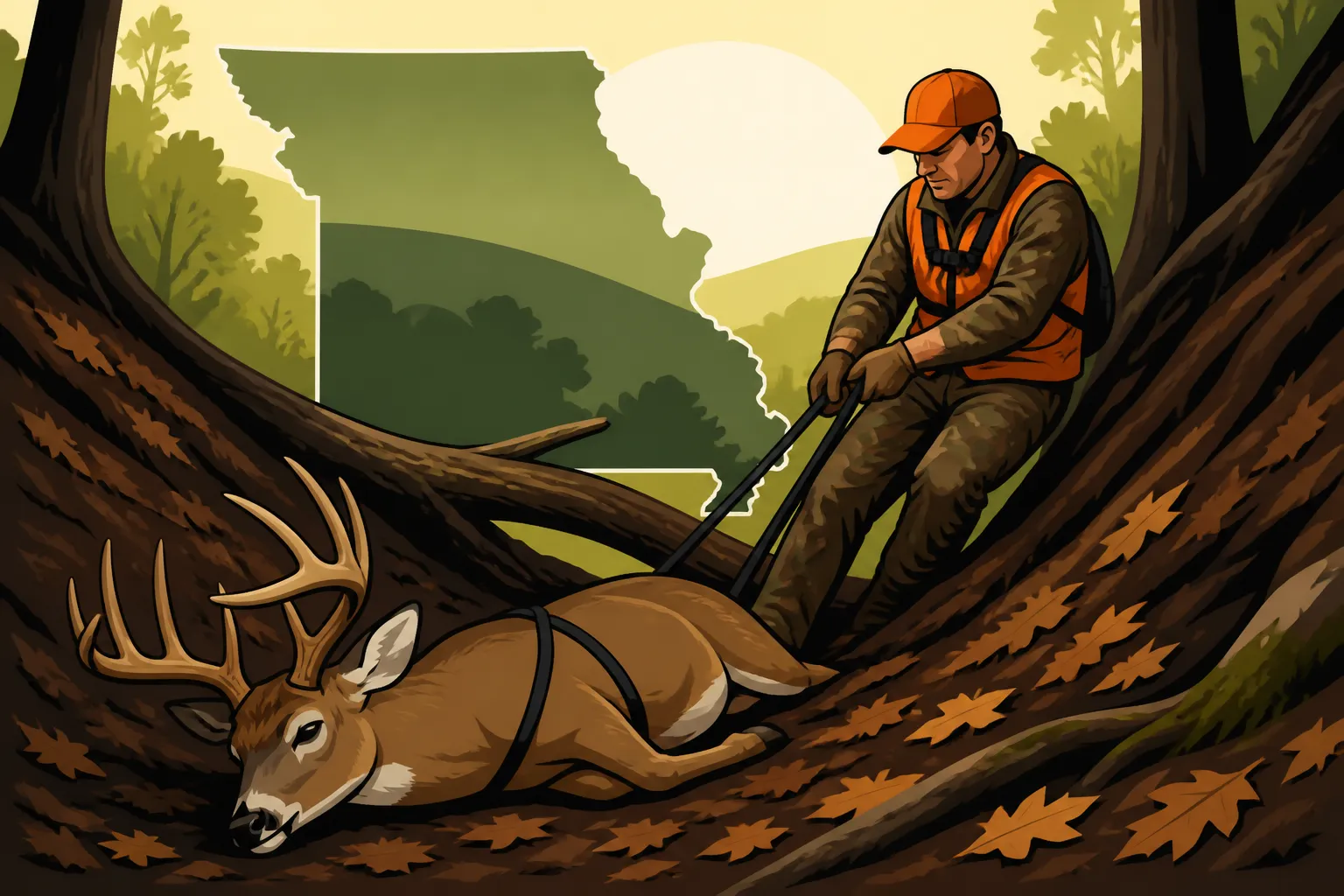
- Position the deer: Always drag a deer headfirst. Its hair is designed to lay back, so dragging against the grain increases friction. Pulling it by the antlers or head reduces resistance. If the antlers are an issue for snagging, you can try to secure them together or even saw them off if permitted and you're not concerned about a skull mount.
- Utilize a drag harness: As mentioned, a harness that goes around your waist or shoulders allows you to use your strongest muscles – your legs and core – rather than just your arms and back. This is a game-changer for reducing strain and increasing endurance.
- Take frequent breaks: Don't try to go too far without resting. Even short, 30-second breaks to catch your breath and stretch can prevent muscle fatigue and injury. This isn't a race; it's a marathon.
- Clear the path: If possible, quickly clear any major obstacles like fallen branches or large rocks from your path. A few seconds spent clearing can save minutes of struggling with the deer.
- Use gravity to your advantage: Whenever possible, choose a route that is downhill or on flat ground. If you must go uphill, aim for switchbacks or gradual slopes rather than a direct ascent. When you need to stop on a slope, ensure the deer is secured or positioned so it won't slide back down, which can happen surprisingly fast.
Quartering and Packing Out
For large deer, long distances, or extremely rugged terrain (like the steep, rocky slopes you might encounter Hunting the Missouri Ozarks), quartering the deer is often the most practical solution. While it adds field dressing time, it significantly reduces the weight you need to move at any one time.
- Safety first: Ensure the deer is stable. If on a slope, position it so it won't roll.
- Perform the gutless method (or traditional field dress): If you're going gutless, you'll skin one side of the deer, remove the front and hindquarters, then the backstraps, and if you open the cavity, the tenderloins. Then flip the deer and repeat. If you traditionally field dress, you can still remove quarters later.
- Bag the meat: Place each piece of meat into separate game bags immediately. This keeps it clean and allows air circulation, which is vital for cooling, especially if it's not Getting Deer Meat Cooled Quickly.
- Load your pack: A sturdy backpack, ideally a dedicated frame pack, is essential. Distribute the weight evenly, with heavier items closer to your back. This can be one of the most effective ways of Getting a Deer Out of a Hollow Alone when you're deep in timber.
- Make multiple trips if necessary: If the deer is particularly large, or you're simply exhausted, it's okay to make two or even three trips. Your safety and the quality of your meat are more important than pushing yourself to exhaustion and risking injury. Leave a marker or bright flagging tape to easily find the rest of the meat or the other trips' location.
Here's a quick comparison of the common methods:
| Method | Pros | Cons | Ideal Scenario |
|---|---|---|---|
| Dragging Whole | Simplest, least field processing required | Extremely physically demanding, slow, high friction | Short distances, relatively flat/smooth terrain, with a drag harness |
| Deer Sled/Drag Mat | Reduces friction, protects hide, lightweight | Less effective on very rough or rocky ground | Snow, ice, wet leaves, mud, open timber with minimal undergrowth |
| Game Cart | Significantly reduces effort, carries heavy loads | Can be bulky/noisy, struggles with steep slopes or dense brush | Moderate to long distances, somewhat open terrain, old roads/trails |
| Quartering/Packing | Lightest carry weight, fastest cooling | Requires more field processing time, specialized pack needed | Very long distances, extremely rugged terrain, preserving meat quality in heat |
Overcoming Common Obstacles and Staying Safe
Solo recovery is inherently more challenging, and staying safe must be your top priority.
Navigating Difficult Terrain
Missouri offers diverse hunting landscapes, from flat farmlands to the rugged Ozark mountains, and each presents unique recovery challenges.
- Steep Hills and Hollows: These are arguably the toughest. When going uphill, use a drag harness and lean into the pull, taking small, deliberate steps. If you have a rope, you can use a tree as an anchor to rest or to pull yourself and the deer up a short, steep pitch. On downhills, control is key. Don't let the deer get ahead of you and drag you down. Use the rope to gently lower the deer, maintaining a safe distance. If it’s very steep, consider going slower and using a tree as a friction point to guide the rope.
- Dense Cover and Brush: Cedar thickets, briar patches, and honeysuckle can make dragging a nightmare. If you have to go through them, pull the deer on its side to reduce its profile. Sometimes, a deer sled can help glide over the top of low brush. If it’s truly impenetrable, you might be better off taking the time to quarter the deer and pack it out. Trying to brute-force a whole deer through a dense thicket is an invitation for exhaustion and frustration.
- Creek Crossings and Water: Small creeks might be easily stepped over, but wider, deeper streams can be a problem. If the water is shallow, you can often drag the deer through, but be mindful of getting too wet and cold, especially in late season. For deeper crossings, if you must cross, you might need to carry the quarters over one by one. Avoid crossing fast-moving water alone if possible, especially with a heavy load. Your safety is paramount.
Staying Found and Communicating
Getting disoriented is a real danger when you're focused on dragging a heavy deer, especially if you're Blood Trailing After Dark in Missouri.
- Reliable Navigation: Always carry a fully charged cell phone with a mapping app (like GoHunt or onX Hunt) and a physical compass as a backup. Mark your truck's location, the deer's location, and your planned extraction route on your map. Checking your location frequently, even every few minutes, is crucial to stay on track.
- Tell someone your plans: Before you even leave home, tell a trusted friend or family member exactly where you're going, your planned route, and when you expect to be back. If you encounter a problem, they'll know where to start looking.
- Emergency supplies: A small, compact first-aid kit is essential. A headlamp with fresh batteries is non-negotiable, even if you expect to be out before dark. A whistle can be used to signal for help if you get into trouble.
Managing Fatigue and Hydration
Dragging a deer solo can push you to your physical limits, making fatigue and dehydration significant risks.
- Pace yourself: It's not a race. Work in short bursts, take frequent breaks, and don't push yourself to the point of exhaustion. Listen to your body.
- Hydrate constantly: Carry plenty of water. Even in cool weather, you'll be sweating and expending a lot of energy. Dehydration can lead to cramping, dizziness, and poor decision-making. Electrolyte drinks can also be beneficial.
- Snacks for energy: High-energy snacks like granola bars, trail mix, or jerky can provide a much-needed boost when you start to flag.
- Know your limits: If the situation is truly beyond your capability, or you're starting to feel faint or sick, know when to call for help. Don't be too proud to ask a buddy or even local law enforcement for assistance. It's far better to ask for help than to get seriously injured or lose your hard-earned venison.
Recovering a deer alone in challenging Missouri terrain is never easy, but with the right planning, gear, and mindset, it's absolutely achievable. Stay safe, stay smart, and enjoy the well-deserved satisfaction of earning your wild game.
Disclaimer
Always consult the latest Missouri Department of Conservation (MDC) regulations before hunting. This guide is for informational purposes only and does not replace official rules and safety guidelines.