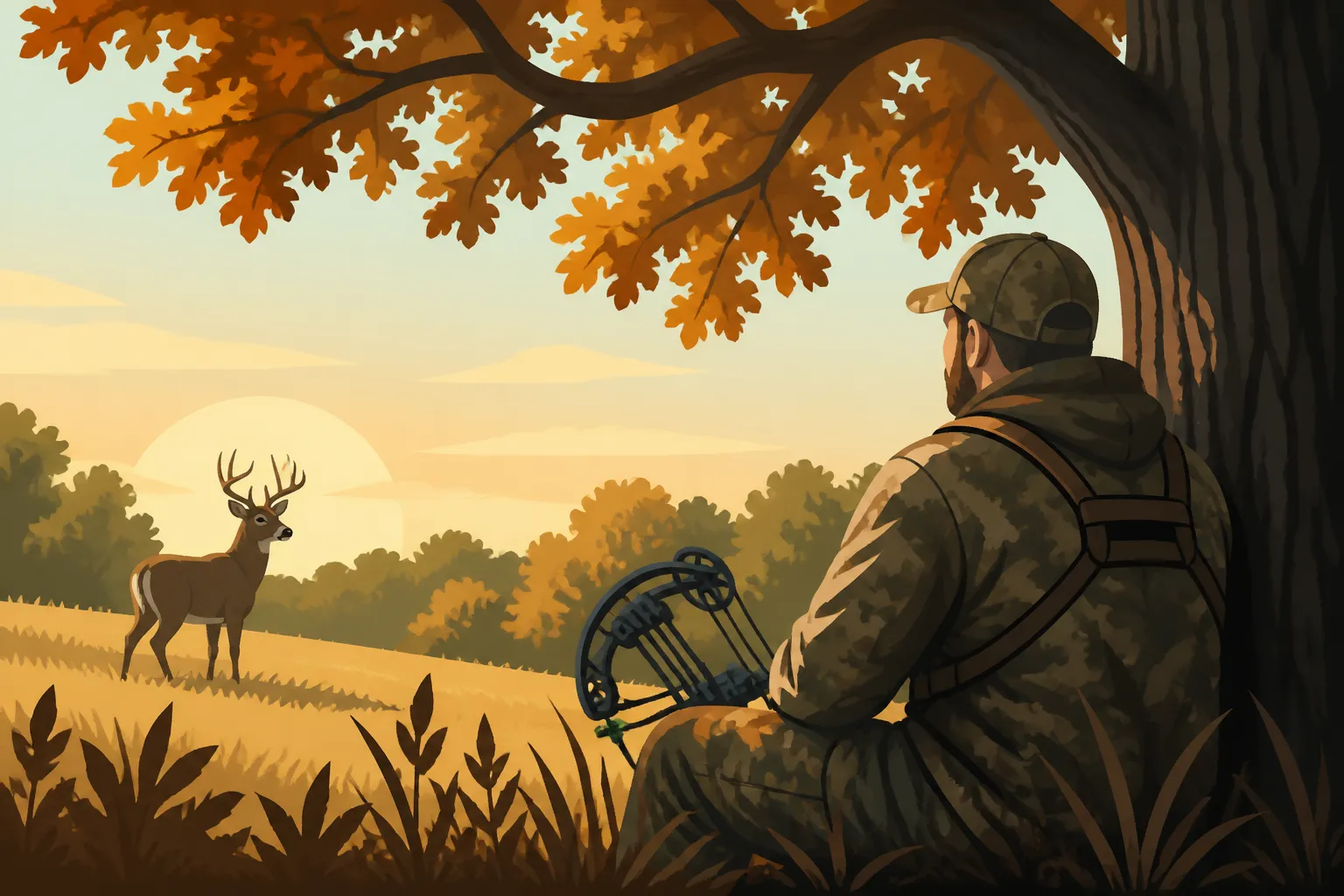
Reading Cuttings Under an Oak
It's easy to walk through the timber, glance at the ground, and miss some of the most crucial intel the woods are trying to tell you. Those seemingly random shell fragments under an oak tree aren't just squirrel leftovers; they're often a direct line into understanding deer movement and feeding habits in Missouri. This guide will help you decipher those subtle clues, turning discarded acorn casings into actionable hunting strategies.
The Subtle Language of Acorn Cuttings and Deer Activity
Walking under a big oak tree, especially in the early fall or even deep into winter, you’re bound to see bits and pieces of acorn shells scattered on the ground. For many hunters, this just confirms that "critters are eating acorns." But for the seasoned hunter, these fragments are like a daily diary, telling a detailed story about who's eating what, when, and how often. Learning to read these seemingly insignificant signs can be the difference between a frustrating, empty hunt and sitting in the right spot at the right time.
Identifying Different Types of Acorn Cuttings
The first step in using acorn cuttings to your advantage is knowing who made them. While squirrels are certainly the most prolific acorn eaters, deer leave a distinct signature that, once you learn to recognize it, becomes unmistakable. It’s like learning a new language in the woods, and it starts with paying attention to the details.
Squirrels are neat freaks when it comes to acorns. They’ll typically hold the acorn in their front paws and carefully gnaw away at one end, leaving behind a relatively clean, often spiral-cut shell with a smooth, almost polished edge where their teeth scraped along the shell. You'll often find these fragments piled up near a stump, a log, or the base of the tree where they sat comfortably to eat. These piles can be quite substantial, almost like a tiny trash heap. If you see a lot of small, neat pieces, often with tiny tooth marks on the edges, you're likely looking at a squirrel's dining table.
Deer, on the other hand, are a bit more… enthusiastic. When a deer eats an acorn, they crush it with their molars. This results in much more ragged, irregular, and often larger pieces of shell. Instead of neat spirals or smooth edges, you'll find crushed, splintered fragments that look like they've been stepped on or stomped into the dirt. They don't sit in one spot to eat; they browse, picking up acorns as they move. So, deer cuttings tend to be more spread out under the canopy of an oak, mixed with leaves and debris, rather than concentrated in a neat pile. You might find a few crushed pieces here, a few more a couple of yards away, tracing their path through the feeding area. Sometimes, you'll even find them with some dirt or mud on them, a testament to how they scooped them up from the forest floor.
Then there are other critters. Turkeys, for instance, will swallow smaller acorns whole, but they might peck at larger ones, leaving behind a few chipped pieces, though rarely the crushed, ragged pieces a deer leaves. Mice or other rodents will leave tiny, delicate chew marks, often on the inside of the shell, much smaller and finer than a squirrel's work. By honing your eye to these distinct patterns, you quickly learn to filter out the irrelevant noise and focus on the signs that truly matter for deer hunting.
Why Oak Trees are Deer Magnets in Missouri
Missouri is a fantastic place for oak trees, and consequently, a fantastic place for deer. Our state's landscape, particularly across the Ozarks and in numerous timber tracts throughout the northern counties, is absolutely riddled with various species of oak, each with its own rhythm for dropping those precious acorns. Acorns are like candy to deer, but a healthy, protein-and-fat-rich candy that provides essential energy, especially as the colder months approach. When other food sources start to dry up or get covered in snow, acorns remain a crucial caloric lifeline for whitetails.
Understanding the different oak species is key because they don't all drop their bounty at the same time, nor do all acorns offer the same appeal. White oaks, including species like the classic white oak, post oak, and bur oak, are often preferred by deer because their acorns have a lower tannin content, making them less bitter and more palatable. These typically drop earlier in the fall, often starting in late September or early October, making them prime targets for early archery hunters. Deer will literally abandon other food sources, even lush green fields, to gorge on fresh white oak acorns. Being able to identify a white oak by its bark and leaf shape, even without leaves, can give you a significant advantage.
Red oaks, which include species like northern red oak, black oak, and pin oak, tend to drop their acorns later in the season, usually from late October through November, and often persist on the ground well into winter. Their acorns have a higher tannin content, which makes them more bitter, so deer often turn to them more heavily after the white oak acorns are gone or when colder weather makes that extra energy even more critical. In years of heavy mast production, you might find deer still heavily utilizing red oak stands when you're Hunting the Missouri Rut in Early November. Knowing the distribution of these different oak types on your hunting grounds, perhaps with the help of a tool like GoHunt's mapping features to identify timber types, can help you predict deer movement weeks in advance.
Interpreting Cuttings for Scouting Success
Finding acorn cuttings is one thing; truly interpreting what they mean for your hunting strategy is another. It's not just about if deer are eating acorns, but how much and how recently. This nuanced understanding allows you to move beyond simply knowing deer are in the area to pinpointing active feeding zones and even predicting travel corridors.
Fresh Cuttings vs. Old Sign
The single most important factor when you find acorn cuttings is their freshness. Old, weathered, dirt-encrusted shell fragments tell you that deer were here, possibly weeks or even months ago. That's useful historical data, but it won't help you much right now. What you're really looking for are fresh cuttings – the "hot sign" that tells you deer are actively feeding in that very spot.
Fresh deer cuttings will look bright and clean on the inside, often with a hint of their original color. The edges might still be sharp, not worn down by rain and foot traffic. They’ll contrast against the damp leaves or soil. If it's been particularly dry, they might even crackle a bit when you step on them. Look for the absence of dirt or mold build-up. If it has rained recently, very fresh cuttings might still show signs of moisture on the inside, or be slightly embedded in soft soil, indicating very recent activity. If you're scouting after a rain, look for cuttings on top of newly wet leaves; anything underneath has been there longer.
Old cuttings, conversely, will be dull, faded, and often blended in with the forest floor. They might be covered in a fine layer of dirt, moss, or even mold. Their edges will be rounded and smooth from exposure to the elements and being trodden upon by various critters. You'll often find them partially buried or broken down, indicating they've been there for a while. It's easy to dismiss a few shell fragments under a random oak, but a concentrated area of fresh crushed shells is a definitive clue that deer are present and utilizing that specific tree or cluster of trees. This real-time intelligence is invaluable, especially when you're trying to decide where to hang a stand or Setting Up on a Bench Above a Creek.
Reading the Volume and Distribution of Cuttings
Once you can distinguish fresh from old, the next level of interpretation comes from the volume and distribution of these fresh cuttings. This tells you about the intensity of the feeding activity and potentially the number of deer involved.
A high volume of fresh, crushed acorn shells concentrated under one or a few trees indicates a major food source and heavy feeding pressure. This isn't just one deer casually passing through; this suggests multiple deer are consistently returning to this spot, or a single deer is spending a considerable amount of time here. This kind of sign is a major red flag (the good kind!) for a potential stand location. It means these trees are "hot" right now. This is where you want to be. The greater the density of fresh cuttings, the more confident you can be that deer are prioritizing this food source.
Conversely, if you find fresh cuttings scattered widely, perhaps just a few here and there over a larger area, it might indicate more casual browsing or that the deer are simply passing through and grabbing a few acorns on their way to another destination. It's still good intel – it confirms deer are in the general vicinity and are interested in acorns – but it might not pinpoint a primary feeding area. For instance, if you're Reading an Ozark Hollow for Deer Movement, you might find scattered cuttings along a travel corridor, but more concentrated piles at a specific feeding oak.
Pay attention to patterns. Are the cuttings mostly on one side of the tree, perhaps where deer are approaching from a bedding area? Are they along a specific line, indicating a travel route between the oak and a water source? Sometimes, you’ll find heavy concentrations under specific "champion" oak trees that consistently produce more or better acorns year after year. Learning to identify these individual trees through scouting and even with mapping tools from GoHunt, helps you plan future hunts.
Using Cuttings to Inform Your Hunt Strategy
Identifying and interpreting acorn cuttings is just the first part of the equation. The real payoff comes when you translate that information into a solid hunting strategy. This means not just finding the food source, but understanding how deer will use it, and how you can position yourself for success without spooking them.
Stand Placement and Approach Based on Cuttings
Finding a hot oak with plenty of fresh deer cuttings is like finding a gold mine. The next challenge is exploiting it without blowing your chances. Your stand placement must consider everything you've learned from the cuttings, as well as the prevailing wind and thermals. This is where the detective work truly pays off.
First and foremost, always hunt downwind of the active feeding area. Deer have an incredible sense of smell, and even with the freshest sign, if your scent drifts into their feeding zone, they’ll know you’re there long before you ever see them. Use a wind checker constantly to confirm your wind direction. If you're hunting in hilly terrain, remember that thermals can influence scent, particularly in the mornings (rising thermals) and evenings (falling thermals). Understanding "Wind and Thermals in Ozark Hills" is critical here.
Consider the likely entry and exit routes deer will use to get to and from the oak. Are there obvious trails leading to the tree? Where is the nearest bedding cover? You want to place your stand where you can intercept deer before they reach the main feeding area, allowing you to catch them on their way in, or position yourself for a shot as they leave. Avoid placing your stand directly over the heaviest concentrations of cuttings if it means compromising your approach or wind advantage. Often, 30-50 yards downwind, along a likely travel corridor, is the sweet spot.
When approaching your stand, plan your route to minimize disturbance. Walk around the feeding area, not through it. Use natural terrain features or thick cover to mask your movement and scent. Get to your stand early, well before deer are expected to arrive, and leave quietly after dark. For specific setups, consider strategies for "Treestand Setups in Hardwood Timber" or even "Ground Blinds on Crop Field Edges" if the oak is on a timber edge. The goal is to be a ghost, appearing and disappearing without the deer ever knowing you were there.
Combining Acorn Intel with Other Sign
Acorn cuttings are a powerful piece of the puzzle, but they are rarely the only piece. To build the most complete picture of deer movement, you need to integrate what the acorns tell you with other deer sign in the area. This holistic approach gives you a much stronger understanding of deer behavior patterns.
Look for rubs and scrapes nearby. A fresh scrape under a licking branch, especially near a heavily-used oak, confirms that a buck is not only feeding there but also checking for does and marking his territory. Rubs on saplings or small trees indicate buck activity and can show you travel corridors. Combine this with "Rattling and Grunting in the Rut" strategies if the timing is right. Tracks in soft soil or mud can tell you about the size of the deer, the direction of travel, and how recently they passed through. Are they fresh tracks leading directly to the oak?
Also, consider bedding areas. Where are the deer likely coming from before they hit the acorns? Is it a thick cedar thicket, a dense fencerow, or a secluded bench on a hillside? If you can identify the likely bedding area and the primary travel corridor between bedding and the hot oak, you’ve hit the jackpot. This is especially important when you're doing your initial "Scouting Missouri Public Land Before Season". On a property mapped with GoHunt, you could identify potential bedding areas, oak stands, and water sources, then use the cuttings to confirm which oak stands are currently in use.
Don't forget water sources. Deer need to drink, and if a good water source (a creek, pond, or even a low-lying damp area) is near a primary acorn feeding area, it creates a complete habitat package that deer will utilize heavily. By layering these different types of sign – acorns, rubs, scrapes, tracks, bedding, and water – you create a comprehensive narrative of deer life in that specific patch of timber, making your hunting efforts far more efficient and successful. This is how you really connect the dots to understand where the deer are, what they’re doing, and how to effectively hunt them.
Advanced Acorn Analysis and Seasonal Shifts
Deer hunting in Missouri is a dynamic challenge, and successful hunters are those who adapt. Acorn production isn't constant, nor is it the only game in town. Understanding how acorns fit into the larger seasonal food puzzle is crucial for consistent success.
Understanding Acorn Drop Cycles
Not every year is a banner year for acorns, and even within a good year, certain areas might produce more than others. This is known as the mast crop cycle. Some years, the oak trees are absolutely loaded, creating a feast for deer and other wildlife. Other years, perhaps due to late frosts, heavy rain during pollination, or insect infestations, the mast crop can be sparse. These variations have a profound impact on deer movement and behavior.
In a bumper acorn year, deer might be scattered throughout the timber, simply because good food is everywhere. This can make them harder to pattern, as they don't have to concentrate on just a few limited food sources. They can pick and choose. In these years, finding an especially hot oak with exceptionally heavy fresh cuttings becomes even more important, as it indicates a particularly favored tree within a sea of options. You'll want to focus on areas that appear to be drawing more deer than others, even if there are acorns everywhere.
In a poor mast year, however, deer will concentrate heavily on any available acorns. A few productive oaks in an otherwise barren landscape can become absolute magnets. These years can actually make deer hunting easier in some ways, because deer movement becomes much more predictable as they flock to the few remaining food sources. This might force you to expand your search beyond your usual spots, perhaps utilizing "Reading Aerial Photos for Ozark Deer" to identify new potential oak stands in areas you haven't explored before. Keeping an eye on the overall mast crop health in your area, and using resources like local conservation reports, can give you a heads-up on what to expect before you even set foot in the woods.
Adapting to Changing Food Sources
Acorns are fantastic, but they don't last forever. Even the late-dropping red oak acorns will eventually be eaten, spoil, or become covered by snow. As the season progresses, particularly after the peak rut and into the late season, deer shift their focus to other available food sources. Being aware of these transitions is vital to staying on deer.
After the acorns are largely gone, deer will often turn to persistent browse, like greenbrier, honeysuckle, or tender young shoots. They might also shift their attention to agricultural fields if they're available, particularly standing corn or leftover soybeans. This is why understanding "What Changes After the Beans Come Off" is so important for late-season hunting in agricultural areas. If you're hunting timber that borders crop fields, this transition from acorns to ag fields can be quite dramatic.
Here's a quick comparison of deer vs. squirrel acorn cuttings:
| Feature | Deer Acorn Cuttings | Squirrel Acorn Cuttings |
|---|---|---|
| Appearance | Ragged, crushed, splintered fragments | Neat, often spiral-cut, smooth edges |
| Size | Irregular, typically larger pieces | Smaller, uniform pieces |
| Distribution | Spread out, mixed with debris under tree | Concentrated in piles near a perch |
| Tooth Marks | No visible specific tooth marks; crushed | Clear, small gnaw marks along edges |
| Surface | Often dirty, embedded in soil | Generally clean, sometimes polished |
| Eating Method | Crushed with molars | Gnawed with incisors |
As the temperatures drop, especially in late December and into January, thermal cover and readily available food sources become paramount. Deer need to conserve energy, so they'll seek out thick cover for bedding and focus on the most calorie-dense food they can find. If you've been focused on oaks all season, be prepared to shift your strategy to focus on "Late-Season Food Sources for Whitetails" like brassicas, standing corn, or cut-over areas with abundant browse. The hunter who can adapt to these seasonal changes, moving with the deer's evolving food preferences, will consistently find success throughout Missouri's long hunting seasons. Knowing your acorns is a powerful start, but combining that knowledge with an understanding of the broader food landscape makes you truly effective.
Disclaimer
Hunting is an inherently dangerous activity. Always prioritize safety by following all local, state, and federal hunting regulations. Ensure you have proper permits and landowner permission. Practice ethical hunting practices, including responsible shot placement and game recovery. This guide is for informational purposes only and should not replace professional instruction or local regulations.