Late-Season Food Sources for Whitetails
As the days shorten and the thermometer consistently dips into the single digits, many deer hunters start to hang up their bows and rifles, thinking the season is all but over. But in Missouri, the late season offers a unique and often rewarding challenge for whitetail enthusiasts willing to brave the cold. It’s a time when deer behavior shifts dramatically, primarily driven by the primal need to find enough calories to simply survive the harsh winter months. This comprehensive guide will walk you through identifying those crucial late-season food sources and developing effective strategies to keep you in the game long after most others have called it quits.
The Late-Season Challenge and Whitetail Needs
Hunting whitetails in the late season in Missouri feels like a completely different sport compared to the early archery days or even the peak of the firearms rut. The vibrant greens of autumn have faded to muted browns and grays, leaves have fallen, and the landscape opens up, revealing every detail. This dramatic change in scenery isn't just aesthetic; it profoundly impacts how deer move, feed, and seek cover.
Why Late Season Hunting is Different
The biggest difference in late season is the sheer struggle for survival that whitetails face. Gone are the days of abundant acorns and lush green browse. Now, every calorie counts, and every bit of energy expended must be justified. Deer are constantly battling dropping temperatures, biting winds, and often, snow cover, all while trying to replenish the fat reserves they depleted during the intense rut. This intense pressure means they become incredibly focused on the most calorically rich and accessible food sources available. You'll notice deer movements become more deliberate and less random, often a direct line from bedding to feeding and back. This predictability, if you can key into it, is precisely what makes late-season hunting so compelling, but also requires a different kind of scouting and patience.
Another factor is hunting pressure. While the initial surge of hunters during the November firearms portion has long passed, deer are still wary. They've been pushed, bumped, and shot at for months. This means they often become largely nocturnal, moving under the cover of darkness to access prime food. Your challenge is to figure out where they feel safe enough to feed during daylight hours or to intercept them during the twilight fringes of dawn and dusk. Understanding Hunting Missouri Deer in Deep Snow can also be a game-changer, as fresh snow reveals every trail and offers a quieter approach.
Understanding Deer Metabolism and Winter Survival
Deer are incredible survivors, but their physiology dictates their late-season behavior. During the peak of the rut, bucks expend a tremendous amount of energy chasing does, fighting rivals, and generally running themselves ragged. Does, too, are bred and now face the metabolic demands of gestation in addition to winter survival. Both sexes enter the late season in a caloric deficit. Their primary goal now is simply to pack on as much fat as possible to make it through the leanest months.
This biological imperative means deer will gravitate towards foods that offer the highest energy return for the least amount of effort. They need carbohydrates, fats, and proteins to fuel their internal furnaces and maintain body temperature. Foods like acorns, corn, and soybeans, with their high caloric content, become absolutely irresistible. Their digestive systems are also highly adapted to breaking down woody browse and other less palatable options when the preferred foods are scarce. This means understanding their digestive cycle and how they extract nutrients from different food sources is key. It’s a constant battle against the elements, and their survival instincts are at an all-time high, which makes them incredibly challenging, yet patterned, to hunt.
Prime Natural Food Sources for Missouri Whitetails
Even when the landscape looks barren, nature still provides. Missouri's diverse habitats offer several crucial natural food sources that whitetails will rely on heavily during the late season, long after the first frosts have bitten hard.
Acorns and Hard Mast: The Residual Gold
While the main acorn drop usually happens in early to mid-fall, don't write off hard mast entirely for the late season. Acorns, especially from specific oak species, can remain viable and palatable on the forest floor well into winter, particularly if they're protected by leaf litter or snow. White oak acorns, with their lower tannin content, are often consumed quickly, but red oak acorns, which contain more tannins, are sometimes left behind and can be a critical food source when other options are exhausted. Pin oak acorns, being smaller, can also be overlooked initially but become vital later.
The key to finding these "residual goldmines" is diligent scouting. Look for areas with a heavy oak component, especially on south-facing slopes or in sheltered draws where snow might melt faster or collect less deeply. Deer will paw through leaf litter and even thin snow to get to these calorie-dense treasures. On a cold, clear day, Scouting Missouri Public Land Before Season might reveal old acorn caches still being worked. Pay attention to deer droppings in these areas – if you see acorn fragments, you know you're in the right place. Don't underestimate how vital even a scattered handful of acorns can be for a deer trying to maintain its energy levels.
Beyond acorns, other hard mast, like hickory nuts, can also be found, though typically less preferred than acorns. However, when hunger pangs set in, deer become less selective. Finding a timber stand with a good mix of oak and hickory can be a late-season magnet. These areas often provide not just food but also critical cover, creating a complete package for whitetail survival.
Browse and Persistent Forbs
When the easy pickings of acorns are gone, whitetails turn to browse—the twigs, buds, and leaves of woody plants. While not as calorically rich as hard mast or agricultural crops, browse is almost always available and forms a significant part of a deer's winter diet. In Missouri, species like honeysuckle, greenbrier, sumac, and cedar are critical. Honeysuckle, an invasive species, actually provides valuable green foliage through much of the winter, making it a persistent and highly sought-after food source. Greenbrier offers both browse and protective thorny cover, which deer appreciate in open timber. Sumac seed heads can provide some sustenance, and cedar, particularly young growth, is a fallback food that also offers thermal cover.
Look for distinct browse lines where deer have nipped off the ends of branches. These lines become more obvious as winter progresses and other food sources diminish. Finding dense thickets of these browse species, especially near bedding areas or on sunny slopes, can be a goldmine. Forbs, which are broad-leafed plants, generally die back with the first hard frost. However, some hardy varieties, like certain clovers or winter wheat planted along field edges or food plots, can persist. If you're exploring Hunting the Missouri Ozarks, you'll quickly learn that browse is king when other options are scarce. Deer will literally eat whatever they can get their mouths on, and these woody plants, though not glamorous, are essential for their survival.
Agricultural Offerings: Unharvested Fields and Leftovers
In Missouri's vast agricultural regions, especially across North Missouri farm country, cultivated fields become absolute magnets for whitetails once the temperatures drop. The caloric density and sheer volume of food available here can draw deer from miles around, often leading to large concentrations of deer feeding in the open.
Standing and Dropped Grains
Few things scream "late-season deer food" louder than a standing cornfield. Unharvested corn provides an incredibly high-energy food source that can sustain deer through the harshest conditions. The stalks offer both cover and abundant kernels. Deer will systematically work through these fields, breaking down stalks and consuming the ears. If you're wondering Hunting Standing Corn Before Harvest, the late season is when it truly shines as a prime deer destination. It’s not just the standing corn, though. Even after harvest, combines inevitably leave behind waste grain—scattered kernels of corn or soybeans—on the ground. These seemingly insignificant leftovers add up to a substantial meal for deer, especially when snow cover makes it harder to find other foods.
Soybean fields, too, even after harvest, offer a surprising amount of residual nutrition. Deer will meticulously browse through stubble, picking up dropped beans. What might look like an empty field to us is a treasure trove of protein and fat for a hungry whitetail. These fields become critical staging areas, especially during those Hunting December Antlerless Days in Missouri. To effectively scout these areas, tools like GoHunt can be invaluable. Its aerial imagery layers often show historical crop rotations or current crop types, helping you pinpoint potential standing fields or recently harvested areas that might hold waste grain. Identifying these agricultural hubs before you even step foot in the woods can save you hours of fruitless searching.
Winter Food Plots and Brassicas
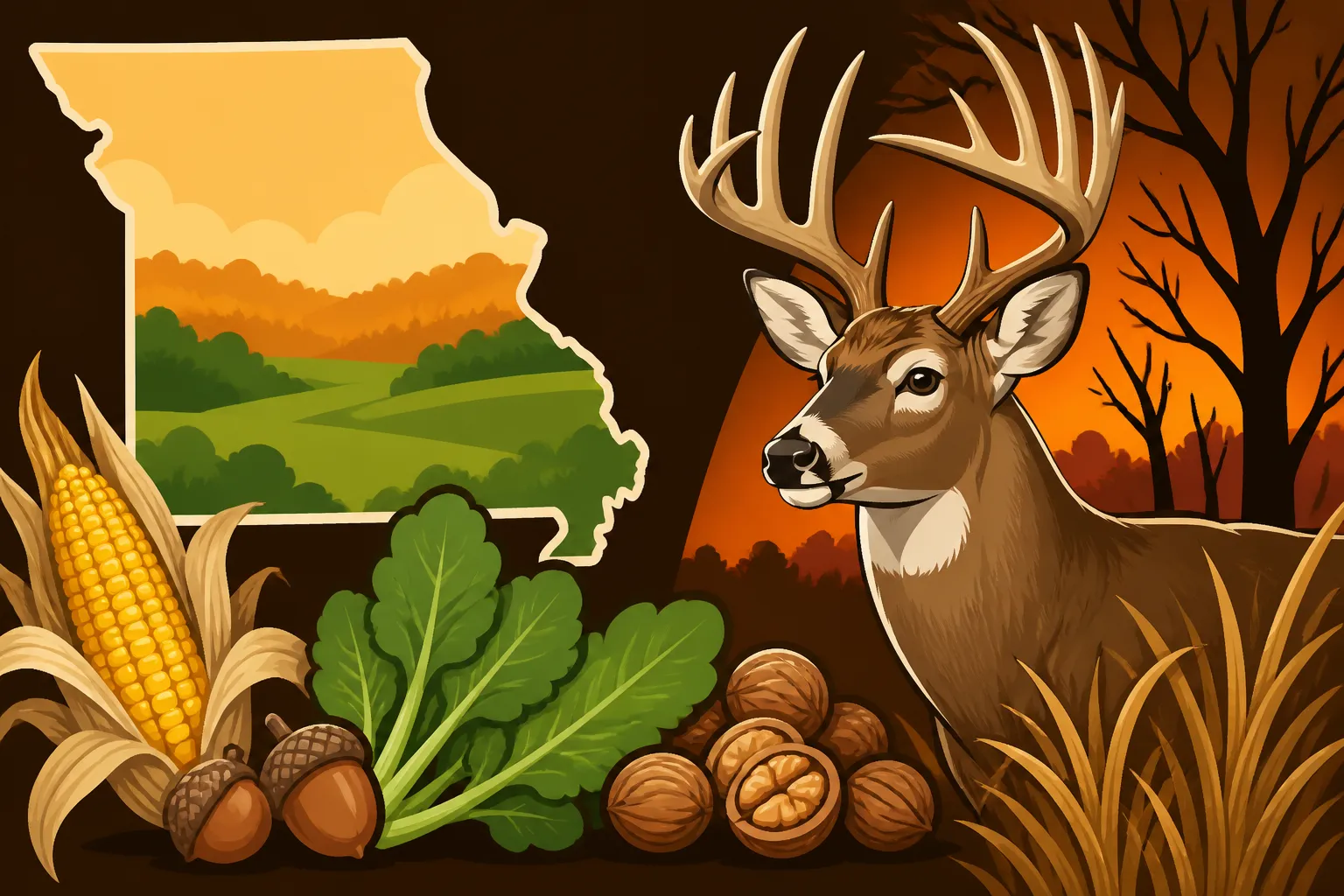
For those who manage private land or hunt on properties with dedicated wildlife management, winter food plots are specifically designed to be late-season deer magnets. Plants like brassicas (turnips, radishes, kale, rape) are phenomenal because they become more palatable and sweeter after a few hard frosts. The cold weather breaks down starches into sugars, making these plants highly attractive. Deer will eagerly dig up turnip bulbs or munch on the leafy greens, getting a massive boost of energy and moisture.
Other popular late-season food plot choices include winter rye, oats, and certain clover mixes. Winter rye is hardy and will stay green well into cold weather, providing a source of green browse. Clover, while often planted for early-season nutrition, can still offer some green growth in sheltered areas or during milder stretches of winter. The beauty of a well-maintained food plot is its reliability. It’s a guaranteed food source in an otherwise lean landscape, concentrating deer movement and offering predictable patterns. When planning your late-season hunt, don't overlook a strategically placed food plot. It could be the missing piece to your puzzle, and GoHunt mapping features can help you visualize these plots in relation to bedding areas and travel corridors.
Scouting and Strategizing for Late-Season Success
Once you understand what deer are eating, the next step is figuring out where they're eating and how to approach these areas effectively. Late-season scouting isn't just about finding deer sign; it's about understanding daily patterns and minimizing disturbance.
Reading the Landscape for Food Sign
With less cover and often snow on the ground, late season offers a unique advantage for scouting: visibility. You can see further, and fresh snow reveals every track, every rub, every path a deer has taken. Look for concentrated feeding areas, identifiable by pawed-up ground where deer have dug for acorns, browse lines on woody plants, or heavy trails leading into and out of agricultural fields. A significant amount of droppings in one area is a dead giveaway that deer are routinely feeding there.
It's crucial to scout from a distance whenever possible. Use quality binoculars or a spotting scope to observe fields and timber edges from afar. This prevents you from pushing deer out of an area or leaving your scent, making them even more nocturnal. Focus on the transition zones between bedding areas—often thick cover on south-facing slopes, cedar thickets, or deep draws—and these prime food sources. Deer will stage in these transition areas before moving into open feeding grounds at last light. GoHunt's robust mapping system with topography and property line overlays can help you identify these critical travel corridors and potential bedding cover in relation to food sources, even allowing you to mark specific observations. It’s like having a scout on the ground before you even lace up your boots. You're looking for patterns, not just individual sightings. Pay attention to Reading Aerial Photos for Ozark Deer which can reveal these subtle terrain features and how they influence deer movement towards food.
Setting Up on a Late-Season Food Source
Once you've identified a prime late-season food source and the likely travel routes to it, your setup is paramount. Unlike the rut, when deer are often moving erratically, late-season deer are generally much more predictable, moving from secure bedding to food. Your primary goals are to intercept them during daylight hours and avoid bumping them.
Consider your entry and exit routes carefully. You want to be able to get to and from your stand or blind without alerting deer in their bedding areas or on their feeding grounds. This might mean taking a longer, more circuitous route or using terrain features like creek beds or ridge lines for concealment. Wind direction is, as always, critical. With deer so focused on food, they'll often rely heavily on their nose to detect danger. Setting up downwind or crosswind of their approach is non-negotiable. Thermals can also play a big role, especially in hilly terrain like the Ozarks, where cold air sinks into valleys at night and warm air rises in the morning. Understanding Wind and Thermals in Ozark Hills can mean the difference between seeing deer and spooking them.
Whether you choose a treestand or a ground blind depends on the situation. Treestands can offer a wider field of view and get your scent above a deer's nose, especially beneficial in open timber overlooking a field. However, Using a Ground Blind on Missouri Public Land offers excellent concealment and thermal protection, which is invaluable on frigid late-season sits. If setting up a treestand, focus on trees that provide natural cover, even after leaf fall. Treestand Setups in Hardwood Timber should always prioritize concealment. The ultimate goal is to be invisible, silent, and scent-free, allowing you to observe and intercept deer without them ever knowing you're there.
| Food Source Type | Examples | Key Characteristics | Scouting Tips | Best Time to Find |
|---|---|---|---|---|
| Hard Mast | Red Oak Acorns, Pin Oak Acorns, Hickory Nuts | High caloric value, can persist under leaf litter. | Look for mature oak stands, especially red oak varieties. Check south-facing slopes. Search for pawed-up ground or acorn fragments in droppings. Observe deer activity with optics from a distance. | Early-Late Winter |
| Browse | Honeysuckle, Greenbrier, Sumac, Young Cedar | Always available, critical for survival, lower calories. | Identify thickets of these species, particularly near bedding areas or sheltered draws. Look for distinct browse lines on twigs. Follow deer trails leading into dense cover. | Mid-Late Winter |
| Forbs | Clover (hardy varieties), Winter Wheat | Limited availability, but highly palatable if present. | Check old food plots or areas with naturalized clover. Look for green patches in fields or along field edges. Observe deer actively grazing. | Mid-Late Winter |
| Agricultural | Standing Corn, Waste Grain (Corn, Soybeans) | Extremely high caloric value, reliable draw for deer. | Use aerial maps (like GoHunt) to identify standing corn or recently harvested fields. Look for concentrated deer tracks, droppings, and feeding activity. Observe travel patterns from bedding to feeding. | Early-Late Winter |
| Food Plots | Brassicas (Turnips, Radishes), Winter Rye, Oats | Intentional plantings, highly attractive after frosts. | Scout known food plot locations. Look for signs of heavy browsing on brassica leaves or dug-up bulbs. Observe during low light from a distance to confirm deer usage. | Mid-Late Winter |
Disclaimer
Hunting is an inherently dangerous activity. Always follow all local, state, and federal laws and regulations. Ensure you have the proper permits and licenses. Practice firearm and archery safety, know your target and what is beyond it, and wear appropriate safety gear, including hunter orange when required. Always inform someone of your hunting plans and expected return time. The information provided is for educational purposes and is not a substitute for professional advice or hands-on training.