Calling a Missouri Gobbler Off the Roost
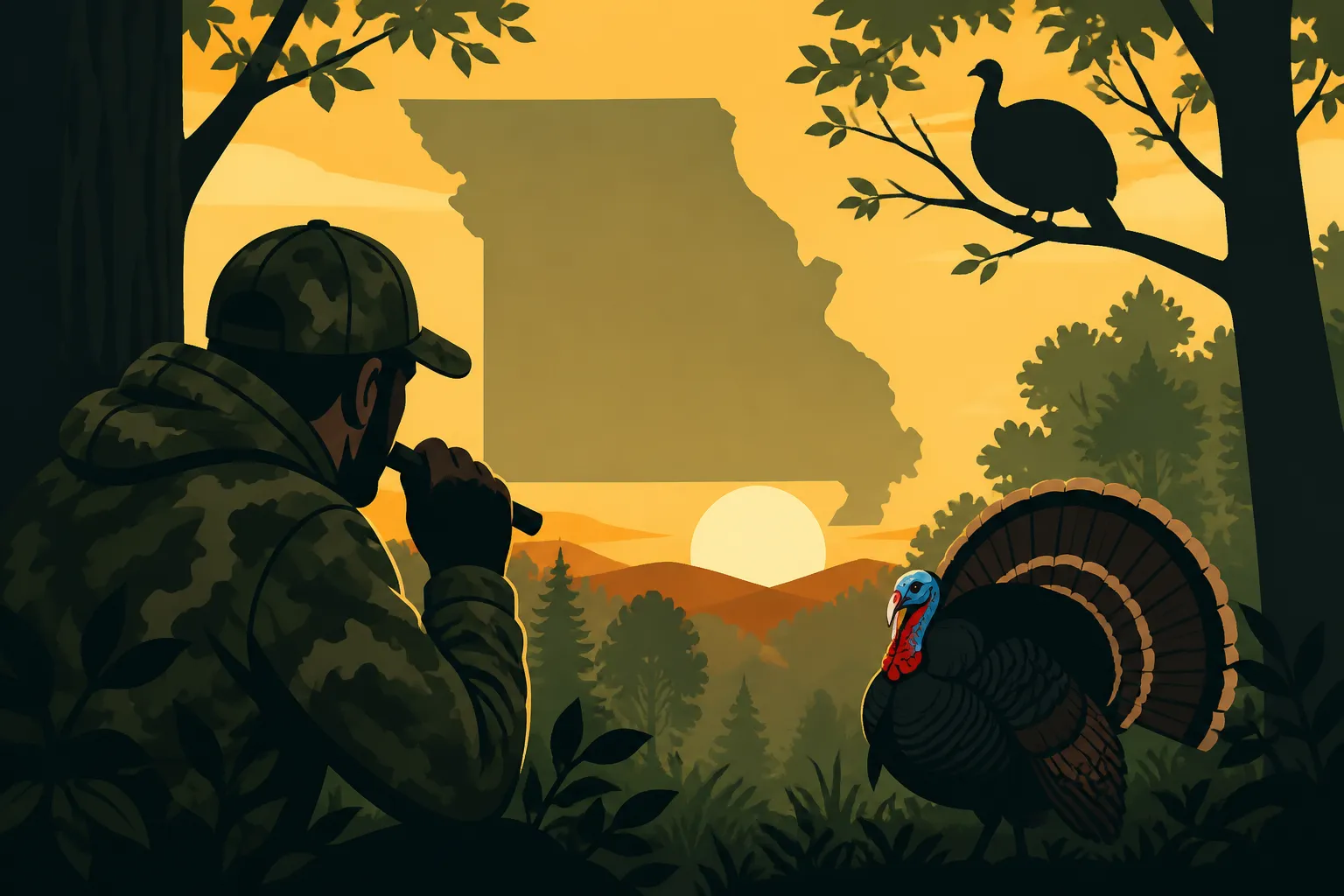
There's nothing quite like the sound of a Missouri gobbler hammering on the limb as dawn breaks, is there? That heart-stopping vocalization echoes through the timber, and your pulse races. But then comes the familiar frustration: you set up perfectly, pour out your best calls, and that bird either flies down with his silent harem of hens in the opposite direction, or he just shuts up, leaving you wondering what went wrong. This guide is all about tackling that exact challenge, breaking down the art and science of calling a Missouri gobbler effectively off the roost, and getting him within range when he finally hits the ground.
Understanding Roosting Behavior and the Morning Routine
Before we can even think about calling a gobbler, we need to understand what makes him tick during those crucial first moments of the day. Turkeys aren't just randomly perching in trees; they're making calculated decisions based on safety, access, and often, the presence of hens.
Why Turkeys Choose Their Roost Location
Gobblers, and hens for that matter, pick roost trees with a few key factors in mind. Security is paramount. They prefer tall, sturdy trees that offer a good vantage point to spot predators, and often have open canopy beneath them for a clear flight path. This is why you'll often find them along ridge lines, especially those with steep drop-offs or near large, mature timber stands. Areas adjacent to water sources like creeks or rivers can also be prime roosting spots, as the dense cover and varied topography provide both security and potential fly-down zones.
Sometimes, they’ll choose a tree within eyesight or earshot of a field edge or a known feeding area, so they can assess the morning's opportunities before committing to the ground. Using mapping applications like GoHunt can be incredibly helpful for identifying these terrain features – ridge lines, dense timber blocks, and water sources – that might hold roosting birds. Prior to the season, you can spend hours digitally scouting, marking potential areas where turkeys might spend the night.
The Challenge of Calling a Gobbler Off the Limb
Let's be brutally honest: successfully calling a gobbler directly off the limb and having him pitch down exactly where you want him is incredibly rare, especially with mature, experienced birds here in Missouri. Think about it from his perspective. He's high up, safe, and has a commanding view of his surroundings. He can see far more than you can, and his ears are incredibly tuned to any subtle anomaly. If he has hens with him on the roost, he’s even less likely to respond to your calls, as he already has what he wants.
The real goal isn't necessarily to get him to jump from the tree to your exact spot. It's about getting him excited, piquing his curiosity, and making him believe there's an eager hen just out of sight that he needs to investigate once he flies down. The challenge is in convincing him that your location offers a better opportunity than simply flying down with his existing flock, or pitching into an open field where he feels more secure. This subtle distinction is crucial to your morning strategy.
Pre-Dawn Precision: Setting the Stage for Success
The moments before legal shooting light are arguably the most critical for roost hunting. How you approach, where you set up, and your initial calling sequence can make or break your hunt.
Scouting for Roost Locations
Effective roost hunting begins long before the actual hunt day. You need to know, or at least have a very strong educated guess, where a gobbler might be spending the night. This involves pre-season scouting, which can be done by simply listening at dawn and dusk. Drive or walk quiet backroads and listen for gobblers sounding off. Once you hear one, try to pinpoint its general direction. The Missouri Department of Conservation's website offers detailed maps of public hunting areas, which can be invaluable for identifying prime turkey habitat.
Physical scouting involves looking for signs under potential roost trees – droppings, discarded feathers, and scratched ground can indicate a frequented roost. Remember, being stealthy during this phase is key. The last thing you want to do is spook a bird from its regular roost before the season even begins. Using mapping tools on your phone, like those from GoHunt, to mark these spots during your scouting trips ensures you can find them again in the dark. This preparation will pay dividends when it comes time to execute your plan in the pitch black.
The Silent Approach and Strategic Setup
Once you've identified a potential roost, your approach needs to be as quiet as a mouse sneaking cheese. This means getting to your desired setup location well before the first hint of gray light, often an hour or more before sunrise. Use terrain features, such as draws, ridge lines, or thick timber, to mask your movement and sound. I've walked miles in the dark, sometimes using a dim headlamp set on a red light mode, just to get into position without making a peep. This is where knowing the land, perhaps from a previous scouting trip or by reviewing aerial photos for Ozark deer movement, becomes invaluable.
Your setup needs to provide concealment, break up your silhouette, and allow for a clear shooting lane in the direction you expect the gobbler to come from. I often look for a large tree to sit against, like a sturdy oak or a sycamore, that's wider than my shoulders. This helps me disappear into the background. Positioning yourself so the rising sun is not directly in your face, but potentially in the gobbler's eyes if he flies towards you, can also be a slight advantage. Think about Setting Up Against a White Oak on a ridge, with a clear view of a potential fly-down area below. Ensure you can remain absolutely motionless once you settle in.
Locator Calls and Initial Soft Calling
As the world slowly transitions from darkness to dawn, resisting the urge to blast out a series of aggressive yelps is tough, but important. Start with locator calls. An owl hoot, a crow call, or even a coyote howl can often provoke a shock gobble without giving away your exact position too early. Listen for his response, and try to judge his distance and direction.
Once he gobbles, and as the light just begins to break, you can introduce very soft, subtle tree yelps. These should sound like a contented hen, just waking up on the roost. Think one or two soft yelps, perhaps a few soft clucks. The goal is to let him know there's a hen nearby, but not to sound overly aggressive or demanding. You want to pique his interest without making him suspicious. Many hunters make the mistake of overcalling at this stage, which can often push an already wary gobbler in the opposite direction.
| Call Type | Description | Best Use Scenario |
|---|---|---|
| Owl Hoot / Crow Call | Loud, distinctive calls mimicking other wildlife. | Locating gobblers on the roost in low light without revealing hunter position. |
| Soft Tree Yelp | Muffled, contented yelps, typically 1-3 notes. | First light, mimicking a hen waking up on the roost, showing subtle presence. |
| Fly-Down Cackle | Rapid, excited yelps, clucks, and cutting as a hen pitches from the roost. | As the gobbler prepares to fly down or just after he hits the ground. |
| Contented Clucks | Soft, single-note clucks. | After fly-down, to reassure a bird, or as he approaches your setup. |
| Standard Yelp | A series of 5-7 clear yelps, moderate volume. | Post-fly-down, to simulate a searching hen, or to pull a hung-up bird. |
The Fly-Down Game: Strategies After They Hit the Ground
The moment a gobbler leaves the safety of his roost tree is often the most critical point in the hunt. This is when he's most vulnerable to good calling, but also when he's most susceptible to getting "hung up" or spooked.
The Fly-Down Cackle and Post-Landing Yelps
This is where you need to be ready. As soon as you hear that tell-tale flapping of wings as he prepares to pitch down, or just as he's hitting the ground, this is your cue. Unleash an excited, aggressive fly-down cackle. This isn't a soft tree yelp; this is a series of rapid, sharp yelps interspersed with clucks and cuts, mimicking a hen excitedly pitching off her roost and hitting the ground. The idea is to make him think, "Wow, there's a hot hen down there who just flew to the ground right where I'm headed!"
Immediately after your fly-down cackle, transition to much softer, contented clucks and purrs. You want to sound like that excited hen has now settled down and is feeding peacefully, waiting for him. This combination can be incredibly effective. It provides the initial burst of excitement he's looking for, followed by the comforting sound of a receptive hen. Many times, a gobbler will hit the ground, gobble once or twice, and then start making his way directly to where he heard that "hen." This tactic is often more effective than trying to call him down while he's still in the tree.
Reading the Bird and Adapting Your Strategy
Turkey hunting is rarely a cookie-cutter affair. Every bird is different, and you need to be ready to adapt. If he hits the ground and immediately starts gobbling and heading your way, keep your calling minimal and soft. Don't overdo it. Just enough to reassure him you're still there. However, if he hits the ground, gobbles, and then seems to be moving away, or worse, goes silent, you need to change tactics.
Sometimes, a single, slightly louder yelp might be enough to pull him back. Other times, it might be an indication that he has hens, and you'll need to employ more aggressive cutting and yelping, or even try a tactic like fanning or reaping, if legal and safe, to pull him in. If he's already moved off a good distance, this might be the time to consider a run-and-gun turkey tactics in the Missouri Ozarks approach, carefully moving to cut him off. Understanding the nuances of When Missouri Gobblers Go Quiet after the fly-down can also help you decide whether to stay put or make a move.
Decoy Placement and Visuals
When it comes to decoys, less is often more, especially with roosted birds. A single hen decoy, or a hen and jake combination, can be effective if placed correctly. The key is to position your decoy (or decoys) where the gobbler will see them as he approaches, but also so that he has to walk past your shooting lane to get to them.
For a roosted bird, placing a decoy too close to the roost tree can sometimes make him hesitant, as it might look unnatural. Instead, consider setting it up about 20-30 yards from your position, in a clear lane, within what you'd consider a comfortable shooting distance. This way, when he eventually commits, he's focused on the decoy, providing you with a cleaner shot. This attention to detail in Decoy Placement for Pressured Birds can make all the difference in those final moments.
Common Pitfalls and Troubleshooting Roosted Gobblers
Even with the best planning, things can go wrong. Understanding common mistakes and how to troubleshoot them can salvage a hunt that initially seems doomed.
Overcalling and Under-Calling: Finding the Balance
One of the most common mistakes beginners (and even seasoned veterans) make is either overcalling or under-calling. Overcalling, especially with aggressive yelps from the roost, can make a gobbler wary. He's heard it all before, and if a hen sounds too desperate, he might just assume it's a decoy or something isn't right. On the flip side, under-calling means you don't generate enough interest. He might gobble once or twice, but if he doesn't hear anything else, he'll simply go about his business, often with his hens.
The balance is subtle. Start soft, assess his reaction. If he gobbles enthusiastically, a soft cluck or purr might be all you need. If he seems hesitant or is moving away, you might need to increase the volume and aggression slightly. Think of it as a conversation; you're responding to his cues. This is especially true after he hits the ground. If he walks off silently, sometimes the best call is no call at all, as he might just be circling to get a better look.
The "Hang-Up" and What to Do
The dreaded "hang-up" – he's gobbling his head off, he's 60 yards out, and he just won't come any closer. This is a common frustration, especially with pressured Missouri gobblers. He can hear you, he knows you're there, but he expects the hen to come to him.
When a gobbler hangs up, you have a few options, and patience is always your first tool.
- Go Silent: Sometimes, shutting up completely for 10-15 minutes can make him nervous. He might wonder why the hen suddenly went quiet and decide to investigate.
- Subtle Movement (with caution): If you're completely hidden, a very slight, slow movement to simulate a hen moving can sometimes work. This is risky, so only attempt if you have solid cover and the bird's attention is diverted.
- Change Calls: Switch from a box call to a slate call, or a mouth call. A different sound might just be the trick. A few soft, contented purrs can also make him think the hen is now feeding and relaxed, making him feel safer to approach.
- Move (if possible): If the terrain allows, and you can stay completely out of sight, a slow, deliberate crawl or crab-walk to get 10-20 yards closer can sometimes bridge that gap. This is a high-risk, high-reward move.
- Aggressive Calling: If he's with hens, sometimes an aggressive series of cuts and yelps can challenge the dominant hen, making her drag the gobbler closer to investigate the "intruder." This works best when you're sure he's with hens.
Dealing with hung-up birds takes experience and a willingness to experiment. What works one day might not work the next. It's all part of the wild turkey hunting puzzle here in Missouri.
Disclaimer
Hunting is an inherently dangerous activity. Always prioritize safety, follow all local and state regulations, and obtain proper permits and licenses. The information provided in this guide is for educational purposes only and should not replace proper training or adherence to official guidelines from the Missouri Department of Conservation (MDC). Always be sure of your target and what lies beyond it.