Decoy Placement for Pressured Birds
It's a familiar scenario for any hunter in Missouri: you've put in the time scouting, maybe even heard some distant gobblers or seen ducks funneling into a particular area, but when it comes time to hunt, those birds just won't commit. They circle, they hang up at long distances, or they simply veer off before getting within range. This frustrating behavior is often the hallmark of "pressured birds," those wary creatures that have learned a thing or two about hunters and their tricks. This comprehensive guide will arm you with the knowledge and strategies to adjust your decoy placement and outsmart these educated birds, turning those near-misses into memorable successes.
Recognizing and Adapting to Pressured Bird Behavior
Hunting in Missouri offers incredible opportunities, but it also means dealing with birds that have seen it all. Whether you're chasing a wily gobbler in the Ozarks or mallards working a flooded timber hole, understanding what makes a bird "pressured" and how they react is the first step toward a successful hunt.
What "Pressured" Really Means for Birds
When we talk about "pressured birds," we're referring to game animals that have learned to associate certain stimuli – calls, decoys, human presence, vehicle noise – with danger. This isn't just a slight wariness; it's a deeply ingrained caution developed over repeated encounters with hunters. For turkeys, this might mean a dominant tom that gobbles less often, approaches silently, or hangs up just out of shotgun range, meticulously scanning for any hint of danger before committing. He's seen that perfect jake-and-hen setup too many times, only for a hunter to pop up.
For waterfowl, pressured birds might circle endlessly, higher than usual, never quite dropping their feet into the kill hole. They'll scrutinize your spread, your blind, and the surrounding environment with a critical eye. They've learned to avoid obvious spreads, unnatural motion, or poorly concealed blinds. Throughout Missouri, especially on popular public lands like those along the Mississippi and Missouri Rivers or well-known Conservation Areas, this pressure compounds as the season progresses. What worked on opening day might be a guaranteed bust by mid-season. These birds develop a wider "safety bubble" and are far more likely to observe from a distance, looking for any excuse to move on.
Reading the Landscape for Pressure Clues
Before you even think about setting out decoys, you need to become a detective and assess the level of pressure in your hunting area. This goes beyond just looking for tracks or droppings; it's about understanding how hunters have influenced bird behavior. Are there old, permanent blind locations evident? Is the cover around common access points trampled down? Do you find spent shotgun shells frequently? These are all tell-tale signs of heavy hunting pressure.
When you're scouting, pay close attention to how birds use the landscape in response to potential threats. You might notice turkeys always cutting across a specific timbered draw instead of walking a wide-open field, or ducks consistently flaring over a certain clump of trees, indicating they perceive danger there. Tools like GoHunt can be incredibly valuable here, allowing you to pour over aerial photos and topographical maps. You can identify potential hunter access points, common travel corridors, and subtle terrain features that pressured birds might use for concealment or escape. By virtually scouting with GoHunt, you can anticipate where birds will feel safer and where they'll be most hesitant to approach, helping you to place your decoys in zones that minimize their perceived risk. Look for features like brush lines, fencerows, or small depressions that birds might utilize to approach a feeding or roosting area with a sense of security.
Strategic Decoy Placement for Wary Birds
Once you've wrapped your head around the concept of pressured birds, it's time to adjust your decoy strategy. The old adage of "less is more" often holds true, but it's also about realism, orientation, and understanding the subtleties that draw a bird in rather than spooking it.
Less is Often More: The Power of Subtlety
When dealing with birds that have seen every trick in the book, sometimes the most effective decoy spread is the simplest. For Missouri turkeys, this often means ditching the full flock of half a dozen hens and multiple gobblers. Instead, consider a single hen decoy, perhaps in a feeding or breeding posture. A solo hen can appear less threatening, less of a direct challenge to a dominant tom, and more natural than a bustling crowd. If you do include a tom or jake, a submissive jake decoy paired with one hen can be incredibly effective, inviting a dominant gobbler to assert his position without feeling overwhelmed by competition. This type of setup is especially potent when Hunting the Missouri Rut in Early November.
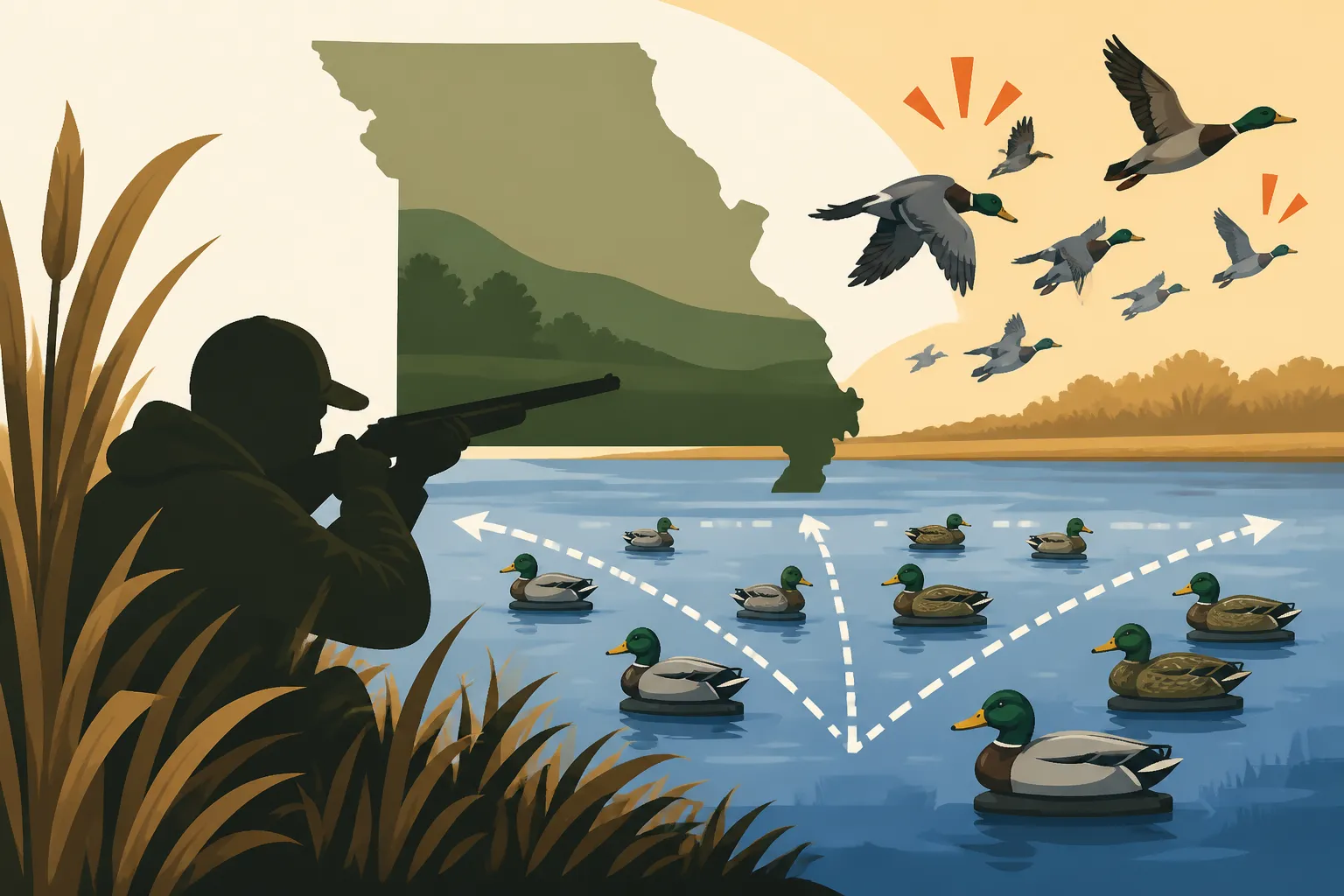
For waterfowl, particularly ducks and geese working heavily hunted rivers or public wetlands, a smaller, more natural-looking spread can often outperform a massive, unrealistic one. Focus on realistic postures – sleeping, feeding, preening – rather than every decoy being alert. You don't need dozens of full-body decoys to convince a wary flock; sometimes a dozen well-placed, high-quality decoys are far more convincing. The goal is to mimic a small, secure group of birds, not a convention. This subtle approach can be key for Missouri Flooded Timber Duck Tactics where space is limited and birds are already on edge.
Creating Realistic Scenarios with Orientation and Movement
It’s not just about how many decoys you use; it’s how you use them. Realism in decoy orientation and movement is paramount for pressured birds.
For turkeys, consider the story your decoys are telling. A hen with her head down, feeding, conveys a sense of security and relaxation. A jake positioned slightly behind her, looking away, suggests a nonchalant, unthreatened scenario that a dominant tom might find irresistible. Avoid decoys with aggressive postures (like a full strut gobbler facing directly towards an incoming bird) if you suspect high pressure, as this can often make a wary tom hang up. You want to invite, not challenge.
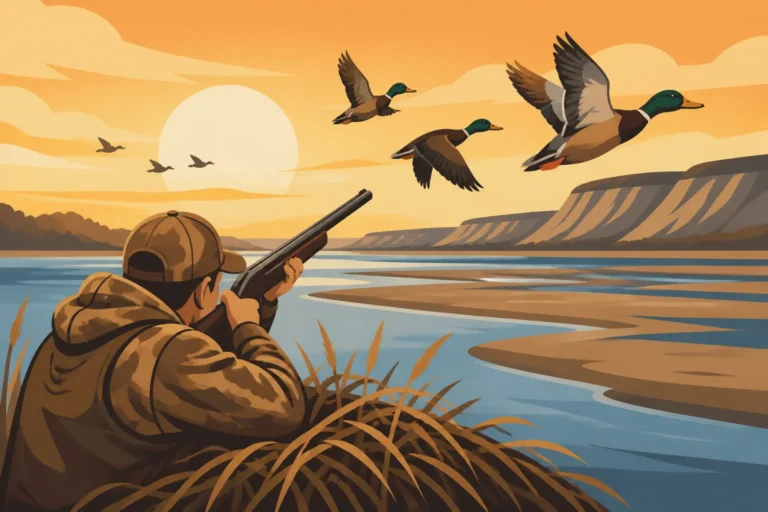
When it comes to waterfowl, understanding the "landing zone" is critical. Ducks and geese almost always land into the wind. Your decoys should be arranged to provide a clear, inviting opening – often called the "kill hole" – directly in front of your blind, with the birds facing into the wind as they approach. This guides them precisely where you want them. Consider using subtle motion decoys like jerk strings in flooded timber or simple Texas rigs in fields. While spinning-wing decoys can be deadly in some situations, pressured birds, especially late in the season, can learn to associate their erratic movement with danger. Sometimes, a subtle ripple on the water or the gentle sway of a feeder decoy is all the motion you need. Setting up in specific locations, like Hunting Missouri River Sandbars for Ducks, requires careful consideration of current and wind to make your decoys look natural.
Distance, Angle, and Your Hide
The best decoys in the world won't matter if your hide is compromised or your placement is off. The distance of your decoys from your blind is a fine line. Too close, and incoming birds might spot movement in your hide before they commit. Too far, and even if they decoy perfectly, they might be just outside your effective range. For shotguns, aiming for a 20-30 yard sweet spot for the main "kill zone" is generally ideal.
Consider the sun's angle throughout the morning. You want the sun at your back, if possible, not glaring off your decoys or silhouetting them from the birds' perspective. A well-placed decoy spread can be nullified if the birds are looking directly into the sun at your blind, making it easier for them to spot you.
Finally, your hide is paramount. Whether you're in a ground blind on a field edge or tucked into timber, absolute concealment is non-negotiable for pressured birds. Ground Blinds on Crop Field Edges require meticulous brushing in with natural vegetation. If you're Run-and-Gun Turkey Tactics in the Missouri Ozarks, you need to be an absolute master of natural camouflage, blending seamlessly into the background. Your decoys are there to draw attention, but that attention needs to be focused on the decoys, not on the slight glint of your barrel or the silhouette of your head.
Adapting Decoy Strategies to Missouri's Diverse Habitats
Missouri is a diverse hunting state, from the rolling farmlands of the north to the rugged Ozark hills and the sprawling river bottoms. Each habitat presents unique challenges and opportunities for decoy placement when dealing with pressured birds.
Timber and Ridge Country Turkey Tactics
Hunting turkeys in the dense timber and steep ridge country of the Missouri Ozarks, such as areas within the Mark Twain National Forest, is a different ballgame. Here, visibility is limited, and birds often travel through thick cover. A big, elaborate decoy spread is usually counterproductive or simply not feasible. Instead, focus on a minimalist approach. Many successful hunters opt for no decoys at all, relying solely on expert calling to bring a gobbler into range.
If you do use a decoy, a single, realistic hen placed very close to your setup (think 10-15 yards) can be enough. The goal is to give a gobbler that last visual confirmation as he crests a ridge or comes through a brush line, providing a quick, close shot. This strategy is highly effective when calling a Missouri gobbler off the roost. Look for natural openings or subtle clearings – perhaps a logging road, a small food plot on a bench, or a ridge saddle – where a decoy can be seen from a reasonable distance without being too exposed. Your hide here needs to be exceptionally good, as birds will appear suddenly and at close range. Understanding how to read an Ozark hollow for deer movement can also give you clues about how turkeys might navigate the terrain, and this applies to their approach to your setup.
Open Fields and Crop Country Waterfowl and Turkeys
North Missouri's expansive farm country, with its vast grain fields and rolling terrain, offers a different challenge. Waterfowl, particularly geese, and field-roosting turkeys can be incredibly sensitive to pressure in these open environments.
For waterfowl, especially when field hunting geese in North Missouri, your decoy spread needs to be large enough to be seen from a distance, but the placement and spacing are key for pressured birds. Instead of a tight cluster, spread your decoys out more naturally, mimicking a flock feeding and loafing. Include some sentry or "looker" decoys positioned to simulate birds on alert, which can add to the realism for distant flocks. Crucially, your layout blinds must be perfectly concealed within the spread, brushed in meticulously with local vegetation. A good virtual scouting session with GoHunt can help you identify subtle dips or changes in elevation in a field where you can set your blinds to disappear. Whether you're hunting standing corn before harvest or adapting to what changes after the beans come off, the importance of blending in cannot be overstated.
For turkeys in crop country, a single hen or a jake/hen combo often works best. Position your decoy(s) to draw the tom across the field to your hidden position, ideally into the wind. Remember, turkeys in open fields have excellent eyesight and will scan the area thoroughly. Keep the setup simple and realistic to minimize any red flags. This aligns with effective Turkey Tactics for Crop Country.
Flooded Timber and River Bottom Duck Hunting
Missouri's iconic flooded timber and vast river bottom wetlands, like those at Duck Creek or the Big Muddy National Wildlife Refuge, present their own unique set of decoy challenges. Ducks here can be heavily pressured, especially late in the season. The key is to create a small, inviting landing hole amidst the trees.
Your decoy spread should be condensed and realistic. Focus on dabbling ducks like mallards and wood ducks. Place decoys in natural openings or slightly thinned areas in the canopy, mimicking a small group of birds resting and feeding. Motion is crucial here; jerk strings can create realistic ripples and movement without the artificiality of spinning-wing decoys, which pressured birds might shy away from. Since visibility is often limited by the trees, the "story" your decoys tell needs to be believable at close range. Think about how ducks would naturally gather in such a spot, finding shelter and food. Setting up a "kill hole" here means understanding the flow of water and how ducks will approach through the timber. This requires a nuanced approach, often described in detail in guides for Flooded Timber Duck Hunting in Missouri.
Avoiding Common Decoy Placement Pitfalls with Pressured Birds
Even with the best intentions, it's easy to fall into common traps when using decoys for pressured birds. Learning to identify and avoid these mistakes can significantly increase your success rate.
Overdoing It: Quantity Versus Realism
One of the biggest pitfalls, especially for less experienced hunters, is believing that more decoys automatically equals more birds. While a massive spread might work in some highly unpressured scenarios, it's often a deterrent for wary birds. A large, static, and unrealistic spread can scream "trap!" to a bird that has already developed a keen sense of self-preservation. Instead of focusing on the sheer number of decoys, prioritize the quality and realism of the decoys you do use.
A dozen hyper-realistic, well-painted decoys with natural postures, strategically placed, will almost always outperform fifty cheap, shiny, or poorly maintained ones. Pressured birds notice the details. The unnatural sheen of a sun-baked plastic decoy, or a spread where every bird is perfectly spaced in a rigid line, can send them flaring instantly. Remember, your goal is to replicate a natural scene of unconcerned birds, not to create an artificial convention.
Ignoring Wind Direction and Sun Angle
It sounds basic, but neglecting wind direction and sun angle is a surprisingly common mistake that can completely ruin a decoy setup for pressured birds. As mentioned, nearly all waterfowl land and approach into the wind. If your decoy spread isn't set up to facilitate this, birds will constantly try to land outside your kill zone, often far away or in an awkward position, making them difficult to shoot or causing them to flare. You need to position your blind and decoys so that incoming birds have a clear, wind-assisted path into your shooting lane.
The sun's position throughout the day also plays a critical role. Setting up with the sun directly in the birds' eyes as they approach can make it difficult for them to see your decoys clearly and can also silhouette your blind, making it more visible. Ideally, you want the sun at your back, allowing the birds to approach with the light hitting your decoys and presenting a clearer, less suspicious view of your setup. This also keeps the sun out of your eyes, improving your visibility for incoming birds.
Static Spreads and Lack of Adaptability
Pressured birds are masters of observation. If they continually see the exact same decoy spread in the same location, especially on smaller public lands or heavily hunted private tracts, they quickly learn to avoid it. A static spread, one that never changes in number, arrangement, or even species representation, becomes predictable, and predictability is the enemy of successful hunting for wary game.
Successful hunters are adaptable. Be willing to change your setup mid-hunt if birds aren't responding. Add or remove a decoy, adjust their orientation, or even move your entire spread slightly to a different pocket or angle. Pay attention to how birds are reacting – are they circling wide? Landing short? Flaring at a specific point? These observations are crucial feedback that should inform immediate adjustments. Before the season, use detailed maps and aerial imagery, perhaps leveraging GoHunt, to identify multiple potential setup locations. Having several pre-scouted options, even for the same field or timber hole, allows you to dynamically respond to conditions and bird behavior, ensuring that you're always presenting a fresh, convincing scene to even the most educated birds. This willingness to adapt is what separates good hunters from truly great ones, especially When Missouri Gobblers Go Quiet after weeks of pressure.
| Decoy Type/Spread | Ideal Scenario for Pressured Birds | Why it Works | Considerations |
|---|---|---|---|
| Single Hen (Turkey) | Heavily hunted timber, late season | Less intimidating, appears natural, invites inquiry | Needs good calling to draw interest; close placement |
| Jake/Hen Combo (Turkey) | Open fields, mid-season competition | Challenges a dominant tom without full aggression | Jake should be submissive, hen in breeding/feeding pose |
| Small, Loose Spread (Ducks) | Public wetlands, late season, small holes | Natural appearance, less crowded, provides landing zone | Realistic decoys crucial; ensure clear kill hole |
| Feeding Geese (Geese) | Cut crop fields with moderate pressure | Mimics relaxed, confident flock | Requires excellent hide for layout blinds; realistic postures |
| Sentry Decoy (Geese/Ducks) | Open fields, distant vantage points | Mimics alert bird, can draw attention from far off | Use sparingly; too many can signal alarm; careful placement |
Disclaimer
The information provided in this guide is for informational purposes only. Hunting regulations and best practices can change, and it is the hunter's responsibility to stay informed and comply with all current Missouri Department of Conservation (MDC) rules and regulations. Always prioritize safety and ethical hunting practices.