Missouri Flooded Timber Duck Tactics
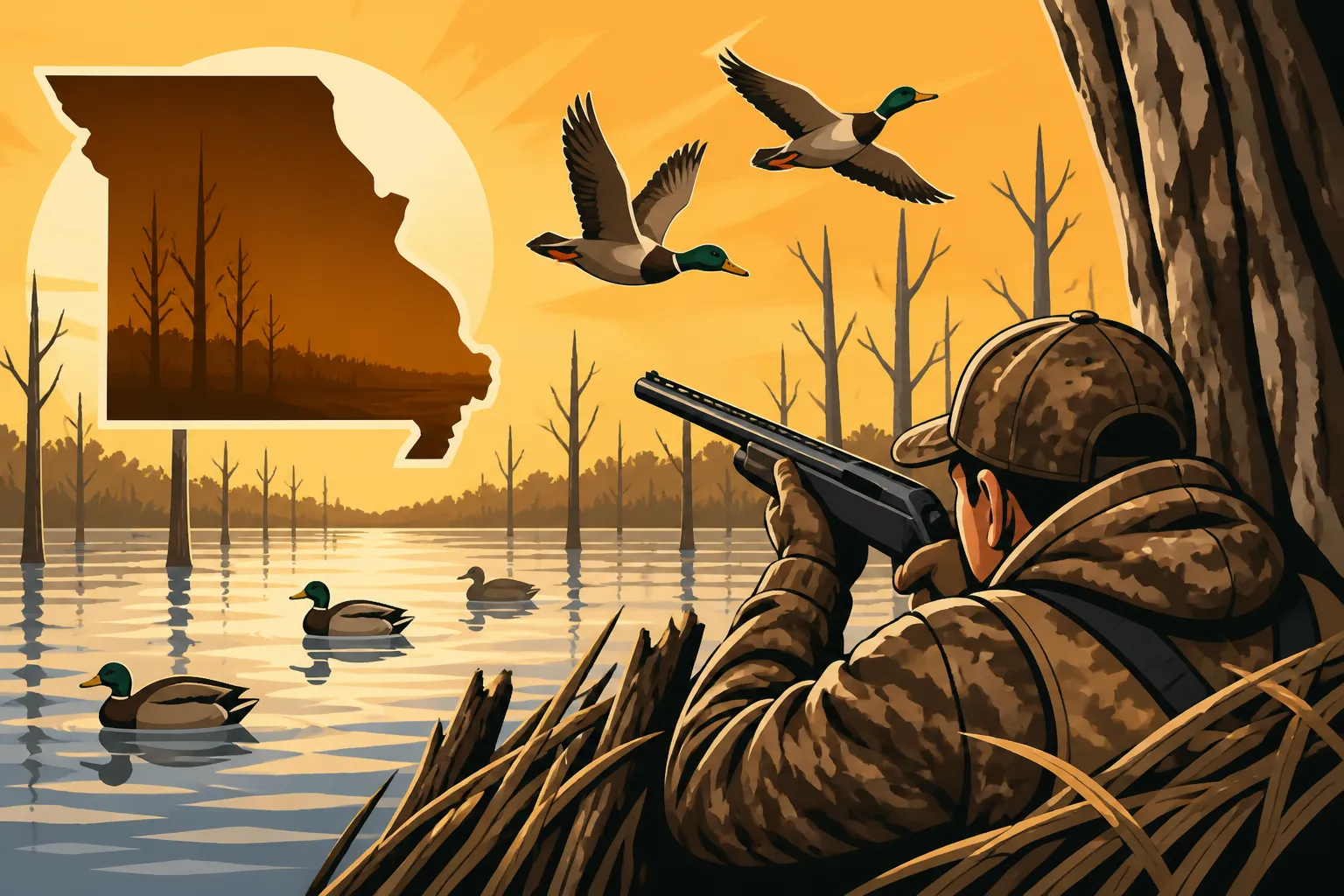
Flooded timber duck hunting in Missouri, for those who truly love it, is an experience unlike any other. But let's be honest, it can also be one of the most maddeningly frustrating endeavors a duck hunter can undertake. You’ve probably spent hours slogging through icy water, set a perfect spread, only for ducks to zip by high above the canopy or land just out of range in a thicket you couldn't access. It’s a specialized game that punishes impatience and rewards deep understanding of this unique environment. This comprehensive guide is here to unravel the mysteries of Missouri's flooded timber, offering proven tactics to help you consistently put more ducks in your strap amidst the trees.
Understanding Missouri's Flooded Timber Ecosystem
Hunting ducks in flooded timber isn't just about finding water and throwing out some decoys. It's about understanding a complex, dynamic ecosystem where subtle changes can mean the difference between limits and an empty game strap. Missouri's timbered wetlands, whether they're natural bottomland sloughs along the mighty Mississippi and Missouri Rivers or managed conservation areas, present a unique set of challenges and opportunities. The key is to think like a duck – what are they looking for, and why?
The Dynamic Nature of Water Levels
One of the biggest factors that dictates duck movement and hunting success in Missouri's flooded timber is water level. It's a constant dance with nature, often driven by rainfall, river stages, or the careful management plans of the Missouri Department of Conservation (MDC) on public lands. When the water first starts to creep into the timber, it often brings with it fresh food sources that were previously inaccessible, like acorns, invertebrates, and even waste grain from adjacent crop fields. This initial flooding can be a magnet for ducks.
However, too much water, or rapidly rising water, can disperse ducks widely and make certain areas less appealing. Conversely, falling water can pull ducks out of the timber and concentrate them into shrinking pools or adjacent open water. Experienced timber hunters are constantly monitoring river gauges, rainfall forecasts, and local reports. You’ll often hear hunters say, "The water's too high, they're everywhere!" or "It's drying out, they're piling into that one hole." It's not just a casual observation; it's a critical piece of the puzzle. Understanding this ebb and flow is paramount. A good mapping tool like GoHunt can provide topographic overlays that help predict where water might concentrate or drain as levels change, giving you a serious edge in your planning.
Identifying Key Tree Species for Ducks
Not all flooded timber is created equal for ducks. While any standing water in trees might hold a few birds, certain tree species are far more attractive because they offer critical food sources or ideal roosting cover. In Missouri, bottomland hardwoods are king. This means focusing on areas dominated by various species of oaks, especially pin oaks, Nuttall oaks, and willow oaks, which drop highly desirable acorns that dabbling ducks like mallards absolutely devour. The high fat content in acorns makes them an invaluable energy source, especially as winter deepens.
Beyond oaks, other valuable tree species include pecans, hackberry, and even some species of cypress in the southeastern reaches of the state. These trees provide not only food but also vital cover and shelter from the wind and predators. Younger timber or areas with dense undergrowth can offer excellent security cover, especially for birds looking to loaf and digest after feeding. When you're Scouting Missouri Public Land Before Season, make note of these tree species. It’s not just about finding water; it’s about finding water with the right trees. If you’re in a purely sycamore and cottonwood stand with little understory or acorn production, your chances of consistently finding ducks might be lower than in a diverse oak flat.
Reading the Habitat for Duck Sign
Ducks are creatures of habit, and they leave clues. Learning to "read" the flooded timber for these signs is a skill that takes time but pays off handsomely. The most obvious sign is fresh droppings on logs, stumps, or shallow water. Fresh droppings, especially if they're numerous, tell you that ducks have been actively feeding and resting in that spot recently. Muddy water in areas where there shouldn't be much current can also indicate active feeding, as ducks dabble and churn up the bottom.
Feathers, especially primary flight feathers or small downy feathers, are another excellent indicator. A concentration of feathers suggests a consistent roosting or loafing area. Sometimes you’ll even find a few breast feathers from a duck preening. Look for "feeding holes" – areas of disturbed bottom where ducks have been actively grubbing for seeds and invertebrates. These are often small, irregular depressions in the mud. Less obvious, but equally important, is the presence of natural forage. Are there abundant acorns on the water or decaying leaves, suggesting a rich invertebrate population? Are there smartweed or other moist-soil plants visible in shallower areas? All these elements come together to paint a picture of where ducks are, what they’re doing, and where they might return.
Scouting Strategies for Timber Ducks
You wouldn't go deer hunting without scouting, and the same absolutely applies to flooded timber duck hunting. In fact, it's even more critical here because the subtle nuances of water depth, food availability, and duck behavior are constantly shifting. What was a hot spot last week might be barren today due to a minor change in water level or pressure. Good scouting isn't just a recommendation; it's the foundation of success in the timber.
Pre-Season Reconnaissance and Satellite Maps
The real work for flooded timber begins long before the first duck season opens. Start with satellite imagery. Tools like GoHunt or other detailed mapping apps are invaluable. Look for low-lying areas, old oxbows, and timbered sloughs adjacent to major river systems or agricultural fields. Identify the distinct differences between mature timber and younger growth. Try to spot areas within the timber that appear to have a higher density of oaks or other mast-producing trees. Pay attention to ditches, sloughs, and any features that might funnel water in and out, as these often create natural travel corridors for ducks.
Mark potential access points, parking areas, and routes through the timber. What looks like an easy walk on a map can be a maze of fallen logs, thick brush, and deep holes in person. During the late summer or early fall, when water levels are typically low, is the perfect time for a boots-on-the-ground recon mission. Walk the areas you've identified on your maps. Confirm tree species, look for old duck sign, and, most importantly, find the subtle changes in elevation, old logging roads, or clearings that might become ideal hunting holes when flooded. This pre-season groundwork saves you untold frustration and wasted hunts when the season finally arrives.
In-Season Scouting: Looking and Listening
Once the season starts, your scouting needs to become even more dynamic. Drive-by scouting at dawn or dusk can tell you a lot. Look for ducks flying into or out of timber blocks, paying attention to flight lines. Are they working a particular section of trees? Are they pitching into a specific opening? Listen for excited duck chatter coming from the timber. The sound of happy mallards signifies they're comfortable and feeding. These observations, though quick, provide real-time intelligence.
For a more in-depth approach, consider a "silent scout" during the middle of the day. If hunting pressure allows, slowly work your way into areas you suspect might hold ducks. Move quietly, wearing waders that allow you to slip through the water with minimal disturbance. Look for fresh duck sign – droppings, feathers, and feeding activity. Listen for subtle quacks or splashes. The goal isn't to blast birds out of the timber, but to locate their current preferred areas. Sometimes, you'll find a honey hole of birds that have been undisturbed, and then you can plan your next hunt around that discovery. This in-season scouting is what separates consistently successful timber hunters from those who just randomly pick a spot.
Using Waterfowl Reports and Local Intel
While nothing beats your own boots and eyes, staying abreast of regional waterfowl reports and local word-of-mouth can be incredibly helpful. The Missouri Department of Conservation (MDC) often provides weekly waterfowl reports for many of its managed wetlands, detailing water levels, bird numbers, and sometimes even species composition. These reports, while general, can give you a broad idea of migration patterns and overall bird presence in an area. Remember to cross-reference with Missouri Duck Season Dates by Zone and Missouri Duck Zone Boundaries to ensure your intel is relevant to your specific hunting area and time.
Beyond official reports, local bait shops, gas stations, and even online forums can be sources of valuable intel – just take everything with a grain of salt. Experienced hunters often pick up on subtle cues: "The main river is falling, so the sloughs are getting good," or "They're still hitting the acorns hard in the big timber west of town." These snippets can confirm your own observations or point you toward new areas to investigate. Sharing information with a trusted hunting buddy can also create a powerful network for staying on top of ever-changing duck movements.
Decoy Spreads and Calling Tactics
This is where the art of flooded timber duck hunting truly comes alive. It's not about throwing out dozens of decoys or blowing your call until your lungs give out. It's about subtlety, realism, and understanding how ducks naturally behave in a wooded environment. The timber dictates everything, from how your decoys sit to how your calls echo.
Timber-Specific Decoy Placement
Forget your vast open-water spreads; flooded timber demands a completely different approach to decoys. The goal here is intimacy and realism. You're trying to replicate a small group of contented ducks loafing and feeding in a tight opening. Too many decoys can look unnatural and cluttered in the timber, especially if your opening is small. A dozen to two dozen decoys, maybe even fewer, is often plenty. The mantra is quality over quantity.
Place your decoys in pockets, small openings, or around the base of trees where water might be slightly shallower. Create an "X" or "U" shape with your decoys, leaving a landing zone directly in front of or slightly downwind of your blind. This funnel encourages ducks to land right where you want them. Mix in a few feeders, sleepers, and uprights to create a natural, relaxed look. Don't be afraid to put a few decoys right up against tree trunks as if they're feeding in the shade. When setting out your Decoys for Missouri Green Timber, remember that visibility is limited by the trees, so focus on creating a realistic, inviting scene within the immediate shooting lane. A common mistake is to spread decoys too widely; keep them grouped to give the impression of a safe, concentrated feeding area.
The Art of Timber Calling
Calling ducks in flooded timber is a nuanced skill. The dense trees absorb sound, and calls echo differently than they do over open water. This means you generally need to call softer and more subtly, especially when ducks are close. Loud, aggressive calling can sound jarring and unnatural to birds in the woods. Think conversational, reassuring tones rather than high-pitched sales pitches.
Start with a soft greeting call or a few contented clucks and quacks. If ducks respond, mirror their intensity. If they're working, a soft feed chuckle and some quiet clucks are often all you need. The goal is to sound like happy ducks on the water, inviting others to join. Over-calling is a common mistake that will flare birds. Focus on realistic hen mallard sounds, as they are the predominant target in Missouri's timber. Practice your cadence and volume control. Understanding Duck Calling in Timber Versus Open Water is crucial here; it's a completely different playbook. While a powerful call might carry better in open fields, a more subdued, natural tone with a quality wooden duck call often works wonders in the close confines of the timber.
Motion Decoys and Jerk Rigs in the Trees
Motion is key, even in the timber, but it needs to be carefully employed. While a spinning-wing decoy (SWD) can be a powerful attractant, its effectiveness in thick timber can be limited due to visibility. Often, ducks won't see it until they're right on top of it, and if it's too bright or unnatural, it can cause them to flare. Some hunters use them sparingly, perhaps one well-placed spinner on the edge of an opening.
However, jerk rigs are a fantastic alternative for flooded timber. They create realistic ripples and subtle movement on the water, mimicking feeding ducks, and don't have the "unnatural" look some ducks associate with SWDs. A simple jerk cord running from your blind to a few decoys can make your spread come alive with gentle tugs. Place a few decoys on the jerk string, perhaps a feeder and an upright, to give the illusion of active dabbling. The key is subtlety. Just enough movement to catch a duck's eye and make your spread appear lively and inviting, without being overtly aggressive. You want them to think, "Hey, those ducks look comfortable; I'll join them."
| Call Type | Best Use in Timber | Sound Profile | When to Use | Pros | Cons |
|---|---|---|---|---|---|
| Puddle Hen | Versatile, foundational call | Soft clucks, quacks, subtle greetings | Approaching ducks, finishing birds, contented chatter | Highly realistic, non-threatening, great for close work | Can be hard to hear for distant birds |
| Feed Call | Mimicking feeding activity | Rapid, low-volume "tik-a-tik-a-tik" | When ducks are working, on the water | Creates realism, tells birds area is safe, very effective close | Overuse can sound unnatural, timing is crucial |
| Greeting/Come-back | Catching attention, turning high flyers | A series of 3-5 increasing quacks, moderate volume | Distant birds, turning birds away from another hole | Grabs attention, effective for initial engagement | Too loud can scare close birds, requires good control |
| Whistle | Pintail, wigeon, teal, wood duck (secondary) | High-pitched trills and peeps | Identifying species, adding diversity to calls | Can attract non-mallards, adds realism to mixed bag spread | Less effective for primary mallard attraction, not a standalone call |
| Coaxer/Lonesome | Final enticement for wary birds, solo ducks | Long, drawn-out single quack | Shy birds, trying to finish singles | Can be very effective on call-shy birds | Very situational, overuse is detrimental |
Setting Up Your Blind and Approaching Your Spot
The success of a flooded timber hunt often hinges on how well you conceal yourself and how quietly you get to your spot. Ducks in the timber are often more wary than those in open fields because they're in a more confined space and can pinpoint sound and movement more easily. Every rustle of leaves or splash of water can be amplified.
Natural Blinds Versus Portable Options
In flooded timber, the best blind is often no blind at all – or rather, a completely natural one. Utilize existing trees, downed logs, or thick brush to break up your outline. Look for a large tree with a dense canopy or a double-trunk that you can stand or sit between. The goal is to blend seamlessly with the environment. If you need a bit more concealment, strategically gather natural brush, fallen branches, or even dead leaves from around your immediate setup to fill in gaps in front of you or to your sides. Avoid drastically altering the natural landscape far from your spot, as this can create unnatural gaps that wary ducks will notice.
While portable ground blinds can be effective in some timber situations, they need to be brushed in extremely well. A pop-up blind sitting starkly in an otherwise natural environment can stick out like a sore thumb. If using one, be sure to cover it heavily with local vegetation to the point where it practically disappears. Often, a simple natural hide will offer better concealment and less bulk to carry through the water. Remember, ducks will be looking down into your hole, so overhead cover is just as important as front and side concealment.
Navigating the Timber Quietly
Getting to your spot in flooded timber is perhaps the most challenging and crucial aspect of the hunt. Every step can create noise, every wader splash can echo. The cardinal rule is slow and steady wins the race. Plan your route beforehand, identifying any deep holes, submerged logs, or thick patches of brush. Use your headlamp sparingly, and only to navigate obstacles; try to rely on moonlight or starlight if possible.
Walk with purpose but silently, lifting your feet rather than dragging them, and placing them down gently. If you're using a small boat or canoe, paddle quietly and avoid bumping into trees or stumps. A common frustration is thinking you're being quiet, only to have a flock of ducks flush 50 yards ahead of you because of a misplaced step. This is where a good pair of Waders for Missouri Flooded Timber with solid boot soles can make a big difference in traction and noise reduction. The quieter your approach, the less likely you are to spook birds already in your hole or alert those resting nearby.
Wind, Sun, and Shot Angles
These three factors are critical for setting up your timber hunt. Always, always set up with the wind at your back or quartering from your back. Ducks, especially mallards, almost invariably land into the wind. This puts them directly in front of your decoy spread and gives you the best shot angle as they cup their wings and commit. Ignore the wind direction, and you'll be shooting at ducks flaring off to the side or landing behind you, which is no fun.
Consider the sun's position. Early morning sun directly in your eyes can make it incredibly difficult to see incoming birds and aim effectively. Try to position your blind so the sun is behind you, illuminating the ducks as they approach. This gives you a clear view and prevents silhouetting. Finally, shot angles in the timber are often vertical, through small openings, or short-range. Be prepared for steep shots as ducks descend through the canopy. Practice shooting at various angles, and be mindful of your zone of fire to avoid shooting into trees or at unsafe angles. A good treestand or saddle setup can also provide a better vantage point in some areas, offering clearer shooting lanes and enhanced visibility for Treestand Setups in Hardwood Timber.
Essential Gear for Flooded Timber Success
Flooded timber hunting is tough on gear. The water is cold, the mud is deep, and the trees are unforgiving. Having the right equipment isn't just about comfort; it's about safety and efficiency, ensuring you can focus on the hunt itself rather than battling equipment failures or the elements.
Waders, Boats, and Transportation
Your waders are arguably the most critical piece of equipment for flooded timber. They need to be durable, comfortable, and warm enough for long hours in cold water. Chest waders are a must, as water depths can vary dramatically. Neoprene waders offer excellent insulation, while breathable waders, often worn with warm layers underneath, provide versatility for varying temperatures and are lighter for long walks. Make sure your waders fit well – too loose, and they'll chafe; too tight, and they'll restrict movement and circulation. Look for waders with reinforced knees and seats, as you'll be kneeling, sitting on stumps, and bumping into logs constantly.
For transporting gear and sometimes even hunters, a small, stable boat or canoe is often invaluable. A sneak boat, kayak, or flat-bottom Jon boat can get you into areas that are otherwise inaccessible, carry your decoys, and help you retrieve downed birds. Make sure your chosen vessel is quiet and easy to maneuver through tight timber. Many hunters also use a sturdy decoy sled or a game cart (if water levels allow) to haul gear, saving your back for the long haul.
Shotguns, Chokes, and Nontoxic Loads
When it comes to your shotgun, reliability is paramount. A 12-gauge shotgun is the standard, offering the versatility to handle various loads and situations. Both semi-automatics and pump-actions are popular choices. Semi-autos offer faster follow-up shots, which can be crucial for multiple birds flushing, but require diligent cleaning to prevent malfunctions in wet, muddy conditions. Pumps are arguably more reliable in harsh conditions, though slower for follow-up shots.
Choke selection is also important. Many timber shots are relatively close-range as ducks descend into the holes. A modified or even improved cylinder choke is often perfect for these situations, providing a good pattern density without being too tight for swinging through trees. A tighter full choke can be too restrictive and lead to missed birds at close range.
And, of course, nontoxic shot is legally required for all waterfowl hunting in Missouri. Steel shot is the most common and affordable option. However, for flooded timber, many hunters prefer alternatives like bismuth, tungsten, or various blended loads. These denser materials offer better energy retention and tighter patterns than steel at similar pellet sizes, which can be advantageous when shooting through small openings or at slightly longer ranges in the timber. While they come at a higher cost, the knockdown power can make a difference. Always check the Nontoxic Shot Rules on Missouri Wetlands before heading out.
Staying Warm, Dry, and Comfortable
Hypothermia is a real danger when hunting in cold, flooded timber. Layering is your best friend. Start with a moisture-wicking base layer (wool or synthetic, never cotton) to pull sweat away from your skin. Add insulating middle layers, such as fleece or down, for warmth. Your outer layer needs to be waterproof and windproof to protect against the elements. A good waterfowl jacket and pants, ideally in a camouflage pattern that blends with timber, are essential. Pay attention to your head, hands, and feet – these are where you lose the most heat. A warm hat, waterproof gloves, and thick wool socks are non-negotiable.
Beyond clothing, a small, waterproof dry bag for your electronics, spare gloves, and snacks is a good idea. A portable, waterproof seat cushion can make hours of sitting on a wet log or stump much more bearable. A thermos of hot coffee, tea, or soup can be a moral booster and a vital source of warmth on frigid mornings. Finally, don't forget a first-aid kit; accidents happen in remote, rugged terrain. Being prepared for the worst allows you to enjoy the hunt with peace of mind.
Disclaimer
Hunting is an inherently dangerous activity. This guide provides information for educational purposes only and does not guarantee success or safety. Always prioritize safety, adhere to all local, state, and federal hunting regulations, and respect wildlife. It is your responsibility to know and follow all applicable laws and to hunt ethically and responsibly.