Spring Turkey Calling in Missouri Timber
There's nothing quite like the sound of a spring gobbler hammering back at your call, especially when you're deep in the timber, where every rustle of leaves feels amplified. But let's be honest, chasing Missouri spring turkeys through the woods can be incredibly frustrating. Sometimes they gobble their heads off on the roost and then clam up at fly-down, or they hang up just out of range, playing hard to get. This guide is all about equipping you with the realistic calling strategies and timber-specific tactics you need to bring those wily Missouri gobblers within range, turning those challenging hunts into successes.
Understanding the Missouri Spring Gobbler in Timber
Hunting spring turkeys in Missouri's diverse timber, from the sprawling Ozark hardwoods to the smaller woodlots of the northern farm country, requires a deep understanding of their behavior. These birds aren't always predictable, and their reactions to calls can vary wildly depending on the time of day, hunting pressure, and their individual mood. Before you even think about putting a call to your lips, it helps to put yourself in their spurs, so to speak, and anticipate their movements throughout the morning.
Roosted Birds and Early Morning Movement
The pre-dawn hours are filled with anticipation, and for good reason: gobblers are often at their most vocal when they're still perched high in their roost trees. As the first hint of light paints the eastern sky, those initial "shock" calls from crows, owls, or even a distant coyote can often elicit a thunderous gobble. This is your cue. A gobbler on the roost is often eager to locate hens, making it a prime time to establish contact. However, the window for coaxing a bird off the limb and straight into your lap can be short. They'll often gobble aggressively, sometimes answering every subtle cluck or soft yelp you throw their way, but once their feet hit the ground, their priorities shift. They'll be looking for actual hens, or they might already have a few with them.
When targeting roosted birds, the key is to be in position well before fly-down. You want to be close enough to hear them clearly and for them to hear you, but not so close that you risk bumping them off the roost in the dark. A good rule of thumb is to set up 100-150 yards away, on a path you anticipate they'll use to travel after flying down. Your initial calls should be subtle, mimicking a hen just waking up – a few soft tree yelps, some sleepy clucks. The goal isn't to get them to gobble endlessly, but to let them know a hen is nearby. As fly-down approaches, you can increase the intensity slightly, perhaps adding a fly-down cackle to simulate a hen pitching off the roost. The ultimate goal is to convince him that you're an eager hen ready to meet him as soon as he hits the ground. Remember, a common frustration for many hunters is when a gobbler just flies down the opposite direction, often because he already has hens.
Mid-Morning Lulls and Locating Scattered Birds
Ah, the mid-morning lull. This is when many hunters throw in the towel, convinced the birds have gone silent for good. But often, it's just a shift in behavior. After the initial fly-down and breeding activity, gobblers that were with hens might now find themselves alone as those hens wander off to nest. These "lone wolf" gobblers are often the most callable during this time. They're still looking for companionship, but they're usually much quieter and more cautious. This means your calling strategy needs to adapt from the eager pre-dawn approach.
Instead of staying put and waiting, the mid-morning is often a fantastic time for active scouting and employing locator calls. This is where you might employ a bit of a run-and-gun approach, moving through the timber, stopping every 100-200 yards to let out a series of crow calls, owl hoots, or even a sharp hawk cry. The idea isn't to sound like a hen, but to provoke a "shock gobble" from a tom that wouldn't respond to a hen call. If you get a response, you can then move in, set up, and switch to soft hen talk. Pay close attention to subtle sounds – a distant gobble, the rustle of leaves, or even the soft purr of a contented hen. Sometimes, these mid-morning birds will surprise you and come in silently, so always be ready. Detailed mapping on platforms like GoHunt can be invaluable here, helping you identify prime travel corridors or hidden benches where a mid-morning gobbler might be cruising, allowing you to plan your movements efficiently.
Afternoon Activity and Re-engaging Quiet Gobblers
While not as popular as the early morning hunt, the afternoon can be incredibly productive for Missouri turkey hunters, especially those with patience. After a morning of chasing hens or being chased by hunters, gobblers often regroup, feed, and sometimes become more receptive to calls as the day winds down and hens head back to their nests. The pressure is often significantly lower in the afternoon, both from other hunters and from the birds' own internal clock. This can make for a more relaxed and, surprisingly, often more successful hunt.
For afternoon hunts, consider areas where birds might feed or stage before heading back to their evening roosts. Food plots, creek bottoms, or timbered ridges adjacent to fields can be excellent choices. Your calling approach should generally be less aggressive than the morning, focusing on soft, contented hen sounds. Think purrs, soft clucks, and a few scattered yelps. These birds are less likely to respond to shock calls and more likely to be drawn in by the sound of a lone hen simply going about her business. Sometimes, a gobbler you've worked in the morning, or even one that hung up, might be much more agreeable to your calls later in the day. It's about presenting a non-threatening, alluring presence that gently coaxes them into investigating, rather than demanding a response. This strategic approach can often pay dividends when the morning has been frustratingly quiet, giving you a second chance at success.
Essential Calls for Missouri Timber Turkeys
Walking into the Missouri woods without a diverse array of turkey calls is like bringing a butter knife to a steak dinner – you might get by, but it won't be pretty, and you'll miss out on the best parts. Mastering various calls is crucial because gobblers, much like people, have different preferences and moods. What works one day or for one bird might not work the next, especially in the thick timber where sound can play tricks on both you and the turkey.
Mastering Locator Calls to Find Them First
Before you can talk to a turkey, you have to find him. That's where locator calls come in, and in Missouri's varied timber, they are absolutely essential. These aren't hen or gobbler sounds; instead, they mimic other common wildlife sounds that often elicit a "shock gobble" from a tom. A gobbler will often gobble at any loud, sudden noise, revealing his location, and then you can move in closer with hen calls.
The most popular locator calls include the owl hooter, the crow call, and the coyote howler. An owl hooter is particularly effective in the pre-dawn darkness and at dusk, as gobblers frequently respond to real owls. A series of deep "who-cooks-for-you-all" hoots can often wake up a quiet tom. As daylight breaks, the crow call becomes incredibly useful. Crows are noisy, and turkeys often associate their calls with non-threatening activity. A loud, sharp "caw-caw-caw" can frequently get a gobbler to announce himself. Finally, a coyote howler, while more aggressive, can also be very effective, especially in areas where coyotes are prevalent. The challenge with locator calls is knowing when to use them and when to be silent. Overdoing it can make a gobbler wary. The best strategy is to move slowly through the timber, stop in a likely spot (like a ridge top or creek bend), and let out a few short, sharp calls, then listen intently for a minute or two before moving on. Quality calls from brands like Primos, Flextone, or Knight & Hale are readily available and can make a big difference in sound realism and volume.
The Versatility of Mouth Calls
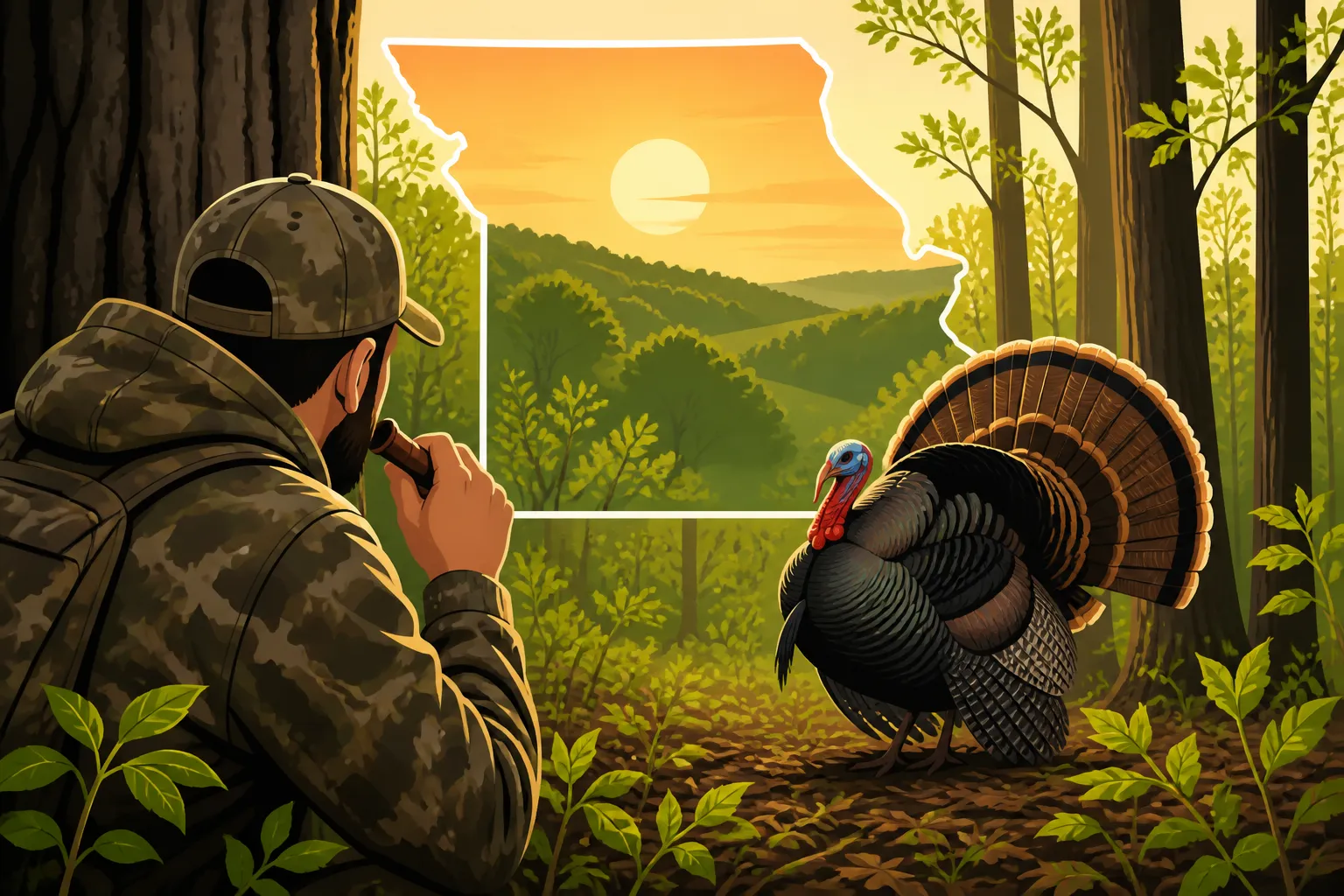
If there's one call that every serious Missouri turkey hunter should master, it's the mouth call, also known as a diaphragm call. These small, horseshoe-shaped calls fit in the roof of your mouth and allow for hands-free operation, which is an enormous advantage when a gobbler is finally closing the distance. You can keep your gun shouldered and ready, subtly cluck or purr, and make those crucial last-second adjustments without any detectable movement.
Mouth calls come in a bewildering array of cuts and reed configurations – from single reed to triple reed, batwing, ghost cut, combo cut, and more. Each type produces slightly different tones and makes certain sounds easier to achieve. For beginners, a simple two-reed call is a great starting point for learning the basic yelp, cluck, and purr. The key to mastering a mouth call is practice. Consistent, dedicated practice will help you develop the muscle memory and breath control needed to produce realistic sounds. Start with a basic yelp, focusing on a clear, distinct "yellp, yellp, yellp" cadence. Once you have that down, work on clucks and soft purrs, which are vital for close-in work. The versatility of a mouth call makes it ideal for run-and-gun turkey tactics in the Missouri Ozarks, allowing you to move, set up quickly, and call without fumbling with other equipment. There's a learning curve, no doubt, but the reward of a gobbler strutting into your setup purely from your hands-free calling is unparalleled.
Pot Calls and Box Calls for Realistic Sounds
While mouth calls offer hands-free convenience, pot calls (also known as slate or friction calls) and box calls excel at producing exceptionally realistic and often loud sounds that can carry through dense timber, making them excellent choices for reaching distant birds or drawing attention in windy conditions. Both require some hand movement, so they are typically used when a bird is further out and before he's close enough to pinpoint small movements.
Pot calls consist of a circular pot, typically made of slate, glass, or aluminum, and a striker, usually made of wood or carbon. By rubbing the striker across the surface of the pot, you can create a wide range of hen vocalizations, from soft purrs and clucks to aggressive yelps and cuts. Different striker materials and pot surfaces produce different tones, so many hunters carry a few combinations to vary their sound. The key to a realistic pot call is consistent pressure and an understanding of how to make the striker "break" over the edge of the pot to get that distinctive turkey sound. They are incredibly versatile and relatively easy to learn, making them a great option for hunters who struggle with mouth calls.
Box calls, with their hinged lid and resonating chamber, are often considered the easiest calls to learn and can produce some of the most authentic yelps, clucks, and cutting sounds right out of the box. By scraping the lid across the lip of the box, you mimic a hen's vocalizations. They are excellent for loud, long-range calling, making them perfect for getting a gobbler's attention across a large timbered hollow or drawing him off the roost. The main drawback for both pot and box calls is that they require two hands (or at least one hand and a steady surface for a pot call), which means putting your gun down or making noticeable movement when a bird is close. However, for those initial attention-grabbing calls, or when a bird is hung up at a distance, their realistic volume and tone are hard to beat. Just remember to keep them dry, as moisture can dramatically affect their sound.
Strategic Calling Approaches in Missouri Timber
Calling a Missouri gobbler in timber isn't just about making turkey sounds; it's about understanding the psychology of the bird and playing a strategic game of cat and mouse. The dense woods offer both challenges and opportunities, requiring hunters to adapt their calling intensity and style to the situation. Knowing when to be soft and subtle, when to be aggressive, and how to integrate decoys into your calling sequence can make all the difference between a gobbler that walks away and one that walks into range.
Soft Calling and Subtlety for Close-Range Engagements
When a gobbler is close, perhaps within 100 yards, or when you're dealing with a wary bird on public land, subtlety becomes your best friend. Loud, aggressive calling at close range can easily spook a tom, especially if he's seen a lot of hunting pressure. The goal here isn't to get him to gobble his head off, but to convince him that a lone, contented hen is nearby and simply waiting for him.
This is the time for soft clucks, contented purrs, and the occasional soft, inquisitive yelp. Think of it as inviting him over for coffee, not yelling across the yard. A soft series of three to five clucks followed by a brief purr can be incredibly effective. Use a mouth call for this, as it allows you to keep your hands on your gun and remain absolutely still. The less movement you make, the better. Often, these soft calls will make a gobbler strain his neck, fan his tail, and slowly work his way in, trying to pinpoint the hen he hears. If he gobbles in response to your soft calls, resist the urge to immediately gobble back loudly. A soft cluck or a purr might be all it takes to reassure him and bring him the rest of the way. The biggest mistake at this stage is to over-call; often, less is truly more when a bird is on the verge of committing.
Aggressive Calling to Challenge and Provoke
Sometimes, subtlety just isn't cutting it. You might encounter a dominant gobbler that's "henned up" with real hens and isn't responding to polite requests, or a bird that's simply being stubborn and hanging up at a distance. In these situations, turning up the volume and embracing aggressive calling can sometimes be the only way to break through and provoke a response. This tactic is about challenging the gobbler, making him think another hen is being stolen, or that a rival tom is moving in.
Aggressive calling includes loud, sharp cutting, fast and excited yelping, and sometimes even a gobbler call or a growl to imitate a dominant tom. A fly-down cackle, especially if you're simulating a hen pitching off a tree just out of sight, can also be very provocative. The idea is to make enough noise to get his attention and, hopefully, trigger his competitive instincts. For aggressive calling, a pot call or a box call can be excellent due to their volume and realism, though a skilled mouth caller can certainly achieve a high level of intensity. When using aggressive calls, listen closely to the gobbler's response. Is he gobbling harder? Strutting more? If he sounds like he's getting fired up, keep at it, but be prepared for him to come in hot and fast. However, there's a fine line between provoking and spooking, so use this tactic judiciously, especially on heavily hunted public land. It's often a last-ditch effort, but sometimes, it's the only thing that works.
Decoy Integration with Calling Sequences
While calling alone can be effective, pairing your vocalizations with decoys, especially in the more open timber of Missouri, can be a game-changer. Decoys provide a visual cue that can seal the deal for a hung-up gobbler, giving him a specific target to approach and distracting him from your position. However, proper placement and understanding when to use them are critical.
For timber hunting, a single hen decoy, or a hen and jake (or submissive tom) combo, tends to be most effective. A jake decoy can really tick off a dominant gobbler, making him march straight in to assert his dominance. When setting up, always place your decoy(s) in an open spot where the gobbler can see them from a distance, but critically, beyond your anticipated shooting lane. The goal is for the gobbler to focus his attention on the decoy, not on you. If using a jake or tom decoy, position it so the gobbler approaches it from the front, offering you a broadside shot as he confronts the "intruder." The decoy should be about 20-25 yards from your position, with the gobbler ideally coming to a stop between the decoy and you. Your calling should draw his attention, then the visual of the decoy should pull him the rest of the way. For example, if you're making soft hen yelps and clucks, and a gobbler sounds like he's 100 yards out, he'll likely be scanning for the hen making those sounds. When he sees your decoy, it often cements his decision to commit. This is where scouting intelligence, perhaps using tools like GoHunt to mark potential setup locations with good visibility, can truly pay off, helping you decide where to place your decoys for maximum effect. Always remember to consider safety, especially on public land; don't carry decoys in the open without hunter orange, and be sure of your target.
Setting Up for Success in Timber Environments
You can be the best turkey caller in the world, but if your setup is poor, you'll still go home empty-handed. In Missouri's timber, where visibility can be limited and terrain varied, choosing the right ambush point is paramount. It’s not just about hiding; it’s about creating a scenario where the gobbler feels comfortable approaching, and you have a clear shot.
Reading Terrain for Optimal Ambush Points
Missouri's timber, particularly in areas like the Ozarks, is rarely flat. It's a landscape of rolling hills, deep hollows, ridge saddles, and creek bottoms. Each of these features can be either a great asset or a major hindrance to your setup. Learning to read the terrain and understand how turkeys use it is crucial for setting up your ambush point.
When selecting a spot, always prioritize good back cover. A wide tree trunk or a thick brush pile behind you will break up your outline and make you practically invisible, even to a keen-eyed gobbler. Turkeys have incredible eyesight, and they will pick up on any unnatural shapes. Look for natural funnels where turkeys are likely to travel, such as a narrow ridge connecting two larger hills, the bend of a creek bottom, or a subtle saddle in a ridge line. These are often primary travel routes. Setting up on a bench above a creek or in a small clearing within a timbered hollow can provide excellent visibility and natural cover. Consider where the gobbler will likely appear and ensure you have clear shooting lanes in that direction. Avoid setting up in dense brush that will impede your swing or vision. A gobbler will often approach from higher ground to survey his surroundings, so if you can set up slightly below him with good visibility, it can be advantageous. Always try to pick a spot where the gobbler has to come into your effective shooting range before he can fully pinpoint your location.
Concealment and Movement Considerations
Once you've chosen your optimal ambush point, the next critical step is maximizing your concealment and minimizing any movement. Turkeys are notorious for their sharp eyesight, often spotting the slightest twitch or unnatural outline. Your camouflage needs to be effective, but even the best camo won't save you if you're fidgeting.
When settling in, ensure you're truly blended into your surroundings. Break up your outline against a tree trunk that's wider than your shoulders, or nestle into a thicket. Use natural shadows to your advantage. Once you start calling, or even just listening, try to become one with the environment. Resist the urge to peek over that log or adjust your seating position. Even a slow, deliberate movement to shift your gun can be enough to spook a wary gobbler. If you absolutely must move, wait until the gobbler's head is behind a tree or he's out of sight, or when he's gobbling loudly (as the sound often makes them close their eyes briefly). This is where the hands-free advantage of a mouth call really shines, allowing you to manipulate sounds without revealing your position. Remember that the final approach of a gobbler is often silent; he might appear out of nowhere, so constant vigilance and absolute stillness are non-negotiable.
Adjusting Setups for Hung-Up Gobblers
Every turkey hunter has experienced it: the gobbler that's fired up, gobbling at every call, but just won't commit. He's "hung up," usually at 60-80 yards, just out of effective shotgun range, often strutting back and forth, expecting you, the "hen," to come to him. This is one of the most frustrating scenarios in turkey hunting, and it requires strategic thinking and often, a willingness to adjust.
When a gobbler hangs up, your initial reaction might be to call louder or more aggressively, but this often makes things worse. He's already heard you; now he's waiting. The first thing to try is a period of silence. Go completely quiet for 5-10 minutes. Sometimes, the lack of a response makes him curious enough to take those last few steps. If that doesn't work, try soft, contented purrs or subtle clucks – make him think you're losing interest and might be walking away. If he still won't budge, and you have enough cover, a bold move might be necessary: a slight repositioning. This involves slowly and quietly moving 20-30 yards to either side or even slightly forward (if the terrain allows for complete concealment). The goal is to make him think the hen has moved. This can sometimes be enough to trick him into moving the last bit to re-establish visual contact. Another tactic, if you're sure no other hunters are in the area, is to aggressively "fan" or "reap" a decoy, quickly raising it and shaking it. This can often make a hung-up tom charge in, thinking another gobbler is trying to steal his hen, but this is a highly aggressive and potentially risky tactic that requires extreme caution and awareness of your surroundings. For those moments when a gobbler just won't come closer, a detailed map from a service like GoHunt can help you plan a subtle repositioning route through the timber, avoiding noise and maintaining concealment.
Adapting Calls to Weather and Hunting Pressure
Missouri's spring weather is famously unpredictable, swinging from warm and sunny to cold and rainy in a matter of hours. This, combined with varying levels of hunting pressure across public and private lands, means that a one-size-fits-all calling approach simply won't cut it. To consistently bring home a bird, you need to be a chameleon, adapting your tactics to the conditions.
Calling in Rain, Wind, and Fog
Weather conditions significantly impact how turkeys behave and how sound travels through the timber. What works on a calm, clear morning will likely fail during a blustery day or a misty drizzle.
- Windy Conditions: Wind is arguably the biggest challenge for turkey callers. It makes it hard for you to hear gobblers, and even harder for them to hear you. In windy timber, you need to call louder and more frequently to cut through the noise. Pot calls and box calls, with their inherent volume, become invaluable here. Position yourself so the wind carries your call towards the direction you expect birds to be. Also, remember that turkeys will often seek shelter from strong winds, so focus your efforts in natural draws, protected hollows, or on the leeward sides of ridges. They'll also be less likely to fly down into strong winds.
- Rainy Conditions: Light rain or a drizzle often makes turkeys quieter and less active, but they don't disappear. During a steady rain, turkeys tend to stay on the roost longer or hunker down. Your calls should be softer and more persistent. Consider using calls that aren't negatively affected by moisture, like some mouth calls or waterproof box calls. After a rain shower, when the woods are still dripping, turkeys often become quite vocal, as the dampness makes sounds carry exceptionally well. This can be a prime time for aggressive calling, as birds feel more secure.
- Foggy Conditions: Fog can be eerie and disorienting, but it can also offer a unique advantage. Sound tends to carry and echo differently in fog, sometimes making your calls seem more distant or diffused. Use moderate volume and listen intently for responses. Turkeys often become more cautious in fog, relying more on their hearing than sight. This means your sound quality needs to be top-notch, and your movements absolutely minimal. The low visibility also means you need to be extra vigilant about safety, confirming your target before taking a shot.
Handling Heavily Pressured Public Land Birds
Missouri boasts incredible public land opportunities, but with that comes increased hunting pressure. Turkeys on these areas quickly become "educated" – they've heard every call in the book, seen countless decoys, and experienced the disappointment of a setup that didn't pan out. Calling these birds requires a completely different mindset.
Forget aggressive, conventional calling. Instead, focus on subtlety, patience, and uniqueness. Use soft, non-committal clucks and purrs, mimicking a hen simply going about her day, rather than a frantic one. Employ long periods of silence between your calling sequences. Let the gobbler get curious and make the move. Consider using less common calls, like a kee-kee run, or experimenting with the cadence of your yelps to sound slightly different from the parade of calls he's heard all season. Moving deeper into the timber, or targeting less accessible areas, where other hunters might not venture, can also increase your chances. This often means Hunting Pressure on Missouri Public Ground is a factor, and scouting areas others walk past is key. Often, these birds will come in silently, so constant vigilance and readiness are crucial. Sometimes, the best call is no call at all – just being there, still and silent, and letting the bird come to you.
Mid-Season Strategies for Vocal and Silent Birds
The spring turkey season in Missouri spans several weeks, and turkey behavior, especially their vocalizations, changes dramatically from the early days to the later weeks. Your calling strategy needs to evolve with the season. Missouri Spring Turkey Season Dates show a long window, allowing for various approaches.
- Early Season (Opening Weeks): Gobblers are often still very much in breeding mode, eager to find hens. They're typically more vocal and more responsive to aggressive calling. If they don't have hens, they might come running to your yelps and cuts. The challenge is often that they do have hens, making them tough to pull away. This is when aggressive cutting and challenging calls might work best if you know he's alone, or persistent calling if he's henned up, hoping to pull him off his real hens.
- Mid-Season (Peak Breeding): This is often when gobblers are at their most active but also most likely to be with hens. They might gobble a lot, but they'll be hard to pull away. This is when you often encounter the "hung-up" gobbler scenario. You need to be patient, subtle, and perhaps use decoys more effectively. If the gobbler is henned up, trying to get the real hen to come to you (which will often bring the gobbler with her) can be a good strategy – soft clucks and purrs aimed at the hen can sometimes work.
- Late Season (Post-Breeding): As the season winds down, many hens are on their nests, and gobblers might find themselves alone and lonely. These can be some of the most callable birds of the season. They've often been pressured and are wary, so soft, subtle calling is usually best. However, they're often desperate for companionship, and a persistent, soft hen might finally bring them in. This is also when you might encounter When Missouri Gobblers Go Quiet, making locator calls and patience even more important. Don't be afraid to try some desperate "lost hen" sounds.
Common Calling Mistakes and Troubleshooting
Every turkey hunter makes mistakes. It's part of the learning process. But some mistakes are more common, and more detrimental, than others, especially when it comes to calling. Recognizing these pitfalls and having a plan to troubleshoot them can dramatically improve your success rate in Missouri's timber.
Over-Calling and Spooking Birds
This is, hands down, the most common and often the most frustrating mistake turkey hunters make. We hear a gobbler, get excited, and then proceed to blast him with every call in our arsenal. The result? He either shuts up, hangs up, or worse, walks away entirely. A gobbler wants to find the hen; he doesn't need to be serenaded endlessly.
The "less is more" principle is golden in turkey hunting. Once a gobbler has responded and is actively working your way, scale back your calling significantly. A few soft clucks or purrs to reassure him, or an occasional soft yelp, is usually all that's needed. Think of it as inviting a date; you don't keep texting them every minute once they're on their way. If he stops gobbling, don't immediately crank up the volume. Give him time. He's probably still coming, but he's listening and looking. The best advice is to make him want to come find you. If he's already gobbling to your calls, you've done your job; now it's his turn to move. Over-calling can easily tell him, "Hey, that hen is stationary and desperate, I'll just wait here," or worse, make him suspicious of your overly enthusiastic and unnatural demeanor.
Poor Sound Quality and Unrealistic Calling
We've all heard it: that "turkey call" that sounds more like a dying cat or a squeaky gate. While sometimes a desperate gobbler might respond to anything, especially early in the season, consistently bringing in wary Missouri toms requires realistic, convincing vocalizations. Poor sound quality is a major turn-off for turkeys.
The key to realistic calling is practice. Spend time with your calls, not just in the truck on the way to the woods, but at home. Listen to real turkey sounds – there are countless videos and audio clips online of actual hens yelping, clucking, and purring. Try to mimic those sounds. Record yourself and play it back; you'd be surprised how different you sound to yourself versus what a recording picks up. Pay attention to cadence, tone, and volume. A good yelp isn't just a sound; it has a distinct rhythm. A cluck needs to be sharp and singular, not a drawn-out squawk. If your calls sound shrill, inconsistent, or simply "off," a gobbler will know it. Don't be afraid to experiment with different calls and strikers; sometimes, a particular combination just "clicks" for you. Investing in high-quality calls and dedicating time to mastering them will pay dividends tenfold, making your efforts sound like a real hen, not a novice hunter.
Dealing with Hung-Up Gobblers and Following Hens
The hung-up gobbler is the bane of every turkey hunter's existence. He's 70 yards out, strutting, gobbling, and showing off, but he simply won't close that last distance. Equally frustrating is the gobbler that's with a hen (or several hens) and just won't leave her to come to your calls. These are classic timber challenges that require patience and often, a change of tactics.
For the hung-up gobbler, after trying silence and soft calls, consider a stealthy repositioning. If the terrain offers enough cover, slowly and quietly move 20-30 yards to the side, creating a new angle. This can make him think the hen has moved, often prompting him to take those crucial few steps to re-engage. Another tactic, if you're sure of your surroundings and no other hunters are present, is to mimic a jake or gobbler approaching. A few subtle gobbler yelps or a jake growl might make the dominant gobbler charge in to defend his territory.
For gobblers with hens, trying to "steal" the gobbler from his real hens with aggressive calling is often futile. Instead, try to call to the hens themselves. Mimic a dominant, bossy hen trying to pull the real hens away from the gobbler. If you can convince the real hens to come to you, the gobbler will almost always follow. Use loud, sharp cutting and aggressive yelps directed at the actual hens. Patience is key here; sometimes you just have to wait them out, hoping the hens eventually wander off to nest, leaving the gobbler lonely and more susceptible to your calls. This is where pre-season scouting, perhaps using a detailed mapping app like GoHunt to understand the terrain and likely turkey movement patterns, can help predict where hens might lead a gobbler and allow you to set up accordingly.
Advanced Tactics and Ethical Considerations
Beyond mastering the basic calls and setups, there are advanced tactics that can turn a challenging hunt into a successful one, especially in Missouri's diverse timber. However, with advanced tactics, come increased responsibilities regarding ethics and safety. Turkey hunting is a privilege, and we must always uphold the highest standards.
"Run-and-Gun" Tactics in Large Timber Tracts
In vast expanses of Missouri timber, such as those found in the Mark Twain National Forest or large conservation areas, sometimes sitting still and waiting simply isn't the most effective strategy. This is where the "run-and-gun" approach shines. This aggressive tactic involves covering a lot of ground, stopping frequently to call, and moving quickly to a setup once a gobbler responds. It's especially effective when birds are scattered, less vocal, or when you're trying to locate a lone gobbler that might be cruising.
The essence of run-and-gun is efficiency. You move, you stop, you call, you listen. If no response, you move again. Use locator calls (crow, owl, coyote) to shock a gobble from a distant bird. Once you get a response, quickly but stealthily move towards the gobbler's location, ideally getting within 100-150 yards before setting up. Don't dawdle. The goal is to get in front of him or in his likely travel path before he moves too far. Set up quickly against a wide tree or in thick cover, and then transition to soft hen calls. Be prepared for a quick shot, as run-and-gun birds often come in fast and hot, or they might try to circle you. This tactic is physically demanding and requires a good understanding of the terrain, but it can be incredibly rewarding, allowing you to cover more ground and interact with more birds throughout the day. It's a hallmark of effective Run-and-Gun Turkey Tactics in the Missouri Ozarks.
Ethical Calling and Safety Reminders
As turkey hunters, we are ambassadors for our sport, and ethical behavior is paramount. The unique nature of turkey calling, where you are mimicking the animal, carries specific safety concerns that all hunters must be acutely aware of, especially in timber where visibility can be limited. Always prioritize safety above all else.
- Never Stalk a Sound: This is the golden rule of turkey hunting safety. If you hear a gobble, assume it's another hunter calling. Never stalk towards the sound. Always call a turkey to you. This simple rule prevents tragic accidents.
- Positive ID: Before taking any shot, be 100% certain of your target. Identify the bird as a legal gobbler and ensure no other hunter or protected species is in your line of fire. In Missouri, a legal bird must be a bearded turkey.
- Hunter Orange: While not always required when actively hunting from a blind or a stationary position for turkeys, it is highly recommended to wear hunter orange when moving through the woods, especially on public land. Stow it in your vest once you're set up, but put it back on if you move. Know Missouri Hunter Orange Rules and follow them diligently.
- Decoy Safety: If using decoys, never carry them uncovered. Use a hunter orange bag or vest when transporting them. Set them up carefully, always beyond your shooting lane, so that any approaching hunter would see the decoy first, not you.
- Call Responsibility: Be mindful of your calling, especially on public land. Avoid excessive or unrealistic calling that might annoy or confuse other hunters. Share the woods responsibly.
- Legal Shooting Hours: Always know and abide by the legal shooting hours for turkeys in Missouri. Generally, this means half an hour before sunrise to sunset, but always confirm current regulations.
Post-Harvest Care and Telecheck Requirements
Successfully calling in and harvesting a Missouri gobbler is a thrilling accomplishment. But the job isn't done once the bird is on the ground. Proper post-harvest care and adherence to legal requirements are crucial for respecting the animal and complying with regulations. This is a vital part of the hunting process, ensuring your hard-earned meal is handled properly and that the Missouri Department of Conservation (MDC) receives necessary harvest data.
First and foremost, immediately after the harvest, notch your permit. Missouri law requires you to notch the permit correctly before moving the bird. This signifies that the permit has been used. Next, you need to field dress your bird. This typically involves removing the entrails to help cool the carcass quickly, especially if the weather is warm. You can also pluck the breast feathers and remove the head and feet at this stage, though some hunters prefer to do this at home. The goal is to get the bird cooled down as rapidly as possible to preserve the meat quality. Carrying game bags can help protect the meat on the walk out.
Finally, and this is non-negotiable, you must Telecheck your bird. Missouri Turkey Telecheck Rules mandate that you Telecheck your harvest by 10 p.m. on the day of harvest. This can be done online through the MDC website, via the MO Hunting app, or by calling the toll-free Telecheck number. You will need your permit number and the date and time of harvest. Upon successful Telecheck, you'll receive a confirmation number that serves as proof of legal harvest and must remain with the bird until it reaches its final destination and processing. Failing to Telecheck your turkey is a serious violation, so make it a priority. This data is vital for wildlife biologists to monitor turkey populations and set future hunting regulations, ensuring healthy turkey flocks for generations to come.
Disclaimer
The information provided in this guide is for general informational purposes only and does not constitute legal advice or a substitute for official hunting regulations. Hunting laws and regulations in Missouri are subject to change. It is the responsibility of every hunter to review and understand the current Missouri Department of Conservation (MDC) regulations and statewide seasons and limits before heading afield. Always prioritize safety and ethical hunting practices.