Hunting Missouri Deer in Deep Snow
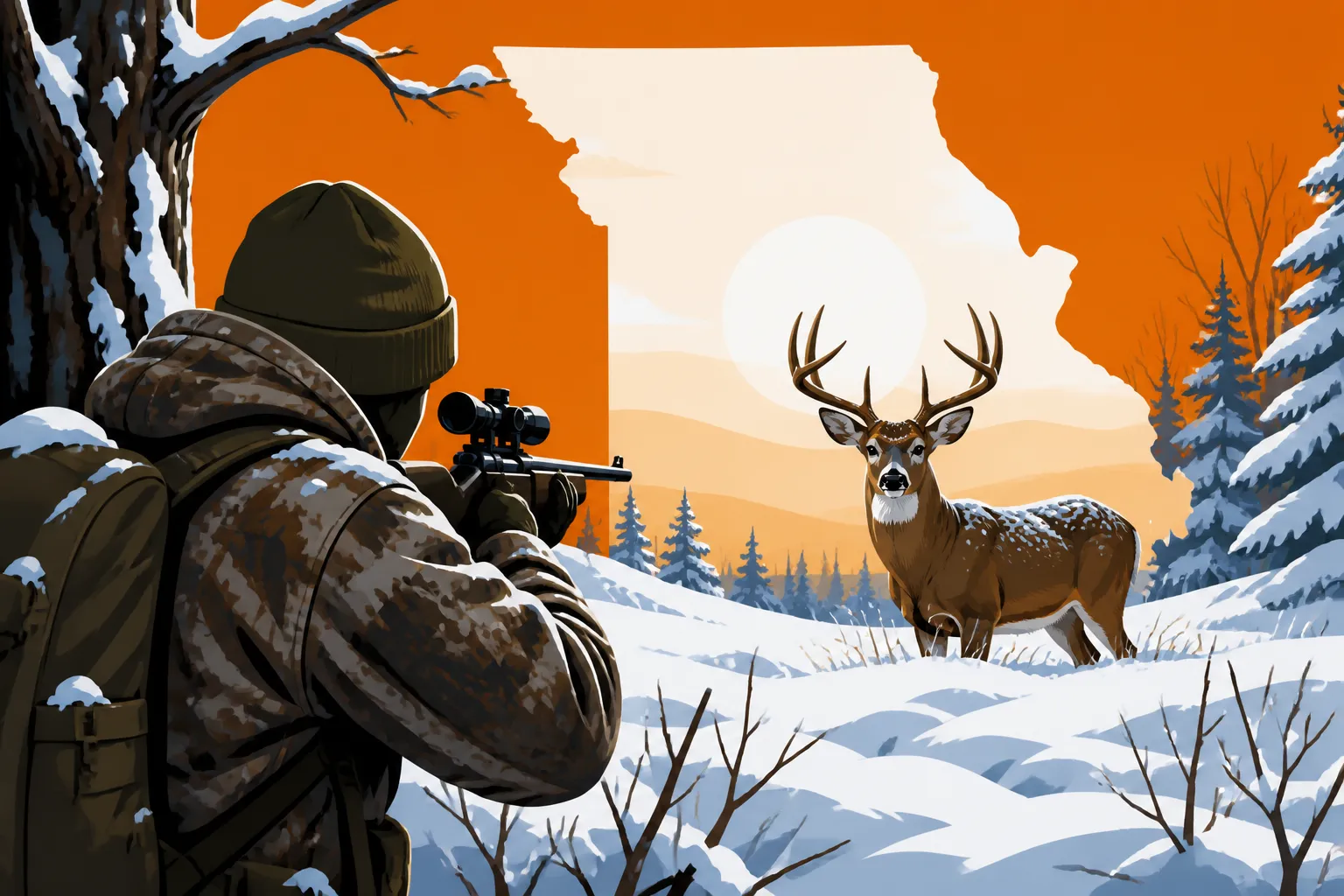
For most Missouri deer hunters, deep snow isn't a common concern. We get dustings, sure, and sometimes a few inches that stick around for a day or two. But truly deep, tracking-level snow? That's a rare beast, and when it arrives, it completely changes the game. It can be incredibly frustrating to figure out where the deer have gone or how to even navigate the woods, but this guide will walk you through the unique challenges and incredible opportunities of hunting Missouri whitetails when the landscape is blanketed in white.
Understanding Deer Behavior in Deep Snow
When Missouri is hit with deep snow, it's like a whole new world for the deer, and their survival instincts kick into overdrive. They're not just going to wander around willy-nilly anymore. Every step takes more energy, every calorie becomes precious, and their patterns shift dramatically to conserve what little they have. Understanding these fundamental changes is the first step to successfully hunting them in these conditions.
Why Deer Move Differently in Winter
The sheer physical effort of moving through deep snow is exhausting for deer. Imagine trying to run through waist-deep powder yourself; it’s not just difficult, it’s a full-body workout. Deer, with their relatively short legs compared to the snow depth, face a similar challenge. This means they're going to minimize their movements significantly. Instead of wide-ranging travel, they’ll create distinct, packed trails that lead from their bedding areas directly to essential food sources. These trails become superhighways for them, and you can bet other deer will use them too, as it’s far easier than breaking new ground. This focus on energy conservation means they're looking for the path of least resistance and the quickest route to sustenance and shelter.
Key Winter Food Sources
In heavy snow, many of the typical food sources deer rely on become inaccessible. Acorns might be buried too deep to paw through, and tender green browse could be completely covered. So, what are they eating? They turn to anything that offers concentrated nutrition and is relatively easy to get to. This often means woody browse – the tender tips of saplings and shrubs that poke above the snowline. Think sumac, honeysuckle, and young oak or maple shoots.
Crucially, in Missouri's agricultural regions, standing crops become goldmines. If a farmer hasn't harvested all their corn or soybeans, or if there's a winter wheat field that's still accessible, deer will absolutely hammer these areas. These are high-calorie, energy-rich meals that are worth the effort of getting to. Over in the Ozarks, it might be more about thickets of greenbriar or the persistent leaves of young oaks that cling to branches through winter. Understanding these "go-to" food sources is critical because that's where the deer will be concentrating their limited movements. You'll want to focus your scouting on areas with prime offerings of Late-Season Food Sources for Whitetails.
Thermal Cover and Bedding Areas
Beyond food, the next critical element for deer in deep snow is thermal cover. This isn't just about hiding; it's about survival. When temperatures plummet and the wind howls, deer need places that offer protection from the elements. Look for dense cedar thickets, stands of mature pines, or even extremely thick brushy areas that create a microclimate warmer than the surrounding open woods. These evergreen species block wind and trap heat, providing a crucial sanctuary.
Deer will also gravitate towards south-facing slopes, particularly those with good cover. These slopes catch more direct sunlight throughout the day, melting snow faster and providing a warmer bed to lie in. The difference in temperature between a north-facing and a south-facing slope can be significant, and deer are masters at finding these subtle advantages. Identifying these thick, protected areas, especially those on sunny slopes, is key to pinpointing where deer will bed down and seek refuge from the cold. In the rolling farm country of north Missouri, thick creek bottoms and timbered draws often act as essential thermal cover, offering sheltered spots for Where North Missouri Bucks Bed.
Scouting and Locating Deer in Snow
Deep snow, while challenging, offers an incredible advantage for hunters: it's a giant, blank canvas for deer sign. Every step a deer takes, every bite it makes, every time it stops to relieve itself, it leaves a clear, undeniable mark. Learning to read these clues is paramount to locating deer when the snow piles up.
Interpreting Snow Sign
This is where the magic happens. Fresh snow makes interpreting sign so much easier. You're no longer guessing how old a track is; if it’s not filled with snow or ice, it’s fresh! Look for tracks that are clean, with sharp edges. A deep, wide track indicates a larger, heavier deer – potentially a mature buck. Pay attention to the stride length; a longer, more deliberate stride suggests a deer moving purposefully, while a shorter, more erratic one might mean it’s browsing or nervous. Most importantly, follow the direction of travel. Are the tracks leading from a bedding area to a food source, or vice-versa?
Beyond tracks, look for scat. Fresh droppings are soft and moist, often a darker color. They can tell you what the deer are eating; coarse, twiggy scat indicates a diet of browse, while softer, more uniform pellets might point to agricultural fields. Also, keep an eye out for browse lines – twigs that have been nipped off at the snow level. This is a clear indicator that deer are actively feeding in the area. By meticulously piecing together these signs, you can start to understand the deer’s daily routine.
Focusing on Winter Funnels and Bottlenecks
Deer, being creatures of efficiency, will use the path of least resistance, especially in deep snow. This creates natural funnels and bottlenecks that become incredibly productive hunting spots. Think about narrow strips of timber connecting two larger woodlots, or a fence line bordered by thick cover that deer prefer to cross in one particular spot. Drainages and creek bottoms often offer easier travel than trying to push through deep snow on higher ground, concentrating deer movement into predictable corridors.
Look for areas where thick thermal cover pinches down, forcing deer into a smaller travel lane. These could be saddles on ridges, gaps in dense vegetation, or creek crossings. These locations are already prime spots in normal conditions, but in deep snow, their importance is magnified tenfold. When you combine fresh tracks with these natural pinch points, you're looking at a high-odds ambush location.
Using Technology for Snow Scouting
Modern technology can be an invaluable asset when scouting in snowy conditions. Mapping apps like GoHunt allow you to zoom in and identify potential thermal cover (dense evergreen stands, thick brush), south-facing slopes, and even unharvested agricultural fields from the comfort of your home. You can use topographic maps within these apps to easily pinpoint ridge saddles, benches, and drainages that act as natural funnels.
Before you even step foot in the snow, you can create a mental map of potential hot spots. By layering aerial imagery with topographical data, you can anticipate deer movement patterns. For instance, you might spot a large cedar thicket on a south-facing slope, bordering an unharvested soybean field, with a creek bottom leading directly to it. That's a textbook deep-snow deer magnet. Using tools like GoHunt helps you efficiently Reading Aerial Photos for Ozark Deer and plan your approach, minimizing unnecessary walking and disturbance in the field.
Hunting Strategies for Deep Snow
Once you understand how deer behave and where they're likely to be, it's time to adapt your hunting strategies. The quiet, stark landscape of deep snow requires a different approach than the rustling leaves of fall or the vibrant green of early season.
Still-Hunting and Tracking
Deep snow creates an almost magical silence in the woods, muffling your footsteps and making still-hunting incredibly effective. Every step you take crunches, but so does every step a deer takes, giving you an auditory advantage. Move at a snail's pace, pausing frequently to scan ahead and listen. Use binoculars to pick apart thick cover. Your goal isn't just to cover ground, but to meticulously analyze every detail.
When you find fresh tracks, especially a distinct, purposeful path, you have a decision to make: do you follow them? Tracking a deer in deep snow can be an exhilarating, yet challenging, experience. It demands patience and attention to detail. Pay attention to the deer's behavior as indicated by its tracks – did it suddenly bound away? Did it stop to browse? Always hunt into the wind, or at least a crosswind, to prevent your scent from reaching the deer. Remember, the goal is not just to follow, but to anticipate where that deer is headed. This methodical approach is the core of Still-Hunting After a Fresh Snow.
Stand Hunting Near Food or Cover
Sometimes, the most effective strategy in deep snow is to let the deer come to you. If you've identified a prime food source that deer are regularly hitting, or a dense thermal bedding area, setting up a stand or ground blind on a well-used travel corridor between the two can be incredibly effective. The deer's reduced movement means they're on a more predictable schedule, making ambush tactics very potent.
When setting up a stand, consider your entry and exit routes to minimize disturbance. In deep snow, a ground blind can be particularly effective, especially if you can brush it in naturally using existing snowdrifts and vegetation. Just be sure to check regulations on Blinds and Stands on Missouri Public Land if you're on public ground. Scent control is even more critical in cold, still air, as your scent will hang in the air longer. Dress in layers to manage your body temperature and consider using a portable heater or hand warmers for comfort. For those long, cold sits, having a good strategy for Cold Weather Sitting Strategy is absolutely essential.
Small Drives in Thick Cover
While typically associated with firearms season, small deer drives can be surprisingly effective in deep snow, especially in Missouri's more challenging terrains like the Ozarks. The primary advantage is that deer are often "snow-bound" in their thermal cover, reluctant to move far. A small, organized drive with two or three hunters can push deer out of these thickets and into more open areas where waiting shooters can get a shot.
Safety is paramount during any drive. Ensure everyone knows the boundaries, shooting lanes, and safety rules. The idea isn't to blast through the woods, but to quietly and deliberately push deer from their sanctuaries. The deep snow can actually work in your favor here, slowing deer down and making them easier to anticipate. For small groups hunting private land or certain public areas, mastering Two-Person Drives on Small Timber Tracts can be a useful tool when the snow gets deep.
Essential Gear and Safety in Snow
Hunting in deep snow is not just about strategy; it's about preparation. The conditions can be unforgiving, and being unprepared can quickly turn a memorable hunt into a dangerous situation. Your gear choices, from clothing to navigation, are critical for both success and safety.
Clothing and Layering for Extreme Cold
Staying warm and dry is non-negotiable when hunting in deep snow and cold. Start with a good moisture-wicking base layer against your skin. This pulls sweat away, preventing you from getting chilled. On top of that, build up with insulating mid-layers like fleece or down. The goal is to trap warm air close to your body.
Your outer layer needs to be both waterproof and windproof to protect against snow, sleet, and biting winds. Pay special attention to your extremities. A warm hat that covers your ears is essential, as you lose a significant amount of heat through your head. Insulated, waterproof gloves or mittens are a must, along with warm, waterproof boots. Consider adding gaiters to prevent snow from getting into the top of your boots. Investing in high-quality Insulated Boots for Long Sits can make or break a cold weather hunt. Layers allow you to adapt to changing activity levels – shed a layer when walking in, put it back on when sitting.
Weapon Choices and Performance in Cold
Cold weather can affect weapon performance, so it's wise to consider this when hunting in deep snow. Firearms, generally, are robust, but extreme cold can stiffen lubricants and affect trigger pull. Make sure your rifle or shotgun is properly cleaned and lightly oiled with cold-weather-rated lubricants. For Hunting Deer With a Muzzleloader in Missouri, ensure your percussion caps or primers are well-protected from moisture, as dampness can lead to misfires.
Bowhunting in extreme cold presents its own set of challenges. Cold hands make it harder to draw and hold steady, and string materials can become less flexible, potentially affecting arrow flight. Broadheads can sometimes pick up snow, altering their aerodynamics. If you're Bowhunting Through the Missouri Firearms Portion and encounter deep snow, practice shooting with your cold-weather gear on, especially your gloves or mittens, to ensure you can execute a clean shot. Always carry extra batteries for any electronic sights or rangefinders, as cold rapidly drains power.
Navigation and Emergency Preparedness
Getting lost in a snowy, featureless landscape is a real danger. A reliable GPS unit or a mapping app like GoHunt on your smartphone is crucial. Remember that phone batteries die quickly in the cold, so carry a portable power bank and keep your phone close to your body to conserve its charge. Physically printed maps are also a good backup. Familiarize yourself with your hunting area beforehand and mark key points like your vehicle, potential bedding areas, and escape routes.
Beyond navigation, always tell someone exactly where you're going and when you expect to return. Carry a small emergency kit including a fire starter (waterproof matches, lighter, fire steel), an emergency blanket, a whistle, and a basic First Aid Kits for Remote Ozark Ground. Dehydration is still a risk in cold weather, so carry water. Finally, always be aware of the changing weather. A light snowfall can quickly turn into a whiteout, making travel and tracking impossible. When you do harvest a deer, the challenge of Getting a Deer Out of a Hollow Alone is magnified, so plan your extraction carefully.
| Snow Depth | Deer Behavior & Movement | Hunting Strategy | Key Gear Consideration |
|---|---|---|---|
| 1-3 inches (light) | Minimal change, tracks more visible. Still moving widely. | Still-hunting, tracking, stand hunting on travel corridors. | Normal winter layers, good waterproof boots. |
| 4-8 inches (moderate) | Begin to use packed trails, concentrate near food/cover. | Focus on funnels, concentrated food sources, thermal cover. Intentional tracking. | Extra insulation, hand/foot warmers, gaiters. |
| 9-12+ inches (deep) | Very restricted movement, heavy reliance on established trails. | Stand hunt prime food/cover, short drives into thickets, methodical tracking. | Heavy-duty waterproof/insulated gear, emergency kit, GPS. |
Disclaimer
Hunting is an inherently dangerous activity. Always prioritize safety, adhere to all Missouri Department of Conservation regulations, and ensure you have proper training and permits. This guide provides general information and should not replace sound judgment, personal experience, or professional instruction. Always hunt with a clear understanding of your abilities and the conditions.