Running Beagles on Missouri Cottontails
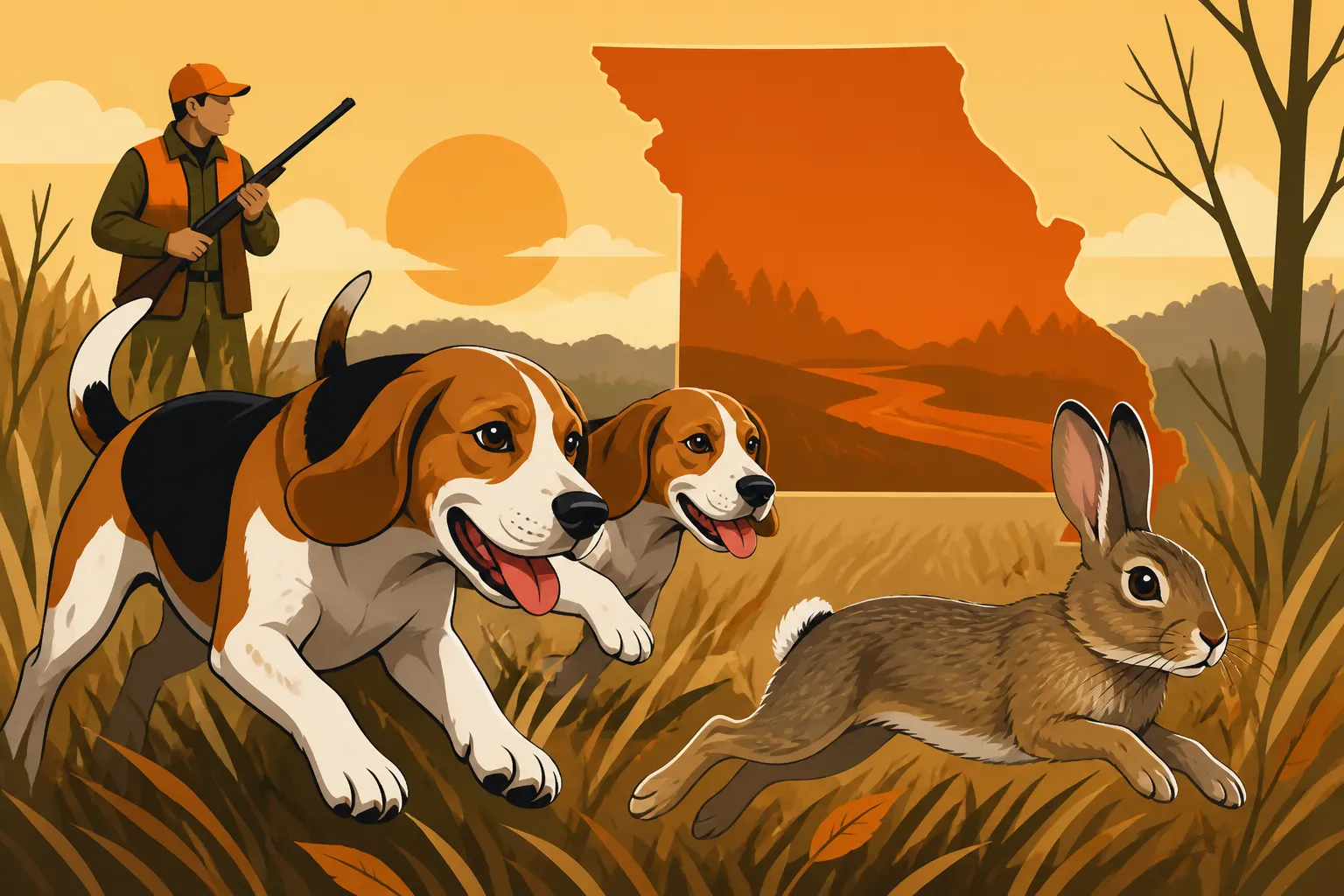
There's nothing quite like the sound of a good pack of beagles striking a fresh cottontail trail on a crisp Missouri morning. If you've spent any time trying to still-hunt Missouri's dense cover for rabbits, you know how frustrating it can be. These little rockets are masters of evasion, diving into briar patches and thickets that are practically impenetrable to a human hunter. But for those of us who appreciate the thrill of the chase and a freezer full of delicious rabbit, a well-trained beagle pack is the absolute game-changer, turning those frustrating patches into exciting, dynamic hunts. This guide will walk you through everything you need to know to get out there and enjoy running beagles on Missouri cottontails.
The Unmatched Prowess of Beagles for Missouri Cottontails
Let's be honest, trying to push rabbits out of a thick multiflora rose hedge or a gnarly brush pile on your own often feels like an exercise in futility. You might jump one, get a fleeting glimpse, and then it's gone. That's where the magic of beagles comes in. These dogs aren't just pets; they are finely tuned hunting machines, bred for centuries to do one thing: find and chase rabbits.
Instinctive Trackers and Relentless Chasers
The core of a beagle's effectiveness lies in its incredible nose and its unwavering drive. Their olfactory sense is legendary, allowing them to pick up the faint scent of a cottontail long after the rabbit has passed through an area. When a beagle "strikes" a trail, meaning they've found that fresh scent, it's often announced with an excited bark or "chop" that sends shivers down a rabbit hunter's spine. As they work to unravel the trail, that chop turns into a more sustained "bawl" or "howl," a chorus that guides you through the thickest cover. It's a symphony of the hunt, a constant communication telling you exactly where the rabbit and the dogs are.
Unlike bigger dogs that might blow past a rabbit's subtle changes in direction, beagles are built for the grind. Their short legs and stout bodies allow them to push through tangled briars, dense honeysuckle, and brush piles that would rip larger dogs or humans to shreds. They don't give up easily, sticking to a trail with incredible persistence. This tenacity is what makes them so effective; they simply refuse to let a rabbit sit tight, constantly pushing it to move. Listening to the chase unfold, with the hounds baying as they navigate the cover, is truly one of the most exhilarating experiences in hunting. If you've ever considered Running Hounds in Missouri, cottontail hunting with beagles is a fantastic entry point into that world.
Thriving in Missouri's Diverse Rabbit Habitats
Missouri is a fantastic state for cottontail hunting because of its varied landscape, which provides ample habitat for rabbits. From the rolling farmlands of north Missouri to the timbered hills of the Ozarks, you'll find places brimming with bunnies. And here's the thing: beagles are uniquely suited to extracting rabbits from all these different kinds of cover.
Imagine a dense brush pile, maybe the remnants of an old fallen tree mixed with some invasive autumn olive. A rabbit can sit tight in there all day, perfectly camouflaged, completely invisible to the human eye. But turn a couple of keen-nosed beagles loose, and within minutes, that rabbit is often up and running, trying to outwit the persistent hounds. The dogs will push them from one sanctuary to another, often forcing them to circle back near where they were jumped, providing shot opportunities for hunters who know how to position themselves. This is particularly true around field edges, old fencerows, and abandoned homesteads where thick cover meets more open ground. Even in more timbered areas, rabbits often stick to the edges where sunlight promotes denser undergrowth, and beagles can work those transition zones beautifully.
Equipping Yourself and Your Canine Partners for Success
Successful beagle hunting isn't just about turning the dogs loose; it requires preparation, the right gear for both you and your hounds, and a deep understanding of the environment. Being well-equipped ensures safety, efficiency, and a more enjoyable hunt for everyone involved.
Essential Gear for the Hunter
Hunting Missouri cottontails with beagles means you'll be walking, often through some seriously challenging terrain. Forget those leisurely deer stand sits; this is an active pursuit! Your footwear is paramount. You'll want sturdy, comfortable boots that can handle anything from muddy creek bottoms to rocky hillsides. Think about boots designed for traction and ankle support, especially if you're venturing into the Ozarks where the ground can be unforgivingly uneven. You might consider specific footwear like those reviewed in Boots for Walking Ozark Rock to protect your feet and ensure comfort throughout the day.
Beyond your boots, brush pants or chaps are non-negotiable. Briars, thorns, and tenacious woody growth will tear up regular hunting pants in no time. A good pair of brush pants, often reinforced with tough ballistic nylon or Cordura, will save your legs from countless scratches and punctures. Layering your clothing is also wise, as a rabbit hunt can start cold and warm up quickly, or vice versa, especially during the fall and winter seasons. Remember, safety is key: Missouri requires hunters to wear a minimum of 400 square inches of hunter orange visible from all sides during certain firearms seasons, even if you're just small game hunting with dogs. Always double-check current regulations, but it's a good practice to wear orange anytime you're hunting with firearms, regardless of the season portion. This is vital information covered in Missouri Hunter Education and Orange Rules.
Communication can be tricky in dense timber or rolling hills. Two-way radios are invaluable for keeping track of your hunting partners, especially if the dogs split up or push a rabbit far. And never, ever forget a well-stocked First Aid Kits for Remote Ozark Ground, tailored for both human and canine emergencies. Hydration is also crucial; carry plenty of water for yourself and your dogs. Finally, having good mapping tools is a huge advantage. Apps like GoHunt, with their detailed satellite imagery and property line overlays, are fantastic for identifying potential rabbit cover and ensuring you stay on public land or land where you have permission. You can also consult the venerable Missouri Conservation Atlas for a comprehensive overview of public hunting opportunities.
Outfitting Your Beagles for the Field
Your dogs are the stars of this show, and their well-being and performance depend on the right equipment. The single most important piece of gear for a beagle pack, especially if you're hunting public land or large tracts, is a reliable GPS collar system. Brands like Garmin's Alpha series are incredibly popular among hound hunters. These systems allow you to track your dogs' exact location, speed, and direction, even when they're out of sight and hearing, which happens frequently during a fast chase. Some platforms, like the GoHunt app, even offer integration or specific "Dog Mode" features that allow you to track your dog's location right on your smartphone, overlaying it on detailed topographic maps. This technology is a game-changer for reducing lost dogs and understanding the dynamics of the hunt.
Bells attached to the dogs' collars are also surprisingly helpful, especially in thick cover. The constant jingle helps you keep a general idea of their proximity when they're not vocalizing strongly or when you're moving through dense brush. For serious briar patches, some hunters equip their dogs with protective vests. These lightweight vests, often made of Cordura or similar tough fabrics, shield a dog's chest and belly from painful cuts and punctures, reducing veterinary bills and keeping your hounds in the field. Don't forget their basic needs: a good quality leash for control before and after the hunt, and portable water bowls to ensure they stay hydrated. Adequate hydration is especially critical during warmer early-season hunts. Remember, responsible dog handling and proper training are key to a safe and enjoyable hunt, and many conservation areas even offer designated spots for Dog Training on Conservation Areas.
Mastering the Hunt: Strategies for Running Beagles
Once you've got your gear and your dogs ready, it's time to put theory into practice. Beagle hunting is a dynamic, interactive sport that requires both the dogs' instincts and the hunter's strategic positioning.
Scouting and Approaching Prime Rabbit Cover
A successful rabbit hunt often starts long before you ever release your dogs. Pre-season scouting, even without your beagles, can dramatically improve your odds. Look for areas with a mosaic of dense cover and open feeding areas. Rabbits love to feed on tender green shoots, clover, and fallen seeds, but they absolutely need thick cover nearby for escape and bedding. Classic spots include:
- Brush Piles: These are rabbit magnets. The thicker and more tangled, the better. They offer perfect protection from predators and the elements. Focusing on areas with numerous Rabbit Hunting Brush Piles will increase your chances exponentially.
- Fencerows and Field Edges: Old fencerows, especially those overgrown with briars, sumac, or small trees, act as natural highways and escape routes for rabbits. The transition zone between a crop field and a timber edge is another prime location.
- Old Homesteads and Abandoned Structures: Overgrown foundations, old barns, and even rusted-out farm equipment can provide fantastic habitat.
- Timber Edges and Regenerating Cuts: Where mature timber meets younger, denser growth, or where logging has occurred, you'll often find excellent rabbit cover. Understanding how game uses these edge habitats is similar to how deer might use terrain in Reading an Ozark Hollow for Deer Movement.
When you arrive at your chosen hunting spot, consider the wind and how you'll approach. You want to release your dogs where they can naturally scent the edges of the cover. Give them a few minutes to start ranging and working their noses. Don't be in a rush; let their instincts kick in. Using a mapping app like GoHunt to mark potential hot spots and plan your entry and exit routes can be incredibly helpful, especially on larger public areas.
Orchestrating the Chase and Taking the Shot
Once your dogs strike a trail and the chase begins, your role as a hunter shifts to anticipation and positioning. Rabbits, when pushed by hounds, typically run in circles. They'll often try to evade the dogs by ducking into new cover, but their strong territorial instincts usually bring them back towards their original home range or the area where they were jumped. This is key for the hunter.
Listen intently to your dogs' vocalizations. When they're in a full "race" or "run," that means they're hot on the rabbit's heels. Pay attention to the direction of the sound. Position yourself along likely escape routes or where you initially jumped the rabbit. Stand still, be patient, and let the dogs do their work. The rabbit will often try to slip past the hunter, hoping to lose the dogs in familiar territory. Be ready for a quick, fleeting shot. Shotguns are the weapon of choice for rabbit hunting, and you'll want to use loads that pattern well for small game at close to moderate ranges. Many of the principles for choosing shotguns and loads for birds, like those discussed in 12 Gauge Versus 20 for Quail, can be adapted for rabbit hunting, focusing on scatter and density at closer ranges.
When the opportunity arises, take a safe, ethical shot. Always be aware of your dogs' positions relative to the rabbit, especially if they are close on its heels. Never shoot towards the sound of your dogs.
Post-Harvest Care and Canine Wind-Down
Once a rabbit is harvested, proper care is important for both the game and your dogs. Field dress the rabbit immediately to allow the carcass to cool down quickly. This is similar to the principles you'd use for larger game, like those outlined in Field Dressing a Deer in Warm Weather, just on a smaller scale. Removing the entrails helps prevent spoilage and makes cleaning easier later. If it's a warm day, try to get the rabbit into a cooler with ice as soon as possible.
For your dogs, the wind-down is just as important as the hunt itself. Ensure they have access to plenty of fresh water. A long, strenuous chase can dehydrate them quickly, especially in warmer weather. Check them over thoroughly for any cuts, punctures from briars, or embedded ticks. Pay close attention to their paws for thorns or sore pads. Giving them a cool-down period before crating them up is also beneficial. Many hunters carry a small amount of high-energy dog treats to reward their efforts and help replenish some of the calories burned.
Respecting the Rules and the Land
Hunting with beagles is a fantastic tradition, but like all hunting activities, it comes with responsibilities. Understanding and adhering to Missouri's regulations and practicing good land stewardship are paramount.
Navigating Missouri's Rabbit Hunting Regulations
Before you even think about hitting the woods, make sure you're up-to-date on Missouri's current hunting regulations for cottontails. The Missouri Department of Conservation (MDC) publishes a hunting guide annually, and it's your definitive source for information. Key things to check include:
- Season Dates: Rabbit season in Missouri is typically quite long, often spanning from October through February, but these dates can shift slightly year to year. Knowing When Missouri Rabbit Season Runs is critical for planning.
- Bag Limits: Missouri usually has a generous daily bag limit for cottontails, often around 10 rabbits per hunter. Understand the specific Missouri rabbit daily bag limit for the current season.
- Permit Requirements: Most small game hunting in Missouri requires a valid small game permit. Residents and non-residents alike will need to purchase the appropriate license. For non-residents, these costs can be higher, and it's important to differentiate between general permits and specific ones like those detailed for Missouri Fall Turkey and Small Game Permits.
- Hunter Orange: As mentioned before, always be mindful of hunter orange requirements, especially during concurrent firearms seasons.
Always respect private property boundaries. If you plan to hunt private land, you absolutely must obtain permission from the landowner before you step foot on their property. This applies whether you're hunting small, individual parcels or larger family farms. The rules regarding Hunting Small Private Tracts in Missouri are clear: always get explicit permission.
Ethical Practices and Public Land Stewardship
When hunting with dogs, your ethical responsibilities extend to your canine partners and to other users of the land. On public lands, always be aware of others. While the sound of beagles on a hot trail is music to a rabbit hunter's ears, it might not be for a deer hunter sitting quietly in a treestand nearby. Being mindful of Hunting Pressure on Missouri Public Ground means choosing your spots wisely and understanding that different activities can coexist if done respectfully.
Always control your dogs. Ensure they are trained to respond to your commands, even amidst the excitement of the chase. This prevents them from chasing non-game animals or trespassing onto adjacent properties without your knowledge. After the hunt, "pack it in, pack it out." Leave no trash behind – this includes spent shotgun shells. Conservation areas and other public hunting grounds are a precious resource, and it's up to us to keep them clean and accessible for future generations.
Finally, remember the goal is not just to harvest rabbits, but to enjoy the experience, the companionship of your dogs, and the beauty of Missouri's outdoors. The sound of a baying hound is a timeless connection to a simpler form of hunting, one that brings immense joy to those who embrace it.
Essential Gear Checklist for a Missouri Cottontail Hunt
| Category | Essential Items | Notes |
|---|---|---|
| Hunter's Apparel | Sturdy, comfortable boots | Waterproof, good ankle support (e.g., for Ozark rock) |
| Brush pants or chaps | Protection from briars and thorns | |
| Layered clothing | Adaptable for changing weather conditions | |
| Hunter orange vest/hat | Meets Missouri's 400 sq. inch requirement for safety | |
| Safety & Navigation | GPS unit or mapping app (e.g., GoHunt) | Tracking dogs, property lines, topo maps |
| Two-way radios | Communication with hunting partners | |
| First aid kit (human & canine) | For cuts, punctures, ticks, minor injuries | |
| Water bottles | For hunter and dogs | |
| Canine Gear | GPS dog collars | Tracking dogs' location and movement (e.g., Garmin Alpha) |
| Protective vests | For briar protection (optional but recommended) | |
| Bells for collars | Aids in locating dogs in dense cover | |
| Leashes | For control before and after the hunt | |
| Portable water bowls | Easy hydration for dogs | |
| Hunting Tools | Shotgun (12 or 20 gauge) | Appropriate for small game, quick shots |
| Shotgun shells (e.g., 6 or 7.5 shot) | Check patterning for desired spread at typical ranges | |
| Field dressing knife | Sharp, sturdy for quick processing | |
| Game bags or cooler with ice | For immediate cooling of harvested rabbits |
Disclaimer
The information provided in this guide is for general informational purposes only and is not intended as legal advice. Hunting regulations and laws can change frequently. Always consult the most current Missouri Department of Conservation (MDC) regulations and local ordinances before engaging in any hunting activity. Ensure you understand and comply with all licensing, permit, and safety requirements. The author and publisher are not responsible for any incidents or violations that may occur from misinterpretation or misuse of this information. Hunt safely and ethically.