Setting Up on a Bench Above a Creek
Oh, the age-old dilemma of finding that perfect deer setup! You spend hours poring over maps, driving backroads, and then hiking through timber, all to find deer sign that just… vanishes. It's especially frustrating when you know deer are using a certain area, like a creek bottom, but pinning down their exact travel routes feels like chasing smoke. This guide is all about demystifying those tricky creek-side movements and showing you how to confidently set up on one of the most consistently productive features in deer hunting: the bench above a creek.
Understanding Deer Movement Along Creek Benches
Creek bottoms and the adjacent terrain are absolute magnets for whitetails, and for good reason. They offer a unique combination of resources and safety that deer just can't resist. Understanding why deer utilize these areas is the first step to knowing where to intercept them.
Why Deer Use Creek Bottoms
Think about it from a deer's perspective. A creek, even a dry one for part of the year, provides an essential water source. But it's more than just a drink. Creek bottoms often boast dense, varied cover along their banks, offering security from predators and harsh weather. This thick undergrowth and mature timber create natural travel corridors. Deer are creatures of efficiency; they're always looking for the path of least resistance, and the relatively flat, clear routes along creek beds and benches fit that bill perfectly.
Beyond immediate resources, these areas can offer thermal advantages. In warmer months, the shaded, cooler air in a creek bottom provides relief from the summer sun. Come winter, a south-facing bank can offer a crucial warm spot for bedding, catching the sun's rays on a chilly day. Furthermore, creek lines often connect different habitat types—a bedding area on a ridge to a food plot in a field, or a block of timber to a neighboring agricultural field. They act like highways, guiding deer from one critical resource to another, often without them having to expose themselves too much.
Identifying a Productive Bench
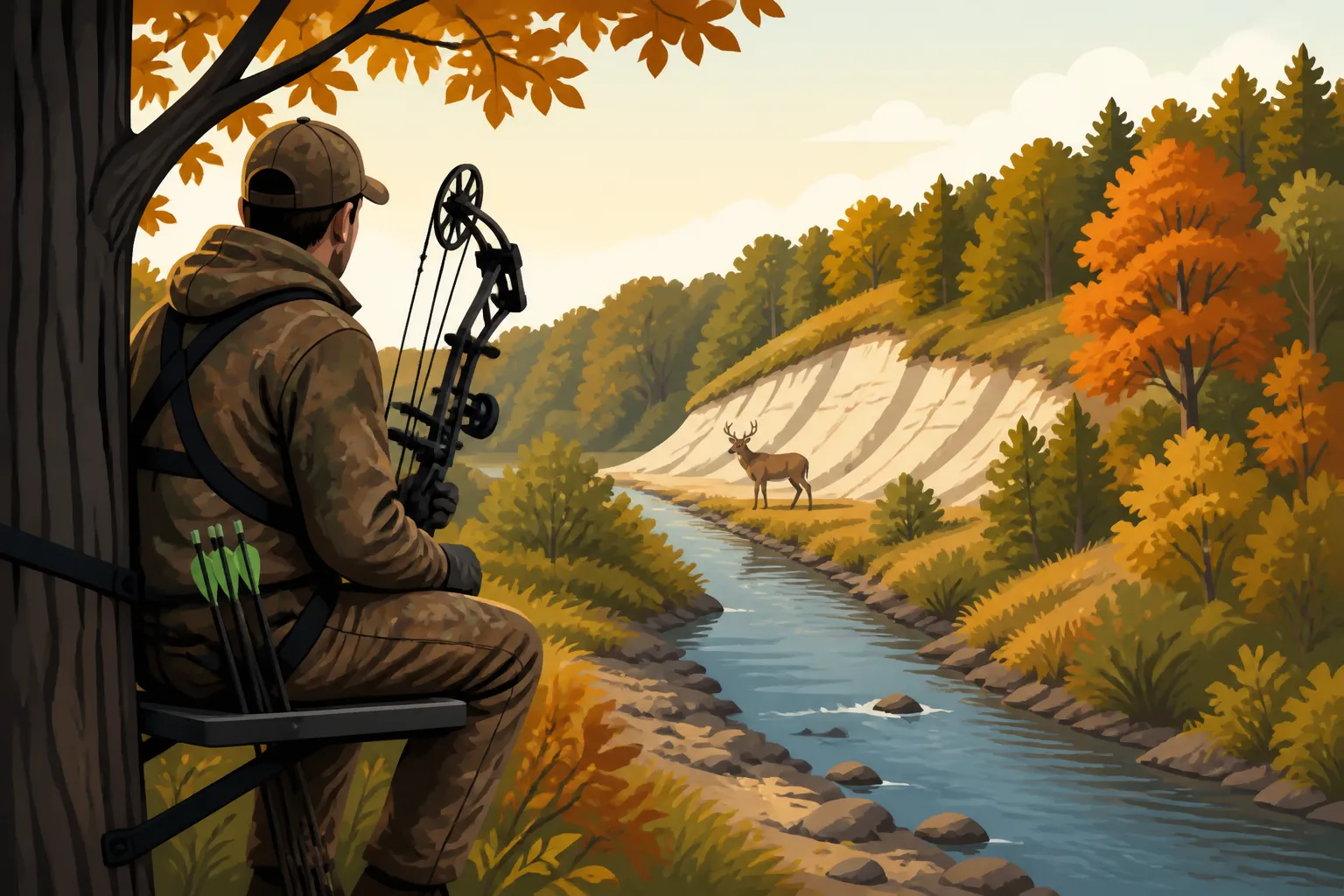
So, what exactly is a bench in hunting terms? Imagine a steep hillside that suddenly flattens out for a short stretch before continuing its descent down to a creek. That flatter, shelf-like area is a bench. It's not a full ridge, but a distinct change in elevation that creates a usable, often subtle, travel lane or bedding spot. These benches are natural ambush points because they force deer to funnel their movement along a narrower path.
To identify a truly productive bench, you'll want to look for several key indicators. On maps, they appear as areas where contour lines spread out before tightening again. In person, they might not look like much at first glance, but close inspection often reveals well-worn trails, old rubs, or even active scrape lines. Deer often prefer to walk these slightly elevated, flat strips of ground rather than navigating the steeper, more treacherous slopes directly above or below. A bench that connects a bedding area to a food source, or one that parallels a creek and offers a slight elevation advantage, is typically gold.
Scouting and Pinpointing Your Setup Location
Finding a bench on a map is one thing; turning it into a successful hunting spot requires diligent scouting, both from your computer screen and with your boots on the ground. You need to understand not just where the deer are, but how they're using that particular piece of terrain.
Reading Topography and Aerial Maps
Before you ever step foot in the woods, your best friend is a good mapping application. Tools like GoHunt (which I find incredibly helpful for Missouri's varied terrain) allow you to overlay topography with detailed aerial imagery. This combination is crucial for identifying benches and understanding how they relate to the broader landscape. Look for those contour lines that fan out and flatten, indicating a shelf. Then, zoom in on the aerial view to see what kind of cover is present on the bench and the surrounding areas.
Connect the dots: Does that bench lead from a known bedding thicket to a standing cornfield? Does it bottleneck between a steep bluff and the creek? Are there old logging roads or subtle transitions in timber type that merge onto this bench? The goal is to see the "big picture" of deer movement. Look for natural pinch points or funnels created by the bench itself, or where the bench intersects with other terrain features. This digital reconnaissance saves you countless hours and helps you focus your ground efforts on the most promising areas.
Boots-on-the-Ground Reconnaissance
Once you've identified potential benches on your maps, it's time to hit the timber. But remember, this isn't just a leisurely hike; it's a covert intelligence mission. Always consider wind direction and your scent profile, even when scouting. The goal is to confirm what you saw on the map and find fresh, undeniable evidence of deer activity. Look for fresh tracks, droppings, and signs of recent browsing. The more fresh sign you find, the better.
Pay particular attention to rub lines and scrape lines. If you find a well-used rub line running along a bench, especially during the pre-rut or rut, you've hit the jackpot. This indicates a buck actively using that travel corridor. Also, note the entry and exit routes deer are using to get onto and off the bench. Are they cutting up a specific drainage? Are they crossing the creek at a particular shallow point? Understanding these micro-movements is critical for proper stand placement. Don't forget to consider human pressure; sometimes, the best spots are just a little further off the beaten path than others will venture, as discussed in Finding Ground Others Walk Past.
Strategic Stand or Blind Placement on a Bench
Once you've found a promising bench and confirmed deer activity, the next critical step is positioning your stand or blind. This is where many hunts are won or lost, as a slight miscalculation can send deer scattering before you even get a shot.
Treestand Setups for Elevated Advantage
For many hunters, a treestand offers the ultimate advantage on a creek bench. Being elevated gives you a better view over the terrain, helps your scent dissipate above the deer's nose, and provides an excellent shooting angle. When selecting a tree, look for one that offers natural concealment – think evergreens like cedars, or hardwoods with dense branching patterns. Position yourself downwind of the anticipated travel route, ensuring you have clear shooting lanes to where you expect deer to pass.
Consider the time of day you'll be hunting. For morning hunts, you might want to face east to avoid the rising sun in your eyes. For evening hunts, facing west could be problematic. Also, think about your entry and exit. Can you get to and from your stand without spooking deer in their bedding or feeding areas? Hang-on stands, climbers, or even saddle hunting setups can be effective. For detailed strategies on this, you might find our guide on Treestand Setups in Hardwood Timber really useful. Remember, safety always comes first; use a safety harness and lifeline every time.
Ground Blind Options for Cover and Concealment
While treestands are popular, ground blinds can be incredibly effective on a creek bench, especially if suitable trees are scarce or if you're hunting with a youth, crossbow, or video camera. The key to a successful ground blind setup is concealment. You can't just plop it down in the open. You need to brush it in thoroughly, breaking up its outline with natural materials like branches, logs, and tall grasses. Imagine how the blind looks to a deer from all angles they might approach.
Ground blinds offer the advantage of warmth and comfort in colder weather, and they can be a great option for minimizing movement with younger hunters. When using a ground blind, pay extra attention to wind and scent control, as you're at deer level. A mapping app like GoHunt can help you visualize areas with dense cover ideal for tucking a blind away, especially where natural features can help break up your outline. For more on this, check out our insights on Brushing In a Blind on a Field Edge. Position your blind with the wind in mind, and ideally, where the sun won't glare directly into your shooting window.
Playing the Wind and Thermals
No matter if you're in a treestand or a ground blind, ignoring the wind and thermals on a creek bench is a recipe for disaster. This is arguably the most critical factor in successful setup. Deer rely heavily on their sense of smell, and a single whiff of human scent will send them packing. Always, always, always hunt with the wind in your favor, blowing your scent away from where you expect deer to approach or travel.
In creek bottoms, thermals play a significant role, especially during calm conditions. In the morning, as the air cools, thermals will typically pull your scent downhill into the creek bottom. In the evening, as the air warms, thermals will rise, carrying your scent uphill and out of the bottom. This means your ideal setup location might be different for a morning hunt versus an evening hunt on the same bench. For a morning sit, you might want to be higher on the bench, letting your scent fall into the creek and drift downstream. For an evening hunt, being lower on the bench, or even across the creek on a parallel bench, might be better, allowing your scent to rise behind the deer as they move up the slope. Adjusting your setup to account for these subtle air currents is paramount for consistent success.
Tactics for Hunting a Creek Bench Through the Seasons
The beauty of a well-chosen creek bench is its versatility. It can be a hot spot throughout the entire Missouri deer season, but your tactics will need to shift with the calendar. Deer priorities change as food sources, breeding behavior, and weather conditions evolve.
Early Season and Warm Weather
When Missouri's archery season opens, often with lingering summer heat, deer movement is primarily driven by food, water, and shade. Creek benches that offer succulent browse, acorns, or other early season food sources will be prime. Deer are also seeking out the cooler, shaded confines of the creek bottom during the hottest parts of the day. This means focusing your early season efforts on benches near reliable water sources or those connecting to lush feeding areas.
During this time, deer movement is often heaviest at dawn and dusk. Plan quiet, scent-controlled entries and exits that minimize disturbance. You'll likely be dealing with mosquitoes and ticks, so proper insect repellent and precautions are a must. Also, be prepared for meat care; early season heat can spoil venison quickly, so understanding Field Dressing and Cooling in Early-Season Heat is vital for preserving your harvest. Focus on benches that offer a clear line of sight to a preferred travel corridor within the creek bottom.
The Rut and Peak Movement
Ah, the Missouri rut! When the peak rut arrives in late October and early November, creek benches transform into buck cruising lanes and doe congregation points. Bucks will actively travel these benches, scent-checking for does, laying down rubs and scrapes, and occasionally challenging other bucks. Does, in turn, will often use these same benches to escape persistent suitors or move between bedding and feeding areas. This makes creek benches incredibly productive during this high-activity period.
During the rut, consider setting up on benches that offer long lines of sight along the creek, allowing you to spot cruising bucks from a distance. Intersections of benches with drainages or other travel corridors can be especially hot. Rattling and grunting can be effective tactics here, as the sound will carry well through the timber and along the creek. Knowing how to hunt during Hunting the Peak Rut Week in Missouri will significantly boost your chances on these benches. Be ready for anything; a chasing buck might burst through at any moment.
Late Season and Cold Weather
As temperatures drop and winter sets in, deer priorities shift dramatically to calorie intake and thermal cover. Creek benches that are close to prime late-season food sources – think standing soybeans, picked cornfields, or areas with persistent acorns – will be your best bet. South-facing benches, which catch the most sunlight and offer a break from biting north winds, become important bedding and loafing areas. Deer will move out of their core bedding areas later in the morning and return earlier in the afternoon to conserve energy and maximize feeding time.
Your tactics should involve identifying the hottest food source nearby and then setting up on a bench that acts as a primary travel corridor to and from that food. This might mean longer morning waits or focusing more heavily on afternoon hunts. Pay attention to fresh tracks in any snow; they'll tell you exactly how deer are moving along the bench. Also, consider the thermal advantages mentioned earlier, positioning yourself to utilize the sun and block the wind as much as possible to stay warm during those long, cold sits.
Comparing Stand and Blind Setups on Creek Benches
To help you decide which setup might be best for your particular creek bench, here's a quick comparison:
| Feature | Treestand on a Bench | Ground Blind on a Bench |
|---|---|---|
| Visibility | Excellent, elevated view of creek and surrounding slopes. | Limited, at deer level; can be enhanced with shooting lanes. |
| Scent Control | Better dispersion due to elevation, but still wind-critical. | More challenging at deer level, absolutely critical wind focus. |
| Concealment | Requires a good tree with cover; less forgiving of movement. | Relies on brushing in; forgiving of slight movements. |
| Setup Time | Can be quick (climber) or involved (hang-on/sticks). | Generally quicker to deploy, but brushing in takes time. |
| Comfort | Varies by stand type; exposed to elements. | Often more comfortable, enclosed, better protection from weather. |
| Mobility | High if using a climber or saddle; moderate for hang-ons. | Low, once brushed in; best for long-term sits. |
| Best For | Scouting new benches, covering wider areas, precise shot angles. | Cold weather, youth hunters, crossbow hunting, thick cover. |
Ultimately, the best setup often comes down to personal preference, the specific characteristics of the bench you're hunting, and the current conditions. Being versatile and knowing how to employ both methods will make you a more successful hunter in Missouri's diverse landscapes.
Disclaimer
Hunting is an inherently dangerous activity. Always prioritize safety, understand and follow all Missouri Department of Conservation regulations, and ensure you have proper training and equipment. This guide provides general information and should not replace professional instruction or local regulations.