Decoy Setups for Pressured Gobblers
It's late spring, and you've been putting in the miles, losing sleep, and calling your heart out, only to have that big Missouri gobbler hang up at 80 yards, stomping and drumming, but absolutely refusing to commit. We've all been there, especially when hunting public land or birds that have heard every call and seen every setup under the sun. This guide is all about dissecting why those wary Toms are so tough to fool and, more importantly, how to adapt your decoy strategies to finally bring them into range.
Understanding Wary Gobblers and Their Reluctance to Commit
There's nothing quite as frustrating as a gobbler that's "heard it all" or been shot at a time or two. These aren't the eager, fresh-from-the-roost birds of opening morning in a low-pressure area. Pressured gobblers, whether on public land, heavily hunted private ground, or late in the season, exhibit a whole different level of caution. They've learned that a pretty hen or a challenging jake often means danger, and they've developed a sixth sense for anything that feels "off."
Why Traditional Decoy Setups Fail
Think about the classic decoy spread: a couple of hens, maybe a jake, all proudly displayed in an open field or clear cut. While this can be dynamite early in the season or for unpressured birds, it's often a red flag for a wary gobbler. He's seen it before, or worse, he's seen a buddy get shot walking into it. These birds become incredibly sensitive to anything that doesn't look completely natural. A full-strut tom decoy, for example, can be a magnet for a jealous longbeard, but it can also be a massive deterrent for one that's been run off a dozen times or simply knows it's too good to be true. He might see it, respond, but then stop just outside of effective shotgun range, meticulously observing for any sign of a trap.
Recognizing Signs of a Pressured Bird
Spotting a pressured gobbler isn't always obvious until it's too late. They might gobble enthusiastically from the roost, but then clam up once on the ground. They'll often circle your position, trying to get a visual from a safe distance before committing. If you notice a gobbler constantly walking parallel to you, using terrain features like creek beds or ridges to stay out of sight, or simply stopping just out of range and refusing to close the distance despite your best calling, you're likely dealing with a pressured bird. They've mastered the art of the "hang-up," driving hunters to distraction. You might also notice them being incredibly quiet after flying down, moving through thick cover, or responding to calls only with soft clucks and purrs rather than booming gobblers. Their entire demeanor screams caution, and your setup needs to mirror that.
The Minimalist Decoy Philosophy
When dealing with wise, old gobblers, often the best approach is to embrace the philosophy of "less is more." Forget the elaborate spreads; sometimes, a single, strategically placed decoy or even no decoy at all can be far more effective.
Single Hen Decoy Tactics
A lone hen decoy is your best friend when hunting pressured gobblers. It’s unassuming, less threatening, and highly natural. Instead of screaming, "Come fight me!" or "Here's a party!", it simply suggests, "There's a hen here, looking for company." Place her slightly off to the side of your shooting lane, facing away from you, as if she's casually feeding or looking away. This subtle positioning can draw a gobbler's attention without immediately signaling danger. He sees a hen, he hears your calls, and his natural instinct kicks in. He approaches with a breeding mindset, not a defensive or suspicious one. I've had incredible success with a single feeding hen decoy placed within 20 yards of my position. The key is to make it look completely at ease, not stiff and unnatural. Using a quality decoy that moves with the slightest breeze, like those from Avian-X or Mojo, can add to the realism.
Decoy-Less Strategies for Maximum Stealth
Believe it or not, sometimes the most effective decoy setup is no decoy at all. This is particularly true when you're Still-Hunting a Missouri Ozark Hollow or when you're hunting extremely tight cover where a decoy would simply be obscured or look out of place. When you forego decoys, you eliminate the visual component of your setup, forcing the gobbler to rely solely on your calls. This can be fantastic for birds that have been "educated" by seeing too many fake birds. Your entire focus shifts to your calling, your camouflage, and your ability to remain absolutely motionless. Set up against a wide tree or in a natural ground blind with excellent cover, and call sparingly. Let the gobbler do most of the work, pulling him in with soft purrs, clucks, and occasional yelps. This approach requires immense patience and discipline, but it can be deadly when all other visual tricks fail. It's about being the most realistic sound in the woods and relying on his curiosity.
The Role of Jake and Strutter Decoys
Using jake or full-strut gobbler decoys for pressured birds is a double-edged sword. On one hand, a smaller, submissive jake decoy can be a powerful attractant for a dominant longbeard looking to assert his authority. He sees a potential rival encroaching on his territory and comes in ready for a fight, often forgetting his caution. The key here is proper placement: put the jake facing you, so the gobbler approaches head-on, focusing on the jake and presenting a broadside shot.
However, a full-strut tom decoy can be a huge risk. While it can sometimes trigger an aggressive response, it’s just as likely to send a wary bird in the opposite direction, especially if he's been whipped before or is less dominant. If you do use a strutter, consider a submissive posture, perhaps with the fan slightly down, or only use it when you're highly confident in the gobbler's dominance and aggression. Remember, for a pressured bird, a big, imposing decoy can be a major red flag. Always evaluate the bird's personality based on his gobbling and strutting behavior before committing to an aggressive visual.
Strategic Placement for Wary Toms
The exact spot where your decoy stands can make all the difference between a successful hunt and another frustrating hang-up. For pressured gobblers, every detail matters, from the angle of the decoy to its distance from your position.
Orienting Decoys for Optimal Shot Opportunities
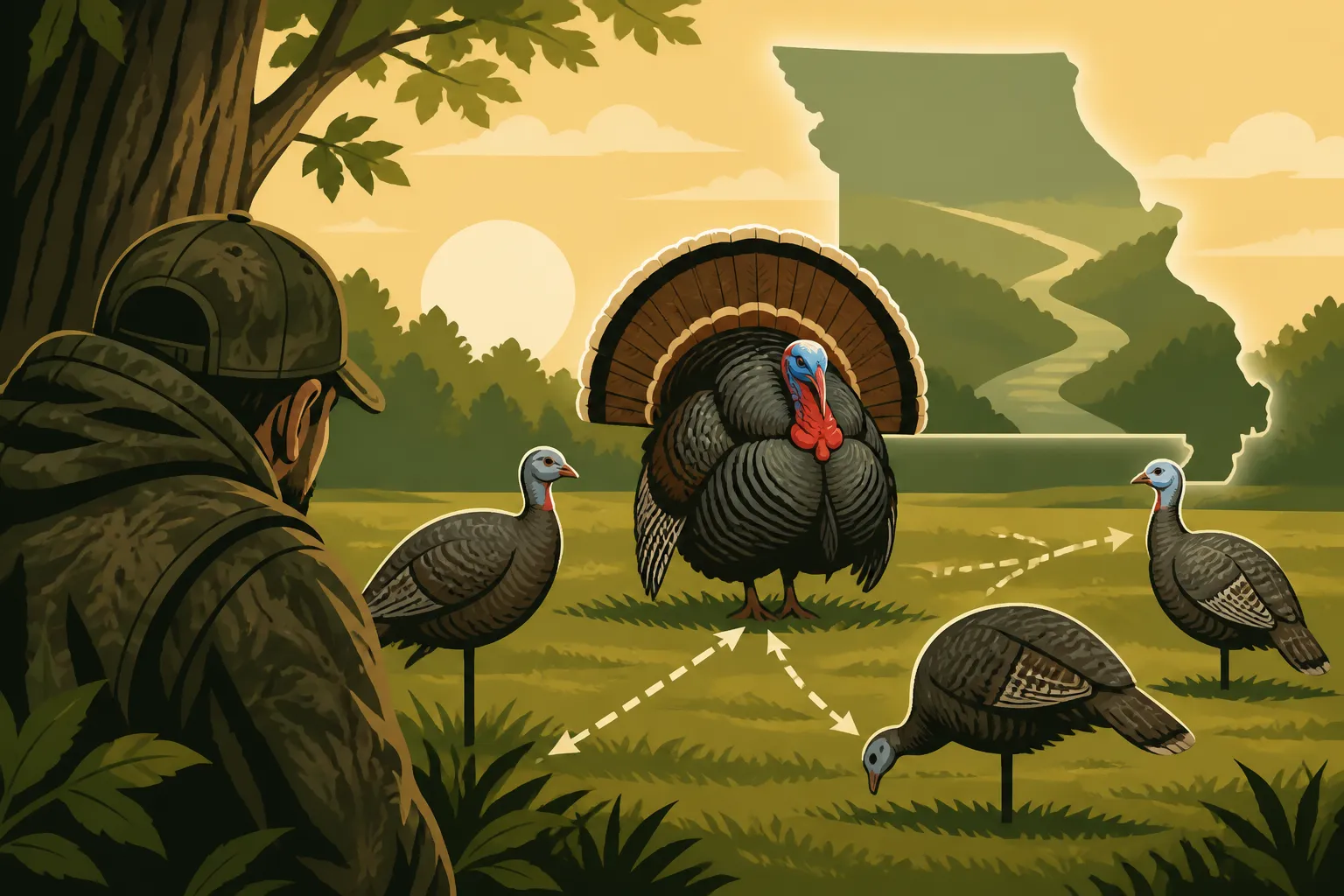
This is critical. Never place your decoy directly in front of you, facing the direction you expect the gobbler to come from. Why? Because when he approaches, he'll be facing the decoy, meaning his head will be perfectly aligned with your gun barrel, making for a difficult shot on a moving target. Instead, place your hen decoy facing away from you, slightly angled to one side. This way, when the gobbler comes in to interact with her, he'll naturally circle around to get in front of her, presenting his broadside or quartering-away profile to your position. This gives you a much larger, more stable target zone.
For a jake decoy, especially if you're trying to incite a challenge, position him facing you. This forces the real gobbler to approach head-on, focusing his aggression on the fake bird, and ideally, turning slightly to posture, giving you a clear shot at his head and neck as he squares off. Always consider the sun's position too; you don't want your decoy silhouetted or a glare blinding the approaching bird. A natural backdrop, like a patch of Hunting Missouri Standing Corn and Beans or a line of timber, will help your decoy blend in and appear less isolated.
Distance and Visibility Considerations
When targeting pressured birds, closer is often better, but not too close. Most hunters place their decoys at 20-30 yards. For wary birds, consider pushing that in a bit, maybe 10-15 yards from your position. This forces the gobbler into your comfort zone for a clean shot, and it also reduces the amount of time he has to scrutinize the decoy from afar. However, if the cover is extremely thick, ensure your decoy is visible from the primary approach lanes you anticipate the bird using.
Visibility is a balancing act. You want the gobbler to see it, but you don't want it screaming "fake!" from 100 yards away. Use subtle rises in terrain, open lanes, or natural clearings to your advantage. Avoid placing decoys in spots where they appear completely isolated in a vast, open field, as this can look unnatural. Instead, position them near a field edge, a fence row, or a subtle break in the timber where a real hen might naturally be feeding or loafing. This also provides critical cover for you to Brushing In a Blind on a Field Edge without being spotted.
Using Natural Cover to Hide Your Position
This goes hand-in-hand with decoy placement. Your ability to remain undetected is paramount. When setting up for pressured birds, natural cover is your best friend. A thick blowdown, a cluster of cedars, or even a wide oak tree can provide the concealment you need. Think about your entry and exit routes – can you get in and out without spooking anything? Once you’re in position, use smaller branches, leaves, or even portable camouflage netting to break up your outline. Remember, even if the gobbler is focused on your decoy, his sharp eyes are constantly scanning the surroundings for movement or unnatural shapes. Make sure your background is dark and cluttered, blending you into the environment. A tool like GoHunt's mapping features can help pinpoint exactly where those subtle terrain breaks and dense cover pockets are that you can use to your advantage. These mapping tools can really shine when you're trying to locate isolated patches of cover within otherwise open areas, or when planning a stealthy approach to your chosen setup location.
Reading the Terrain and Environment
Missouri's diverse landscape, from the rolling hills of the Ozarks to the flat farmlands of the north, offers unique challenges and opportunities for decoy setups. Understanding how turkeys use the terrain is key to effective placement.
How Topography Influences Gobbler Movement
Turkeys, especially big toms, are creatures of habit and efficiency. They'll use terrain to their advantage, much like deer. In the Deer Hunting the Missouri Ozarks, for instance, they often travel along ridge lines, benches, or down subtle draws that offer cover and easy walking. When setting up decoys in such areas, anticipate these travel corridors. Don't place your decoy in a low-lying, hidden ditch where it won't be seen until the gobbler is practically on top of it. Instead, position it on a bench or a slight rise where it's visible from a reasonable distance along his likely travel path. If you know a gobbler roosts on one ridge and pitches down into a specific hollow, set your decoy on the first flat or bench he'd encounter, drawing him naturally to the setup.
In flatter farm country, gobblers might use fence lines, ditches, or rows of trees for cover. Your decoy placement should capitalize on these natural movement patterns, ensuring it's visible as he follows these corridors. Always put yourself in the gobbler's shoes: "Where would I naturally walk, and from where would I first spot a hen?"
Utilizing Field Edges and Openings
Missouri is dotted with numerous crop fields and open clearings, which are prime spots for turkeys. While open areas seem straightforward, they can be tricky for pressured birds. A decoy placed too far into a wide-open field can scream "trap" to a cautious gobbler. Instead, focus your decoy placement on the edges of fields or just inside small openings within timber.
If you're hunting a field, place your decoy within 10-15 yards of the timber line or a fencerow where you are set up. This gives the gobbler a more natural visual and makes him feel less exposed as he approaches. He can stay closer to the safety of the woods, rather than having to commit to a long, vulnerable walk across open ground. For openings in the timber, think about the natural flow of the woods. A small clearing on a ridge or a power line cut can be perfect. Place your decoy so it appears to be naturally feeding or loafing in that opening, drawing the gobbler into your shooting lane. Remember, turkeys love the security of cover, and the closer your decoy is to that cover, the more confidence a wary gobbler will have in approaching. Using satellite imagery or apps like GoHunt before you even set foot in the woods can really help you identify these subtle terrain features and ideal setup locations.
Adapting to Different Habitat Types
From the dense timber of the Mark Twain National Forest to the open prairies of northern Missouri, habitat dictates strategy. In thick woods, your visibility is limited, so decoys need to be closer, and often less is more. A single hen might be all you need, placed in a small pocket or on a logging road where a gobbler can see her without feeling overly exposed. The focus here is on sound more than sight.
In more open habitats, like those found when Hunting North Missouri's Big-Buck Farm Country, you have wider visibility, but also less cover for yourself. Here, you might consider a small jake and hen combination, but still keep them relatively close to your position and any available cover. The expansive views mean a gobbler can scrutinize your setup from hundreds of yards away, so realism and subtle movement become even more important. Some hunters even use the terrain to hide their decoys until the last minute, only revealing them as the gobbler commits to crossing a rise or entering a draw. This takes practice and a deep understanding of the specific area you're hunting.
Advanced Decoy Tactics for Stubborn Toms
Sometimes, standard decoy setups just aren't enough. When gobblers are truly locked up, or if you're trying to coax a bird away from real hens, you might need to employ some more aggressive or specialized tactics.
Fanning and Reaping (Use with Extreme Caution)
Fanning and reaping, where a hunter uses a turkey fan or a full-body gobbler decoy to mimic a strutting tom and actively move towards an approaching bird, have become popular, but they come with significant risks, especially on public land or in areas with other hunters. In Missouri, while not explicitly illegal, safety is paramount. You are essentially imitating a turkey, and another hunter could easily mistake you for a real bird.
- How it works: You carry a fan (real or artificial) or a full-strut decoy and slowly advance towards a gobbler, often crawling. The visual of a dominant tom moving into his space can be an irresistible challenge, drawing him in quickly and aggressively.
- When to use it: This tactic is best reserved for situations where you can confirm you are the only hunter in the area, and you have a clear line of sight to the gobbler. It's often most effective on dominant birds that are "henned up" and won't leave their real hens. The aggressive visual is a direct challenge they can't ignore.
- Crucial Safety Measures: If you ever consider fanning or reaping, you absolutely must have blaze orange on your back, hidden until you are ready to shoot, and only engage a bird when you are 100% certain it is a wild turkey and that no other hunters are present. Scout your area thoroughly beforehand. This method requires a high degree of situational awareness and should be avoided in high-pressure hunting areas where other hunters are likely to be.
Decoys for Hen-Up Gobblers
One of the most common frustrations is a gobbler that's "henned up" – meaning he's with a flock of real hens and is completely uninterested in your calls. Why would he leave live hens for your fake ones? This is where a jake decoy can be incredibly effective. A submissive jake, paired with a single breeding hen, can spark jealousy and aggression. The gobbler sees a rival trying to court his hens, and his protective instincts kick in. He’ll come in to run off the interloper.
Place the jake decoy facing your position, with the hen decoy slightly behind it, facing away from you. This presents the perfect scenario for the dominant gobbler to approach the jake head-on, giving you a shot as he postures or moves to fight. Avoid using multiple hens when he's with live birds; too many hens might just make him bring his hens to yours, and then wander off. You want him to feel challenged, not invited to a party. You might even consider using minimal calling, letting the visual do most of the work to draw him away from his real companions.
Motion Decoys and Wind-Powered Realism
Static decoys can be effective, but movement brings them to life. While battery-powered motion decoys might be overkill or even prohibited in some areas (always check current regulations), wind-powered options are incredibly realistic and effective. A simple spring stake or a decoy that naturally swivels and moves with the breeze can add a critical layer of realism. The subtle head bob or tail fanning of a feeding hen, or the slight shift in a jake's posture, can be just enough to convince a wary gobbler that your setup is the real deal.
Companies like Primos and Flextone offer decoys designed with this in mind, often featuring collapsible bodies that still maintain a lifelike posture and move fluidly in the wind. This subtle motion mimics the natural behavior of turkeys, grabbing a gobbler's attention and holding it as he approaches, distracting him from your position.
| Decoy Type | Best Use Case | Pros | Cons | Pressure Level |
|---|---|---|---|---|
| Single Hen | All-around, especially for wary birds | Natural, non-threatening, effective | Can be ignored by heavily henned-up gobblers | Low to High |
| Feeding Hen | Suggests contentment, draws curious birds | Very realistic, often reduces suspicion | Might not incite aggressive response | Low to Medium |
| Breeding Hen | Signals readiness, pairs well with jake | Strong visual attractant, especially with jake | Can be too aggressive for timid gobblers | Low to Medium |
| Submissive Jake | Challenges dominant toms, draws them to fight | Triggers aggressive response, pulls birds off hens | Can spook less dominant or super wary birds | Medium to High |
| Full Strut Gobbler | Highly aggressive challenge for dominant birds | Powerful attractant for the right gobbler | High risk of spooking wary or non-dominant birds; safety concerns for fanning | Low (for static); High (for fanning/reaping, with caution) |
Maintaining Realism and Scent Control
Even the most perfectly placed decoy setup can be ruined by a lack of realism or human scent. Wary gobblers are masters of detection, relying on all their senses to stay safe.
The Importance of Lifelike Decoys
You wouldn't use a cardboard cutout for deer hunting, so why compromise on turkey decoys? A cheap, shiny, unrealistic decoy can instantly telegraph "fake" to a wary gobbler. Invest in quality decoys that offer lifelike details, realistic feather patterns, and a non-glare finish. Decoys from brands like Avian-X, Dave Smith Decoys, or Primos have become popular for their realism.
Modern decoys are often collapsible, making them easy to carry, but they pop back into shape to present a natural posture. The finish on these decoys is designed to absorb light, preventing the unnatural sheen that can scare off a bird. Look for anatomically correct poses – a feeding hen should look like she's pecking, a jake should look like he's observing or challenging, not like a stiff toy soldier. The more realistic your decoy looks, the less time a gobbler will spend scrutinizing it from a distance, and the more confidence he'll have in approaching.
Scent Control for Turkey Hunting
While turkeys don't have the nose of a whitetail deer, they can still detect unnatural odors. Especially on calm days or when a gobbler is approaching from downwind, human scent can be a major deterrent. Treat turkey hunting like deer hunting when it comes to scent. Wash your hunting clothes in scent-free detergent, store them in airtight containers, and use scent-eliminating sprays on your clothes and gear. Pay particular attention to your hands and mouth – avoid smoking or eating strong-smelling foods right before you head out.
Your decoys can also carry scent. Before heading into the field, wipe down your decoys with a scent-free cloth or spray them with a scent eliminator. Avoid handling them excessively with bare hands. While a turkey's primary defense is sight and sound, eliminating any potential human odor from your setup is just another layer of insurance against spooking a wary tom.
Blending into Your Environment
This goes beyond just camouflage clothing. Your entire setup needs to blend seamlessly into the Missouri timber or field edge. When choosing a spot, look for natural shadows, varied vegetation, and a cluttered background to break up your outline. Avoid setting up in front of a completely open space, as any slight movement will be glaringly obvious.
Use your surroundings to your advantage. If you're Setting Up Against a White Oak, ensure the tree is wide enough to conceal your body completely. If you're in a ground blind, brush it in thoroughly with local vegetation so it looks like a natural part of the landscape. Even your decoy stake can be a giveaway if it's shiny or stands out. Paint it flat black or camouflage it. The goal is to become an invisible part of the woods, allowing the gobbler to focus solely on your realistic-looking decoy and your irresistible calls. The more you blend, the more comfortable a pressured bird will feel closing the distance.
Disclaimer
Hunting is an inherently dangerous activity. Always prioritize safety, understand and follow all Missouri Department of Conservation regulations, and be absolutely certain of your target and what lies beyond it before taking a shot. This guide offers tactical advice, but responsible hunting practices are paramount.