Hunting Missouri Standing Corn and Beans
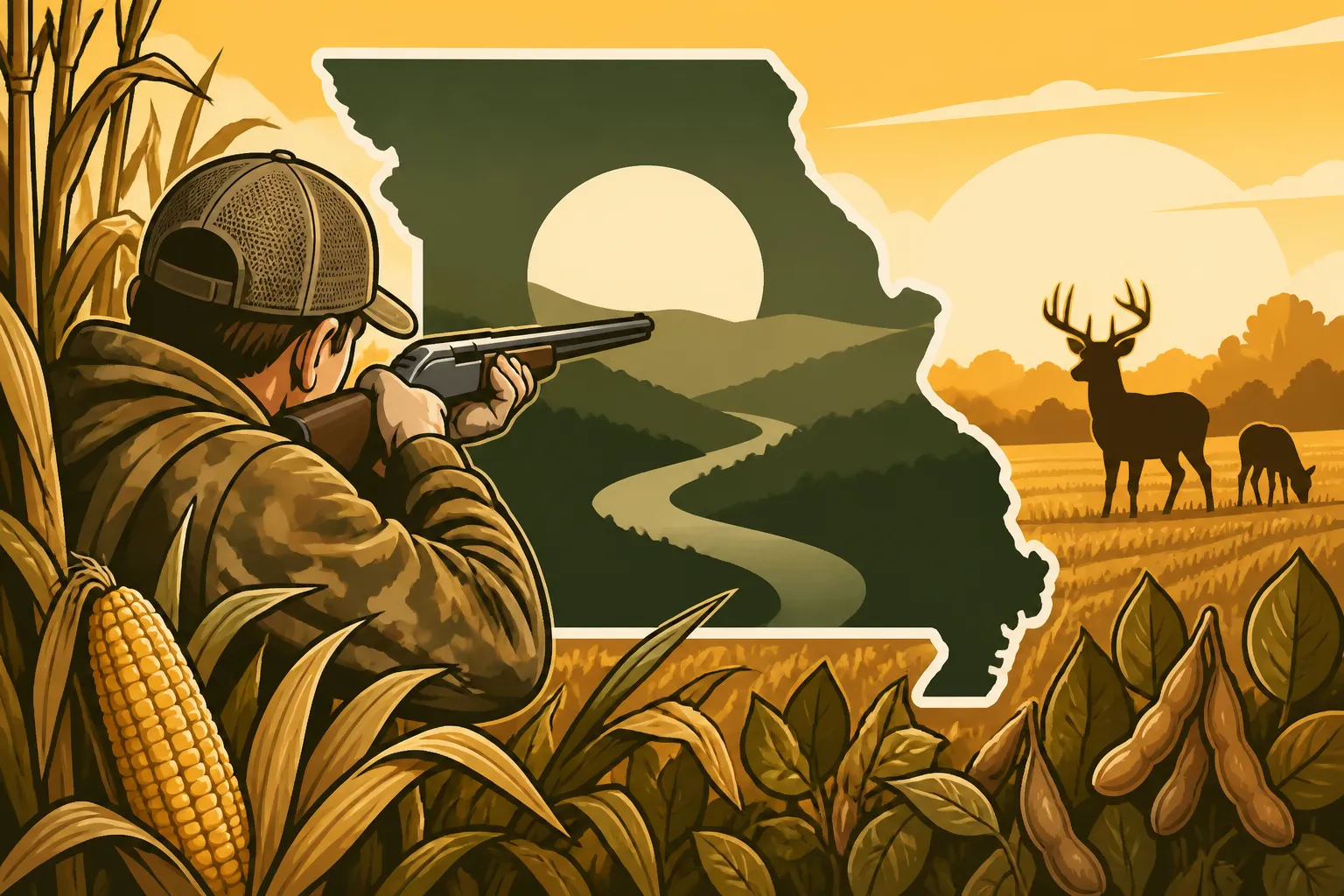
For many deer hunters across Missouri's vast agricultural landscape, there's nothing quite as frustrating as watching a prime whitetail vanish into a towering sea of standing corn or seemingly disappear into an endless expanse of soybeans. These fields aren't just food sources; they're impenetrable fortresses offering unparalleled cover, making successful hunting a true challenge. This guide will walk you through the nuances of hunting these elusive deer in Missouri's standing crops, offering practical strategies to turn those frustrating vanishing acts into successful encounters.
The Irresistible Allure of Standing Crops for Whitetails
It's no secret that deer are drawn to agricultural fields like a magnet, especially in Missouri's central and northern farm counties. These areas offer a combination of resources that are simply too good for a whitetail to pass up, transforming a seemingly open landscape into a prime habitat. Understanding why deer utilize these fields so heavily is the first step in learning how to hunt them effectively.
Unparalleled Cover and Security
Imagine being a deer: a creature of instinct and prey. Standing crops, particularly mature corn, provide an almost impenetrable canopy of cover. From a deer's perspective, this isn't just a place to eat; it's a sanctuary. The sheer density of corn stalks means a deer can disappear from sight just a few yards into the field, making it incredibly difficult for predators—including hunters—to spot them. This sense of security allows deer, especially mature bucks, to feel comfortable bedding down right in the middle of a field, often miles from traditional timber cover.
This dense cover extends beyond just hiding from view. It also muffles sounds and disrupts scent dispersal, adding another layer of security. A deer bedded deep in standing corn can often hear approaching footsteps long before it's seen, and swirling winds within the rows can make it nearly impossible for a hunter to hold a consistent wind advantage. This makes these fields not just places to hide, but veritable fortresses where deer feel incredibly safe, spending a significant portion of their day inside, venturing out only under the cloak of darkness or during peak rut activity.
Abundant Food Source Dynamics
Beyond security, standing corn and soybeans offer a buffet that’s hard to beat. As corn matures, the kernels provide a high-energy carbohydrate source that deer absolutely crave, especially as cooler weather approaches and they need to pack on fat reserves for the winter and the demanding rut. Think of it like a giant, deer-specific grocery store that also happens to be a five-star hotel. They don't have to travel far to get a meal, minimizing their exposure to potential threats.
Soybeans, while different in nutritional profile, are equally attractive. Early in the season, deer will browse the green leaves, which are rich in protein. As the beans mature and dry down, the pods become another highly digestible, energy-rich food source. It's not uncommon to see deer feeding aggressively in soybean fields from late summer through the early archery season. The sheer volume of food available in these massive fields means a deer can feed continuously, often for hours, without ever having to leave the protective cover of the crops. This combination of top-tier nutrition and extreme security solidifies standing crops as a primary draw for Missouri's whitetail population.
Essential Scouting Strategies for Standing Crop Fields
You can't effectively hunt what you don't understand, and that starts with meticulous scouting. Hunting standing crops isn't about blind luck; it's about discerning subtle patterns in a vast, seemingly uniform landscape. For deer that spend their days largely out of sight, your pre-season and in-season scouting becomes paramount. This is where you connect the dots, finding those hidden highways and dining rooms within the green and gold.
Pre-Season Observation
Before the crops get too high to see over, or even before planting, your pre-season scouting lays the groundwork. Use binoculars or a spotting scope from a distance to observe deer entering and exiting fields. Pay attention to specific points—corners, dips in the terrain, fencerows, or even isolated clumps of trees within or adjacent to a field. These are often consistent entry and exit points. As the corn begins to tassel and the soybeans fill out, deer will start to use these fields more aggressively, making your observations even more crucial.
Additionally, don't neglect the surrounding timber and cover that adjoins these fields. Where do deer come from when they enter the crops? Are there distinct trails leading from bedding areas in the woods directly into the field? Identifying these travel corridors early on will help you pinpoint future stand locations. Remember, even though deer might spend their entire day in the crops, they still have to come from somewhere, and often return to traditional bedding cover in the timber after the crops are harvested. This early legwork will be invaluable later in the season. You can learn a lot about what deer are doing by Scouting Missouri Public Land Before Season.
Reading the Edges and Entry Points
Once crops are tall, direct observation becomes nearly impossible. This is when you have to become a detective, meticulously reading the signs along the field edges. Walk the perimeter, looking for heavily used trails that dive directly into the standing crop. These aren't just random paths; they are well-worn arteries that deer use daily. Look for tracks, scat, and rubbed vegetation where deer squeeze through thick growth. Pay close attention to corners and draws where deer might prefer to enter, as these often provide a small amount of additional cover or funneling terrain.
Also, examine where the crops meet other types of cover—a creek bottom, a timber patch, or a dense fencerow. Deer often prefer to hug these transition lines, feeling less exposed than if they were to cross open ground. A mature buck might use a Hunting a Missouri Fencerow Between Fields as a highway between two large fields, only dipping into the corn or beans when he's well inside the field and out of sight. These subtle features can be massive deer magnets, and you'll find much more concentrated sign there than in a random spot along a straight, uniform field edge.
Utilizing Technology for Crop Field Reconnaissance
In today's hunting world, technology can be your best friend, especially when trying to unravel the mysteries of crop country. Satellite imagery and topographical maps found on apps like GoHunt are invaluable. They allow you to view the entire landscape, identifying subtle terrain features, isolated woodlots, or wet spots within fields that might serve as bedding sanctuaries. You can often spot these features from aerial views that you'd never notice from ground level.
Using detailed mapping applications, such as GoHunt, can reveal subtle elevation changes or depressions within large, flat fields. These slight topographic variations can act as natural funnels or provide bedding cover within the crops that deer gravitate toward. Overlaying property lines is also critical when dealing with large agricultural tracts, ensuring you're always aware of where you can and cannot hunt. Furthermore, setting trail cameras on key entry points—especially on trails leading into the crops or near pinch points along the edges—can confirm deer activity, identify specific bucks, and help you understand their patterns, often revealing when and where those Where North Missouri Bucks Bed are moving.
Effective Tactics for Hunting Standing Corn
Hunting standing corn is a unique challenge that requires a different approach than hunting open timber. The dense nature of the stalks dictates specific strategies, from where you set up to how you move. Success often hinges on exploiting the deer's reliance on this cover while minimizing your own intrusion.
Ambush Points Near Travel Corridors
The most common and often most effective method for hunting standing corn is to set up an ambush along known travel corridors. Since deer use the interior of the corn for bedding and feeding, they'll inevitably create distinct trails leading to and from the field edges, or even internal trails that connect different parts of the field. Your goal is to intercept them on these predictable paths.
Look for pinch points where a thick fencerow meets a field, a natural bottleneck in the terrain, or a narrow strip of timber that forces deer into a smaller area before they enter the corn. Placing a treestand or a well-camouflaged ground blind on these trails, downwind, is key. Think about the time of day: early morning setups should focus on trails leading into the corn from night feeding areas or external bedding, while evening hunts should target trails leading out of the corn towards external food sources or nocturnal travel routes. Patience is paramount, as deer may appear silently from the dense cover. Consider a Treestand Setups in Hardwood Timber or a Ground Blinds on Crop Field Edges for these ambush points.
Still-Hunting the Rows
Still-hunting directly within standing corn is perhaps the most physically and mentally demanding tactic, but it can be incredibly effective, especially for experienced hunters looking for a mature buck that rarely leaves the cover. This method requires extreme stealth, an acute awareness of the wind, and an understanding of how deer use the corn rows. You're essentially entering their sanctuary, hoping to bump a deer just enough to get a shot, or even better, spot one before it knows you're there.
Move agonizingly slow, taking one or two steps, then pausing for several minutes to scan, listen, and truly feel the environment. Always move directly into the wind or with a slight crosswind to keep your scent from blowing ahead of you. Pay attention to subtle signs: a rustle of leaves, a glint of an antler, or a change in the pattern of the corn stalks that indicates a deer has recently passed. This is not a tactic for the faint of heart or the impatient; it requires immense concentration and the discipline to move at a snail's pace. The reward, however, can be a close-quarters encounter with a deer that felt safe enough to spend its day deep within the golden stalks.
Small Drives in Corn
While large deer drives are often associated with the firearms season, small, methodical drives can be highly effective in standing corn, particularly for a small group of hunters (2-3 people). The key here is control and communication. One or two hunters act as drivers, moving slowly and deliberately through a section of corn, while one or more hunters are positioned as standers at the downwind end or along predicted escape routes.
The drivers should move at a walking pace, making some noise but not crashing through, gently nudging deer towards the standers. The standers must be ready for quick shots, as deer pushed from corn often burst out at high speeds. This tactic is best employed in smaller, manageable sections of corn, perhaps an isolated patch, a corner of a larger field, or where a point of timber juts into the field, creating a natural funnel. Always prioritize safety, knowing exactly where everyone is positioned and what their shooting lanes are. In Missouri, always ensure everyone is aware of the Missouri Hunter Orange Rules during appropriate seasons.
Effective Tactics for Hunting Standing Bean Fields
Hunting standing soybeans presents a different set of challenges and opportunities compared to corn. While still offering excellent cover, particularly when mature, the shorter stature of bean plants means different visibility and movement patterns for deer. Success in bean fields often relies on identifying specific feeding zones and understanding how deer transition between cover and feed.
Edge Hunting Strategies
Unlike corn, where deer can disappear entirely within the stalks, soybeans typically provide cover but not complete concealment for taller deer, especially mature bucks, from a distance. This makes edge hunting a prime strategy. Deer will often feed along the perimeter of a bean field, especially if it borders dense timber or a brushy fencerow. They can quickly duck into the taller woods if they feel threatened, providing a sense of security while they feed.
Focus your efforts on the corners of fields, areas where a wood line creates a point or an inside corner, or anywhere a creek or drainage cuts into the field. These natural funnels often see concentrated deer activity. Set up a treestand or a ground blind on the downwind side of these edge travel routes, allowing you to intercept deer as they move from bedding cover to feed, or vice-versa. During the early archery season, when beans are still green and lush, these edges can be incredibly productive, as deer actively browse the protein-rich leaves throughout the late afternoon and early evening.
Identifying Key Feeding Zones
While deer will generally feed throughout a bean field, there are often specific "hot zones" where they concentrate their efforts. These can be small depressions in the field, areas with different soil types that yield sweeter or more nutritious plants, or even sections of the field that are simply less disturbed by human activity. Scouting is critical here: look for heavily browsed plants, areas with abundant tracks and scat, and places where bean plants have been thrashed or broken by feeding deer.
Once you identify these key feeding zones, you can plan your approach. If the zone is deep within a large field, it might be tough to access without spooking deer. In such cases, a strategically placed Using a Ground Blind on Missouri Public Land carefully brushed in may be your best bet. If the zone is closer to an edge, an elevated stand might work. Understanding when deer are using these zones (often late afternoon/evening) will dictate your hunting times. Remember, deer in bean fields are often very sensitive to pressure, so a stealthy approach and exit are paramount to not blowing out the feeding area.
Hunting Transition Areas
Deer are creatures of transition. They move from thick cover to food, from bedding to feeding, and often utilize the "in-between" spaces. In soybean country, these transition areas are goldmines. This could be a narrow strip of timber connecting two larger woodlots with bean fields on either side, a brushy creek bottom leading into a field, or even a small patch of weeds or native grass adjacent to the beans. Deer feel relatively safe in these linear cover strips and use them as travel corridors to access the food.
Focus on setting up stands or blinds where these transition zones meet the bean field. Consider the prevailing wind, as deer will often travel with the wind in their face, allowing them to scent check ahead. If you can find an Entry Routes on Rolling Farm Ground that funnels deer along a ditch or small draw into a bean field, you're in an excellent position. These routes provide just enough security for deer to feel comfortable moving during daylight, especially during the early morning and late afternoon hours, making them ideal ambush locations.
Post-Harvest Adjustments and Strategies
The landscape changes dramatically once the combines roll through. The vast green and gold sanctuaries transform into barren stubble fields, and deer patterns shift almost overnight. This post-harvest period can be both challenging and incredibly rewarding for hunters who adapt quickly. Understanding these shifts is crucial for continued success in Missouri's farm country.
Hunting Cut Fields and Leftovers
When the corn and soybeans are harvested, they don't simply cease to be food sources. Modern farming practices, while efficient, always leave behind a significant amount of grain on the ground. For deer, these "leftovers" become a critical food source, especially as winter approaches. A harvested cornfield, with its scattered kernels, can be an absolute magnet. Similarly, shelled soybeans, while less visually apparent, offer high-protein scraps.
The challenge now is the lack of cover. Deer that once felt secure within the standing crops are now exposed. This means their feeding patterns will often shift to primarily nocturnal activity, or they will venture out into cut fields only during periods of low light—dawn and dusk—and quickly retreat to the nearest timber or thick cover. Your strategy must change accordingly. Identify which cut fields are being utilized by looking for fresh tracks, scat, and signs of digging or browsing. Set up ground blinds or elevated stands on the edges of these fields, focusing on the routes deer use to enter and exit. This is a great time to be thinking about What Changes After the Beans Come Off and how deer will adapt.
Shifting Deer Patterns
The removal of standing crops forces deer to redistribute and rely on other available cover and food sources. This can mean a heavier concentration of deer in nearby woodlots, brushy creek bottoms, or CRP (Conservation Reserve Program) fields. Deer that spent their entire day in corn may now be bedding in the closest patch of thick timber, only venturing out to feed in the cut fields or explore new Late-Season Food Sources for Whitetails like acorns or brassicas.
This period often coincides with the late archery season and the firearms portions in Missouri, where hunting pressure can also play a significant role. Deer will become even more reclusive and wary, making it vital to understand their new travel patterns. Scouting for fresh sign in these alternative cover areas, setting up cameras on trails leading to and from cut fields, and even employing tactics like Still-Hunting After a Fresh Snow in the timber can reveal these new patterns. Be adaptable; the deer that were once predictable in standing crops will require a fresh approach once their home turf is gone.
Comparative Considerations: Hunting Standing Corn vs. Beans
| Feature | Standing Corn | Standing Beans |
|---|---|---|
| Cover Density | Extremely dense; full concealment. | Moderate to high; good concealment, less "impenetrable." |
| Visibility | Very limited inside; deer can be yards away unseen. | Moderate; deer often visible at greater distances if standing. |
| Noise | Stalks are noisy, especially in wind; hard to move quietly. | Quieter than corn; less rustle from stalks. |
| Food Value (Season) | High-energy carb source (fall/early winter). | High protein (green, summer), high energy (mature, fall). |
| Preferred Tactics | Ambush travel lanes, still-hunt interior, small drives. | Edge hunting, identifying specific feeding zones, transition areas. |
| Post-Harvest | Abundant scattered kernels, high attraction. | Scattered pods/beans, good attraction, less obvious. |
| Wind Importance | Critical due to dense cover & sound muffling. | Critical for scent checking, less for sound muffling. |
| Entry/Exit | Distinct, often tunnel-like trails. | Often more varied, along cover lines. |
Safety and Ethical Considerations in Crop Fields
Hunting in agricultural settings comes with its own set of responsibilities and ethical considerations. Unlike hunting in vast, unbroken timber, crop fields are often part of a working farm, frequently border other private properties, and sometimes see multiple hunters. Prioritizing safety and respecting land are non-negotiable aspects of a successful and responsible hunt.
Awareness of Other Hunters and Landowners
In many parts of Missouri, particularly prime farm country, hunting pressure can be significant. It's not uncommon for multiple hunters to have permission on adjacent properties or even for public access areas to border private farmland. Always be acutely aware of your surroundings. Before you even head out, take the time to know property boundaries using reliable mapping tools like GoHunt. This ensures you're on legal ground and minimizes the risk of inadvertently trespassing.
If you know other hunters might be in the area, or if you're hunting public land, make your presence known through appropriate blaze orange during firearm seasons, and always be cautious and communicate if you encounter another hunter. A quick, friendly conversation can prevent misunderstandings or unsafe situations. Moreover, remember that you are a guest on private land; treat the landowner with utmost respect, follow any specific rules they've set, and communicate your plans, especially if you plan to still-hunt or conduct a small drive. A good relationship with a landowner is priceless.
Respecting Private Property and Agricultural Operations
Agricultural fields are someone's livelihood. Never damage crops, fences, or farm equipment. Stick to designated travel paths or the very edges of fields when entering or exiting to avoid trampling crops. If you're on private land, always ask for explicit permission to retrieve a downed animal that might have crossed a property line. Forcing your way onto private land, even for recovery, is trespassing and can quickly sour relations with landowners, potentially jeopardizing future hunting opportunities for everyone.
Even on public lands bordering private farms, pay strict attention to boundaries. Deer often run onto private land after being shot on public ground. Knowing your Missouri Trespass and Permission Law is crucial. Furthermore, avoid leaving trash, gut piles visible from roads, or anything that might be offensive to the landowner or other members of the public. Your actions reflect not just on you, but on the entire hunting community. By acting responsibly and ethically, you help ensure that Missouri's rich hunting tradition can continue for generations to come.
Disclaimer
Hunting is an inherently dangerous activity. Always follow all local, state, and federal laws and regulations. Ensure you have the proper permits and licenses. Practice firearm and archery safety, and always know your target and what lies beyond it. This guide is for informational purposes only and does not supersede official hunting regulations or safety guidelines.