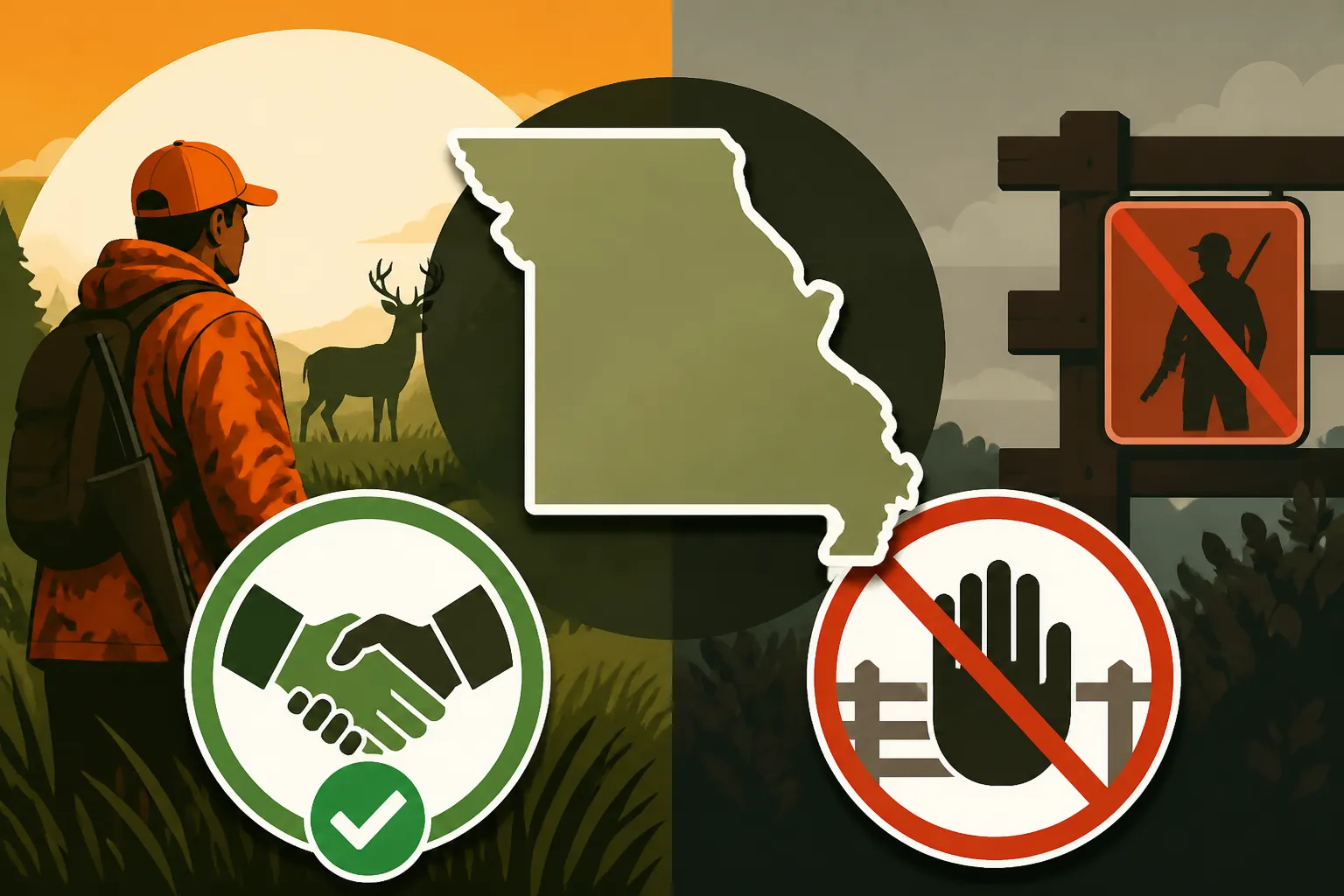
Missouri Trespass and Permission Law
Navigating land access for hunting in Missouri can feel like a maze, especially when you're trying to figure out what's public, what's private, and exactly what kind of permission you need to be legal and ethical. Many hunters worry about accidentally stepping onto private ground or inadvertently crossing a property line, which can lead to uncomfortable confrontations or even legal trouble. This guide is here to untangle the complexities of Missouri's trespass and permission laws, helping you understand your rights and responsibilities so you can hunt with confidence and respect for all landowners.
Understanding Missouri's Trespass Laws for Hunters
Missouri's approach to trespass can sometimes feel a bit nuanced, and it’s critical for hunters to grasp the fundamental differences between various types of land access. Knowing these distinctions isn't just about avoiding a fine; it's about upholding the integrity of our hunting traditions and maintaining positive relationships with landowners across the state.
The Basics of Unlawful Entry
At its core, unlawful entry, or trespass, means being on someone else's property without their express permission. In Missouri, for hunting purposes, this often hinges on whether the land is "posted" or not. However, even if land isn't specifically marked with "no trespassing" signs, it doesn't automatically mean you have free rein. The expectation is that you should know whose land you're on, and if you don't, you need to err on the side of caution. Ignorance of property lines isn't typically a valid defense once you've crossed that invisible boundary.
Think about it this way: imagine someone walking through your backyard. Even if you don't have a "no trespassing" sign, you'd probably feel violated, right? The same principle applies to landowners in rural Missouri. While many are friendly, they expect a basic level of respect for their property. When you're out in the woods, it's not always obvious where one tract ends and another begins, which is why diligent scouting and using mapping tools are so crucial. Always assume private unless you have definitive proof otherwise, and always, always seek permission.
Posted Land vs. Unposted Land
This is where some of the common misconceptions lie. In Missouri, if private land is clearly "posted," meaning it has signs or purple paint markings indicating "no trespassing," then entering that land for hunting, fishing, or trapping without permission is explicitly illegal. The signs or markings serve as a clear, undeniable warning. These signs usually need to be conspicuously placed at regular intervals along the property boundary, often at every corner and at least every few hundred feet along fence lines. Purple paint is a popular, durable alternative to paper signs, with specific regulations on its placement and visibility. You can learn more about specific requirements in Missouri Posted Land Rules.
Now, what about unposted land? This is where it gets a little trickier. While simply walking across unposted private land might not immediately be a criminal trespass offense unless you're causing damage or have been previously warned, hunting, fishing, or trapping on any private land without permission, whether posted or not, is generally unlawful in Missouri. The distinction often comes down to intent and activity. If you are actively engaged in hunting activities – carrying a weapon, setting up a stand, pursuing game – on private land without permission, you are very likely trespassing, regardless of whether a sign is present. This is a critical point for hunters to understand, as it means the absence of a sign isn't an invitation.
Retrieving Game from Private Property
This is a scenario that often causes anxiety and ethical dilemmas for hunters. You've made a great shot on a deer, but it runs across a property line onto land you don't have permission to hunt. What do you do? The law in Missouri states that you do not have an automatic right to enter private land, even to retrieve game you've legally harvested on adjacent land. This can be incredibly frustrating after all the effort you've put in, but trespassing to retrieve game is still trespassing.
Your absolute best course of action in this situation is to contact the landowner immediately and respectfully request permission to enter their property to recover your animal. Be prepared to show them where you shot the animal, where you last saw it, and explain your tracking efforts. Approaching them politely, ideally without your weapon, and explaining the situation can often lead to a positive outcome. Most landowners, even if they don't allow hunting, understand the desire to recover game and prevent waste. However, they are under no legal obligation to grant you access. If you cannot contact them or they deny permission, you must respect their wishes, even if it means losing your game. It's a tough pill to swallow, but it's the law. For more details on this often-stressful situation, check out Retrieving Game From Private Land.
The Importance of Permission: Getting on Private Land
Gaining access to private land can unlock incredible hunting opportunities, especially in areas with limited public ground or where you're seeking less pressured game. However, it's not always easy, and the way you approach landowners can make all the difference. Understanding the value of respectful engagement and clear communication is paramount.
Why Permission is Paramount
Beyond the legal ramifications, seeking and obtaining permission before hunting on private land is a cornerstone of ethical hunting. It shows respect for private property rights, builds trust within the hunting community, and helps maintain a positive image of hunters as responsible outdoorsmen and women. When hunters trespass, it erodes public trust, fuels anti-hunting sentiment, and can lead to landowners closing their properties to everyone. A single bad experience for a landowner can sour them on all hunters for years to come.
Furthermore, having explicit permission often means you gain a wealth of local knowledge. Landowners can tell you about deer patterns, water sources, bedding areas, or even hazards on their property. They might point you to the best stand locations or warn you about areas where livestock graze. This partnership can lead to more successful and enjoyable hunts, turning a simple permission slip into a valuable, long-term relationship. Many hunters who have consistent access to great private land didn't get it on the first try; they built trust over years through respectful interactions and by proving themselves to be reliable.
Asking for Access: Tips for Success
So, you've found a promising piece of private ground. How do you go about asking for permission? First, timing is key. Don't show up on opening day of deer season, rifle in hand, expecting a "yes." Instead, approach landowners well in advance of the season, perhaps in late summer or early fall. Dress neatly and respectfully; you're making a first impression. Be prepared to introduce yourself clearly, explain why you're interested in hunting their property, and highlight your commitment to safety and ethical behavior. Offer to share some of your harvest, help with small chores, or keep an eye on their property for anything suspicious.
Always be polite and accept a "no" gracefully. A "no" today doesn't mean "no" forever. They might have a friend or family member who hunts it, or simply aren't comfortable with strangers. Thank them for their time regardless. If they say yes, clarify the terms: what species can you hunt, what areas are off-limits, can you use ATVs, what are their expectations for gates and fences? Clear communication upfront prevents misunderstandings down the road. For more detailed advice, refer to Getting Private Land Permission in Missouri.
Written vs. Verbal Permission
In Missouri, both verbal and written permission are legally valid. However, there's a significant difference in their practical application, especially if any dispute arises. Verbal permission is often how most access is initially granted – a handshake and a "sure, you can hunt that back forty." This is perfectly acceptable and common, especially among neighbors or friends. However, it relies heavily on memory and goodwill.
Written permission, while sometimes feeling formal, offers clear documentation of the agreement. It removes ambiguity about who can hunt, when, where, and for what species. A simple signed note stating the hunter's name, the landowner's name, the date, and the specific property description (even just an address or general location) can prevent a lot of headaches. It's especially valuable if you're hunting land owned by someone you don't know well, or if the property ownership is complex. While not strictly required by law, many seasoned hunters and landowners prefer written permission for peace of mind. To explore whether you need written permission, you can check out Do You Need Written Permission in Missouri?.
Navigating Public vs. Private Boundaries
One of the biggest challenges for hunters in Missouri, particularly when venturing onto new ground, is accurately discerning public land from private and knowing exactly where those property lines fall. With a mix of rolling timber, agricultural fields, and river bottoms, these boundaries aren't always marked clearly on the ground.
Utilizing Mapping Tools for Clarity
In today's hunting world, digital mapping tools have become indispensable for navigating property lines. Apps like onX Hunt and GoHunt offer detailed satellite imagery overlaid with property ownership information, displaying public and private land boundaries right on your phone or GPS device. These tools can show you landowner names, parcel lines, and even different types of public land (like state conservation areas, national forests, or federal refuges). This allows you to scout remotely, plan your entry and exit routes, and verify property lines while you're actually in the field.
Imagine you're still-hunting a ridge system that borders both a large Mark Twain National Forest tract and several private timber holdings. With onX Hunt or GoHunt, you can see precisely where the public land ends and private begins, helping you avoid accidental trespass. You can even drop waypoints for your stand locations, mark sign, and record your tracks, all while being confident you're on legal ground. These apps are continually updated and can be a game-changer for ethical and successful hunting, especially on fragmented landscapes common in Missouri. For additional resources on finding these boundaries, look at Finding Missouri Property Lines.
Common Boundary Disputes and How to Avoid Them
Boundary disputes are unfortunately common, and they can arise from unclear markings, old surveys, or simple misunderstandings. As a hunter, it's your responsibility to know where you are. One common scenario is hunting along a fencerow that you assume marks a property line, only to find out later the actual line is 20 yards further in, or vice versa. Another issue can be hunting timber that visually appears to extend into a large public tract, but actually belongs to a small, private landowner tucked away.
To avoid these headaches, always verify boundaries with multiple sources if possible. Use your mapping app, consult county plat maps, and if you have permission for a private tract, ask the landowner to walk the boundaries with you or clearly mark them. Pay attention to subtle clues like old fence lines, changes in timber management, or differing paint schemes on trees. When in doubt, always assume the land is private until you can confirm otherwise. It's far better to back out and clarify than to inadvertently trespass.
Unmarked or Ambiguous Boundaries
Missouri, with its diverse landscapes ranging from the rugged Ozarks to the expansive northern farm fields, often presents hunters with unmarked or ambiguous property boundaries. In dense timber, an old fenceline might be completely overgrown, or a creek might serve as a boundary line but its path changes with erosion. In farm country, the edge of a standing cornfield might seem like a natural boundary, but the actual property line could be in the middle of the field or beyond.
When encountering such ambiguities, extreme caution is warranted. This is where your mapping app truly shines, allowing you to zoom in and see the digital lines. If you're on public land, like a Conservation Area, always carry the area brochure or map, which often highlights boundaries and permissible activities. If you're unsure, it's always best to stay on what you know is definitively public ground, or if you have private land permission, stick to the areas the landowner has clearly identified. Ethical hunting demands that we go the extra mile to avoid misunderstandings, even when the lines aren't painted bright purple.
| Land Type | Permission Required | Posting Required | Best Practice for Hunters |
|---|---|---|---|
| Posted Private | Yes, always | Yes | Explicit written or verbal permission, verified boundaries. |
| Unposted Private | Yes, always | No (but implied) | Explicit written or verbal permission, verified boundaries. |
| Public Land | No (permit/license) | No | Respect all area-specific rules, verify boundaries with mapping tools. |
| Private (Game Retrieval) | Yes, always | N/A | Contact landowner immediately; do not enter without permission. |
Consequences of Violating Missouri's Trespass Laws
Ignoring Missouri's trespass and permission laws isn't just an ethical misstep; it can lead to serious legal and reputational consequences. For hunters, upholding the law is vital to protect our privileges and ensure future access to hunting lands.
Penalties and Legal Repercussions
In Missouri, trespassing can be classified as a misdemeanor, with penalties that can include fines, court costs, and even jail time, especially if it's a repeat offense or if damage to property occurs. Beyond that, a hunting license can be suspended or revoked, impacting your ability to hunt in Missouri and potentially other states through interstate compacts. Imagine losing your hunting privileges for a year, or even longer, all because you didn't take the time to secure proper permission or verify a property line.
The legal system doesn't differentiate between "accidentally" trespassing and intentionally doing so, particularly if you're engaged in an activity like hunting that implies a level of preparation and knowledge. Law enforcement takes these violations seriously, as they protect the rights of landowners. A criminal record, even for a misdemeanor, can have long-lasting impacts on your life, affecting employment, housing, and more. It's simply not worth the risk.
Hunter Etiquette and Reputation
Beyond the legal penalties, the damage to a hunter's reputation, and to the reputation of hunters in general, can be significant. Word travels fast in rural communities. A hunter known for disrespecting property lines will quickly find doors closed to them and may even face hostility. Landowners talk to each other, and a negative experience with one hunter can lead to an entire community becoming wary of granting any hunting access.
Every time a hunter asks for permission, respects property, and follows the rules, they are an ambassador for our sport. Conversely, every trespasser creates a negative stereotype that all ethical hunters then have to work harder to overcome. Maintaining a good reputation means being meticulous about knowing where you can hunt, leaving gates as you found them, not leaving trash, and always being grateful for the privilege of access. It's about being a good neighbor and a responsible steward of the land, whether it's public or private.
What to Do if You Suspect Trespass
What if the shoe is on the other foot, and you suspect someone is trespassing on your property, or property where you have exclusive hunting rights? It's natural to feel frustrated and protective. The first step, if possible and safe, is to observe and document. Note vehicle descriptions, license plate numbers, descriptions of the individuals, and any specific activities they are engaged in. Avoid direct confrontation if you feel unsafe or if the situation is volatile.
Once you have this information, the best course of action is to contact the Missouri Department of Conservation (MDC) or local law enforcement. Wildlife damage biologists and conservation agents are trained to handle these situations and can investigate. Providing them with clear, factual information will aid their investigation. It's crucial not to take matters into your own hands, as this can escalate the situation and potentially put you in legal jeopardy. Reporting incidents helps protect property rights and ensures appropriate action is taken. If you need to report such an incident, look into Reporting a Poacher in Missouri for the correct channels and procedures.
Special Considerations for Missouri Landowners
For those who own land in Missouri, understanding your rights and responsibilities regarding hunting access is just as important as it is for hunters seeking access. Landowners play a crucial role in providing habitat and hunting opportunities, and there are specific provisions designed to support them.
Landowner Responsibilities and Protections
Missouri landowners have the right to control who enters their property, and for what purpose. This is a fundamental property right. To protect this right, landowners can clearly post their land with "no trespassing" signs or purple paint marks according to MDC regulations. These markings serve as clear notice to anyone who might consider entering without permission. By adequately posting your property, you create a stronger legal basis for any trespass enforcement action.
However, landowners also have a general responsibility to ensure their property is reasonably safe for those they do invite onto their land, or for members of the public who might legitimately access certain features, like public roadways or navigable waterways that cross or border the property. While Missouri has landowner liability laws designed to protect landowners from excessive lawsuits related to recreational use, it's always wise to ensure any known hazards are clearly marked or communicated to those you grant access. It’s also important to be aware of the rules that apply to landowners, especially regarding permits; you can find information on this in Missouri Landowner Permit Eligibility.
Landowner Permits and Exemptions
In Missouri, landowners and their immediate family members (living in the same household) often qualify for specific hunting and fishing permit exemptions when hunting or fishing on land they own. These exemptions can significantly reduce the cost and administrative burden of hunting on your own property. For example, resident landowners and their immediate household members typically do not need to purchase statewide deer or turkey hunting permits to harvest deer or turkey on their land, provided they meet certain acreage requirements and are Missouri residents.
However, even with these exemptions, landowners are still required to abide by all other hunting regulations, including season dates, bag limits, shooting hours, and Telecheck requirements. The purpose of these exemptions is to facilitate hunting on private land, not to create a separate set of rules for harvest. It’s crucial for landowners to be familiar with the specifics of these exemptions to ensure full compliance with state regulations.
Dealing with Trespassers on Your Property
If you discover someone trespassing on your land, especially if they are hunting without permission, it's a tense situation. As mentioned previously, your personal safety should always be your top priority. While you have the right to tell them to leave your property, direct confrontation can be unpredictable. The best course of action is to calmly but firmly inform them they are on private property and ask them to depart. If they refuse, become belligerent, or you feel threatened, retreat to a safe location and immediately contact local law enforcement or a Missouri Department of Conservation agent.
Collect as much information as you safely can – descriptions, vehicle details, direction of travel – without engaging in a dangerous situation. Your goal is to secure your property and ensure your safety, then allow the authorities to handle the enforcement. Taking photos or videos from a safe distance can also be helpful evidence. Remember, property rights are serious, and law enforcement has the training and authority to address these violations legally and effectively.
Disclaimer
This article is for general informational purposes only and does not constitute professional advice. Laws, prices and regulations vary by location and change over time. Consult a qualified professional for guidance on your specific situation.