Retrieving Game From Private Land
There are few things as gut-wrenching for a hunter as making a great shot, only to watch your deer or turkey disappear over a property line onto land you don't have permission to be on. It’s a moment filled with anxiety, ethical responsibility, and often, confusion about what you can and cannot do. This guide is here to walk you through the often murky waters of retrieving game from private land in Missouri, giving you clear steps and advice to navigate this stressful situation legally and ethically.
Understanding Missouri Trespass Law and Game Retrieval
When your quarry crosses a property line, your immediate instinct is to follow. You feel a deep obligation to recover that animal, not just for the meat, but out of respect for the game itself. However, that line on the map isn't just an arbitrary boundary; it represents private property, and Missouri has clear laws about trespassing. Ignoring these laws, even with the best intentions, can lead to serious legal trouble and damage the reputation of all hunters.
The Legal Landscape of Trespassing in Missouri
In Missouri, walking onto private land without permission for any reason, including retrieving game, is generally considered trespassing. It doesn't matter if you think the land is unposted or if you believe no one will care; if you don't have explicit permission, you could be breaking the law. This is a critical point that many hunters misunderstand, often assuming that game retrieval somehow grants an automatic right of entry. It does not. The law prioritizes property rights, and as ethical hunters, we must respect that.
The consequences of trespassing can range from a warning to fines, and in some cases, even more severe penalties, especially if damage occurs or if the landowner feels threatened. Imagine the stress of tracking a buck for hours, only to face a sheriff's deputy or an angry landowner because you didn't take the proper steps. It’s a scenario no one wants to be in, and it's entirely avoidable by understanding the rules and acting responsibly. Knowing Missouri Trespass and Permission Law is the first line of defense.
Distinguishing Ethical Recovery from Illegal Entry
We all feel that moral imperative to recover an animal we've shot. It’s a core tenet of responsible hunting: waste not, want not. However, this ethical responsibility does not override legal statutes. You absolutely should make every reasonable effort to recover your game, but those efforts must always be within the bounds of the law. This means getting permission before you cross that fence.
Think about it from the landowner's perspective. They might be home, have children playing outside, or be working their land. An unknown person suddenly appearing on their property, especially with a firearm or bow, can be alarming, regardless of the reason. Their property is their sanctuary, their livelihood, or both. Approaching them with respect and clear communication is not only the legal way but also the most effective way to build goodwill and potentially gain access. Rushing in without permission can instantly create an adversarial situation, turning a potentially helpful neighbor into someone who might call law enforcement.
Steps to Take When Your Game Crosses a Boundary
So, you've got a downed animal, or at least a strong blood trail, leading off your hunting ground onto someone else's property. Don't panic, but don't just follow either. This is where patience, preparation, and clear communication become your most valuable tools.
Step 1: Confirm the Boundary and Secure Your Gear
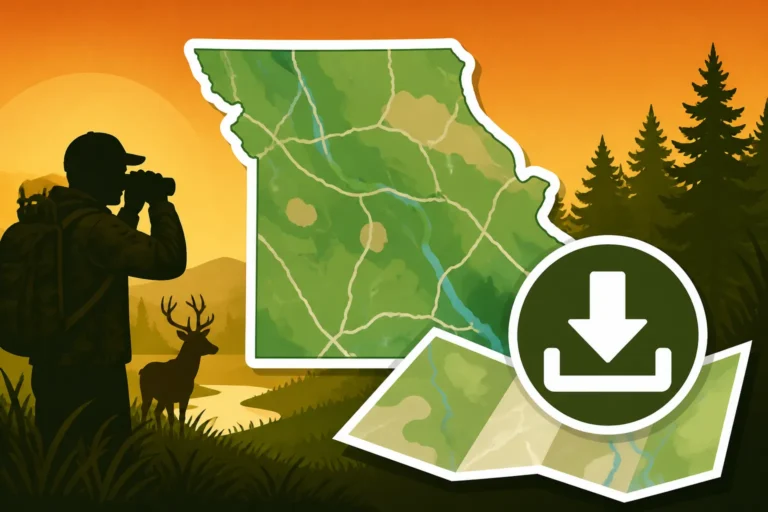
The very first thing you need to do is confirm that the animal indeed crossed onto land where you don't have permission. This might seem obvious, but in the heat of the moment, it's easy to misjudge. Use a reliable mapping application like onX Hunt to pinpoint your exact location and the property lines. This app can be an absolute lifesaver for clarifying boundaries in unfamiliar territory or when terrain features make it difficult to tell where one property ends and another begins. It’s a much more accurate tool than relying on old fence lines or vague memories.
Once you’ve confirmed the boundary, do not cross it. If you are carrying a firearm or bow, make sure it is unloaded and secured, ideally back in your vehicle or at your camp. You want to present yourself as a responsible, non-threatening individual when approaching a landowner. Carrying a weapon onto their property, even if you’re just trying to recover game, can be misconstrued and escalate the situation unnecessarily. Leave your hunting gear behind and take only what you need for a polite conversation.
Step 2: Identify the Landowner and Make Contact
This is often the trickiest part. Who owns the land? Again, mapping apps like onX Hunt can be invaluable here, often providing landowner names and sometimes even contact information. If not, you might need to do a little detective work. Look for houses nearby, or talk to other local residents if you know them. County assessor's offices are also a public resource for property ownership details, though they might not be open after hunting hours.
Once you identify the landowner, approach them respectfully. If they're home, knock on the door, remove your hat, and introduce yourself calmly. Explain the situation clearly and concisely, without any hint of entitlement or aggression. "Hello, my name is [Your Name], and I was hunting on [Your Property/Public Land] next door. I believe I've shot a deer, and the blood trail indicates it crossed onto your property here. I would be incredibly grateful if you would grant me permission to quickly retrieve it. I promise to be respectful of your land."
It’s crucial to understand that the landowner has every right to deny you access. While it’s certainly frustrating, an ethical hunter respects that decision. Offer to show them the blood trail from the property line, or offer to have them accompany you. Sometimes, a landowner might even offer to retrieve the animal for you, or grant you permission under certain conditions, such as leaving your weapon behind. Be prepared to abide by whatever conditions they set. This is also where a resource like GoHunt could have been useful in your pre-season scouting, as sometimes these platforms can provide general land access information or highlight areas where gaining permission might be more feasible.
Step 3: Document and Recover (If Granted Permission)
If the landowner grants you permission, congratulations! Before you proceed, make sure you understand any conditions they've set. Clarify the route you're allowed to take, whether they want you to avoid certain areas, and if they want to accompany you. This clarity avoids any misunderstandings later.
As you track and recover the animal, continue to be respectful of their property. Stick to the agreed-upon path, close any gates you open, and be mindful of fences or crops. If you're tracking blood, try not to disturb the ground more than necessary. Once you locate the animal, field dress it efficiently and remove it from their property as quickly and cleanly as possible. Thank the landowner profusely for their generosity. A small gesture of appreciation, like offering some of the meat (if appropriate and accepted), or even just a sincere thank you card later, can go a long way in building relationships for future seasons.
| Action | Do's | Don'ts |
|---|---|---|
| Boundary Crossing | Confirm with mapping app (e.g., onX Hunt) | Cross without permission |
| Gear | Unload and secure all weapons | Carry weapons while asking for permission |
| Landowner Contact | Be polite, respectful, and explain clearly | Be demanding, entitled, or aggressive |
| Permission | Respect their decision, even if "no" | Argue, plead, or ignore a "no" |
| Recovery | Abide by all conditions, thank them sincerely | Make a mess, leave gates open, trespass again |
Navigating Difficult Situations and Prevention
Not every situation will be straightforward. Sometimes, you might encounter a landowner who is simply unwilling to grant access, or worse, one who is openly hostile. Knowing how to handle these moments and, more importantly, how to prevent them in the first place, is key to a positive hunting experience.
When Permission is Denied or Unavailable
It's a tough pill to swallow, but if a landowner denies you permission to retrieve your game, you must respect their decision. Legally, that animal is now on their property, and you cannot trespass to get it. This is a painful scenario for any ethical hunter, knowing that an animal you harvested may go to waste. However, the alternative—breaking the law and potentially harming hunting's public image—is far worse.
If you can't get permission, document your efforts. Keep a record of when you attempted to contact the landowner, their response, and any details of the situation. This can be helpful if questions arise later. Sometimes, local conservation agents can offer advice or even mediate, but they generally cannot compel a landowner to grant access. Your best bet is always to secure permission directly. The despair of losing an animal is real, but your integrity as a hunter is more important. It’s also important to remember that laws vary, so always check Missouri Deer Transport Rules and Missouri Hunter Orange Rules to ensure compliance with all aspects of the hunt.
There might also be situations where you simply cannot identify the landowner or make contact, perhaps in remote areas or if houses are vacant. In such cases, the rule of thumb remains: no permission, no entry. It's a harsh reality, but an unavoidable one. This underscores the importance of thoroughly scouting the areas adjacent to your hunting spot before the season, using tools like onX Hunt to understand all property boundaries and ownership information.
Proactive Measures to Prevent Future Issues
The absolute best way to handle game crossing onto private land is to prevent the problem before it even starts. Proactive planning can save you a world of heartache and legal trouble.
One of the most effective strategies is to gain permission from neighboring landowners before the season begins. This isn't always easy, but a polite, in-person visit well in advance of opening day, explaining your intentions and asking for game retrieval permission, can make all the difference. Offer to share some venison or help with a chore. Building these relationships can be incredibly valuable, not just for retrieval, but sometimes even for gaining additional hunting access. Think about Knocking on Doors in Missouri Farm Country as a strategic pre-season activity.
Another crucial step is meticulous pre-season scouting. Use aerial photos, topography maps, and property boundary overlays (like those found in onX Hunt) to identify potential blood trail routes that might lead off your hunting ground. When Reading Aerial Photos for Ozark Deer, pay close attention to timbered draws, fence rows, or creek bottoms that might funnel deer across property lines. If you identify a high-traffic deer crossing that's close to a boundary, you might consider setting up your stand in a different location to minimize the risk of a deer expiring on unpermitted land.
Finally, always be prepared for tracking. Good shot placement is paramount, but even the best shot can result in a deer running further than expected. Carry a good headlamp, flagging tape, and a clear understanding of Blood Trailing After Dark in Missouri protocols. The faster you can track an animal, the less likely it is to cross multiple property lines or become unrecoverable. Ethical hunting begins long before the shot, with preparation, respect for the land, and respect for the game. Whether you're hunting Missouri Public Hunting Land in Missouri or a small private tract, understanding your boundaries is always important.
Disclaimer
This article is for general informational purposes only and does not constitute professional advice. Laws, prices and regulations vary by location and change over time. Consult a qualified professional for guidance on your specific situation.