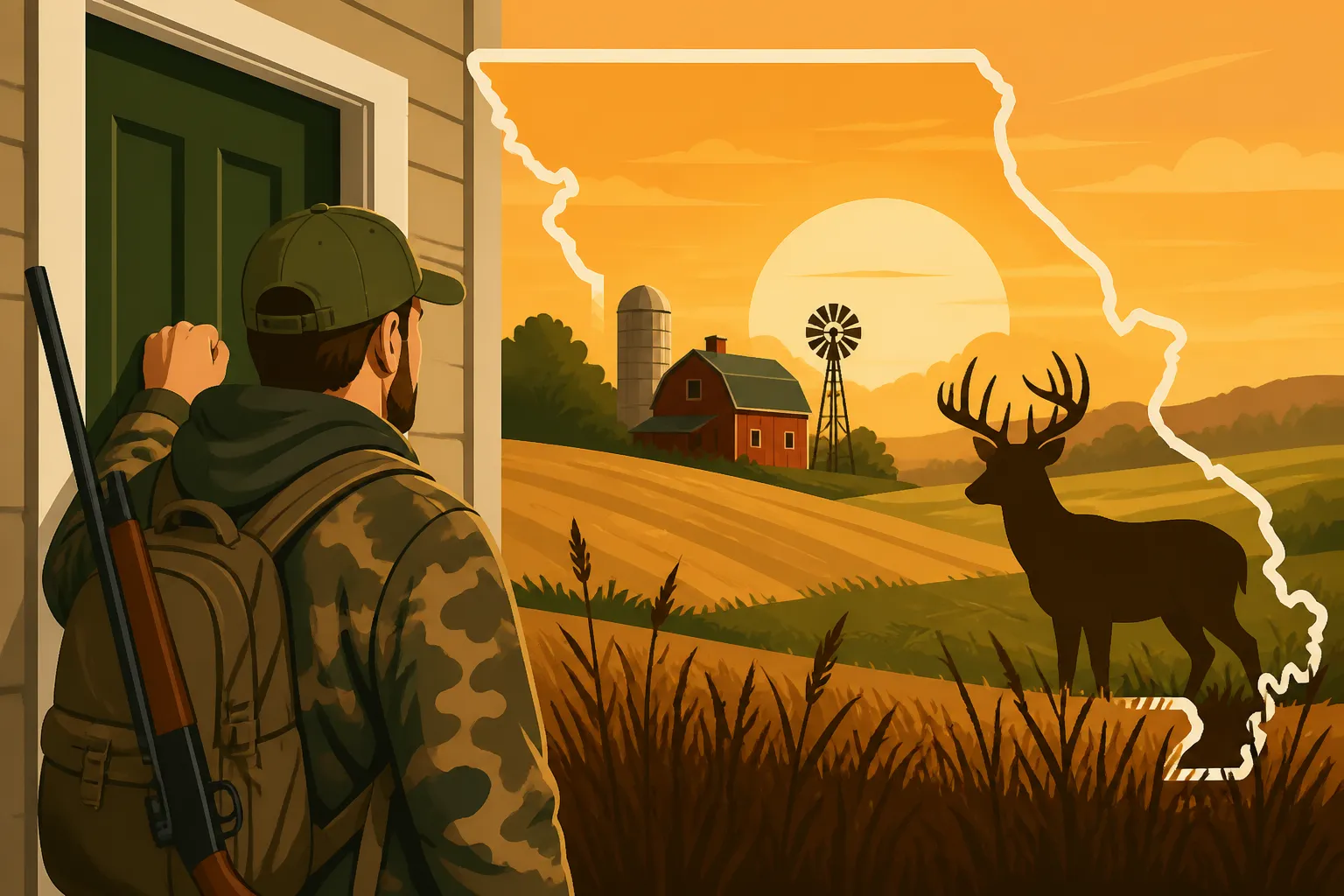
Knocking on Doors in Missouri Farm Country
Finding quality hunting land in Missouri can often feel like a constant uphill battle, especially when public land pressure is soaring and hunting lease prices seem to climb higher every season. Many hunters get discouraged, feeling like all the good spots are taken. But I'm here to tell you that an old-school approach, simply knocking on doors in Missouri farm country, can still be an incredibly effective way to unlock fantastic private land opportunities if you approach it correctly. This guide will walk you through everything you need to know to confidently and successfully ask for hunting permission.
The Enduring Value of the Knock: Why Private Land Matters in Missouri
Let's be real, the struggle is legitimate. More hunters are hitting the woods every year, and with the rise of digital mapping tools, those once-secret public land honey holes aren't so secret anymore. You can spend hours driving around, seeing "No Trespassing" signs everywhere, and feeling like you're constantly competing for space. It’s enough to make you throw up your hands. That's precisely why looking for private land access is more important than ever.
Private land, particularly in Missouri's rich agricultural counties, often holds the key to less pressured deer and turkey populations. These properties can offer better habitat, undisturbed sanctuaries, and consistent food sources that naturally attract game. While there are some fantastic resources for Scouting Missouri Public Land Before Season, relying solely on it can limit your options, especially during peak seasons like the November firearms portion. The sheer number of hunters during these times can make it feel less like hunting and more like a crowded park.
Moreover, securing permission on a private tract offers a completely different hunting experience. You gain a sense of ownership, responsibility, and the potential to truly manage the land for its wildlife. This isn't just about finding a place to pull a trigger; it's about building a connection to the land and the people who steward it. Many of Missouri's largest bucks, the kind that make headlines, often come from these quietly managed private parcels, away from the constant pressure of public ground.
Dealing with Public Land Crowds and Lease Costs
The reality of public hunting is that while it’s accessible to everyone, it often comes with a trade-off: competition. You might find a great sign, only to discover three other trucks parked there an hour before daylight. This isn't just frustrating; it can impact deer movement and your overall hunting strategy. Deer on heavily hunted public ground often become nocturnal, making daytime encounters far less common. For those looking to escape the crowds, learning to secure private land is a game-changer.
Then there's the cost of leases. If you've looked into leasing hunting ground in Missouri, you know it's not cheap. Prices per acre continue to rise, and many prime properties are locked up for years by hunting clubs or groups. This puts quality hunting out of reach for many average folks. This is where the old-fashioned, face-to-face request comes in. It bypasses the commercialization of hunting access and taps into the goodwill of landowners, often yielding incredible results for little to no financial cost beyond your time and effort. It’s a direct, personal approach that can differentiate you from the masses.
The Personal Connection That Pays Off
When you lease land, it's a business transaction. When you gain permission by knocking on a door, it's the start of a relationship. Landowners appreciate being asked directly and respectfully. It shows you care enough to make a personal investment. This relationship can lead to opportunities that extend far beyond a single season. Maybe they’ll let you hunt small game, or offer you access to different parts of their property over time. Building trust means you’re seen as a helper, not just a hunter.
This trust is incredibly valuable. Many landowners are simply tired of issues like litter, property damage, or hunters who disrespect boundaries. When you take the time to introduce yourself, explain your intentions, and offer to help, you immediately stand out. This personal touch is often the difference between a "no" and a "yes" and can be far more rewarding than any anonymous lease agreement.
Strategic Preparation: Research and Presentation Before You Approach
Before you even think about pulling into a driveway, a lot of homework needs to be done. You wouldn't show up for a job interview without preparing, and asking for hunting permission is no different. Your goal is to make a positive, trustworthy first impression. This starts long before you ever ring a doorbell.
Missouri farm country is diverse, from the rolling hills of the Ozarks to the expansive crop fields of North Missouri. Each area presents different opportunities and challenges. Researching the area and specific properties is crucial.
Identifying Promising Properties and Landowners
First things first: you need to find land worth asking about. Don't just pick random houses. Look for properties that have the right habitat: timber blocks, creek bottoms, overgrown fencerows, standing crops, or thick CRP fields adjacent to woods. These are the kinds of features that naturally attract and hold deer and turkey. Aerial maps are your best friend here. Tools like GoHunt or OnX Hunt are invaluable for this pre-scouting. They allow you to view property lines, see satellite imagery, and often even find landowner names. This information can help you target specific parcels that look promising for Entry Routes on Rolling Farm Ground or for setting up a stand along a Hunting a Missouri Fencerow Between Fields.
Once you've identified a few potential properties, try to find out who owns them. Sometimes, mapping apps provide this directly. Other times, you might need to check county plat maps online or even visit the county assessor's office. Knowing a landowner's name when you approach them (e.g., "Hi, Mr. Johnson? My name is…") immediately demonstrates respect and diligence, rather than a generic "Hey, buddy, you let people hunt here?". Focus on smaller tracts first; these are often overlooked by larger hunting groups and can still hold excellent game.
What to Bring and How to Present Yourself
Your appearance and what you bring to the door speak volumes before you say a word. Dress neatly and conservatively. You don't need a suit, but don't show up in dirty camo or work clothes, either. A clean pair of jeans or khakis, a simple shirt, and a clean ball cap (or no hat) are perfectly acceptable. You want to convey responsibility and respect, not desperation.
Here's a list of essential items to have with you:
- A simple, concise letter of introduction: This isn't always necessary, but it can be helpful. It should briefly introduce yourself, state your intention (respectful hunting), and include your contact information. This leaves something tangible behind if the landowner isn't home or needs time to think.
- Your hunting license and hunter education card: This proves you're a legal, educated hunter. While Missouri allows some exemptions, like the Missouri Apprentice Hunter Authorization, showing proof of proper training demonstrates you take safety seriously.
- A pen and small notepad: To jot down notes, contact info, or specific instructions if permission is granted.
- A printed aerial map of their property: Mark the areas you're interested in, but be prepared to discuss their specific boundaries and any off-limits areas. This shows you've done your homework and are serious about respecting their land.
- A small, thoughtful gift (optional but highly recommended): This can be anything from a local pie, a small gift basket, or even a gift card to a local hardware store or restaurant. It's a gesture of goodwill, not a bribe. It shows you appreciate their time and generosity. My wife bakes incredible cookies, and those have opened a lot of doors over the years!
Remember, this is about making a professional and polite impression. Your goal is to build trust from the very first interaction.
Mastering the Face-to-Face: Etiquette and Conversation at the Door
This is the moment of truth. You've done your research, you're dressed appropriately, and you have your materials ready. Now it’s time to knock. This step requires confidence, politeness, and the ability to listen.
Approaching a landowner can be intimidating, especially if you're not used to it. Remember that they have every right to say no, and your job is to make it easy for them to say yes by being courteous and respectful, regardless of the outcome.
The Right Way to Knock and Introduce Yourself
Timing is key. Avoid meal times (lunch, dinner) and early mornings or late evenings. Mid-morning to mid-afternoon on a weekend or a weekday can be ideal, when people are likely to be home but not busy with chores or eating. If there are kids playing outside, or people visibly busy, it might be better to come back another time.
When you approach the door, park your vehicle where it won't block access or look like you're trying to hide. Walk confidently but not aggressively to the door. Knock firmly, but not pounding. If there's a screen door, knock on the main door if possible. Step back a few feet from the door once you've knocked. This gives the homeowner space and helps them feel less confronted. Take off your hat if you're wearing one.
When they answer, start with a warm, polite greeting. "Good morning/afternoon, Mr./Mrs. [Landowner's Last Name]. My name is [Your Name], and I apologize for bothering you, but I was hoping to speak with you for just a moment about hunting on your property." Immediately state your purpose clearly and respectfully. Don't beat around the bush.
What to Say and What to Avoid
Be direct, honest, and concise. Here’s a good framework for the conversation:
- Introduce yourself and state your purpose (as above).
- Compliment their property (sincerely): "I've noticed your beautiful farm with that great timber block/creek bottom, and I was hoping you might allow a respectful hunter like myself to pursue deer or turkey this season."
- Explain your approach: "I'm a solo hunter (or with just one partner, if applicable) and very quiet. I'm looking for a low-impact way to enjoy the outdoors. I always adhere to all Missouri hunting regulations and would treat your land with the utmost respect." This is a good place to mention showing your license and hunter ed card, if you have it.
- Offer something in return: This is crucial. "I'd be happy to help with any chores you might have around the property—mending fences, clearing brush, helping with odd jobs—or I could bring you some fresh produce/meat/etc. from my garden/kitchen." Even if they say no to the hunting, a genuine offer of help can sometimes change their mind later or lead to other forms of access.
- Address safety and responsibility: "Safety is my number one priority. I'm very mindful of my surroundings and would only hunt in areas you designate, well away from any buildings or livestock. I'm also fully insured (if you are, through a hunting club or personal policy)." Ensure you discuss Missouri Hunter Orange Rules if applicable to the season you're interested in.
What to absolutely avoid:
- Demanding or entitled language: Never act like they owe you anything.
- Lying or exaggerating: Be honest about your intentions and experience.
- Talking about how many deer you'll kill: Focus on respect, safety, and the experience, not just the harvest.
- Criticizing their land or management: It's their property, respect it.
- Bringing a large group with you: This is a one-on-one conversation.
- Expecting an immediate "yes": Be prepared for a "no" or "let me think about it."
If they ask to see your license and hunter education card, have them readily available. Showing them you're a responsible, legal hunter can build a lot of confidence. They might also inquire about specific weapons you plan to use, so be ready to discuss Legal Firearms for Missouri Deer or crossbow rules.
Building Lasting Relationships with Landowners
Let's say you've done it – you got a "yes"! Congratulations, but the work isn't over. In fact, this is where the real work of building a long-term hunting relationship begins. Getting permission for one season is great, but maintaining that trust and goodwill means you could have access for years to come.
Remember that landowners are taking a leap of faith by allowing you onto their private property. Your actions will either validate that faith or break it.
Respecting Boundaries and Communicating Regularly
The absolute golden rule: respect every single boundary and instruction they give you. If they say, "Don't hunt past that creek," don't even step a toe across it. If they say, "No driving off the main path," walk the extra distance. These are not suggestions; they are conditions of your access. Failure to adhere to these rules is a sure way to lose your permission, not just with them, but potentially with their neighbors too. Hunters talk, and so do landowners.
Communication is also vital. Before you hunt, text or call to let them know you'll be on the property. "Hey Mr. Johnson, just wanted to let you know I'm heading out to the north timber this morning. Will be gone by noon." This simple courtesy goes a long way. If you harvest an animal, let them know! Offer to show it to them, or even share some of the meat. This builds a sense of shared experience. If you see something concerning, like a downed fence or suspicious activity, report it to them. You are now their eyes and ears on the property.
Showing Gratitude and Offering Continued Help
Never take your permission for granted. A simple thank you note after your first hunt, and definitely after the season, is a must. Sending them a Christmas card or stopping by with a small gift during the holidays keeps that relationship warm. My dad always took the landowner a venison roast or a turkey breast after a successful hunt. It’s a tangible way to share the bounty and show your appreciation.
Beyond gifts, proactively offer help throughout the year. "Spring's coming, Mr. Johnson, is there anything I can help with around the farm? Mending fences, moving brush piles, anything at all?" Even if they don't take you up on it, the offer itself reinforces your commitment and value. This is how you transform a one-time permission into a lasting partnership. This genuine approach is often why some hunters find Hunting Small Private Tracts in Missouri to be incredibly productive year after year.
Remember the value of stewardship. If you see trash on the property (even if it's not yours), pick it up. Close gates behind you. Report any issues you notice. You're not just a hunter; you're a temporary steward of their land.
Here’s a quick summary of key actions for successful door-knocking:
| Do's | Don'ts |
|---|---|
| Research thoroughly (GoHunt, plat maps) | Show up unannounced without any prior research |
| Dress neatly and respectfully | Wear dirty clothes or look disheveled |
| Bring your license and hunter education card | Forget your credentials |
| Have a map of their property ready | Ask them to point out their property lines |
| Be polite, confident, and concise | Be shy, aggressive, or ramble on |
| Clearly state your intentions | Be vague about what you want |
| Offer help or a thoughtful gift | Expect something for nothing |
| Listen carefully to their concerns | Interrupt or dismiss their concerns |
| Respect their "No" graciously | Argue or become defensive if denied |
| Communicate before/after hunting | Just show up or leave without informing them |
| Follow all rules and boundaries | Push boundaries or ignore instructions |
| Send thank you notes and offer year-round help | Disappear until next season |
Knocking on doors takes guts, and it won't always work out. You’ll hear "no" sometimes, and that’s okay. But with persistence, respect, and a genuine desire to build a relationship, you'll be amazed at the private land opportunities that can open up. It’s a method that still works incredibly well in Missouri farm country, and it can lead to some of the most rewarding hunting experiences of your life, well away from the Hunting Pressure on Missouri Public Ground.
Disclaimer
Please note that hunting regulations and landowner permissions can change. Always consult the latest Missouri Department of Conservation (MDC) regulations and confirm all landowner agreements before hunting. This guide is for informational purposes only and does not constitute legal advice.