Alternative Methods Portion Weapon Choices
Hunting in Missouri offers a wealth of opportunities, but sometimes the traditional rifle season just doesn't feel like enough time in the woods. Many hunters feel a pang of disappointment as November closes, thinking their deer season is over. Thankfully, Missouri's Alternative Methods Portion extends the deer season, opening up new challenges and different approaches. However, understanding the specific weapon choices and their unique rules can be a real head-scratcher. This comprehensive guide is here to untangle the confusion, breaking down each legal weapon for the Alternative Methods Portion so you can step into the late season with confidence and the right gear.
Understanding Missouri's Alternative Methods Portion
The Alternative Methods Portion is a crucial segment of Missouri's deer season, offering hunters a chance to extend their pursuit of whitetails after the main firearms season has concluded. It's often held in late December, typically right after Christmas and extending into early January. This period is specifically designed to allow hunters to use equipment that isn't typically permitted during the highly popular November firearms portion, hence the "alternative" in its name. It's a fantastic opportunity for those who love the quiet challenge of archery, the traditional feel of a muzzleloader, or who simply want more time afield.
The main appeal of this late-season segment is multifold. First, it offers a distinct change of pace. The woods are generally quieter, with fewer hunters compared to the peak rut or firearms season. This can translate to less pressured deer, though they are certainly more wary by this point in the year. Second, it often falls during colder weather, which means deer are heavily focused on reliable food sources, making their patterns a bit more predictable if you know what to look for. For many, it's a chance to fill a second tag or simply enjoy the solitude of a winter deer woods. If you're looking for more general information on how to approach this season, check out our guide on Alternative Methods Deer Hunting in Missouri.
Legal Weapon Choices and Their Specific Requirements
The Missouri Department of Conservation (MDC) is very clear about what constitutes a legal weapon during the Alternative Methods Portion. Unlike the general firearms season where centerfire rifles and shotguns are prevalent, this portion shifts the focus to more specialized equipment. It's crucial to understand these rules precisely, as an oversight could lead to a ruined hunt or, worse, a violation.
Muzzleloading Firearms
Muzzleloaders are a favorite for many during the Alternative Methods Portion, offering a blend of traditional hunting and modern capability. These single-shot, front-loading firearms can be incredibly effective when used correctly.
Types and Caliber Restrictions: You can use a flintlock, percussion, or inline muzzleloader. For deer hunting, the MDC requires a minimum caliber of .40. While many hunters opt for .50 caliber for its proven knockdown power, a .40 caliber is perfectly legal. Remember, you can only load a single projectile, meaning no buckshot or multiple projectiles are allowed for deer. This single projectile must be loaded from the muzzle end of the barrel.
Practical Considerations on the Hunt: Muzzleloaders require careful attention to detail. Cold, damp weather can significantly impact their reliability. Ensuring your powder stays dry and your primer/cap is secure is paramount. Range is another factor; while modern inlines can be accurate out to 150-200 yards, the typical shot in Missouri timber during late season is often much closer. Practice at various ranges, especially under field conditions, to understand your weapon's capabilities. Cleaning is also essential, as black powder substitutes can be corrosive. If you're diving deeper into this, our guide on Muzzleloader Tactics in the Alternative Methods Portion offers excellent insights.
Archery Equipment
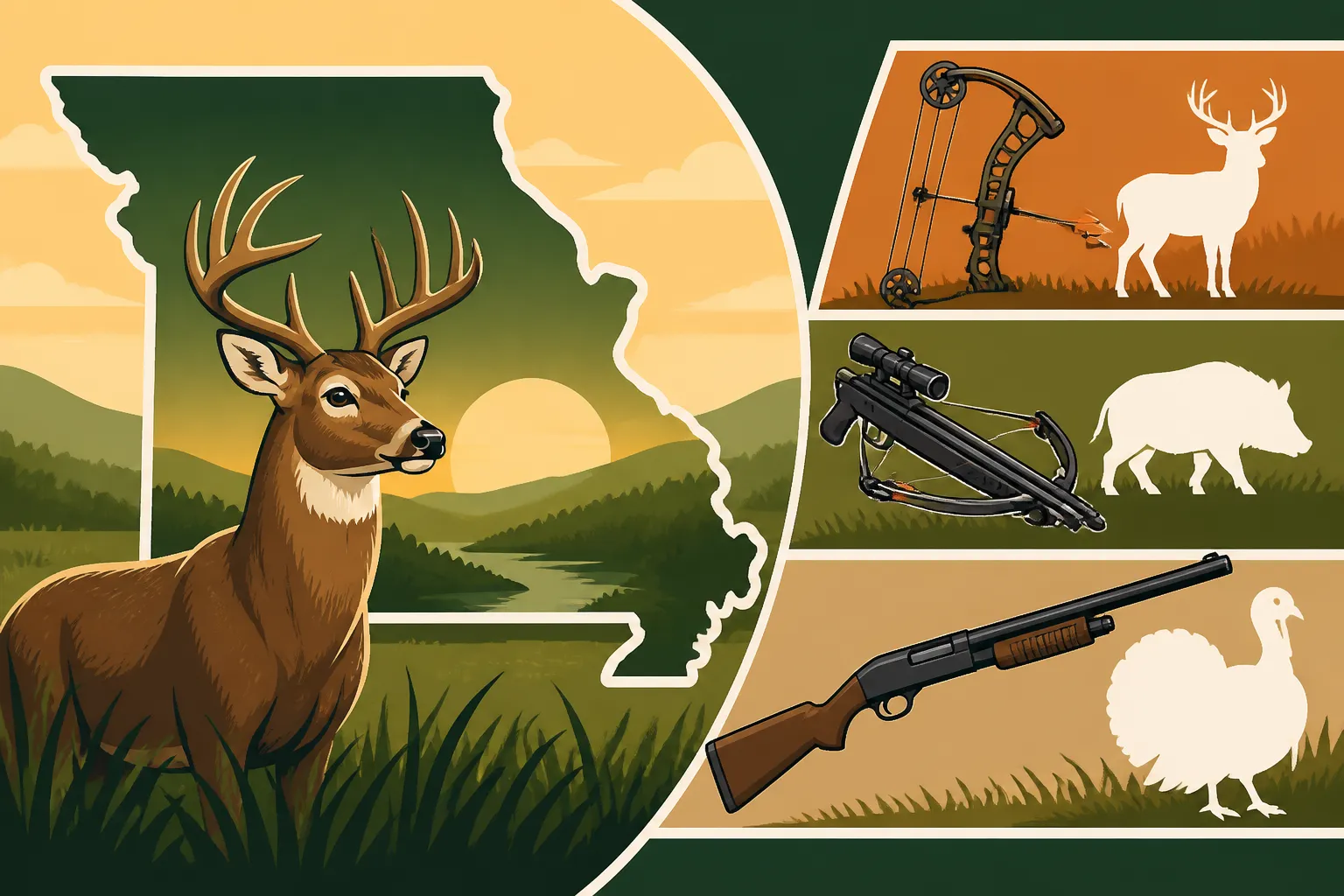
Bowhunting during the Alternative Methods Portion simply picks up where the regular archery season leaves off, applying the same rules and regulations. This means both traditional bows (recurve, longbows) and compound bows, as well as crossbows, are legal.
Minimum Draw Weights and Broadhead Rules: For compound and recurve bows, the minimum draw weight is 40 pounds. For crossbows, it's 100 pounds. These minimums ensure sufficient energy to ethically harvest a deer. When it comes to broadheads, they must be fixed-blade or mechanical broadheads with a minimum cutting width of 7/8 inch. Practice with the exact broadheads you intend to hunt with, as they can fly differently than field points. The quiet nature of archery equipment makes it ideal for stalking or close-range stand hunting, particularly when deer are concentrated on late-season food plots or timbered draws. For those interested in this specific method, our post on Crossbow Hunting Under Missouri Rules offers more depth.
Benefits in Late-Season Conditions: The stealth factor of archery equipment can be a huge advantage. With less foliage, deer have better visibility, making quiet movement and silent shots critical. Your effective range will likely be much shorter than with a muzzleloader, typically within 20-40 yards, so patience and precise shot placement are key.
Handguns
Hunting deer with a handgun offers a unique challenge and a deeply satisfying experience. It's not for everyone, but for those who master it, it can be incredibly rewarding.
Legal Calibers and Projectile Requirements: Just like muzzleloaders, there's a minimum caliber requirement: .40 for deer. The projectile must be a single, expanding bullet, meaning hollow points or soft points are usually preferred. No full metal jacket (FMJ) bullets are typically allowed for big game as they do not expand reliably. The barrel length must be at least 4 inches. Remember, this is a one-shot opportunity, so shot placement is absolutely critical, and practicing with your specific hunting load is non-negotiable.
Challenges and Rewards: Handgun hunting demands a high level of proficiency. The shorter sight radius and often heavier triggers make accurate shooting at distance more difficult than with a rifle. Effective range is usually limited to 50-75 yards for most hunters, often less. However, the portability and light weight of a handgun can be an advantage when still-hunting or navigating dense cover. It truly epitomizes the "up close and personal" aspect of hunting. Always ensure you are familiar with all Legal Firearms for Missouri Deer before heading out.
Air Rifles
Perhaps one of the most recent and least understood additions to Missouri's legal weapon list for deer is the air rifle. This option has opened new doors for hunters seeking a different kind of challenge.
Minimum Caliber and Energy: For deer, air rifles must be at least .40 caliber. More importantly, they must be capable of producing at least 200 foot-pounds of energy (FPE) at the muzzle. This FPE requirement ensures that the projectile has enough power for a clean, ethical harvest. Many air rifles that meet these criteria are powerful PCP (Pre-Charged Pneumatic) models, not your typical backyard pellet gun.
Accuracy and Noise Considerations: Modern big-bore air rifles can be incredibly accurate, often rivaling rimfire firearms. They are also significantly quieter than a traditional firearm, which can be an advantage in certain hunting scenarios or areas where noise is a concern. However, they do require specialized equipment like high-pressure air compressors or tanks to recharge them. Like any other weapon, extensive practice to confirm accuracy and energy delivery at various ranges is essential. For more detailed information, check out our guide on Are Air Rifles Legal for Missouri Deer?
Comparison of Alternative Methods Weapon Choices
To help clarify the differences and similarities between these alternative weapon choices, here's a quick comparison:
| Weapon Type | Minimum Caliber/Draw Weight | Typical Effective Range | Noise Level | Key Advantage |
|---|---|---|---|---|
| Muzzleloader | .40 caliber | 100-200 yards | Moderate | Traditional feel, good power |
| Archery (Bow) | 40 lbs draw weight | 20-40 yards | Silent | Stealth, close-range challenge |
| Archery (X-bow) | 100 lbs draw weight | 30-60 yards | Low | Easier to master, effective in blinds |
| Handgun | .40 caliber, 4" barrel | 25-75 yards | Loud | Portability, extreme challenge |
| Air Rifle | .40 caliber, 200 FPE | 50-100 yards | Very Low | Quiet, unique hunting experience |
Note: Typical effective ranges are highly dependent on individual skill, weapon setup, and environmental conditions.
Tactical Considerations for Alternative Methods Hunters
Hunting during the Alternative Methods Portion isn't just about the weapon; it's also about adapting your strategies to the late-season environment and the specific challenges these weapons present. The woods are different in late December and early January than they are during the rut.
Focusing on Late-Season Food Sources
By late December, the rut is long over, and deer's primary motivation is food and survival. Natural browse may be scarce or picked over, making concentrated food sources absolute magnets for whitetails. Look for standing grain crops like corn or soybeans that haven't been harvested yet. Brassicas, winter wheat, and even overlooked acorn patches (especially white oaks) can draw deer in. The key is finding areas with high-quality, readily available calories. Our article on Late-Season Food Sources for Whitetails goes into much greater detail on identifying these crucial areas. A good scouting app or detailed aerial maps can help you pinpoint these spots before you even step foot in the woods.
Dressing for Cold Weather Success
Missouri's late December and early January can be brutally cold, often with biting winds, snow, or freezing rain. Proper layering is not just about comfort; it's about safety and your ability to remain motionless and focused on stand for extended periods. Start with a good moisture-wicking base layer, add insulating layers (fleece, down, synthetic puffies), and top it off with a windproof and waterproof outer shell. Don't forget insulated boots, a warm hat that covers your ears, and heavy gloves or mittens with hand warmers. Staying warm directly impacts your ability to make a steady shot when the opportunity arises. Check out our advice on Cold Weather Sitting Strategy to learn more about preparing for those frigid hunts.
Adapting to Changing Deer Patterns
Deer behavior shifts dramatically after the rut and major firearms pressure. Bucks are often exhausted and have lost significant body weight. They, along with does and fawns, will prioritize recovering energy and staying alive. This often means they become much more nocturnal and stick to thicker cover, only venturing out to feed during the safest times, usually dawn and dusk. This is where diligent scouting, even after the season opens, becomes vital. Look for fresh tracks in snow or mud, droppings, and browse lines near your chosen food sources. Our guide on Scouting Missouri Public Land Before Season provides a strong foundation for understanding deer movement.
Public Land Strategies for Alternative Methods
Hunting public land during the Alternative Methods Portion can be rewarding, but it often means dealing with deer that have seen significant pressure. The key is to find areas that offer a sense of security for deer and are harder for other hunters to access. This might mean walking deeper into cover, finding small, overlooked pockets of habitat, or hunting steep, rugged terrain in the Ozarks. Using the Missouri Conservation Atlas to identify less-pressured corners of larger conservation areas can give you an edge. Think about how to approach your stand or blind without alerting deer and how to make a clean, quiet exit.
Maximizing Your Chances with the Right Setup
Choosing your weapon is only half the battle. Your success in the Alternative Methods Portion hinges on how well you prepare and how meticulously you plan your hunt.
Matching Weapon to Terrain and Conditions
Consider the specific area you'll be hunting. If you're in wide-open fields bordering thick timber, a muzzleloader or even a capable air rifle might give you the range you need. If you're tucked deep into a hardwood hollow or hunting dense cedar thickets, an archery setup or a handgun might be more suitable due to their maneuverability and shorter effective ranges. The less foliage in late season can make long shots difficult to conceal yourself for, so think about your preferred shooting lanes and how your chosen weapon performs within those distances.
Practice, Practice, Practice
This cannot be stressed enough, especially when using less-common weapons like muzzleloaders, handguns, or air rifles. Don't just sight in at the range and call it good. Practice shooting in your hunting clothes, from your stand or blind (if safe), and under various weather conditions. Understand how cold hands affect your trigger pull or how different temperatures might affect a muzzleloader's ignition. Become intimately familiar with your weapon's capabilities and your own limitations. This confidence will translate directly to a more ethical and successful hunt.
Importance of Tracking and Recovery
In colder weather, especially if there's snow, tracking can be easier, but the urgency of recovery remains the same. A deer hit in freezing temperatures will keep longer, but you still want to recover it quickly and efficiently. Mark your shot location carefully, note the deer's last direction of travel, and give it sufficient time before taking up the trail. Having a good tracking light or even a thermal optic for finding downed game can be invaluable, particularly if you're dealing with a difficult blood trail. For those unavoidable situations, knowing how to approach Blood Trailing After Dark in Missouri is a skill every hunter needs.
Considering Hunting During December Antlerless Days
It's also worth noting that the Alternative Methods Portion often coincides with Hunting December Antlerless Days in Missouri. This means you might have additional opportunities to fill antlerless tags, contributing to herd management and filling your freezer. Always double-check the specific regulations and county restrictions for antlerless permits during this time, as they can vary.
Disclaimer
Always consult the most current Missouri Department of Conservation (MDC) hunting regulations before heading afield. Rules and seasons can change, and it is the hunter's responsibility to know and follow all applicable laws.