Caney Mountain Refuge Turkey Country
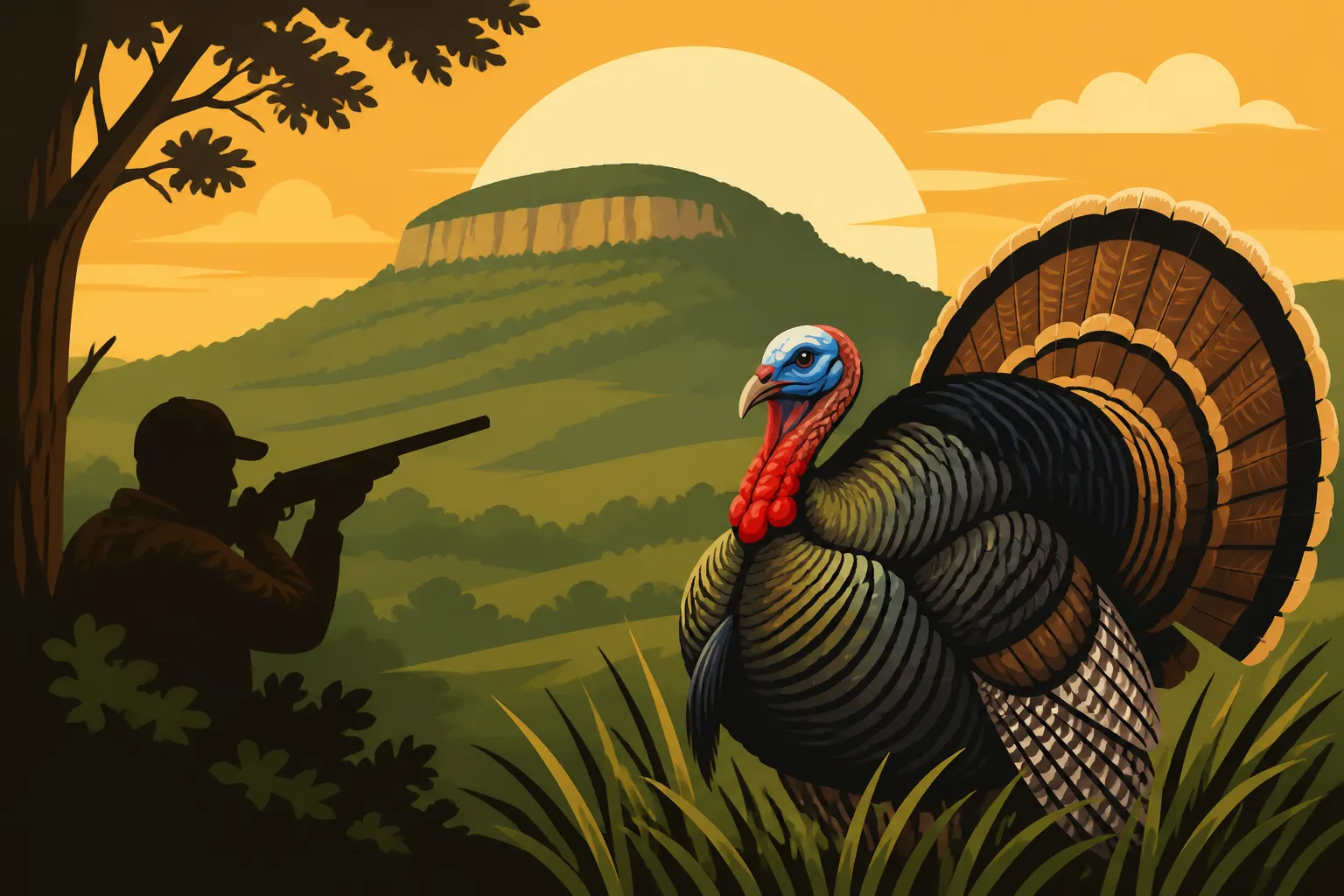
Heading into the spring woods of Missouri, many turkey hunters dream of gobblers sounding off in pristine, wild country. But let's be real, finding a true wilderness experience without endless pressure can feel like chasing a ghost. Caney Mountain Refuge, tucked away in the rugged Ozarks, offers just that – a challenging, rewarding hunt for those willing to put in the work, and this guide is here to help you navigate its unique demands and chase those elusive birds.
Understanding Caney Mountain Refuge for Turkey Hunting
Caney Mountain Refuge isn't your typical Missouri Conservation Area. It's a special place, managed with a focus on wild game and minimal human impact, which translates directly to a hunting experience unlike many others in the state. If you're tired of seeing more hunters than turkeys, or if you crave a hunt where you truly earn that bird, Caney Mountain might be calling your name.
The Landscape and Its Wild Character
Imagine deep, winding hollows, incredibly steep ridges covered in mature oak and hickory, and rocky outcroppings that seem to defy gravity. That’s the essence of Caney Mountain Refuge. This isn't manicured farm ground with easy walking trails and perfectly mowed food plots. This is raw, unadulterated Ozark timber, and its wildness is both its greatest challenge and its strongest appeal. The dense canopy and rugged topography mean sound can play tricks on you, and a gobbler that sounds close might be an entire ridge system away. Creeks trickle through the bottoms, offering occasional flat spots, but generally, expect to be climbing or descending. This wild character is precisely what allows turkeys here to thrive with a level of resilience that birds on more accessible, pressured grounds often lack.
Why Caney Mountain is Known for Turkeys
Caney Mountain Refuge has a long-standing reputation for its healthy wild turkey population, and for good reason. The combination of its remote, rugged terrain and management philosophy creates an ideal environment for turkeys. With less pressure from development and fewer easy access points for hunters, the birds here often exhibit more natural behaviors. They aren't as accustomed to human presence, which means they can be tougher to fool, but also means when you do connect with a gobbler, it feels like a genuine accomplishment. The habitat provides everything a turkey needs: vast tracts of mature timber for roosting and foraging for acorns, dense undergrowth for nesting and brood rearing, and scattered openings that offer bugging areas and strutting grounds. This consistency in prime habitat, coupled with limited disturbance, allows the population to remain robust, offering a quality hunt for those who embrace the wilderness aspect.
Unique Challenges of This Terrain
Let's be honest, hunting Caney Mountain is not for the faint of heart or the casually prepared. The terrain itself is perhaps the biggest hurdle. You'll encounter incredibly steep climbs and descents, often on rocky, uneven ground. This means a lot more energy expended just to move from one ridge to the next. Navigating through dense cedar thickets or thorny greenbrier patches can slow you down considerably and test your patience. Unlike areas with established trail systems, much of Caney Mountain requires bushwhacking, making quiet movement difficult. Finding easy access points off main roads is rare, and the concept of "easy walking" simply doesn't exist for most of the refuge. Furthermore, with fewer hunters frequenting the deepest reaches, a missed step or an unexpected injury can leave you in a truly isolated situation. These challenges, while daunting, contribute to the sense of wild adventure and the quality of the hunt.
Navigating the Terrain and Rules of Caney Mountain
Success in Caney Mountain Turkey Country hinges not just on your hunting skills, but on your ability to understand and navigate its unique landscape and regulations. It’s a place where preparation truly meets opportunity.
Access Points and Travel Within the Refuge
Unlike many of Missouri's Conservation Areas that boast extensive gravel road networks, Caney Mountain Refuge generally offers limited vehicular access. You'll find a few designated parking areas, often just pull-offs along county roads that border the refuge, or perhaps a small gravel lot leading to an old logging road. From these points, your two feet become your primary mode of transportation. Expect to walk, and walk a lot. Old logging roads or faint game trails might offer brief respites, but much of your travel will be off-trail, navigating dense woods and steep terrain. This means being mindful of where you park and remembering your entry point, as it's easy to get disoriented in the undulating landscape. Always check the specific refuge map for current access points, as they can occasionally change or be seasonal.
Special Regulations for Caney Mountain
Refuges, by their very nature, often operate under a different set of rules than standard Missouri Conservation Areas. It's absolutely critical to consult the most current regulations specific to Caney Mountain Refuge before you ever set foot on the ground. These might include unique season dates or bag limits that differ from the statewide Missouri Spring Turkey Season Structure. There could be specific restrictions on weapon types, scouting periods, or even how you can transport a harvested bird out of the area. For instance, some refuges limit pre-season scouting or prohibit the use of ATVs or even electric bikes for access. Always look for signage at entry points, and always check the official Missouri Department of Conservation (MDC) online resources or contact the local refuge office directly for the most up-to-date and specific regulations. Knowing these details is not just about compliance; it's about avoiding a ruined hunt or, worse, a citation.
Utilizing Mapping Tools for Better Success
In a rugged and less-trafficked area like Caney Mountain, reliable mapping tools are not just helpful, they're essential. Forget about relying solely on old-school paper maps unless you're truly expert with them; modern apps like onX Hunt are invaluable. These platforms allow you to download offline maps, so you're not left without navigation when cell service inevitably disappears in the hollows. With onX Hunt, you can view detailed topographic lines, pinpoint property boundaries (crucial for staying within the refuge limits), identify potential water sources, and mark key features like roosting ridges, strutting zones, or even old logging roads you might discover. You can even use it to track your path, helping you navigate back to your vehicle at the end of a long day. Similarly, other tools like GoHunt offer comprehensive mapping features that can provide aerial imagery and public land overlays. Using these tools to study the terrain beforehand, identifying likely travel corridors, saddle points, or benches along ridges, will significantly increase your efficiency and reduce wasted effort during the hunt. Layers showing timber density and elevation changes are especially useful for planning your approach and predicting how a gobbler might move. Reading Aerial Photos for Ozark Deer can offer transferable skills here, helping you understand terrain features for turkeys as well.
| Feature | Standard CA (North MO) | Caney Mountain Refuge (Ozarks) |
|---|---|---|
| Terrain | Rolling hills, crop fields | Steep ridges, deep hollows |
| Timber Density | Mixed, often fragmented | Extensive, mature, dense |
| Road Access | Often good, gravel networks | Limited, mostly foot access |
| Hunter Pressure | Variable, often high | Lower in deeper areas, earned |
| Navigation Need | Moderate | High, GPS/mapping critical |
| Physical Demand | Moderate | High, strenuous hiking |
| Turkey Behavior | More accustomed to humans | Wary, wilder, less predictable |
Strategies for Success in Caney Mountain's Turkey Woods
Hunting turkeys in Caney Mountain's wild terrain demands a different approach than calling birds in open farm country. You'll need grit, patience, and a willingness to adapt your tactics.
Scouting the Refuge Before Your Hunt
Pre-season scouting is paramount for success in Caney Mountain, perhaps even more so than in other areas. This isn't a place where you can just show up on opening morning and expect to stumble into birds. You need to understand the lay of the land, identify where turkeys are likely to be, and plan your approach. Start by poring over your mapping apps (like onX Hunt) to pinpoint potential roosting ridges—these are often the highest points or large, mature trees along steep slopes. Look for water sources, as turkeys need to drink, and note any subtle benches or flat spots along ridges where birds might strut or feed. Actual physical scouting is non-negotiable. Walk the hills, listen for distant gobbling, and look for fresh sign: tracks in soft earth, droppings, and shed feathers. Pay attention to how sound carries and how the terrain funnels movement. The more you know about where the turkeys are likely to be, and how to get to and from those spots quietly, the better your chances. This is where Scouting Missouri Public Land Before Season truly pays dividends.
Effective Calling and Decoy Tactics
Calling turkeys in the dense, rugged terrain of Caney Mountain requires a nuanced approach. While loud locator calls like crow or owl hoots are great for getting a bird to shock gobble off the roost, you'll want to adjust your turkey calling volume and frequency once you're on the move or setting up. Sound can be tricky here; it might carry poorly through dense timber or echo off opposing ridges, making it hard to pinpoint a bird's exact location. Start with confident, clear yelps and cutts, but be prepared to soften your calls as a bird closes in. Patience is key; sometimes less is more. Avoid overcalling, especially if a bird is working its way toward you. Using a variety of calls – slate, box, and diaphragm – allows you to adapt to the bird's mood and the conditions. Decoys can be effective, but remember the dense cover. A full-strut tom decoy might be too aggressive or too visible in thick woods, potentially scaring off wary birds. A submissive hen or a single quarter-strut jake might be more appropriate and less intimidating, especially if you're Setting Up Against a White Oak or other large cover. Place decoys where they are visible from a likely approach path, but not so exposed that they look out of place. This might involve setting up in a small opening or a break in the timber rather than a wide-open field. For more aggressive tactics, consider a run-and-gun approach, as detailed in Run-and-Gun Turkey Tactics in the Missouri Ozarks, to quickly cover ground and engage gobblers that might otherwise hang up in the thick cover.
Setting Up for Success in Rugged Terrain
Choosing your setup location in Caney Mountain is critical. Unlike flat agricultural fields, you can use the terrain to your advantage. Look for benches along a ridge, the tip of a ridge point, or a slight rise in a hollow. These natural features can act as funnels, channeling turkeys into your setup. Always ensure you have a solid backdrop, like a large tree or a thick brush pile, to break up your silhouette and provide concealment from sharp-eyed gobblers. Consider how sound will travel and how the bird will likely approach. If he's gobbling from a hollow, he'll often try to come up a finger ridge or draw to reach you. If he's on the opposite ridge, he might drop into a low spot and then ascend to your position. Pay attention to your entry and exit routes; you don't want to silhouette yourself on a skyline. Sometimes, the best setup is just above a subtle crest on a ridge, allowing you to peek over and spot a bird without being seen. Being able to get quiet and concealed quickly in these Hunting Turkeys in Ozark Hollows or on the steep slopes is crucial.
Considerations Beyond the Hunt: Safety and Preparedness
A successful turkey hunt in Caney Mountain isn't just about calling and shooting; it’s about making it home safely. The rugged and remote nature of the refuge demands extra attention to safety and preparedness.
Physical Demands and What to Carry
Let's be blunt: hunting Caney Mountain is a workout. The relentless climbs and descents will test your cardiovascular fitness and leg strength. You must be in good physical condition to truly enjoy and safely navigate this terrain. Appropriate footwear is non-negotiable – sturdy, waterproof hiking boots with excellent ankle support are essential for traversing rocky, uneven ground. Layered clothing is also key, as spring mornings can be chilly, but the midday sun combined with strenuous hiking will warm you up fast. Beyond your hunting gear, always carry a backpack with essentials: plenty of water (more than you think you'll need, as natural sources can be scarce or contaminated), high-energy snacks, a flashlight or headlamp (even if you plan to be out before dark, things happen), and a basic First Aid Kits for Remote Ozark Ground. A small survival kit with a fire starter, emergency blanket, and whistle can also be a lifesaver. Think about what you'd need if you had to spend an unexpected night out, especially when considering Boots and Packs for Ozark Country.
Navigational Skills and Staying Found
It's remarkably easy to get turned around in the deep, winding hollows and repetitive ridges of the Ozarks. Even with mapping apps, a dead battery or a dropped phone can leave you disoriented. Always carry a physical compass and know how to use it in conjunction with a paper map (even if it's a simple topographical printout). Before you head out, orient yourself with landmarks. As you walk, periodically check your compass and your GPS to ensure you're heading in the right direction. Use features like drainages, rock formations, or distinct tree lines as mental breadcrumbs. If you do get lost, stay calm. The first step is to recognize you're lost. Then, consult your map and compass, or your phone's GPS if it's working. If all else fails, stay put, especially as darkness approaches, and try to attract attention. Telling someone your exact hunting plan and expected return time is not just a good idea, it's a non-negotiable safety rule for hunting in remote areas.
Respecting the Resource and Other Hunters
Caney Mountain, despite its ruggedness, is still a shared resource. Practice ethical hunting by always following regulations, ensuring a clean shot, and quickly recovering any downed game. Leave no trace behind – pack out everything you pack in, including spent shell casings and snack wrappers. While it's a remote area, you might still encounter other hunters, especially on weekends or during peak Missouri Spring Turkey Permits and Limits dates. Be courteous and respectful. If you hear another hunter working a bird, give them a wide berth. Avoid "sky-lining" yourself on ridges, which not only gives away your position to turkeys but also makes you an unsafe target for others. The spirit of the wild Ozarks demands a certain level of respect, both for the land and for your fellow outdoors enthusiasts. Even in less crowded spots like Caney, understanding Hunting Pressure on Missouri Public Ground is wise, as certain pockets will still draw more people than others.
Disclaimer
This article is for general informational purposes only and does not constitute professional advice. Laws, prices and regulations vary by location and change over time. Consult a qualified professional for guidance on your specific situation.