Reservation Versus Walk-In at a Wetland
There’s nothing quite like the anticipation of a good duck hunt, but for many of us, that excitement can quickly turn to frustration when we think about gaining access to Missouri’s prime wetland areas. The confusion between reservations and walk-in opportunities can make planning a hunt feel like a game of chance, leading to wasted early mornings or missed opportunities. This guide is here to untangle the complexities of securing your spot on Missouri’s public wetlands, helping you understand both systems and how to navigate them effectively so you can focus on the birds, not the logistics.
Understanding Missouri's Wetland Access System
Missouri is a fantastic state for waterfowl hunting, thanks to the dedicated efforts of the Missouri Department of Conservation (MDC) in managing numerous wetland areas across the state. These areas, from the vast expanses of Duck Creek to the vital stopovers like Grand Pass, are critical for migrating ducks and geese on the Mississippi Flyway. However, because these spots are so productive and often hold incredible numbers of birds, demand for access is high. To manage this demand fairly and ensure a quality experience, the MDC utilizes a combination of drawing systems: pre-season reservations and daily morning drawings for walk-in spots. It’s not always a simple process, and understanding the nuances is key to not showing up disappointed.
The Managed Hunt Draw System
Before the waterfowl season even begins, many of Missouri's most popular wetland areas offer a reservation system. This isn't just about showing up; it’s about planning ahead, often months in advance. Hunters apply for specific dates and areas, hoping their number comes up in what often feels like a lottery. If you're lucky enough to draw a reservation, you secure a guaranteed spot for that specific date. This system is designed to spread out hunting pressure and give everyone a fair shake at prime dates.
These reservations are highly sought after, and for good reason. Imagine knowing you have a guaranteed spot in a flooded timber hole at Duck Creek Conservation Area Hunting or a prime field blind at Eagle Bluffs. That peace of mind changes your entire hunting preparation. However, it also means a lot of competition. The application period usually opens well before the season, and you need to be diligent about checking MDC announcements so you don't miss the window. The draw results can be nerve-wracking to wait for, but a successful draw means you can scout, prepare your gear, and plan your travel with confidence.
The Daily Morning Draw for Walk-Ins
For those who don't secure a reservation, or for areas that don't offer them, the walk-in system is the primary route to access. This is where the true grit of a waterfowl hunter often comes out. You arrive at the wetland area's headquarters well before legal shooting light, often in the pitch dark, to put your name in a daily drawing for any remaining spots. These spots might be unreserved blinds, open timber holes, or even designated "refuge zones" that are opened up under specific conditions.
The daily draw can be a real roller coaster of emotions. You might be the first person in line, only to draw a terrible number, or you could arrive later and get lucky. It's a system that tests patience and dedication, often requiring multiple attempts to get a hunt in. Many seasoned hunters have stories of sitting through a Poor Line Numbers at a Missouri Wetland drawing, watching every good spot get called out before their turn, only to try again the next day. This is the classic "run-and-gun" approach, but it starts with a potentially long wait in the cold.
Reservation Hunting: Pros, Cons, and Strategies
Securing a reservation for a Missouri wetland hunt is often seen as the golden ticket. It eliminates much of the uncertainty and anxiety associated with the daily draw, allowing for a more deliberate and planned hunting experience. But like any system, it has its trade-offs.
Advantages of Drawing a Reservation
The biggest advantage of having a reservation is the guaranteed access. Knowing you have a specific blind or area reserved for a particular date is invaluable. It means no brutal early alarms just to sit in line, no agonizing wait for your number to be called, and no immediate disappointment if you draw poorly. You can plan your decoys, strategize your calling, and set up exactly where you want, within the area designated by your reservation. This is especially beneficial for those traveling a distance, as it makes the trip worthwhile.
Furthermore, a reservation often grants access to some of the most sought-after spots on a given area. These are often blinds or timber holes known for consistent action. With a reservation, you can thoroughly scout the area beforehand, getting a feel for Reading Water Levels on a Wetland, understanding bird movement, and identifying optimal decoy spreads. For instance, if you've drawn a timber hole in the middle of a big area, you can use a mapping app like onX Hunt to pinpoint your route, mark potential obstacles, and ensure you arrive at your spot efficiently in the dark.
The Challenges of the Reservation System
However, getting a reservation is far from guaranteed. The application process itself requires foresight and attention to detail, as deadlines are firm. The draw can be highly competitive, especially for prime dates like opening weekend or during the peak of the Duck Migration Timing Through the Flyway. You might apply for multiple areas and dates only to come up empty, leaving you scrambling for walk-in opportunities or alternative plans. This can be particularly frustrating if you've blocked out vacation time specifically for a hunt.
Another aspect to consider is the inflexibility. If you've drawn a reservation for a specific date, you're locked into it. What if the weather turns south, or the birds aren't cooperating on that particular day? Unlike a walk-in where you might have the option to pick a different day, a reservation is a one-shot deal for that date. This can lead to less-than-ideal hunting conditions if the birds have moved on or a cold front pushes them out of the area you’re assigned.
Maximizing Your Reservation Chances
To improve your odds of getting a reservation, start by studying the MDC’s managed hunt calendar well in advance. Understand the application periods for different areas and set reminders. Apply for as many dates and areas as your schedule and budget allow, diversifying your applications to increase your chances. Don't be afraid to apply for weekdays, as these are often less competitive than weekends.
Once you’ve drawn a reservation, don’t just show up blind. Use your guaranteed access as an opportunity to truly prepare. Scout the area if possible, even if it’s just driving the perimeter or looking at aerial maps on onX Hunt to understand the layout of your designated hunt zone. Review the specific area rules, as each wetland can have unique requirements regarding blind material, decoy limits, or Nontoxic Shot Rules on Missouri Wetlands. Being prepared makes all the difference when your reserved day finally arrives.
Walk-In Hunting: Opportunities, Frustrations, and Tactics
Walk-in hunting is the lifeblood for many Missouri waterfowl hunters, offering spontaneity and a chance to get out even if the reservation draw didn't go your way. It's a testament to dedication, but it comes with its own unique set of challenges and triumphs.
The Nature of Walk-In Draws
The walk-in draw, often referred to as the "morning draw," is a daily lottery held at the wetland area's headquarters. Hunters check in, often hours before dawn, to enter their names for available hunting spots. The number of spots varies daily, depending on how many reservations were utilized and how many designated walk-in areas are available. Participants are given a number, and spots are called out in numerical order. It's a tense, exciting, and sometimes heartbreaking ritual that How a Missouri Wetland Morning Draw Runs perfectly describes.
The raw energy of the morning draw is palpable. Hunters huddle together in the dark, sipping coffee, trading stories, and anxiously waiting for their number to be called. When a good number is drawn, the hunter gets to pick from the available spots, leading to a quick scramble to gear up and get to the chosen blind or timber hole. If you draw a late number, you might be left with less desirable spots, or no spots at all. It's a gamble every time you show up.
The Frustrations and Rewards of Walk-Ins
The frustration of the walk-in system is primarily the uncertainty. You can invest a lot of time and effort—driving long distances, waking up at 2 AM, and waiting for hours—only to draw a bad number and go home empty-handed. This can be incredibly disheartening, especially when a long drive is involved. The competition is often fierce, particularly on weekends and during prime migration. It’s also tough when you feel like you've done everything right, but luck just isn't on your side.
However, the rewards of a successful walk-in hunt can be immense. There's a certain satisfaction in earning your spot through persistence. When you draw a good number and get into a hot blind, it feels like you've truly earned that hunt. Walk-ins also offer flexibility. You can choose to hunt on days with better weather forecasts or when bird reports are more promising. If one wetland is slow, you might decide to try another the next day, assuming you can make the drive. This adaptability is a huge draw for many hunters.
Strategies for Successful Walk-In Hunting
To maximize your chances with walk-in hunting, strategy is crucial. First, arrive early. I'm talking earlier than you think you need to be. Being among the first to sign up significantly increases your odds of drawing a low number, which means more options for choice spots. This might mean camping nearby or sacrificing sleep, but it often pays off. Second, consider hunting weekdays. Weekends see the highest pressure, so if your schedule allows, a Tuesday or Wednesday hunt will likely have fewer hunters and better draw odds.
Third, be flexible with your target areas. While everyone wants the famous green timber holes, sometimes a less popular field blind or a remote slough can offer excellent hunting with less competition. Don't be afraid to study maps with onX Hunt and look for overlooked corners or more challenging access points on Missouri Conservation Areas Explained. Finally, always have a backup plan. If the walk-in draw doesn't go your way, know if there's an alternative public land nearby you can pivot to, or if a small game hunt might be in the cards instead. It helps ease the sting of disappointment and keeps you in the field.
Comparing Reservation and Walk-In Access
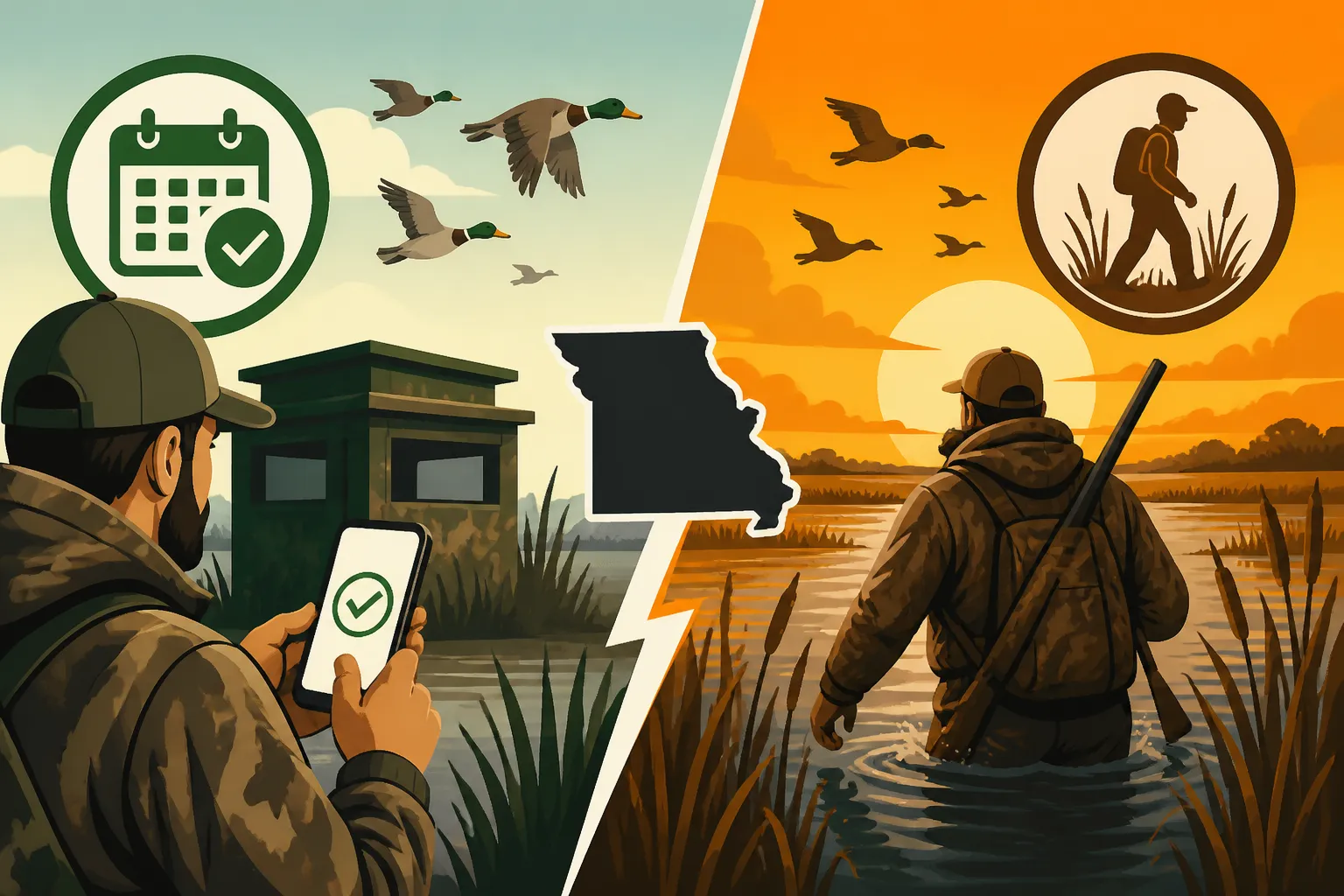
To truly understand which method might be best for your next Missouri waterfowl adventure, it helps to put them side-by-side. Both have their place, depending on your hunting style, schedule, and tolerance for uncertainty.
Here's a quick comparison of the two primary access methods for Missouri wetlands:
| Feature | Reservation System | Walk-In System |
|---|---|---|
| Access | Guaranteed access if drawn; pre-planned. | Dependent on daily draw luck; uncertain until morning of hunt. |
| Planning | Requires early application, strict deadlines, and long-term planning. | Spontaneous; can decide day-of, but requires very early arrival. |
| Competition | High competition during application phase for prime dates/areas. | High competition daily, especially on weekends and peak migration. |
| Flexibility | Limited flexibility; once drawn, you're locked into specific date/area. | High flexibility; choose to hunt on favorable weather days or change areas easily. |
| Effort | Effort front-loaded (application); easier morning of hunt. | Effort daily (early wake-ups, waiting in line, potential disappointment). |
| Scouting | Allows for extensive pre-season scouting of your specific reserved area. | Scouting is more generalized; specific hunt spot unknown until draw. |
| Psychology | Peace of mind if successful; frustration if unsuccessful in draw. | Daily excitement and anticipation; potential for immediate disappointment or triumph. |
| Ideal For | Hunters who prefer certainty, plan far in advance, or travel long distances. | Hunters who are flexible, enjoy spontaneity, or live close to wetland areas. |
When you consider your own hunting style, you can see how both options fit different needs. If you're someone who meticulously plans your hunts, enjoys scouting, and wants to minimize surprises, aiming for a reservation is probably your best bet. If you thrive on the thrill of the chase, are adaptable to changing conditions, and don't mind putting in the early morning effort, the walk-in system offers plenty of opportunities.
Ultimately, many dedicated waterfowl hunters in Missouri employ a hybrid approach. They apply for reservations, hoping for a lucky draw, but always keep the walk-in system in their back pocket as a fallback. By understanding both systems, you empower yourself to make the most of what Missouri's fantastic waterfowl hunting has to offer. Whether you're chasing greenheads in the timber or honkers in the fields, knowing how to get on the ground is the first step to a successful hunt.
Disclaimer
This article is for general informational purposes only and does not constitute professional advice. Laws, prices and regulations vary by location and change over time. Consult a qualified professional for guidance on your specific situation.