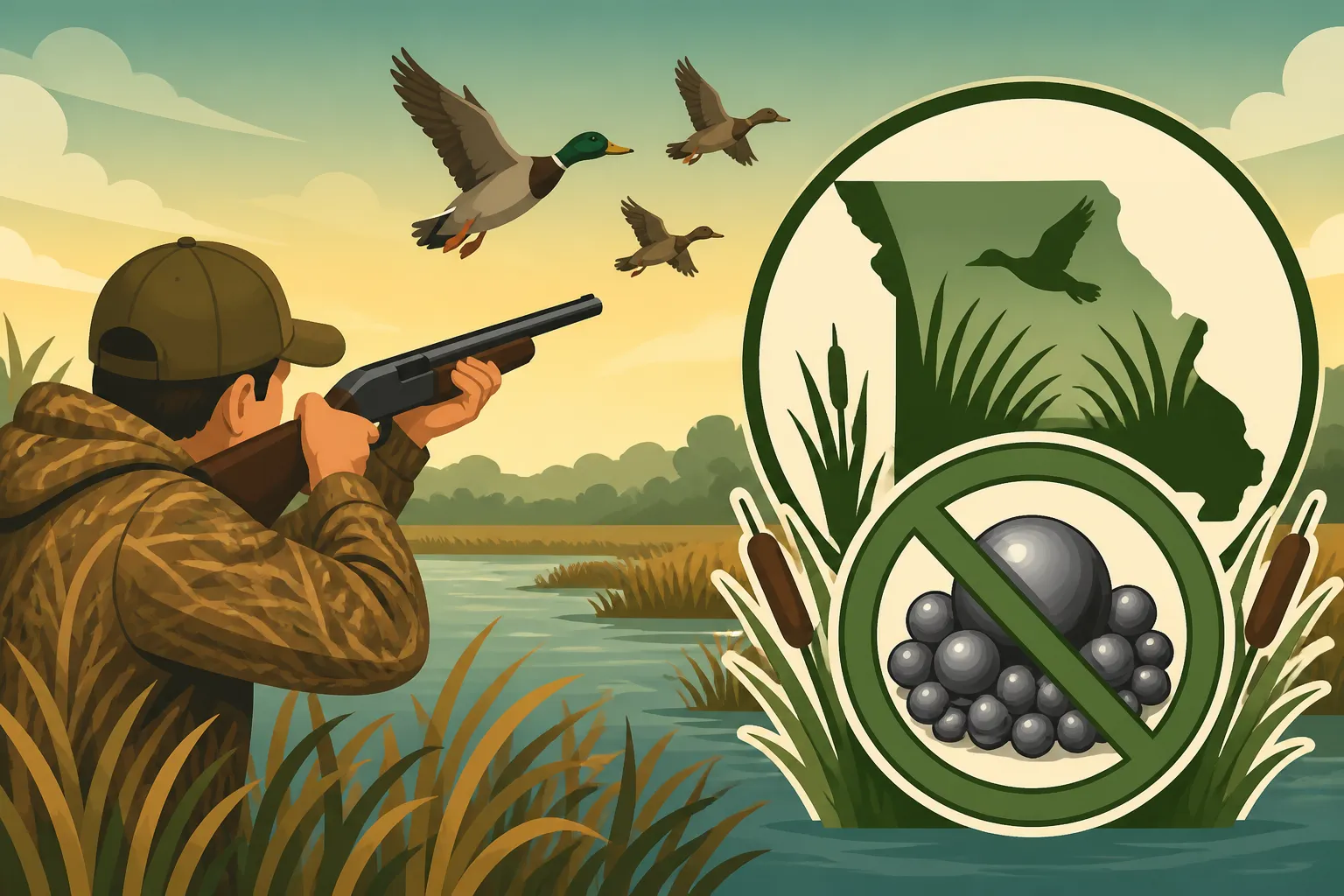
Nontoxic Shot Rules on Missouri Wetlands
It's always a headache trying to keep up with all the regulations when you're just trying to enjoy a peaceful day in the field or marsh. One of the most critical, and sometimes confusing, rules for many Missouri hunters revolves around nontoxic shot, especially when you're planning to chase ducks and geese on our beautiful wetlands. This comprehensive guide is here to untangle the nuances of nontoxic shot rules on Missouri's public wetlands, helping you stay compliant and focus on your hunt.
Why Nontoxic Shot? Understanding the "Why" Behind the Rule
It can feel like an extra hassle, having to buy different types of ammunition or spend more money, but the rule requiring nontoxic shot on Missouri wetlands, and federally for waterfowl, didn't just appear out of nowhere. There's a deeply rooted environmental and conservation reason behind it, and understanding that "why" can make the "what" a lot easier to swallow.
The Legacy of Lead and Waterfowl
For generations, lead was the go-to material for shotgun pellets. It was dense, cheap, and effective. The problem, though, became painfully clear as scientific studies mounted: spent lead shot, particularly in waterfowl hunting areas, was a silent killer. When you pull the trigger over a marsh or a flooded field, those lead pellets fall into the water or mud. Ducks and geese, especially dabblers like mallards and teal, spend their lives sifting through the bottom for food and grit – tiny stones they ingest to help grind up food in their gizzards.
Unfortunately, spent lead pellets look a lot like grit or seeds. A duck might swallow a few, thinking they're aiding digestion. But once ingested, the lead slowly breaks down in the bird's acidic gizzard, entering its bloodstream. This lead poisoning is agonizing. Birds become lethargic, lose their appetite, suffer from muscle weakness, and often develop "angel wing," a deformation that prevents flight. They become easy prey or simply starve to death. It's a slow, agonizing process that can decimate local populations and even affect other species, like eagles, that prey on sick or dead waterfowl. This wasn't just a few birds; it was millions, year after year, posing a significant threat to the very populations we love to hunt and conserve.
The Evolution of Conservation and Regulation
The grim reality of lead poisoning spurred a massive shift in conservation policy. Nationally, the U.S. Fish and Wildlife Service, working with state agencies, phased out lead shot for waterfowl hunting, culminating in a nationwide ban in 1991. Missouri, with its rich tradition of waterfowl hunting and its critical position along the Mississippi Flyway, was at the forefront of this change. The Missouri Department of Conservation (MDC) recognized the importance of protecting its wetlands, which serve as vital wintering and migration grounds for millions of ducks and geese.
While the federal ban covered waterfowl, Missouri took it a step further on many of its managed wetland areas. Recognizing that lead shot dropped by upland bird hunters or small game hunters could still contaminate these sensitive environments, the MDC expanded the nontoxic shot rule to apply to all shotgun hunting on designated areas. This proactive approach ensures that these crucial habitats remain free of lead contamination, safeguarding not only waterfowl but the entire ecosystem. It's a testament to our collective commitment to conservation, even when it means adapting our traditional practices.
Where Do Nontoxic Shot Rules Apply in Missouri? Defining "Wetland"
The term "Missouri wetlands" can be broad, and it's easy to get confused about exactly where nontoxic shot is mandatory. It's not every puddle or drainage ditch, but specific, often intensively managed, areas that draw significant waterfowl populations or are critical for ecological health.
Federally Managed Lands and National Wildlife Refuges
First off, any hunting on federally managed lands, particularly National Wildlife Refuges (NWRs) within Missouri, will adhere to federal nontoxic shot requirements. These refuges are established precisely for the conservation of migratory birds and other wildlife, so protecting them from lead contamination is paramount. Places like Loess Bluffs National Wildlife Refuge in northwest Missouri or Mingo National Wildlife Refuge in the Bootheel are prime examples.
If you plan to hunt anything with a shotgun on an NWR, expect that nontoxic shot will be required, not just for waterfowl, but often for upland game and small game as well. These rules are usually non-negotiable and strictly enforced by federal agents. Before heading out, it's always wise to check the specific regulations for the individual refuge you plan to visit, as rules can sometimes have nuances. These areas are truly sanctuaries, and our hunting practices there reflect that higher standard of protection. You can often find specific rules for these areas on the NWR's official website.
Missouri Conservation Areas and Designated Wetlands
The bulk of Missouri's nontoxic shot rules that apply beyond just waterfowl hunting fall under areas managed by the Missouri Department of Conservation (MDC). The MDC manages numerous Conservation Areas (CAs) across the state, and many of these are specifically managed for waterfowl. On these designated "wetland" or "waterfowl management" CAs, the nontoxic shot requirement typically extends to all shotgun hunting. This means if you're hunting anything from doves to ducks, pheasants, quail, rabbits, or squirrels with a shotgun on these specific CAs, you must use nontoxic shot.
Think of iconic Missouri waterfowl hunting destinations like Grand Pass Conservation Area, Eagle Bluffs Conservation Area, or Fountain Grove Conservation Area. These are prime examples where the rule is in full effect. It's not every single acre of every Conservation Area, so you can't just assume. The critical step is to consult the specific area's regulations, which are usually detailed in an area brochure available on the MDC website or often linked through mapping apps like onX Hunt. I can't stress this enough: always check the area-specific rules before you leave home. A quick search for Missouri Area Brochures and Local Rules will lead you right where you need to go. You can also explore options for Managed Hunt Draws on Missouri Wetlands where these rules are very strictly enforced.
Private Land Adjacent to Wetlands or Shared Waterways
Now, what about private land? Generally, statewide regulations apply to private land. However, there are considerations when your private hunting ground borders a public wetland area or a shared waterway like the Missouri River. While it might seem like common sense, it's worth stating: you cannot shoot lead shot on your private land if those pellets are likely to fall into a regulated public wetland or waterway where nontoxic shot is required.
Imagine you're hunting ducks on your own private pond that happens to be directly adjacent to, say, Duck Creek Conservation Area Hunting. Even though you're on private property, if your shots are carrying over onto the CA, you could be in violation. The same goes for hunting along river systems like the Missouri River. While Hunting Missouri River Sandbars for Ducks often offers unique opportunities, you must be hyper-aware of where your shot is landing and whether you're inadvertently contaminating a regulated area. Always err on the side of caution. If there's any doubt about lead shot falling onto a public wetland, use nontoxic. It's not just about avoiding a ticket; it's about being a responsible hunter and steward of the resource.
What Exactly Counts as Nontoxic Shot in Missouri? Your Ammunition Choices
So you know where you need to use it, but what is it? "Nontoxic shot" isn't just one material; it's a category of materials that have been approved as safe for the environment and wildlife. Understanding your options is key to making the right choice for your hunting needs.
Approved Materials and Their Characteristics
The most common and widely available nontoxic shot is steel. Steel shot is relatively inexpensive, readily available, and gets the job done. However, it's less dense than lead, which means individual pellets carry less energy and lose velocity faster. To compensate, hunters often go up one or two shot sizes (e.g., if you'd shoot lead #4, you might shoot steel #2) or use magnum loads to put more pellets in the pattern. Because steel is harder than lead, it doesn't deform as much, which can lead to tighter patterns. However, its hardness also means you need to be mindful of your choke tubes; very tight chokes (like full or extra full) can potentially damage older barrels or negatively impact pattern uniformity with steel.
Then you have bismuth. Bismuth shot is significantly denser than steel, much closer to lead in weight. This means it retains energy better, hits harder, and performs more like traditional lead shot. It's also softer than steel, making it safe for use in older shotguns and with all choke constrictions. The downside? Bismuth is considerably more expensive than steel, often two to three times the price per box. However, for those looking for performance closer to lead without the environmental impact, bismuth is an excellent choice, especially for longer shots or less robust birds.
Finally, there's a range of tungsten-based alloys (like tungsten-iron, tungsten-matrix, or the ultra-dense Tungsten Super Shot, or TSS). These materials are incredibly dense – some even denser than lead – providing superior energy, range, and knockdown power. They are typically very soft and safe for all barrels and chokes. The trade-off, as you might guess, is cost. Tungsten-based shot is often the most expensive option, sometimes four to five times the price of steel. While incredibly effective, especially for wary geese or long-range turkey hunting (where TSS truly shines), its price point often reserves it for specialized applications rather than general waterfowl hunting for many hunters.
Shot Size and Choke Considerations with Nontoxic Loads
Making the switch from lead isn't just about buying a box that says "nontoxic." You need to understand how these materials perform differently, especially regarding your shotgun's choke and the optimal shot size for your target. As mentioned, steel is lighter and harder. This means:
- Chokes: Steel doesn't compress like lead. Using a very tight choke (like Full or Extra Full) with steel can actually damage your barrel or, at the very least, produce blown patterns with poor pellet distribution. Most manufacturers recommend Modified or Improved Cylinder chokes for steel shot to get the best patterns and avoid issues.
- Shot Size: Because steel is lighter, you often need to go up one or two shot sizes to achieve similar energy levels downrange compared to lead. So, if you historically shot lead #6 for ducks, you might find steel #4 or even #3 to be more effective.
Bismuth and tungsten alloys, being denser and often softer, behave much more like lead. You can generally use your preferred chokes and shot sizes with these materials without major issues, though patterning your gun with any new load is always a smart move. Don't just assume your favorite choke/load combo for lead will translate perfectly to nontoxic materials; hitting a pattern board at typical hunting distances (20, 30, 40 yards) is crucial to understanding your gun's performance. For more specific insights on ammo, you might look into resources about Waterfowl Loads for Missouri Ducks.
Ammunition Availability and Cost Implications
Let's be real: the cost of nontoxic shot, particularly bismuth and tungsten, can be a sticker shock. You're definitely going to pay more per box than for equivalent lead loads. This higher price is due to the raw material costs and the more complex manufacturing processes. Steel is generally the most affordable option, which is why it's so popular for high-volume shooting.
Beyond cost, availability can sometimes be an issue, especially if you wait until the last minute before opening day. Popular shot sizes and specific brands of bismuth or tungsten might sell out quickly. My advice is always to plan ahead. Purchase your nontoxic ammunition well in advance of the season. If you're struggling to find specific loads, local sporting goods stores or specialty online retailers might have better stock than big box stores. While brands like GoHunt focus more on big game, general hunting retailers that carry their products might also carry a wider range of specialty ammunition. Checking inventory online or calling ahead is a good practice. This also ties into being prepared for the various Missouri Waterfowl Seasons and Duck Zones you might hunt.
Here's a quick comparison of common nontoxic shot materials to help you make an informed choice:
| Material | Density (Relative to Lead) | Cost (Relative to Steel) | Barrel/Choke Compatibility | General Performance Notes |
|---|---|---|---|---|
| Steel | ~2/3 | Low | Safe with most chokes (Modified or more open recommended, avoid Full/Extra Full in older guns) | Most common and affordable. Lighter than lead, so requires larger shot sizes (e.g., #2 steel vs. #4 lead) to compensate for energy loss. Can pattern tightly. Best for ducks, close-range geese. Good all-around choice. |
| Bismuth | ~90-95% | Medium-High | Safe with older guns and all chokes | Much closer to lead in density and performance. Hits harder than steel at longer ranges. Softer than steel, so it's excellent for classic shotguns. Great for ducks, geese, and upland birds where nontoxic is required. |
| Tungsten-Matrix | ~90-95% | High | Safe with older guns and all chokes | Similar to bismuth in density and softness, often considered a good all-around high-performance nontoxic load. |
| Tungsten Super Shot (TSS) | ~1.5x | Very High | Safe with all chokes | Extremely dense. Allows for very small shot sizes (#7, #9) with incredible energy and range. Primarily used for turkeys due to its cost and potent pattern, but also effective for very long-range geese if cost is no object. |
Navigating the Rules: Practical Tips for Missouri Hunters
With all this information, how do you actually apply it in the field? It boils down to vigilance, preparation, and knowing your hunting grounds. Avoiding a violation, and more importantly, doing your part for conservation, is easier than you think with a few practical habits.
Checking Area-Specific Regulations Before You Go
This cannot be overstated: always check the specific rules for the Missouri Conservation Area or National Wildlife Refuge you plan to hunt. The MDC website is your best friend here. Every Conservation Area has a dedicated page with regulations, often including a downloadable brochure that spells out specific rules like nontoxic shot requirements. These regulations can change year to year, or even within a season, so relying on what you "remembered" from last year is a recipe for trouble.
Many hunters find apps like onX Hunt incredibly useful for this. While mapping capabilities are fantastic for property boundaries and terrain, many of these apps also integrate or link directly to public land regulations and brochures. Before you ever load up your truck, take a few minutes to pull up the area on the MDC website or your mapping app. It’s a small investment of time that prevents a major headache and potential fine. If you’re ever in doubt, a quick phone call to the local conservation agent is a far better option than guessing. Their job is to help you understand the rules, not just enforce them. This preparation is key, especially if you’re planning a trip to one of the state's popular managed areas for ducks like Missouri Flooded Timber Duck Tactics.
The "All Shotgun Hunting" Clause and Other Species
This is a critical point that often trips up hunters: on many designated Missouri wetland CAs, the nontoxic shot rule applies to all shotgun hunting, not just waterfowl. This means if you decide to jump-shoot some wood ducks on the same area where you also plan to try for rabbits or squirrels, every shotgun shell in your possession must be nontoxic. You can’t bring lead shot with you, even if it’s "just for the squirrels."
Consider a scenario: you’re duck hunting at a popular wetland area, and the ducks just aren't flying. You notice some Squirrel Hunting in Oak Hickory Timber in the woods along the edge of the marsh and think about making a quick detour. If that timber is within the boundaries of a designated nontoxic shot area, you can't switch to lead squirrel loads. You must use nontoxic shot for those squirrels too. It's about preventing any lead from entering the sensitive environment. This rule is designed for simplicity and maximum protection; if you’re in a nontoxic zone, all shotgun ammunition is nontoxic.
Storage and Transport in Nontoxic Zones
Because possession of lead shot is often prohibited in designated nontoxic areas, managing your ammunition becomes important. It’s not enough to just shoot nontoxic; you cannot have lead shot rounds with you. This can be challenging if you're hunting multiple species or moving between different types of hunting grounds.
The safest approach is to simply leave any lead shot at home if you're heading to a designated nontoxic area. If you absolutely need to carry both lead and nontoxic for a trip where you'll be transitioning between different zones (e.g., hunting upland birds with lead on private ground, then waterfowl with nontoxic on a public wetland), ensure your lead ammunition is securely stored and inaccessible while you're in the nontoxic zone. This might mean locking it in your vehicle's trunk, separate from your hunting gear, or even leaving it with a non-hunting companion outside the restricted area. The goal is to avoid any appearance of intent to use lead shot where it's not allowed. Being prepared with your hunting license and knowing the limits for Missouri Duck Daily Bag Limit are also essential parts of responsible hunting.
Disclaimer
This article is for general informational purposes only and does not constitute professional advice. Laws, prices and regulations vary by location and change over time. Consult a qualified professional for guidance on your specific situation.