Rattling and Grunting in the Rut
The Missouri rut is a time of incredible excitement, but let's be honest, it can also be a period of intense frustration. You spend countless hours in the stand, seeing does and yearlings, but those big bucks seem to vanish into thin air, leaving you wondering if they even exist. This guide is all about giving you the tools to flip that script, delving deep into the art of rattling and grunting to actively pull those elusive whitetails into range when their hormones are running wild.
Understanding the Rut Dynamics in Missouri
The rut in Missouri isn't a single event; it's a dynamic, month-long process that shifts dramatically from the early stirrings to the peak breeding and beyond. If you're going to use rattling and grunting effectively, you have to understand where the deer are in their breeding cycle and what their priorities are. Just blindly clashing antlers won't cut it, and neither will a generic grunt.
Missouri's Rut Phases and Deer Behavior
Missouri's whitetail rut typically kicks off in late October with what we call the pre-rut, intensifying through early November, hitting its peak, and then winding down into the post-rut by late November and early December. Each phase dictates different buck behaviors, and thus, different calling strategies.
During the pre-rut, bucks are getting antsy. They're starting to disperse, rubbing trees, making scrapes, and generally trying to establish their dominance and find does that are coming into estrus. This is a fantastic time for aggressive calling, as bucks are still relatively comfortable moving during daylight and are actively seeking competition or receptive females. You might see a lot of sparring during this time, so rattling can be highly effective. They're often cruising edges and cover, sometimes alone, sometimes with smaller bucks, feeling each other out. Their movements are often predictable around preferred food sources as they still need to fuel up before the marathon of the peak rut truly begins.
When you hit the peak rut, usually the first two weeks of November, things get wild. Does are in full estrus, and bucks are focused almost entirely on breeding. They're running, chasing, and pushing does, often to exhaustion. This is when bucks are least cautious, as their biological imperative overrides much of their survival instinct. This can be a tricky time for calling, as a buck might be locked down with a doe, ignoring your calls completely, or he might come flying in to investigate potential competition or a hot doe. Understanding the nuances of Hunting the Peak Rut Week in Missouri is crucial here, as it's a short window where intensity is everything.
Finally, the post-rut sees bucks exhausted and rundown. Many does have been bred, and the frenetic activity slows. Bucks are trying to regain weight and strength, but there are still some unbred does or those coming into a second estrus cycle. This can be another good time for calling, as bucks are often desperate to find any remaining receptive does, or they might respond to a challenge out of sheer frustration or a lingering competitive streak.
Why Calling Works During the Rut
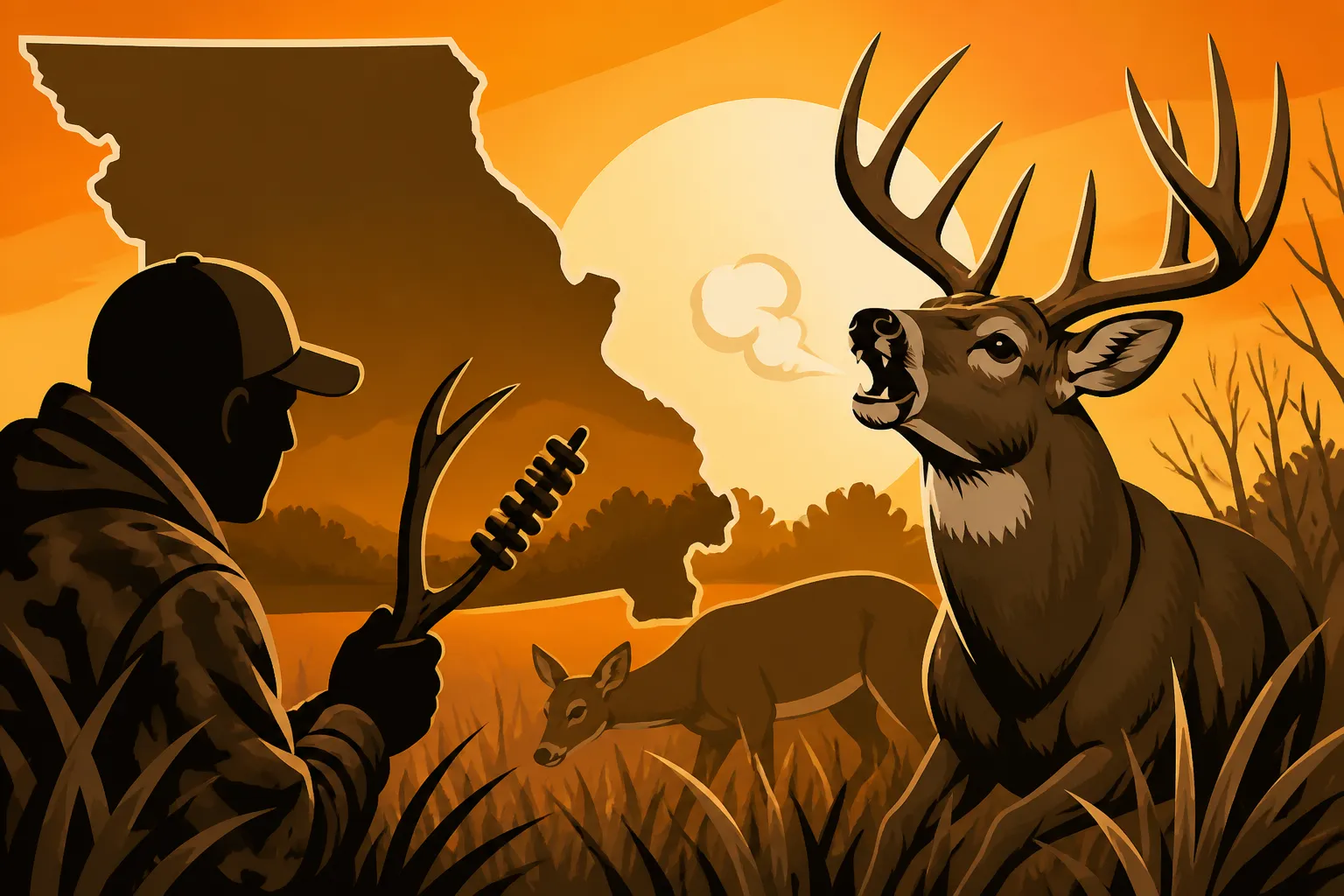
Simply put, calling works during the rut because it taps into the two most primal instincts of a whitetail buck: procreation and dominance. When you rattle antlers, you're mimicking a fight between two bucks. This can attract a dominant buck looking to assert his authority, a younger buck hoping to sneak in for a chance with a doe, or even a curious buck just wanting to see what the commotion is about. It's an invitation, or a challenge, depending on the listener.
Grunt calls, on the other hand, cover a broader spectrum of communication. A basic grunt often sounds like a buck looking for a doe, or a doe communicating with her fawn. A social grunt, a tending grunt, or even a snort-wheeze all convey different messages that can pique a buck's interest. A tending grunt, in particular, is extremely powerful during the rut because it mimics a buck actively pursuing a hot doe, signaling competition. The sound of potential breeding activity is often too much for a nearby buck to ignore, especially if he thinks another buck is about to get a jump on him with a receptive female. It's all about playing into their deeply ingrained biological urges at the most critical time of year.
When and Where to Use Calling Strategies
Knowing when and where to deploy your rattling and grunting is just as important as knowing how to do it. You can have the best grunt tube and rattling antlers money can buy, but if you're using them at the wrong time or in the wrong place, you're more likely to spook deer than attract them. This is where your scouting and understanding of deer movement patterns really pay off.
Timing Your Calls for Success
The best times for rattling and grunting often coincide with periods of increased buck activity. Generally, this means early morning and late afternoon, much like prime hunting times. However, during the rut, bucks can be on their feet and moving at any time of day, particularly during the peak.
Early Morning: As the sun comes up and the woods awaken, bucks are often returning from their night's travels or still actively searching for does. This is an excellent time to try some aggressive rattling sequences, especially during the pre-rut when bucks are still fighting for dominance. The cool, crisp air often carries sound well, and deer are typically relaxed from the quiet of the night. If you're trying to call a buck off the roost, so to speak, this is your prime window.
Mid-Day: Don't dismiss the middle of the day during the rut! While many hunters head in for lunch, big bucks are often still moving, checking scrapes, cruising travel corridors, or pushing does. This can be a fantastic time for a more subtle grunt call, or even a light rattling sequence, particularly if you're still-hunting slowly through timber. A buck might be bedded nearby and respond to the sound of another buck tending a doe, compelling him to check it out. Many hunters overlook this period, but it can be one of the most productive, especially if you're on a productive piece of public land or a less-pressured private tract.
Late Afternoon: As evening approaches, deer activity picks up again. Bucks will be on the move towards food sources or checking traditional doe bedding areas. A well-timed grunt or rattling sequence can pull a buck off his intended path and into your shooting lane. Be mindful of the light, as you want enough time for a buck to come in and for you to make an ethical shot before darkness falls.
Location is Key for Effective Calling
You can't just rattle in an open field and expect a buck to sprint across it in broad daylight. Location, location, location! This is paramount when using vocalizations and antler clashing. You want to set up in areas where deer naturally travel, and where the sound can carry effectively while offering concealment.
Travel Corridors and Funnels: These are prime real estate for calling. Think about those narrow strips of timber between two fields, a saddle on a ridge, or a creek bottom that deer use to move between bedding and feeding areas. A buck traveling through a funnel is often focused on moving, but also highly susceptible to curiosity or a challenge. These are the highways where bucks are cruising, and where a well-placed call can redirect their journey directly to you.
Thick Cover Edges: Bucks, especially mature ones, are rarely far from cover. Setting up on the edge of a thick bedding area, or a brushy draw, allows your calls to reach deer that are already feeling secure. They might not step out into the open immediately, but they'll often skirt the edge of the cover to investigate. When considering Treestand Setups in Hardwood Timber, always think about how your stand relates to these edges and potential deer travel routes.
Downwind Advantage: Always, always consider the wind. A deer's nose is its primary defense. When you call, you want any approaching buck to come in from a direction where your scent isn't blowing directly towards them. This often means setting up so they have to circle downwind to get a better read on the situation. If you're rattling aggressively, they might forget their caution and try to come straight in, but having that wind advantage gives you a much better chance of seeing them before they smell you. This can be a huge challenge in the swirly winds of the Ozarks, so understanding Wind and Thermals in Ozark Hills is critical. Use mapping tools like GoHunt to analyze terrain and wind direction effectively.
Visibility and Approach: You need to be able to see the deer approaching, and they need to be able to approach somewhat cautiously. Too open, and they might hang up out of range. Too thick, and they might pass you by unnoticed. Look for openings in the timber, subtle rises, or benches where you can see 50-70 yards, giving you time to react to an incoming buck.
Mastering the Art of Rattling
Rattling is an exciting, often aggressive tactic that can produce heart-stopping encounters during the rut. It's not just about slamming two pieces of plastic together; there's a definite rhythm, intensity, and even a bit of theater involved. Done right, you can pull a buck from hundreds of yards away.
Choosing Your Rattling Antlers
Before you even make a sound, you need the right tools. There are generally two main categories: real antlers and synthetic rattling systems.
Real Antlers: Nothing truly replicates the sound of real antlers clashing. You can buy them from taxidermy supply shops, or if you're lucky enough to find some shed antlers, you can use those. The sound produced by real antlers depends on their size and density. Smaller, lighter antlers will create a sound more akin to sparring younger bucks, while heavier, denser antlers will replicate a more serious fight between mature deer. The texture of the bone, the tines scraping, the hollow sound of the skull plate hitting, it's all part of the natural acoustic signature. The downside? They can be bulky, awkward to carry, and can make a lot of noise if they clank against your rifle or bow in the stand.
Synthetic Rattling Systems (Rattling Bags/Blocks): These are designed for convenience and ease of use. Brands like Primos and Knight & Hale make excellent rattling bags and blocks that fit easily into a pack. They often produce a good, realistic sound without the bulk. Some hunters feel they lack the specific "crack" of real antlers, but advancements in materials have made them incredibly effective. They're usually quieter to transport, too, which is a major advantage when trying to slip into a stand undetected. Many successful hunters swear by them, finding them more practical for all-day sits or long walks into remote areas. For instance, if you're hiking deep into the Mark Twain National Forest Hunting, a rattling bag might be a lot less cumbersome than a full set of real sheds.
The Sequence of a Rattle
Okay, you've got your antlers. Now what? A good rattling sequence isn't just constant noise; it tells a story. Think of it as a brief, intense fight between two bucks.
1. The Setup: Get your antlers ready, but don't make a sound yet. Take a moment to scan your surroundings. Have your bow or rifle ready. If a buck comes flying in, you need to be prepared.
2. The Initial Clash (The "Crash"): Start with a loud, aggressive crash, mimicking two bucks suddenly locking horns. This is meant to grab attention. Don't be shy; envision two heavy-bodied animals slamming into each other. This crash should be followed by 10-15 seconds of intense, but varied, rattling. Don't just hold them together and shake. Grind them, clash them, break them apart, and rub them together. Think about deer pushing, twisting, and locking up. This is where you might incorporate some "thump" sounds by hitting the base against your knee or pack, mimicking body blows.
3. The Grinding Phase: After the initial crash, settle into a more sustained, grinding sound for another 15-20 seconds. This simulates the bucks pushing and shoving, fighting for position. Use a mix of light tines scraping, and heavier pushes of the main beams. Vary the intensity. Remember, real buck fights aren't always full-throttle; there are moments of pause and repositioning.
4. Interspersed Pauses and Vocalizations: Now, here's where it gets interesting. After your initial sequence, pause for 30-60 seconds. This silence allows deer to approach undetected, and also gives you a chance to listen and scan. During these pauses, add some grunts (more on that later) or even a snort-wheeze if you're trying to simulate a truly dominant buck.
5. Repeat and Vary: After your pause, you can repeat a similar sequence, perhaps a little less aggressively, or slightly different. Continue this for about 10-15 minutes, with pauses in between. The entire sequence, from initial clash to your last quiet scrape, should paint a picture of a struggle. A common mistake is to rattle too quietly or too aggressively for too long. For Rattling Volume for Thick Timber, you might need to be more subtle, but still audible.
6. The "Waiting Game": The biggest mistake after rattling is giving up too soon. Bucks might not come charging in. They might circle downwind, or approach slowly, cautiously. After your calling sequence, remain absolutely still and alert for at least 15-20 minutes, sometimes longer. Many bucks have been spotted sneaking in silently long after the last sound has faded.
The Nuances of Grunt Calling
Grunt calls are the workhorse of deer vocalizations. They're versatile, relatively easy to master, and can be effective throughout much of the deer season, not just the rut. But during the rut, they take on a whole new level of importance, allowing you to speak directly to a buck's primal urges.
Different Grunt Sounds and What They Mean
A grunt isn't just a grunt. Different intensities, lengths, and tones convey entirely different messages to a whitetail. Understanding these nuances is crucial for successful calling.
The Basic Grunt: This is your bread and butter. It's a short, guttural "Uhhhnk" sound, often made by a buck cruising through the woods, looking for does or other deer. It's a general locator call, a way for bucks and does to communicate their presence. It's a relatively non-threatening sound that can pique a deer's curiosity without putting them on high alert. You can use this when you see a buck at a distance, or just blind calling into a promising area.
The Social Grunt: Slightly softer and more drawn out, this grunt is often heard among deer interacting casually. It's a way for deer to acknowledge each other's presence. It might be used by a doe to call her fawns, or by bucks when they're in a bachelor group outside the rut. During the rut, it's less about aggression and more about general communication.
The Tending Grunt: This is pure gold during the rut. It's a series of short, choppy grunts, often followed by a louder, drawn-out grunt, that a buck makes when he is actively chasing or "tending" a doe in estrus. It sounds excited, breathless, and urgent – think "uh-uh-uh-uhhnnnnkkk!" This call tells other bucks, "Hey, I've found a hot doe, and I'm about to breed her!" This is a challenge that many bucks simply cannot resist, especially if they are close enough to hear it. This is probably the most effective grunt call during the peak of the rut.
The Snort-Wheeze: This is a call of pure aggression and dominance. It's not a grunt at all, but rather a sharp snort followed by a drawn-out wheeze, often in three bursts: "Pffft! Wooooosh! Pffft!" A buck makes this sound when he's about to challenge another buck, warning them to back off. It's a dangerous call to use because if there's no buck nearby, it can alarm other deer. But if you've got a hung-up buck staring you down, or a challenger buck coming in from a distance, a snort-wheeze can sometimes turn him into a full-blown charge. Use with caution, and only when you're sure there's a buck within earshot that you're directly addressing.
Deciding on a Call Type
Just like rattling antlers, grunt calls come in various forms, each with its own advantages.
Tube-Style Grunt Calls: These are the most common and often the easiest to use. They consist of a flexible tube with a reed inside. By adjusting your breath pressure and sometimes your finger placement over the exit hole, you can produce a variety of grunts, from basic to tending. Many models have an O-ring that you can slide to change the pitch, mimicking a fawn, doe, or mature buck. Brands like Primos, Flextone, and HS Strut offer excellent tube calls. Some even allow for doe bleats and fawn bawls.
Diaphragm Grunt Calls: Similar to turkey diaphragm calls, these require a bit more practice but offer incredible realism and hands-free operation. You hold a small frame with a latex reed in your mouth and manipulate the sound with your tongue and breath. This is excellent for keeping your hands free for your weapon, but it has a steeper learning curve.
Can-Style Bleat Calls: While not strictly grunts, these "bleat" calls are invaluable, especially during the pre-rut and post-rut. When you tip the can, it emits a soft, natural doe bleat. This sound mimics a doe in estrus, or simply a social doe, and can attract bucks looking for receptive females. It's a non-threatening call that can often bring in curious bucks that might be wary of aggressive grunts or rattling. When combining calls, a few doe bleats can be incredibly effective, making the scene even more realistic. You can find excellent advice on Grunt Calls in Missouri River Bottoms if you hunt those specific types of terrain.
Combining Calls for Maximum Effect
The real magic happens when you start combining rattling and grunting. This isn't just making noise; it's telling a full, compelling story to the deer in the woods. By layering sounds, you can create a scenario that is incredibly hard for a rut-crazed buck to ignore.
Grunt-Rattle Combinations
Think of a full-blown buck fight. It's not silent, and it's not just clashing antlers. Bucks grunt and snort-wheeze during a fight. They also tend to grunt after a brief skirmish as they recover or search for the doe.
The Fight Scenario:
- Start with Rattling: Begin with a loud, aggressive rattling sequence, as described earlier. Clash, grind, and thrash those antlers for 20-30 seconds.
- Add Grunts: As your rattling sequence begins to quiet down, or during a pause in the middle of it, intersperse some aggressive buck grunts or even a snort-wheeze. Imagine a buck letting out a guttural grunt as he pushes another buck, or a snort-wheeze after gaining dominance. These vocalizations add realism and urgency to the fight.
- Post-Fight Grunts: After your main rattling sequence is over and you've paused for 30-60 seconds, make a few quieter, tending-style grunts. This simulates a buck "winning" the fight and then immediately tending to the doe he was fighting over. This specific combination is exceptionally potent because it directly addresses the buck's two strongest desires: dominance and procreation.
- Wait and Watch: As always, follow up with an extended period of silence and intense observation. That buck might be circling, listening intently.
This grunt-rattle combo works best during the pre-rut and peak rut, when bucks are highly competitive and actively seeking does. It's an aggressive strategy, so be ready for a fast approach from an excited buck!
Adding Other Calls to the Mix
To make your calling scenario even more believable, don't hesitate to incorporate other deer vocalizations.
Doe Bleats: Before, during, or after your grunt-rattle sequence, a few soft doe bleats can sweeten the pot. This adds the presence of a receptive female to your simulated fight. Imagine: two bucks fighting over a doe. That's a scene that will draw in almost any interested buck. Use a can call for this, or a grunt tube that has a bleat feature. This is particularly effective if you're trying to Decoy a North Missouri Buck, as the bleat adds to the visual allure.
Fawn Bawls: While less common for rut calling, a fawn bawl can sometimes bring in a curious doe, and where does go, bucks often follow during the rut. It's a desperate sound that usually indicates distress, and a mother doe's maternal instinct often kicks in. If you're hunting an area with a lot of fawns, it's something to consider, but use it sparingly and carefully.
Scraping and Rubbing: While not vocalizations, these are crucial sounds to add to your overall "soundscape." Before your calling sequence, you can kick the leaves and scratch the ground with your foot to simulate a buck making or checking a scrape. You can also use a small stick to scrape against a tree trunk, mimicking a buck making a rub. These subtle additions create a more complete picture of deer activity in the area, further drawing in any curious or competitive bucks. When you're Hunting Missouri Standing Corn and Beans, these sounds can be even more important as visual cues might be limited.
Common Mistakes and How to Avoid Them
Even with the best intentions and the right gear, it's easy to make mistakes when rattling and grunting. A single misstep can spook a wary buck and ruin your hunt. Learning from common errors is a huge part of becoming a more effective caller.
Overcalling and Under-Calling
This is a classic dilemma for many hunters.
Overcalling: More isn't always better. If you're constantly blowing your grunt tube or clashing antlers every five minutes, you're going to sound unnatural and potentially scare deer off. Think about how often bucks actually fight or vocalize in the wild. It's not continuous. Overcalling can make deer wary because it just doesn't feel right, or it can make them pinpoint your exact location too easily, giving them the advantage. They might hang up out of range, trying to figure out what's going on. The goal is to create a believable scenario, not a symphony.
- How to Avoid: Stick to specific sequences. After a 10-15 minute calling sequence (with pauses), give it at least 30-45 minutes of complete silence before trying again, or even an hour. Let the woods settle. Many times, a buck will take his time to approach, and if you keep calling, you might push him away or tip him off to your precise location. Scan constantly during your silent periods.
Under-Calling: On the flip side, some hunters are too timid. They make a few soft grunts or light antler clacks and then sit silently for hours. While patience is a virtue, sometimes you need to be assertive to get a buck's attention, especially in thick timber or on windy days where sound doesn't travel far. A quiet grunt might not carry far enough to reach a buck that's just out of earshot.
- How to Avoid: Don't be afraid to put some emotion into your calls. If you're in a big timber block like parts of the Missouri Ozarks Deer Hunting, you might need to call louder to ensure your sound reaches distant bucks. Match your calling intensity to the conditions. If it's windy, you'll need to call louder. If you're in open country, your sounds will travel farther. Adjust your rattling volume as discussed in Rattling Volume for Thick Timber.
Ignoring the Wind and Not Being Ready
These are arguably the two biggest mistakes that sabotage calling efforts.
Ignoring the Wind: A deer's nose is its superpower. You can fool its eyes and ears, but rarely its nose. If a buck approaches your calling setup and catches your scent, the game is over. He'll either bolt, or slowly melt away without you ever knowing he was there. This is why setting up downwind is absolutely critical.
- How to Avoid: Before every setup, always check the wind direction. Use a milkweed puff, a small squeeze bottle of powder, or even a piece of dental floss to constantly monitor changes. Position yourself so that any buck coming to investigate has to approach from a direction where your scent isn't blowing directly towards them. This often means facing into the wind while calling, or setting up with the wind quartering slightly away, forcing deer to circle downwind, hopefully into a shooting lane you've anticipated. Using mapping tools like GoHunt can help you visualize wind direction relative to terrain and deer travel routes. This goes hand-in-hand with scouting, as you should have already identified potential approach routes for deer.
Not Being Ready: Nothing is more frustrating than a buck charging in to your calls, only for you to be fumbling with your antlers, still putting down your grunt tube, or not having your bow/rifle in hand. Bucks responding to calls, especially aggressive rattling, can come in fast and silently.
- How to Avoid: After every calling sequence, immediately put your call down and get your weapon into a ready position. Remain absolutely motionless and scan your surroundings, particularly the areas downwind and where you expect a buck to appear. Always assume a buck is coming. If you're in a treestand, have your bow hooked or rifle rested so you can easily pick it up and acquire a target without excessive movement. Be patient, be still, and be ready. This requires mental discipline and focus, especially during long waits.
Table: Missouri Rut Calling Strategies by Phase
| Rut Phase | Typical Buck Behavior | Recommended Calling Strategy | Call Types & Intensity | Key Considerations |
|---|---|---|---|---|
| Pre-Rut | Increased rubs/scrapes, sparring, seeking first does in estrus, establishing dominance | Aggressive rattling, buck grunts, tending grunts | Medium-High intensity rattling (30-45 sec), 2-3 aggressive buck grunts, occasional snort-wheeze | Bucks are competitive and curious. They'll often investigate fights. Good for drawing out larger, dominant bucks. Be ready for them to come in cautiously, circling downwind. Consider adding doe bleats to make the "prize" more enticing. This is a great time to be mobile, doing short calling sequences as you Still-Hunting a Missouri Ozark Hollow. |
| Peak Rut | Actively breeding, running/chasing does, less cautious but often locked down with does | Tending grunts, less frequent rattling, occasional aggressive grunts for "break-ups" | Tending grunts (series of 3-5), 1-2 excited buck grunts. Rattling: shorter, less frequent (15-20 sec) | Bucks are highly focused on breeding. If a buck is with a doe, he might ignore calls. Tending grunts are powerful as they mimic another buck with a hot doe. Rattling can work to "break up" a pair if they're close enough, but can also be ignored. Be patient; a buck might come from further away if he's alone and desperate for a doe. This is when your Hunting the Missouri Rut in Early November efforts will be most fruitful. |
| Post-Rut | Exhausted, recovering, seeking remaining unbred does, some second estrus cycles | Subtle grunts, tending grunts, light rattling, doe bleats | Soft buck grunts (2-3), occasional tending grunt, light "sparring" rattling (10-15 sec), 1-2 doe bleats | Bucks are recuperating but still have a strong urge to breed any remaining does. They might respond to less aggressive calls out of curiosity or a lingering drive. The "lone doe" sound (bleats) can be very effective now. Be mindful of their exhaustion; they might not charge in. Longer waits might be required. |
Final Thoughts and Ethical Hunting
Rattling and grunting are powerful tools in a Missouri hunter's arsenal, especially during the electric atmosphere of the rut. They offer a unique opportunity to interact directly with deer, turning a passive hunt into an active engagement. Remember, however, that these techniques require practice, patience, and a deep understanding of deer behavior. No call is a magic bullet, but used correctly, they can dramatically increase your chances of connecting with a Missouri whitetail. Always prioritize ethical hunting practices, ensuring you have a clear shot and are prepared for a quick recovery. Keep honing your skills, observe the deer, and listen to what the woods are telling you. Happy hunting!
Disclaimer
This article is for informational purposes only and should not be considered legal advice. Always consult the official Missouri Department of Conservation (MDC) regulations handbook for the most current and accurate hunting laws and safety guidelines. Hunting regulations can change annually, and it is the hunter's responsibility to be aware of and comply with all applicable rules and regulations.