Hunting Quail Without a Dog
It’s a dream many of us share: the crisp autumn air, the rustle of dry leaves underfoot, and the electrifying whirr of a wild quail covey exploding from cover. But let's be honest, not everyone has access to a well-trained bird dog, and for many aspiring upland hunters, that often feels like a non-starter. Don't despair, because while a good canine companion is undeniably an asset, it's absolutely possible to find and hunt Missouri quail successfully on your own two feet, with a little strategic effort and a lot of patience. This guide is for those determined to chase bobwhites without a four-legged friend.
Understanding Quail Behavior When Hunting Solo
Hunting quail without a dog fundamentally changes your approach because you lose that incredible nose and instinct that pinpoints birds before they flush. You have to become the nose, the eyes, and the systematic tracker yourself. This means having a deeper understanding of how quail behave and what signs they leave behind.
Covey Dynamics and Flushes
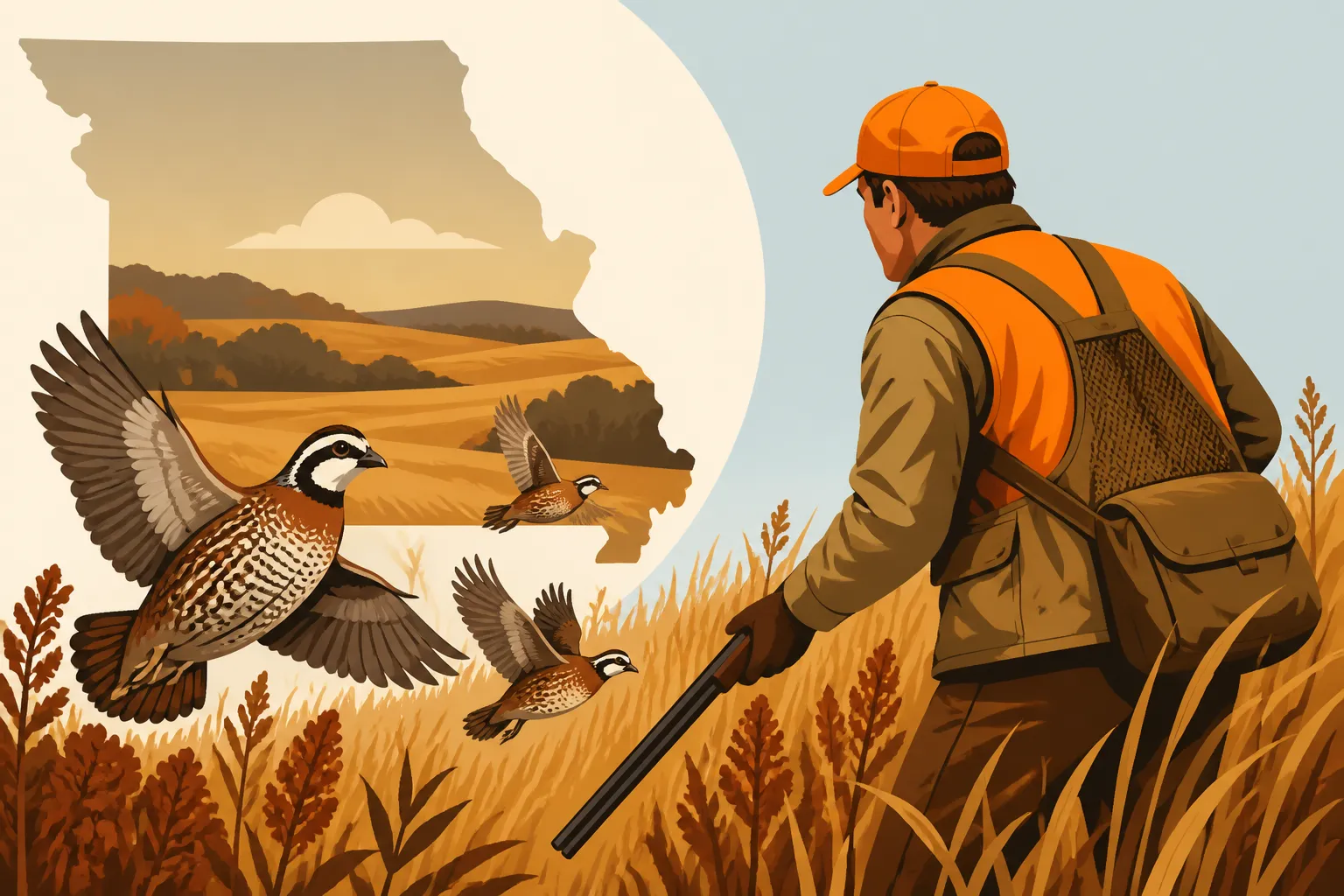
Northern bobwhite quail are social birds, almost always found in coveys during the hunting season, especially once temperatures drop. These coveys can range from just a handful of birds to a couple of dozen. When undisturbed, they move, feed, and roost as a unit. The magic of quail hunting is often in that initial covey rise – the sudden, explosive flush of multiple birds. Without a dog, you’re relying on surprising them, which means being acutely aware of your surroundings and moving deliberately.
These coveys will typically hold tight, often until you're practically on top of them, especially in good cover. They don't want to fly unless they absolutely have to, as flying expends precious energy and exposes them to predators. Your goal, therefore, is to walk in a way that encourages them to flush within shotgun range. Once a covey flushes and you manage to connect with a bird or two, the remaining birds scatter. This is where a dog truly shines, as it makes finding those single, scattered birds much easier. Without one, you’ll focus on marking where the singles fly and trying to relocate them, a task that requires quick observation and a good memory for landmarks. Often, singles will land in thicker cover than the original covey, using it for immediate refuge.
Reading Quail Sign
Since you don't have a dog to tell you "birds here," you'll need to develop an eye for quail sign. This is where being a detective comes into play. Quail leave subtle clues. Look for tracks in soft soil or dust patches, especially along field edges or paths. Their tracks are small, three-toed, and distinct. Another key indicator is droppings. Quail droppings are typically small, dark, and often have a white cap, like miniature versions of turkey droppings. You'll find these where they feed, dust, or roost.
Dusting bowls, which are small depressions in soft earth or sand where birds take dust baths to clean their feathers, are another strong sign. These are often found near good cover. During colder parts of the season, listen for their distinctive "quail talk" or "assembly calls" as scattered birds try to regroup. This is often a soft, almost mournful whistle. Learning to recognize these calls can guide you toward where birds are trying to reassemble after a flush. Pay attention to what they are eating too; small seeds, insects, and berries are common fare. Knowing what's in season and available on a particular property can help you narrow down feeding areas.
Finding Productive Quail Habitat
Missouri has a rich history of quail hunting, but habitat loss has certainly had an impact. Still, there are fantastic opportunities, particularly on public lands managed for upland birds or on private lands with conservation efforts in place. The key is knowing what to look for, even more so when you're going it alone.
Edge Habitat and Brush Piles
Quail are creatures of the edge. They thrive in areas where different types of cover meet, providing easy access to food, nesting cover, and protection from predators. Think about where a crop field meets a brushy fencerow, or where an open timber stand transitions into a thicket of young cedars and briars. These "edge habitats" are prime quail territory. In Missouri, this often means old farm fields reverting to native grasses and forbs, bordered by timber or heavy brush.
Brush piles are absolute magnets for quail. They provide instant, dense overhead cover from raptors and ground predators, as well as roosting spots in colder weather. Many conservation areas actively manage for quail by creating brush piles, or you might find natural ones from downed trees. Make these a priority to investigate. Slowly and thoroughly walk around them, sometimes even kicking into them (carefully!) if they are thick. Also look for field borders, hedgerows, and the edges of timber blocks where sunlight can penetrate, allowing for dense, quail-friendly vegetation to grow. This mosaic of habitat types is what makes for quality quail ground.
Water Sources and Food Plots
Just like any other wildlife, quail need water, though they get a significant portion from dew and the food they eat. However, a reliable water source can concentrate birds, especially during dry spells or late in the season. Small creeks, ponds, or even low-lying areas that hold moisture can be important. When scouting, especially with tools like the GoHunt app which allows you to overlay satellite imagery and topographical maps, look for these water features. It's often where you'll find other quail habitat elements intersecting.
Many conservation areas in Missouri will also plant small food plots specifically for upland birds. These plots, often containing sorghum, milo, sunflowers, or native warm-season grasses, provide vital food resources through the fall and winter. Check the area brochures for public land (which you can often download using the GoHunt app or from the MDC website) to see if food plots are mentioned. If you find one, thoroughly work its edges, especially where it meets thicker cover. These plots are essentially cafeterias for quail, and they won't be far from them, especially in the mornings and late afternoons. Remember, understanding Missouri Quail Season Dates and the Missouri Quail Daily Bag Limit is crucial before heading out.
Walk-Through Tactics for Undogged Hunters
Hunting without a dog means your legs become your primary scouting and flushing tool. This requires a systematic approach, a slow pace, and a keen eye. It's more of a deliberate hunt than a casual stroll.
Systematic Grid Searches
When you don't have a dog to cover ground and find scent, you need to be very methodical. A systematic grid search, or a zigzag pattern, is your best friend. Instead of just wandering, pick a section of cover you want to hunt – say, a brushy draw or a field edge – and walk it back and forth, covering every inch. If you're hunting with a partner or two, spread out a safe distance apart (usually 20-40 yards, depending on cover and visibility) and walk in a parallel line. This creates a "net" that is more likely to push birds out.
Move slowly, taking a few steps, then pausing and listening. Quail can be incredibly quiet, but sometimes you'll hear them running through the dry leaves ahead of you. These pauses also give you a moment to scan the ground ahead and anticipate potential flush points. Don't be afraid to double back or make small circles around particularly thick cover patches or brush piles. Quail will often try to run rather than fly, especially if they feel they can evade you on the ground. A methodical approach, even if slower, significantly increases your chances of encountering a covey. This is especially true when you are Working Field Edges and Draws for Quail.
Flushing Techniques
Since you’re the flusher, you need to employ techniques that encourage birds to take wing. A slow, steady, deliberate walk is often effective. Don't rush. The goal is to make the quail feel pressured enough to flush, but not so alarmed that they run out of the area before you get close. Sometimes, a sudden stomp or a kick into a thick briar patch can be the trigger. As you approach dense cover, be ready. Your shotgun should be shouldered or at the "low ready" position, safety off (but finger off the trigger until you have a target), and your eyes scanning.
If you're hunting with a partner, one person might act as the "driver," walking through the thickest cover, while the other walks the edge, ready for birds that try to skirt the main push. Communication is key if hunting with others – know where everyone is at all times. Remember, even after a covey flushes, stay alert. Sometimes a single bird might hold tight, or a small group might flush separately a few seconds later. You'd be surprised how often a lone bird will try to hide even when all its companions have fled.
Shot Opportunities and Recovery
When a covey rises, it's an exhilarating chaos. Focus on one bird, pick it out, swing smoothly, and follow through. Don't try to get two birds on the initial flush; your chances of cleanly dropping one are far better if you concentrate. The initial Covey Rise Shooting Discipline is paramount. If you're fortunate enough to drop a bird, immediately mark where it fell. Without a dog, recovery is entirely on you, and lost birds are a heartbreaking waste. Walk directly to the spot, mentally marking trees, bushes, or other landmarks as you go. Grid search the area thoroughly. Many hunters tie a brightly colored ribbon to their belt or vest to drop at the point of the shot, helping to mark the spot.
Once you’ve recovered your bird, pause and watch where the scattered singles flew. Even if you only get a general direction, try to follow up. Singles often land in thicker cover than the original covey, but they won't fly nearly as far. If you can pinpoint their general landing zone, slowly and meticulously walk that area, listening for assembly calls. This is where your ability to Walk Missouri Quail Country becomes crucial.
Gear and Setup for Success
Hunting quail without a dog puts a bit more emphasis on certain gear choices, primarily because you're doing all the work yourself. Comfort, safety, and efficiency are paramount.
Shotgun and Load Choices
For hunting quail on foot, a lightweight, fast-handling shotgun is ideal. Most hunters opt for a 12-gauge or 20-gauge. A 20-gauge, being lighter, is often preferred for long walks over rugged Missouri terrain, and it still delivers plenty of punch for small birds. The Best Shotgun Gauge for Missouri Quail is really the one you shoot best. If you find a 20-gauge to be easier to carry and swing, then it's the right choice. For a detailed comparison, check out our piece on 12 Gauge Versus 20 for Quail.
When it comes to loads, smaller shot sizes are the way to go for quail. No. 7.5 or No. 8 shot are perfect. They deliver a dense pattern with enough pellets to cleanly dispatch a bird without excessive damage to the meat. For choking, an Improved Cylinder or Light Modified choke is typically preferred for the first shot, giving you a wider pattern for those close, explosive covey flushes. If you're shooting an over/under or side-by-side, you might have an Improved Cylinder in the first barrel and a Modified in the second for follow-up shots on birds flying further. Understanding Choke Choice for Covey Rises is a game-changer.
Here's a quick reference for common shotgun setups:
| Gauge | Choke (First Shot) | Choke (Second Shot) | Recommended Shot Size | Typical Range (Yards) |
|---|---|---|---|---|
| 12 Gauge | Improved Cylinder | Modified | #7.5, #8 | 15-30 |
| 20 Gauge | Improved Cylinder | Modified | #7.5, #8 | 15-25 |
| 28 Gauge | Improved Cylinder | Modified | #8 | 10-20 |
| .410 Bore | Full | Full | #8, #9 | 10-15 |
Remember to pattern your shotgun with your chosen loads before the season to understand its true performance.
Footwear and Apparel
Comfortable, supportive, and waterproof boots are non-negotiable for hunting quail in Missouri. You'll be covering miles, often through thorny briars, uneven terrain, and potentially wet grass. Look for boots that offer good ankle support and a robust sole. Many hunters prefer snake boots for added protection in thicker cover, as Missouri is home to several venomous snake species, even in cooler weather when they might be less active but still present. Take a look at Boots for Walking Ozark Rock for specific considerations.
For apparel, layering is always key in Missouri's unpredictable fall and winter weather. You'll be walking, so you'll generate heat, but you might also stop frequently. Blaze orange is a requirement for hunter safety in certain seasons and always a good idea when hunting upland birds, especially with partners. A good upland vest or game bag with plenty of pockets for shells, water, and your harvested birds is invaluable. Many Upland Vests With Water Capacity also include a padded seat, which is a nice touch for a quick break. And don't forget to wear a Blaze Orange Caps and Vests in Missouri to stay visible.
Navigation and Safety
When you're out in the field, especially on large public areas like those managed by the Missouri Department of Conservation or the Mark Twain National Forest, navigation is critical. A reliable GPS unit or a smartphone app like GoHunt can be a lifesaver. These tools allow you to mark your vehicle, track your path, identify property boundaries, and pinpoint features like water sources or food plots. Using satellite imagery for scouting before you even leave home is also a great strategy to identify potential quail habitat. The GoHunt app can overlay property lines, showing you exactly where you can and cannot hunt.
Always carry a compass and a physical map as a backup, especially if hunting in areas with poor cell service. Let someone know where you're going and when you expect to return. Carry plenty of water, especially on warmer days, and some snacks. A small first-aid kit, a whistle, and a knife are also essential. Remember that hunting is inherently dangerous, and taking precautions is vital, particularly when you're the only one responsible for finding and retrieving your game. Even without a dog, safe and ethical hunting is always the top priority.
Disclaimer
Hunting is an activity with inherent risks. Always follow all local, state, and federal hunting regulations. Ensure you have the proper permits and licenses. Prioritize safety by wearing appropriate gear, knowing your firearm, and being aware of your surroundings and hunting partners. This guide is for informational purposes only and does not substitute for proper hunter education or professional guidance.