Duck Calling in Timber Versus Open Water
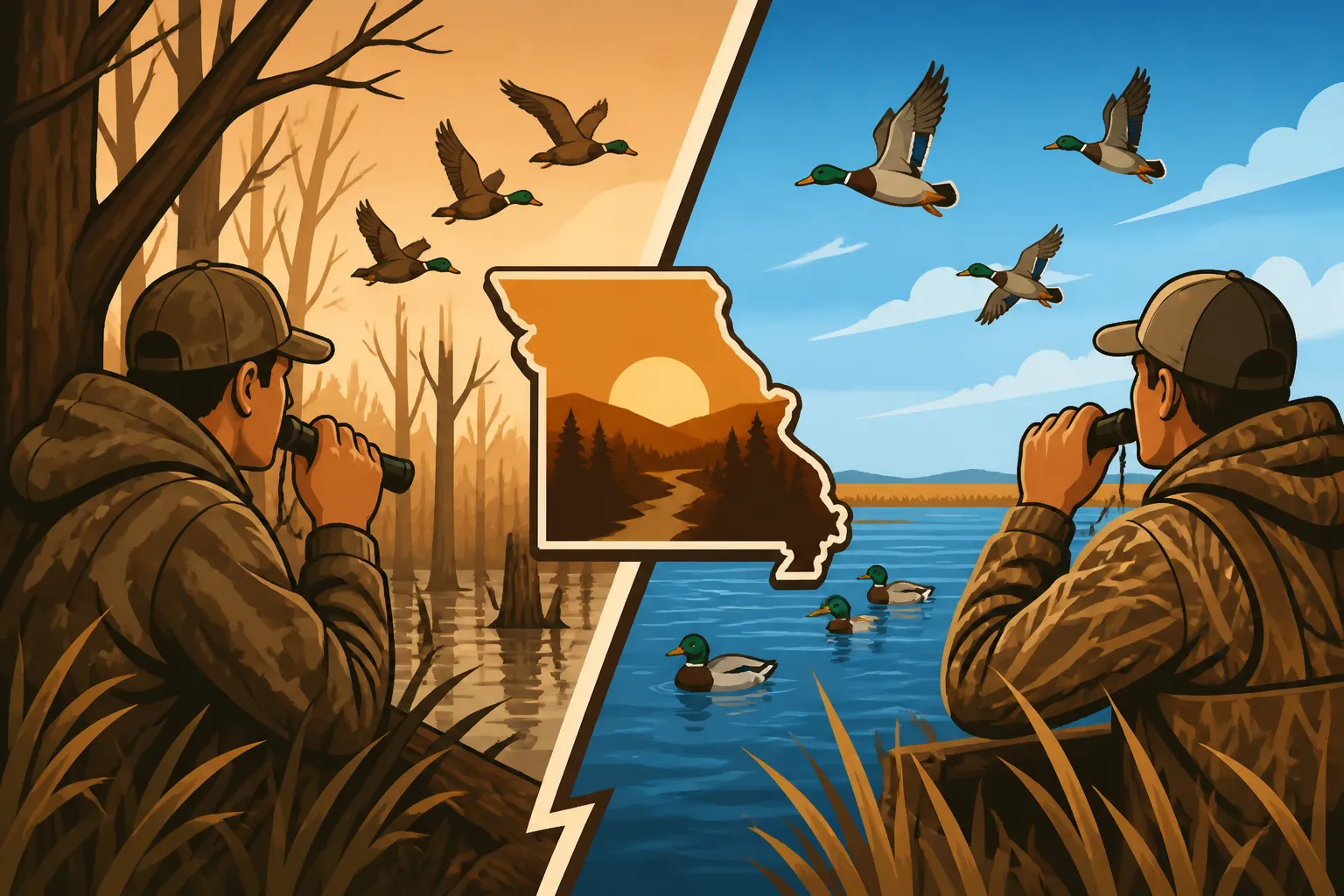
There's nothing quite like the sound of ducks circling overhead, but sometimes it feels like they just aren't hearing your calls, or worse, they're flaring off at the last minute for reasons you can't pinpoint. A lot of that frustration comes down to not matching your calling technique to the specific environment you're hunting in. Whether you're tucked deep into Missouri's flooded timber or sitting on the vast expanse of open water, understanding how sound travels and how ducks react in each setting is absolutely crucial for more successful hunts.
Understanding the Acoustics of Different Waterfowl Habitats
The biggest mistake many duck hunters make is using the same calling strategy no matter where they are. The reality is, sound behaves drastically differently in a dense timber hole compared to a wide-open lake or agricultural field. Thinking about the physics of sound transmission is the first step to becoming a more effective caller in Missouri's varied waterfowl landscapes.
The Muffling Effect of Timber
Imagine yelling in a dense forest versus an empty gymnasium. The difference is stark, right? Timber, especially the thick stands of hardwoods you find in Missouri's river bottoms, acts like a giant sound sponge. Every tree trunk, every branch, every leaf on the ground absorbs and deflects sound waves. This means your calls, no matter how passionate, are going to carry a much shorter distance and will be significantly muffled. Ducks flying high over a timber hole might not hear your call at all, or if they do, it will be so diminished they can't pinpoint the source.
The challenge here isn't just volume, but also clarity and direction. Ducks attempting to land in timber need to navigate a maze of trees, so they're listening for very precise, localized sounds to guide their descent. A call that sounds great and loud to you might just be a faint, indistinct murmur to a duck trying to thread its way through the canopy. This muffling effect means you need to adjust your volume, cadence, and even the type of call you're using to be truly effective.
The Echo and Range of Open Water
Now, picture that same yell on a wide-open lake, or across a vast sheet of flooded agricultural fields. The sound just travels, doesn't it? Open water environments, like big reservoirs or the massive pools on managed wetlands across North Missouri, offer very little to obstruct sound waves. Your calls can carry for incredible distances, attracting ducks from miles away. However, this also presents its own unique set of challenges.
While the sound carries, it can also echo and become distorted, especially on still mornings. Ducks can hear your call from a long way off, but the lack of distinct reference points can make it harder for them to judge distance and direction accurately until they get closer. This means your early hail calls need to be commanding and clear, designed to grab attention and pull birds from the horizon. As they approach, your calling needs to guide them precisely into your spread, without sounding artificial or confused by multiple echoes.
Timber Calling Tactics for Close Quarters
Hunting timber in Missouri is a unique experience. It's often intimate, challenging, and incredibly rewarding when a group of mallards suddenly drops out of the sky into your calling hole. But it demands a calling style that is almost the opposite of what you might use in open fields.
Low Volume, Subtle Sounds
When you're tucked into a stand of pin oaks in a flooded bottomland, less is almost always more. Ducks are typically already relatively close, or they're working their way down into the timber, trying to locate their buddies. Over-calling or blowing a call too loudly can sound aggressive, unnatural, or simply startling in such a confined space. Think about trying to talk to someone in a small room – you wouldn't shout, right? The same principle applies here. Your goal is to sound like contented ducks feeding and resting, not a chaotic party.
Focus on soft, contented feed chuckles and quiet quacks. These are the sounds that say, "Everything's fine here, come on down." A light, nasal single quack or a short, sweet greeting call, delivered softly, can be incredibly effective. Sometimes, just a series of muffled feeding calls, almost like a whisper, is all it takes to convince wary birds to commit. The key is to convey a sense of calm and safety, rather than demanding attention. This can be especially effective when you're targeting birds already showing interest in the area, maybe circling high above the canopy, and you just need to seal the deal. For more on navigating these unique spots, check out this guide on Finding a Hole in Green Timber.
Mimicking Natural Timber Sounds
The sounds of ducks in timber are inherently different from those in open water. They're often quieter, more subdued, and localized. When you're calling, you want to mimic this. Think about the soft "chuckle-chuckle-chuckle" of a contented hen sifting through submerged acorns, or the low, reassuring "quack-quack-quack" as she calls to her flock. These aren't loud, booming calls designed to reach across miles. They're intimate, social calls.
You might want to use softer, more nasally calls or even a quieter double-reed call that doesn't have the same piercing volume as some single-reeds. The idea is to create an auditory "pocket" of sound that sounds inviting and authentic to ducks actively looking to land in the timber. Work on soft greeting calls, contented quacks, and really dial in your feed chuckle. Vary your cadence, making it sound like multiple birds rather than a single, repetitive blast. Often, it's about subtle interaction and convincing the birds that what they're seeing (your decoys) and what they're hearing (your calls) are perfectly natural.
Decoy Spacing and Setup in Timber
While calling is paramount, your decoy setup plays an integral role in complementing your timber calling. In flooded timber, you generally want a tighter, more intimate spread of decoys. Ducks don't need a huge landing strip among the trees; they need a clear, inviting hole. Your calling is guiding them directly to this small, safe zone.
Consider using fewer decoys than you might in open water, maybe 6-12, arranged naturally to create a clear landing spot. Place a few motion decoys, like jerk strings or spinners, but use them sparingly to avoid looking unnatural in the timber. Your calling should draw their attention to this specific pocket, and the decoys should reinforce the idea of a relaxed group of ducks. For more detail on how many decoys make sense, consider reading up on Decoy Numbers for Green Timber. The visual and auditory cues must work in harmony to convince those mallards to cup their wings and drop through the canopy.
Open Water Calling Strategies for Distant Birds
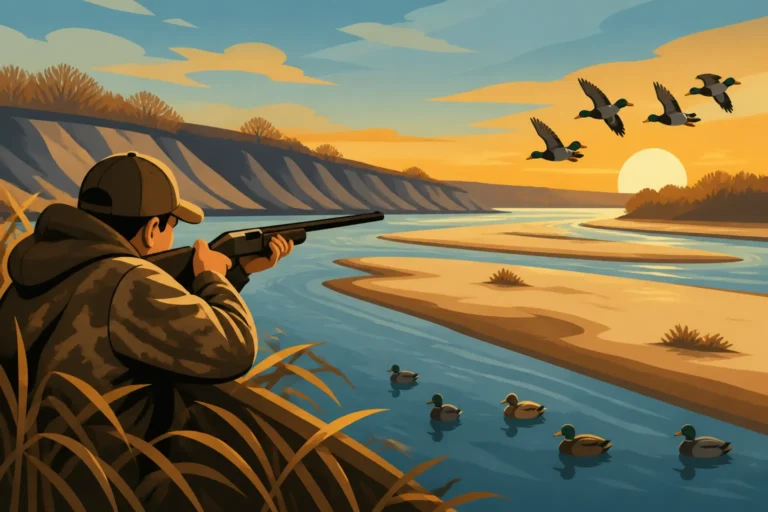
Hunting open water in Missouri, whether it's a massive pool on a Conservation Area, a stretch of the Missouri River, or a large private lake, requires a completely different approach. Here, you're often trying to attract birds that are high, fast, and potentially miles away.
High Volume, Far-Reaching Calls
On open water, the name of the game is projection. Your primary goal is to get the attention of ducks that are mere specks in the sky, often flying on their own migratory routes. This demands loud, aggressive, and sustained calling sequences. You need a call that can cut through the wind and carry across vast distances. Forget the soft whispers of timber calling; here, you're practically shouting a greeting.
Start with a loud, drawn-out "hail call" – several long, excited quacks that echo across the water. This is your initial siren song, designed to make those high-flyers turn their heads and investigate. Follow it up with shorter, choppy "come-back" calls if they start to veer off. The key is to be persistent and audible. You want to paint an auditory picture that says, "Hey, over here! There's a big, happy group of ducks down here, and this is where the action is!"
Adapting to Wind and Distance
Wind is a major factor on open water. It can carry your calls further, but it can also distort them or push them away from incoming birds. Always try to call into the wind, or at least across it, so your sound carries downstream towards approaching ducks. When birds are a long way off, you might need to lean into your call, using more air and projection to ensure they hear you over the ambient sounds of nature or other hunters.
As ducks get closer, you'll want to gradually reduce the volume and aggression of your calls, transitioning from those booming hail calls to more reassuring, social sounds. But even when they're close, don't drop your volume too drastically. Ducks on open water are used to sounds traveling further, so a sudden, timid call might actually make them wary. Continuously adjust your calling based on the birds' reaction, the distance, and the wind conditions, always striving for a confident, inviting sound. Sometimes, a quick glance at the weather in your GoHunt app can give you an idea of wind direction and speed for planning your call-and-decoy strategy.
The Importance of Landing Zone Calls
Once ducks have committed and are circling your open-water spread, your calling shifts from attraction to persuasion. This is where your "landing zone" or "finishing" calls become critical. These are softer, more contented sounds designed to reassure birds that the spot is safe and inviting for them to drop into. Think of clucking, contented feed chuckles, and soft quacks – but delivered with enough volume to be heard clearly over the water, especially if there's a chop.
A well-timed, pleading "come-on-down" call as they make their final swing can often be the difference between birds cupping their wings and splashing down, or flaring out at the last second. You want to sound like a flock that's already on the water, happy and safe, welcoming new arrivals. This delicate balance of volume and realism, combined with a spread that mimics natural feeding or resting, is what seals the deal on open water. For more specific tactics related to these environments, consider looking at Hunting Missouri River Sandbars for Ducks or Managed Hunt Draws on Missouri Wetlands.
Gear Considerations for Each Environment
Just as your calling style changes, so too might your choice of duck call. Having the right tools for the job can make a significant difference in your success rate.
Calls Tuned for Timber
For flooded timber, you generally want a call that produces a richer, deeper, and often softer sound. Many hunters prefer a single-reed call for its versatility and realistic ducky tone, allowing for subtle inflections and softer finishes. However, a well-tuned double-reed call can also excel in timber, providing a raspy, more forgiving sound that's easy to control at low volumes. Brands like Rich-N-Tone (RNT) or Haydel's Game Calls offer excellent options specifically designed for timber hunting. The key is a call that allows you to easily drop volume and maintain realistic tone for soft quacks and feed chuckles, without sounding too sharp or piercing in the close quarters.
Calls Designed for Open Water
When you're out on the big water, you need a call that can scream. Single-reed calls are often favored here for their sheer volume and ability to reach out and touch ducks from a mile away. Look for calls with a larger bore, a stiffer reed, or those specifically marketed as "open water" or "competition" calls. Echo Calls, Foiles Migrators, or Zink Calls are popular choices known for their powerful projection. The call needs to be loud, clear, and capable of holding a high note for those long hail calls. You want something that demands attention and can cut through any wind or distance.
Integrating Technology
Beyond your calls, modern technology can play a significant role in enhancing your understanding and preparation for hunting in diverse Missouri environments. Apps and online platforms like GoHunt can provide invaluable satellite imagery, property boundaries (crucial for Hunting Small Private Tracts in Missouri), and even weather overlays that help you predict wind direction and how it might impact your calling effectiveness.
Using such tools for scouting before you even step foot in the marsh or timber can help you identify optimal locations for your setup, assess potential water levels (especially important when Reading Water Levels on a Wetland), and visualize how sound might travel in a particular spot. GoHunt can give you an edge by helping you locate those subtle changes in terrain that could act as natural sound barriers or amplifiers, allowing you to fine-tune your calling strategy before the ducks even arrive. Understanding your hunting area from an aerial perspective through tools like GoHunt helps you determine if you should be projecting across open fields or whispering into a tight timber hole.
Comparing Calling Strategies: Timber vs. Open Water
Here's a quick breakdown of the core differences in duck calling techniques for Missouri's diverse waterfowl habitats:
| Feature | Flooded Timber (e.g., Duck Creek CA, Grand Pass CA) | Open Water (e.g., Truman Lake, Mississippi River, large CAs) |
|---|---|---|
| Primary Goal | Guide birds to specific landing hole, reassure | Attract birds from great distance, turn them, pull them in |
| Call Volume | Low to medium, subtle | High, aggressive initially, gradually decreasing |
| Call Type Focus | Soft quacks, contented feed chuckles, greeting calls | Loud hail calls, excited comeback calls, attention grabbers |
| Call Style | Realistic, nasal, less aggressive | Sharp, piercing, demanding, high-pitched |
| Sound Travel | Short distance, muffled, absorbed | Long distance, echoes, affected by wind |
| Decoy Spread | Tight, intimate, clear landing zone | Larger, spread out, visible from afar |
| Common Call Types | Single-reed (versatile), softer double-reeds | Single-reed (volume), larger bore, competition calls |
| Key Challenge | Avoid over-calling, sound natural in close quarters | Get attention, maintain interest from afar, cut through wind |
Disclaimer
Hunting carries inherent risks, and conditions in Missouri's outdoors can change rapidly. Always prioritize safety, adhere to all Missouri Department of Conservation regulations, and ensure you have the appropriate permits and licenses before heading afield. This guide is for informational purposes only and should not replace professional instruction or local regulations.