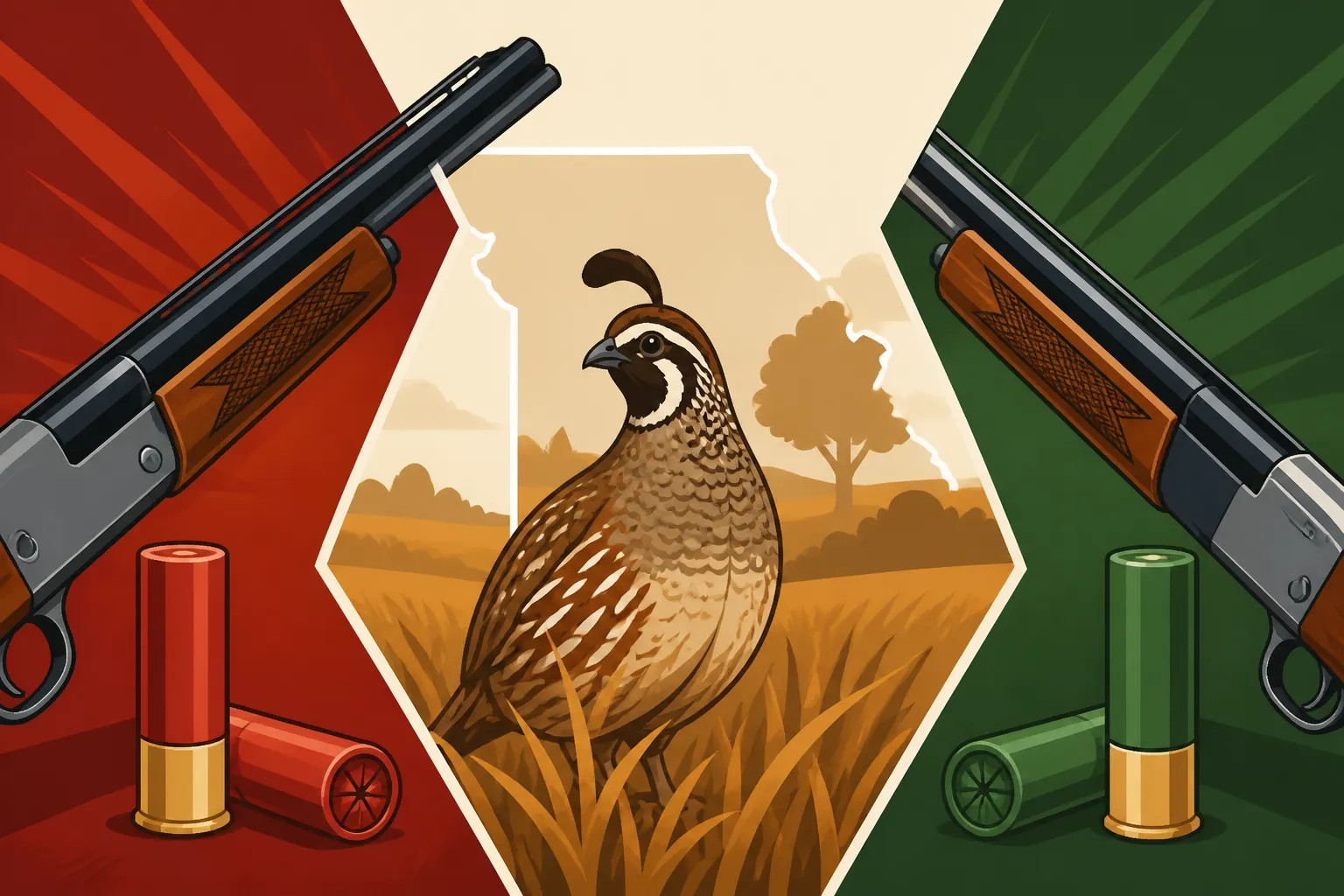
12 Gauge Versus 20 for Quail
One of the most common dilemmas for any upland hunter, especially those chasing the elusive bobwhite quail across Missouri's diverse landscapes, is choosing the right shotgun. It's not just about what looks good or what your buddy uses; it's about what truly performs when a covey explodes at your feet. This guide aims to clear up the age-old debate between the 12-gauge and the 20-gauge, giving you a comprehensive breakdown so you can make an informed decision for your next quail hunt in the Show-Me State.
Understanding the Core Differences: 12-Gauge Versus 20-Gauge
At its heart, the difference between a 12-gauge and a 20-gauge shotgun comes down to bore diameter and, consequently, the size of the shell and the amount of shot it can hold. A 12-gauge has a larger bore, meaning it can typically chamber a shell with more pellets. A 20-gauge, with its smaller bore, holds fewer pellets. But the story doesn't end there, and for quail hunting, these distinctions play out in interesting ways that often surprise new hunters.
Recoil and Comfort for Upland Hunters
Let's be honest, nobody enjoys getting rattled by heavy recoil, especially not when you're trying to stay focused for those lightning-fast covey flushes. The physical impact of recoil is a major factor in sustained shooting performance and overall comfort during a long day in the field. Generally speaking, a 12-gauge shotgun, especially when loaded with heavier game loads, produces more recoil than a 20-gauge. This isn't just a minor detail; it can significantly affect your hunting experience.
Imagine walking through dense cover, pushing through thick briars and chest-high switchgrass, only to have a covey erupt unexpectedly. You shoulder your gun, make a quick shot, and if the recoil is substantial, it can throw you off balance, making a crucial follow-up shot on another bird much harder. For new hunters, or those who might be a bit recoil-sensitive, a 20-gauge offers a much gentler experience. This reduced "thump" allows for quicker recovery, better concentration, and less flinching. Over the course of a full day, especially if the birds are moving and you're getting multiple shooting opportunities, that cumulative recoil from a 12-gauge can really start to wear on you. With a 20-gauge, you might find yourself feeling fresher, more accurate, and simply more enjoyable at the end of the day, ready for another morning in the field.
Ammunition Availability and Cost Considerations
When you're planning your season, thinking about the shells you'll need is a practical concern. Both 12-gauge and 20-gauge ammunition are incredibly popular and widely available. You'll find a vast array of options for both gauges at almost any sporting goods store, from local mom-and-pop shops to larger chains. However, there can be subtle differences in the sheer variety of specific upland loads, particularly when you start looking for specialized smaller shot sizes like #7.5 or #8, which are ideal for quail.
Historically, 12-gauge ammunition might have offered a slightly broader selection of different load weights and shot types, simply because it's been the most popular gauge for a very long time across all types of hunting. For quail, however, both gauges excel with common upland loads. When it comes to cost, prices for standard lead upland loads are often comparable between the two. Sometimes, 20-gauge shells might be marginally more expensive per box, but this can fluctuate greatly depending on brand, shot size, and current market conditions. If you're buying in bulk for a season's worth of hunting, any slight price difference might be negligible. What truly matters is ensuring you can consistently find the specific Shot Size for Missouri Bobwhites you prefer, and both gauges offer plenty of options in that regard. Checking with your preferred retailer or even online outfitters like GoHunt can give you a good idea of current availability and pricing before you stock up.
Performance in the Field: Patterning and Shot String
Beyond the feel of the gun, how a shotgun performs downrange is paramount. For quail hunting, we're talking about fast-flying, relatively small birds that often flush within close range. Your shotgun's ability to throw a dense, uniform pattern is crucial for clean kills and minimizing cripples. Both the 12-gauge and the 20-gauge are perfectly capable of delivering lethal patterns for quail, but they do it in slightly different ways.
Pattern Density and Effective Range
Pattern density refers to how tightly packed your pellets are at a given distance. For quail, you want a pattern that's dense enough to ensure multiple pellet strikes for a clean kill, but not so tight that it creates a "hole" at close range, leading to missed birds. A 12-gauge, by virtue of its larger shell, can hold a greater quantity of shot. This means, theoretically, it can put more pellets downrange, potentially creating a slightly denser pattern, especially at the outer edges of effective range. However, for quail, which are typically shot within 20-30 yards, this extra pellet count isn't always a significant advantage.
A 20-gauge, with proper shot size and choke selection, can deliver an equally effective and lethal pattern for quail at these common ranges. The key is in matching your choke to your chosen load and the distances you expect to shoot. For instance, a modified or improved cylinder choke in a 20-gauge can throw a beautiful pattern perfect for those close-quarter flushes. What's more important than the raw number of pellets is their distribution. A well-patterned 20-gauge might have fewer pellets, but if they are evenly distributed within a 20-inch circle at 25 yards, it will be just as effective as a 12-gauge with more pellets that are clumped or uneven. Don't underestimate the power of careful load and Choke Choice for Covey Rises selection, as this often trumps the gauge itself when it comes to patterning for small birds.
Carrying Weight and Maneuverability in Missouri Cover
Missouri's quail habitat can be demanding. We're not talking about wide-open fields where you can walk for miles without hitting a thicket. Often, you're Walking Missouri Quail Country that includes dense plum thickets, brushy draws, tall native grasses, and the edges of timber. This kind of hunting means a lot of walking, pushing through heavy cover, and being ready to shoulder your gun in an instant when a covey bursts out. In these scenarios, the weight and balance of your shotgun become incredibly important.
Most 20-gauge shotguns are inherently lighter and often have a slimmer profile than their 12-gauge counterparts. A lighter gun means less fatigue over a day of slogging through the brush. Think about that last hour of the hunt when your arms feel heavy and every step is a chore – a lighter 20-gauge can make a real difference in your energy levels and your ability to maintain focus. Furthermore, the reduced size and weight of a 20-gauge often translate to better maneuverability. In tight cover, where you might have only a split second to get your gun up and on a bird, a quicker-swinging, lighter shotgun can be a game-changer. It allows for faster target acquisition and smoother transitions between birds if you get multiple flushes. This enhanced maneuverability can lead to more successful shots, especially when hunting those quail that seem to appear out of nowhere in thick cover.
Practical Considerations for the Missouri Quail Hunter
Beyond the technical specs and field performance, there are some very real, personal aspects to consider when picking your quail gun. A shotgun isn't just a tool; it's an extension of the hunter. The way it feels, the confidence it inspires, and how it fits you physically can be just as crucial as its gauge.
The Importance of Fit and Swing
This point cannot be stressed enough: the fit of your shotgun is often more important than its gauge. A perfectly fitting 20-gauge that mounts naturally to your shoulder and points instinctively will almost always outperform a 12-gauge, regardless of its superior patterning, if that 12-gauge doesn't fit you right. "Fit" encompasses several elements: the length of pull (distance from the trigger to the butt of the stock), the drop at comb (how low your cheek rests on the stock), and the cast (whether the stock angles left or right to align with your dominant eye).
When a shotgun fits you well, it feels like it becomes part of you. You can quickly bring it to your shoulder, and your eye naturally aligns with the rib, allowing you to focus purely on the bird. For the incredibly quick, reactionary shooting required for quail, this seamless motion is paramount. If your gun doesn't fit, you'll be constantly adjusting, craning your neck, or struggling to get a consistent sight picture, all of which eat up precious milliseconds when a covey is rocketing away. Before you get too hung up on 12 versus 20, make sure whatever gun you choose, it feels right in your hands and against your cheek. Many gun shops offer basic fitting services, and it's an investment that pays dividends in every hunt.
Hunter Experience and Confidence
For new upland hunters, the sheer speed and unpredictability of a covey flush can be daunting. The sharp report and heavier recoil of a 12-gauge can sometimes lead to anticipation of the shot or flinching, which can quickly erode confidence. A 20-gauge, with its milder recoil, can be a fantastic confidence builder for beginners. It allows them to focus on the mechanics of the shot – mounting, swinging, and following through – without the added distraction of bracing for a heavy kick.
An experienced hunter might already have a strong preference or a trusted 12-gauge that they've used for years, and there's absolutely nothing wrong with sticking to what works for you. But even seasoned hunters can appreciate the benefits of a lighter, faster-handling gun in thick cover, especially during long days of Working Field Edges and Draws for Quail. Ultimately, the gun you are most comfortable and confident shooting is the one that will yield the best results. Practice, regardless of gauge, is key. Spend time at the trap or skeet range, or even just mounting your unloaded gun at home, to build that muscle memory. Resources like GoHunt often have articles and forums where hunters share their experiences with different gauges and setups, which can be invaluable for gaining perspective.
Making Your Decision: A Side-by-Side Look
When all is said and done, both the 12-gauge and the 20-gauge are highly effective tools for hunting quail in Missouri. The "best" choice really comes down to individual preference, hunting style, and physical comfort. Let's break down some situational advantages and summarize the key differences.
Situational Advantages of Each Gauge
While either gauge can certainly fill your Missouri Quail Daily Bag Limit, there are scenarios where one might feel like it has a slight edge:
- When a 12-Gauge Shines: If you're primarily hunting more open fields where shots might stretch out a bit further, or if you're planning a mixed-bag hunt where you might also encounter larger birds like pheasants, the 12-gauge's heavier payload can offer a touch more versatility and reach. If you already own a 12-gauge and are very comfortable with it, there's no compelling reason to switch if it fits you well. Some hunters also feel the larger firearm is a bit more stable for them when swinging.
- When a 20-Gauge Excels: For most dedicated quail hunting in Missouri, particularly in dense, classic bobwhite cover, the 20-gauge often takes the lead. Its lighter weight and quicker handling make it less tiring to carry all day and faster to shoulder for those close, explosive flushes. If you're a newer hunter, recoil sensitive, or simply want to maximize comfort and maneuverability in thick brush, the 20-gauge is an excellent choice. It’s also a fantastic option for youth hunters, providing a more manageable firearm that helps build good habits and confidence. Consider exploring various Upland Vests and Quail Gear that complement a lighter shotgun setup, enhancing overall comfort in the field.
To help you visualize the core trade-offs, here’s a quick comparison:
| Feature | 12-Gauge | 20-Gauge |
|---|---|---|
| Recoil | Generally heavier | Generally lighter, easier on the shoulder |
| Ammunition Payload | Can hold more shot, potentially denser patterns | Holds less shot, but sufficient for quail |
| Gun Weight | Often heavier, can lead to fatigue | Often lighter, better for long walks |
| Maneuverability | Can be slower to swing in dense cover | Quicker to shoulder and swing in tight spots |
| Effective Range (Quail) | Excellent at typical quail ranges | Excellent at typical quail ranges |
| Versatility | More versatile for larger birds/multi-species | Excellent for quail and other small game |
| Hunter Confidence | Good for experienced, can be tough on new | Great for new hunters, less recoil-induced flinch |
Final Thoughts on Gear Optimization
Ultimately, choosing between a 12-gauge and a 20-gauge for quail hunting in Missouri isn't about one being definitively "better" than the other in all circumstances. Both are capable of putting birds in the bag. Your decision should hinge on a combination of factors: personal comfort, physical fitness for long walks through cover, how well a particular gun fits you, and your confidence with that firearm.
Think of it less as a competition between gauges and more about optimizing your entire setup for the specific challenge of quail hunting. This includes not just your shotgun, but your choice of shells, your choke tubes, your physical conditioning, and your Covey Rise Shooting Discipline. Spend time practicing with your chosen firearm, learn its patterns with different loads, and become intimately familiar with how it handles. Whether you carry a nimble 20-gauge or a stalwart 12-gauge, the most important gear you bring to the field is your skill and preparation. Knowing how to read the landscape and where to find birds, like when Finding Coveys on a Restoration Landscape, will often be more impactful than a slight difference in bore size. So go out there, hit the range, and find the shotgun that makes you feel most effective and comfortable on your Missouri quail hunts! You might even want to consider expanding your upland game pursuits to include Squirrel and Rabbit Hunting in Missouri to get more practice with your chosen gauge.
Disclaimer
This article is for general informational purposes only and does not constitute professional advice. Laws, prices and regulations vary by location and change over time. Consult a qualified professional for guidance on your specific situation.