Rifled Versus Smoothbore Slug Barrels
Choosing the right shotgun barrel for deer hunting in Missouri can feel like navigating a maze, especially with all the talk about accuracy and range. Many hunters find themselves frustrated, wondering if their trusty old smoothbore is truly holding them back, or if a dedicated rifled slug barrel is an absolute necessity. This guide will cut through the confusion, explaining the fundamental differences between rifled and smoothbore slug barrels, helping you understand their strengths and weaknesses, and ultimately empowering you to make the best decision for your unique hunting style in Missouri's diverse landscapes.
The Basics of Shotgun Slug Barrels for Missouri Deer
For generations, the shotgun has been a staple in the Missouri deer woods, particularly in areas where rifle hunting might be restricted or where shots are typically taken at closer distances in thick cover. But not all shotgun barrels are created equal when it comes to launching a heavy slug accurately. Understanding the foundational differences between smoothbore and rifled barrels is the first step to maximizing your effectiveness and ensuring ethical shots.
Understanding Smoothbore Barrels and Their Role
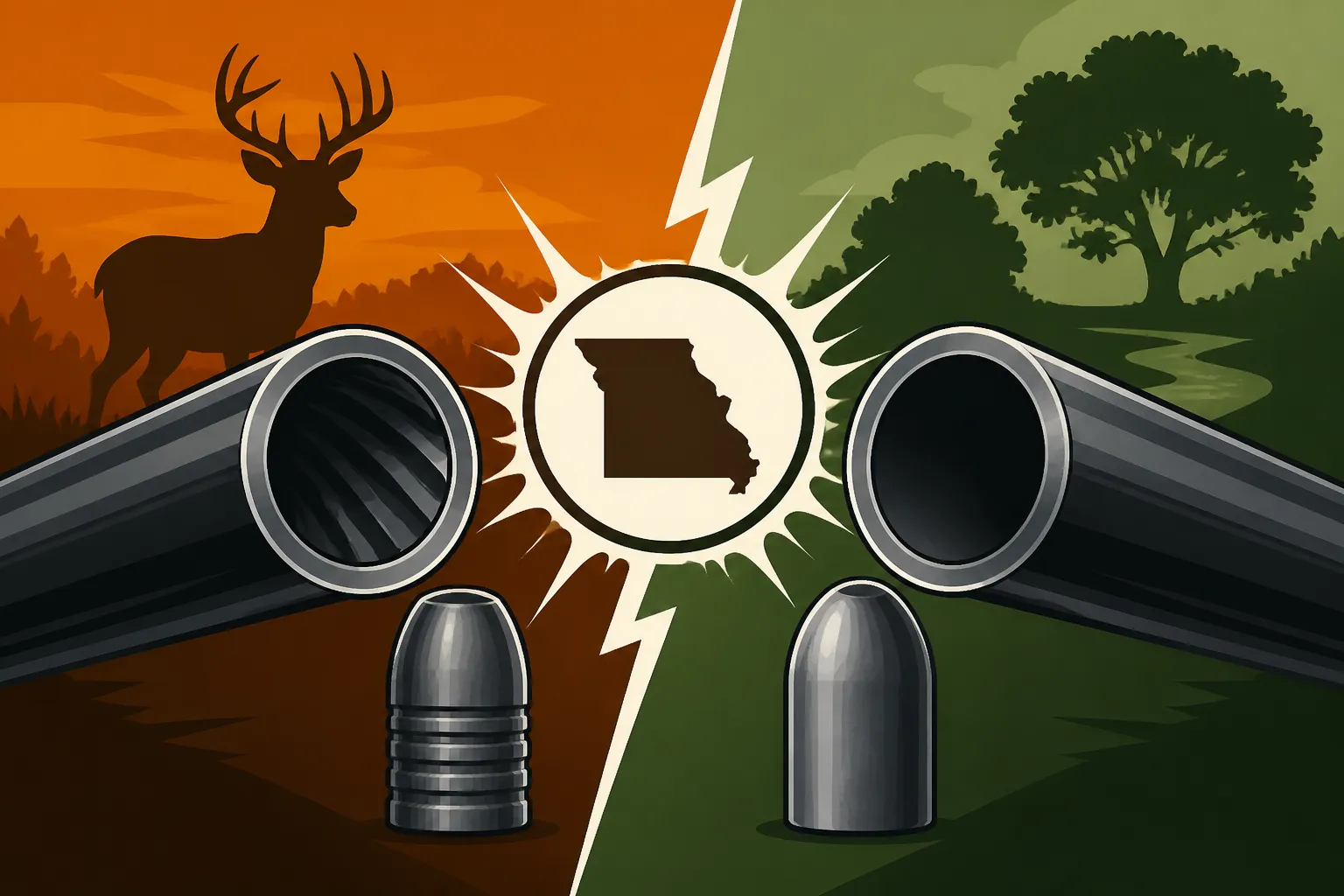
A smoothbore barrel is exactly what it sounds like: the inside of the barrel is perfectly smooth, without any helical grooves (rifling). This design is optimized for shooting scattershot, like birdshot or buckshot, allowing the shot column to exit the barrel with a relatively even pattern. For most hunters, a shotgun is a smoothbore, used for everything from busting clays to chasing quail or ducks. It's the workhorse of the shotgun world, versatile and reliable.
However, when it comes to slugs, this smooth interior presents a challenge. A slug, being a single projectile, needs stability to fly accurately, much like a rifle bullet. Without rifling to impart a spin, a smoothbore slug relies on its own design to achieve some level of stability. Traditional slugs, like the Foster or Brenneke types, often have a heavy nose and a hollow skirt or fins to try and achieve aerodynamic stability, much like a shuttlecock. They fly in a somewhat stable, but often wobbly, trajectory. If you've ever tried to hit a deer at 80 yards with an old smoothbore and standard slugs, you know the frustration. You might be aiming dead on, but the slug could be spiraling or dropping significantly, leading to a clean miss or, worse, a wounded animal. This inherent limitation is why many hunters, even those deeply rooted in tradition, eventually start looking for something more precise as deer populations expand and hunting opportunities diversify.
The Emergence of Rifled Barrels for Enhanced Accuracy
Enter the rifled barrel. The concept is borrowed directly from rifles: spiral grooves are cut into the interior of the barrel. When a slug is fired through this barrel, these grooves grip the projectile, causing it to spin rapidly along its axis as it travels down the bore. This spin, known as gyroscopic stabilization, dramatically improves the slug's accuracy and extends its effective range. It's the same principle that makes a football thrown with a perfect spiral fly straighter and farther than one simply tossed end-over-end.
The development of dedicated rifled slug barrels, often paired with specialized ammunition called sabot slugs, revolutionized shotgun deer hunting. A sabot slug is typically a smaller-diameter projectile (like a .50 caliber bullet) encased in a plastic sleeve (the sabot) that fits snugly into the shotgun's bore. As the slug and sabot travel down the rifled barrel, the sabot engages the rifling, imparting spin to the bullet. Once the slug exits the muzzle, the sabot peels away, leaving the spinning bullet to continue its accurate flight. This combination allows shotgun hunters to achieve rifle-like accuracy out to ranges that were once unthinkable for a shotgun, often exceeding 100 or even 150 yards with practice. For Missouri hunters looking to stretch their ethical range, especially in more open agricultural fields or along river bottoms, a rifled barrel quickly became a game-changer. You might be accustomed to hunting thick timber where 50-yard shots are the norm, but imagine the confidence of knowing you can take a clean, ethical shot on a deer standing at 120 yards across a field.
Smoothbore Barrels: Pros, Cons, and Optimal Use in Missouri
For many Missouri hunters, the smoothbore shotgun is where it all began. It's often the first firearm you learn to shoot, and it has a long, storied history in the deer woods. But like any tool, it has its ideal applications and its limitations, especially in the context of modern deer hunting expectations.
Advantages of Smoothbore for Close-Range Hunting
One of the biggest advantages of a smoothbore shotgun is its incredible versatility. That same gun you use for squirrels and rabbits in the fall or ducks in the winter can, with a quick change of ammunition, become a deer hunting tool. This means you don't necessarily need to invest in a dedicated slug gun or rifle right away, making it a very cost-effective option, especially for new hunters or those on a budget. Missouri Youth Permit Prices are often designed to make hunting accessible, and using an existing smoothbore can keep initial gear costs down.
For hunting in dense Missouri timber, particularly in the rugged Ozarks or thick creek bottoms, a smoothbore shotgun throwing traditional Foster or Brenneke slugs is perfectly adequate, and sometimes even preferable. In these environments, shots are typically close – often 50 yards or less. At these distances, the inherent accuracy limitations of a smoothbore are less pronounced. A heavy, hard-hitting slug from a smoothbore is more than capable of taking down a deer cleanly at these ranges. Think about navigating a thick patch of honeysuckle or briars, trying to push through a cedarbrakes, where a clear shot beyond 40 yards is a rarity. In such scenarios, the quick handling of a smoothbore, often with open sights or a simple bead, is all you truly need. Plus, the sheer power of a large-diameter lead slug can be incredibly effective on game.
Disadvantages and Limitations with Modern Slugs
However, the moment you step out of the dense timber and into more open country – say, hunting a timbered draw adjacent to a vast cornfield in north Missouri, or trying to cover a wider food plot – the smoothbore's disadvantages quickly become apparent. Its primary limitation is accuracy and effective range. Beyond about 75 yards, even with practice, grouping slugs reliably with a smoothbore can be a real challenge. The lack of spin means the slug is susceptible to yawing and dropping significantly over distance, making precise shot placement difficult. If you miss a deer at 80 yards with your smoothbore, you might blame yourself, but often it's the ballistic limitations of the setup. Practical Range in Missouri Timber can be quite short, but if your hunting grounds offer longer shots, a smoothbore might not be the best ethical choice.
Furthermore, smoothbores are really designed for traditional, full-bore slugs like the Foster or Brenneke. Trying to shoot sabot slugs (which are meant for rifled barrels) through a smoothbore will result in abysmal accuracy, as the sabot won't engage any rifling to stabilize the projectile. This means you're limited in your ammunition choices, and modern advancements in slug technology that offer flatter trajectories and greater energy retention are largely out of reach. For hunters who demand maximum precision and want to push their ethical shooting distance, the smoothbore often leaves them wanting more.
Rifled Barrels: Precision, Performance, and Considerations for Missouri Hunters
For those seeking to elevate their shotgun hunting experience to rifle-like levels of precision, the rifled barrel is the clear answer. It addresses the fundamental accuracy issues of smoothbores head-on, opening up new possibilities for shotgun hunters across Missouri's varied landscapes.
The Accuracy Advantage of Rifled Slug Guns
The most significant advantage of a rifled barrel is, without a doubt, its superior accuracy. By imparting a stabilizing spin on the slug, a rifled barrel, especially when paired with saboted ammunition, can achieve groups comparable to many centerfire rifles at moderate ranges. It's not uncommon for hunters to consistently achieve 3-inch groups or better at 100 yards with a good rifled slug gun and matched ammunition. This level of precision allows for much cleaner, more ethical kills at extended ranges, boosting a hunter's confidence immensely.
Imagine setting up a ground blind on a crop field edge in north Missouri, watching a prime buck enter the field at 120 yards. With a traditional smoothbore, that might be an un-ethical shot. But with a properly sighted-in rifled slug gun, equipped with a scope, that shot becomes not just possible, but highly probable for a skilled marksman. This expanded ethical range means you can hunt more diverse terrain and capitalize on opportunities that a smoothbore simply can't handle. Companies like GoHunt can be a great resource for researching ballistic tables and user reviews to find the sabot slugs that perform best out of specific rifled barrels, helping you dial in that precision. You can compare different ammunition types and see what other hunters are using successfully.
Trade-offs and Best Practices for Rifled Barrels
While rifled barrels offer incredible performance, they do come with their own set of considerations. First and foremost, cost. A dedicated rifled slug barrel can be a significant investment, often costing as much as a new, entry-level shotgun itself. If you're buying a complete slug gun, it will generally be more expensive than a basic smoothbore field model.
Secondly, a rifled barrel is essentially a single-purpose tool. While you can shoot traditional full-bore slugs through it, the soft lead will foul the rifling quickly, degrading accuracy and requiring extensive cleaning. And you absolutely cannot shoot birdshot or buckshot through a rifled barrel effectively; the patterns will be wildly inconsistent. This means if you want to hunt deer and birds with the same shotgun receiver, you'll need to swap barrels, adding time and potentially impacting your zero. For Missouri hunters, this means you might need two barrels (or even two different firearms) to cover all your hunting needs.
Best practices for rifled barrels include meticulous ammunition matching. Not all sabot slugs are created equal, and different brands and weights will perform differently in your specific barrel. It's crucial to buy several boxes of various sabot slug types and test them at the range to find the one your gun "likes" best. Zeroing at 100 Yards is a good starting point for testing. Cleaning is also important, as copper or lead fouling from saboted slugs can build up and degrade accuracy over time. Finally, don't forget the optics. To fully capitalize on the accuracy of a rifled barrel, a good quality scope is almost a necessity, allowing for precise aiming at extended ranges.
Choosing the Right Barrel for Your Missouri Hunting Style
Deciding between a rifled and a smoothbore slug barrel really boils down to understanding your personal hunting style, the terrain you frequent in Missouri, and your budget. There's no single "best" option, only the best option for you.
Factors to Consider: Terrain, Shot Distance, and Budget
When making your choice, start by honestly assessing where you hunt. Are you primarily navigating the dense, brushy creek bottoms and steep hollows of the Missouri Ozarks, where a 75-yard shot is rare and a 50-yard shot is common? In these close-quarters scenarios, the maneuverability and cost-effectiveness of a smoothbore with traditional slugs might be perfectly adequate. The deer move quickly, and you need to be ready for an instant, close-range opportunity. Still-Hunting a Missouri Ozark Hollow often involves these types of close encounters.
However, if your hunting grounds include wide-open agricultural fields, power lines, large food plots, or clear-cut areas where shots beyond 100 yards are not only possible but expected, then a rifled barrel becomes a serious consideration. The added accuracy and extended ethical range will dramatically increase your chances of a clean harvest at distance.
Your personal shooting skill and comfort level with longer shots also play a role. If you prefer to keep your shots within 75 yards regardless of the terrain, a smoothbore might suffice. But if you've practiced and are confident in your ability to make precise shots at 100-150 yards, a rifled barrel will allow you to do so ethically. Finally, consider your budget. A smoothbore is often more affordable, especially if you already own one. A dedicated rifled barrel, or a complete rifled slug gun, represents a greater financial investment but delivers superior long-range performance. You can often find great deals on used shotguns that already have a dedicated slug barrel if you search around, making the upgrade more palatable. Online resources, including forums and gear reviews on sites like GoHunt, can provide insights into value-for-money options.
Ammunition Matching: The Key to Performance
Regardless of whether you choose a smoothbore or a rifled barrel, understanding and matching your ammunition to your barrel is paramount. This isn't just a suggestion; it's a critical component of accuracy and ethical hunting.
For smoothbore barrels, you absolutely must use traditional, full-bore slugs like Foster or Brenneke designs. These slugs are designed to stabilize themselves aerodynamically as they fly. They are typically made of soft lead and are designed to safely pass through any choke constriction, although improved cylinder or cylinder chokes are generally recommended for best accuracy. Never use sabot slugs in a smoothbore, as they will tumble and be wildly inaccurate.
For rifled barrels, you should exclusively use saboted slugs. These slugs consist of a bullet (often jacketed lead or copper) encased in a plastic sabot. The sabot engages the rifling, imparting spin to the bullet, and then separates from the bullet shortly after leaving the muzzle. Shooting traditional full-bore slugs through a rifled barrel will not only be less accurate (as the soft lead may not properly engage the rifling) but will also lead to significant lead fouling in your barrel, which is a pain to clean and will degrade accuracy for future sabot slug use.
No matter which barrel type you choose, range testing is non-negotiable. Buy several different brands and types of appropriate slugs for your barrel, and shoot them at various distances (e.g., 50 yards, 75 yards, 100 yards) from a solid rest. Your shotgun will likely "prefer" one type of slug over others, delivering consistently tighter groups. This trial and error is essential for maximizing your accuracy and confidence in the field. Ammunition Availability Before Missouri Season can sometimes be tricky, so plan your testing well in advance of opening day.
Here's a quick comparison of the two barrel types:
| Feature | Smoothbore Barrel | Rifled Barrel |
|---|---|---|
| Barrel Interior | Smooth, no rifling | Helical grooves (rifling) |
| Primary Ammo | Foster, Brenneke (full-bore slugs); birdshot, buckshot | Saboted slugs only |
| Accuracy | Fair to Good (under 75 yards) | Excellent (up to 150+ yards) |
| Effective Range | ~75 yards (ethical maximum) | ~150+ yards (ethical maximum) |
| Versatility | Highly versatile (one barrel for all shotgun uses) | Dedicated (for slugs only, requires barrel swap for other uses) |
| Cost | Lower (often comes standard with field guns) | Higher (dedicated barrel or full slug gun) |
| Optics Need | Often open sights or simple bead | Scope highly recommended for max performance |
| Cleaning | Easier to clean after slug use | Important to prevent fouling from sabots |
Ultimately, the best choice for your Missouri deer hunting adventures comes down to a thoughtful evaluation of your hunting environment, your ethical shooting boundaries, and your willingness to invest in specialized gear. Whether you stick with the time-honored smoothbore for dense timber or embrace the precision of a rifled barrel for open fields, ensure you practice, understand your equipment's limitations, and always strive for the most ethical shot possible. Using resources like GoHunt to stay informed on gear trends and regulations, such as Legal Firearms for Missouri Deer or Missouri Firearms Deer Permit Types, will only enhance your hunting success and enjoyment.
Disclaimer
This article is for general informational purposes only and does not constitute professional advice. Laws, prices and regulations vary by location and change over time. Consult a qualified professional for guidance on your specific situation.