Sabot Slugs and Effective Range
For many deer hunters across Missouri, especially those navigating areas where centerfire rifles might be restricted or simply choosing the versatility of a shotgun, the desire for rifle-like accuracy can be a real challenge. You want to extend your ethical range, place your shots cleanly, and feel confident when that big buck steps out. Sabot slugs promise to deliver that precision, but truly understanding their effective range and how to achieve it with your setup is absolutely critical to success in the field. This guide will walk you through everything you need to know to maximize your sabot slug's performance.
The Evolution of the Shotgun Slug: From Ball to Bullet
Hunting with a shotgun in Missouri often brings to mind the traditional "pumpkin ball" slug, a round piece of lead or a Foster-style slug that can be quite effective at close ranges. But for hunters looking to stretch their limits and achieve greater accuracy, especially in open country or longer timber lanes, sabot slugs have revolutionized what a shotgun can do. It's not just about putting lead downrange anymore; it's about precision.
What Makes a Sabot Slug Different?
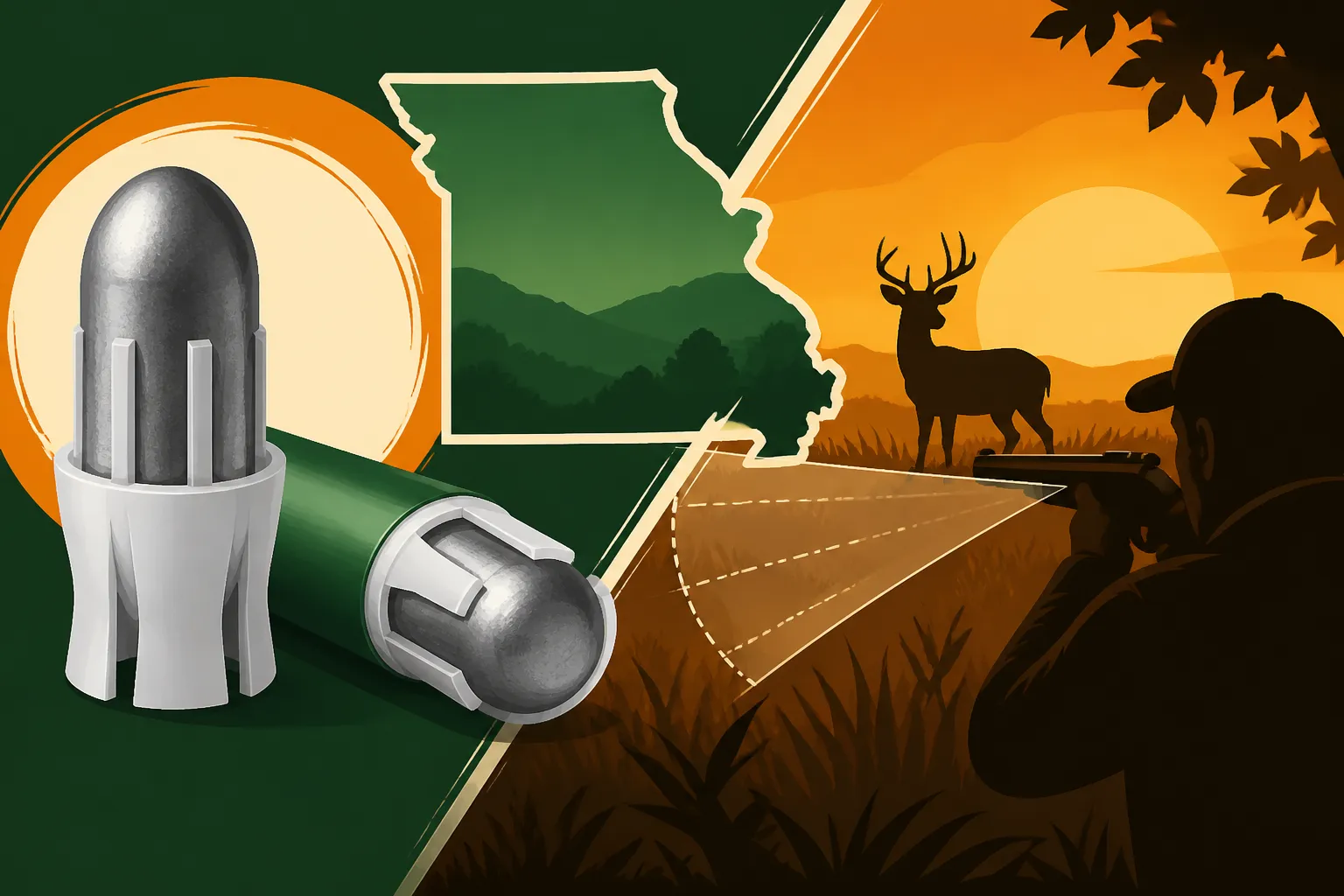
At its core, a sabot slug is designed to mimic a rifle bullet, even though it's fired from a smoothbore or, ideally, a rifled shotgun barrel. Unlike a traditional Foster slug, which is a full-bore lead projectile that spins only slightly due to air resistance, a sabot slug is a smaller-diameter projectile encased in a plastic sleeve, or "sabot." This plastic sabot engages the rifling in a barrel, imparting a spin to the projectile much like a rifle bullet. Once the slug exits the barrel, the sabot peels away, leaving the aerodynamic projectile to continue its flight with gyroscopic stability.
This design is a game-changer because it allows the projectile itself to be more aerodynamic, often with a pointed or boat-tail design, which retains energy better and flies flatter over longer distances. Think of it this way: a traditional slug is like throwing a football end-over-end, while a sabot slug is like throwing a perfectly spiraled pass. The latter is far more predictable and travels further with accuracy. This engineering marvel is why many hunters, especially those in regions with Legal Firearms for Missouri Deer restrictions, eagerly embrace them.
Why Shotgun Hunters Turn to Sabots in Missouri
The appeal of sabot slugs for Missouri hunters is multifaceted. Firstly, specific regulations in certain counties or conservation areas might restrict the use of centerfire rifles, making shotguns (and muzzleloaders) the primary choice for deer hunting. In these scenarios, if you're hunting a food plot or a field edge, you might find yourself needing to take a shot beyond what a traditional slug can reliably offer. Sabot slugs fill that void, offering a flatter trajectory and better accuracy at ranges up to 150-200 yards, sometimes even more for highly optimized setups and skilled shooters.
Secondly, many hunters simply prefer the feel of a shotgun or already own a dedicated slug gun. Investing in a rifled barrel for their existing shotgun and pairing it with quality sabot slugs can transform their reliable deer hunting tool into a more versatile instrument. This avoids the need to purchase a completely new rifle setup. Lastly, the terminal performance of many sabot slugs is excellent. They are designed to expand reliably on impact, creating significant wound channels that lead to quick, humane harvests, which is always the goal of any ethical hunter.
Understanding Effective Range for Sabot Slugs
When we talk about "effective range," it’s not just about how far a projectile can physically travel; it's about the maximum distance at which you, as the shooter, can consistently place a shot into a vital area, and the projectile retains enough energy to ethically harvest the animal. For sabot slugs, this is a nuanced discussion, blending ballistic capability with real-world hunting conditions and personal skill.
Factors Influencing Sabot Slug Performance
Several key factors conspire to dictate how far your sabot slug setup can truly be effective. It’s a holistic system, not just one magic component.
- Barrel Type and Twist Rate: This is paramount. Sabot slugs require a rifled barrel to achieve their full potential. A smoothbore barrel, while capable of firing them, won't impart the necessary spin, drastically reducing accuracy and effective range. Even among rifled barrels, the twist rate can make a difference; some slugs perform better with specific twist rates.
- Ammunition Match: Not all sabot slugs are created equal, and not all shotguns "like" the same slugs. You might find that your shotgun groups incredibly tight with one brand and weight, but terribly with another. It's a frustrating but essential part of the process to test different loads.
- Optics: While some hunters might use open sights or a red dot, a low-power scope (like a 1-4x or 2-7x) is generally recommended for maximizing the accuracy potential of sabot slugs at longer ranges. Good Rifle Scopes for Low-Light Timber can make a huge difference in target acquisition during those critical dawn and dusk hours.
- Shooter Skill: This can't be stressed enough. The best equipment in the world won't compensate for a lack of practice. Consistency in shooting form, trigger control, and understanding bullet drop are vital.
- Weather Conditions: Wind, rain, and temperature can all affect a slug's flight path, especially at extended ranges. A strong crosswind, for instance, can push a slug offline surprisingly far.
Defining "Effective Range" for Deer Hunting
For deer hunting, "effective range" isn't just a number on a ballistic chart. It's a practical, ethical boundary. It's the distance at which you can confidently place a shot within a 6-8 inch diameter circle (representing a deer's vital zone) every single time, under real hunting conditions. This also means the slug must retain sufficient kinetic energy to ensure a quick, humane kill. While some sabot slugs might technically travel 300 yards, their energy might have dropped significantly, or your personal accuracy might fall apart long before that.
Many experts suggest a minimum of 1,000-1,200 ft-lbs of energy for deer, but reliable expansion and precise shot placement are far more critical. A well-placed slug with slightly less energy is always better than a poorly placed one with more. Knowing your personal limitations and the capabilities of your specific setup is far more important than bragging rights.
Typical Effective Ranges in Missouri Scenarios
In the diverse landscapes of Missouri, typical effective ranges for sabot slugs can vary significantly.
- Dense Timber: In thick woods, shots are generally much closer. Here, the advantage of a sabot slug might not be its extended range, but its superior accuracy for threading a shot through a small opening. For these scenarios, even 75-100 yards can feel like a long shot, and a traditional Foster slug might even suffice.
- Field Edges and Food Plots: This is where sabot slugs truly shine. If you're set up on a Ground Blinds on Crop Field Edges overlooking a bean field or a remote food plot, shots can easily stretch from 100 to 150 yards, or even 200 yards in very open situations. This is where a dialed-in sabot slug setup can perform much like a rifle.
- Rolling Hills and Open Country: In some parts of North Missouri's big-buck farm country, or open areas of the Ozarks, you might have longer sight lines. A highly optimized sabot slug setup in a rifled barrel with a good scope, paired with a skilled shooter, could potentially reach out to 200 yards or slightly beyond. However, for most hunters, keeping shots within 150-175 yards ensures a higher probability of an ethical kill.
Ultimately, your personal maximum ethical range might be 125 yards, while another hunter with an identical setup might be confident at 175 yards. It’s about honest self-assessment.
| Slug Type | Barrel Type Recommended | Typical Accuracy Range (yards) | Primary Advantage | Best For Missouri Scenario |
|---|---|---|---|---|
| Sabot Slug | Rifled Barrel (preferred) | 75 – 200+ (with practice) | Flat trajectory, rifle-like accuracy | Field edges, food plots, open timber, longer sight lines |
| Foster Slug | Smoothbore (can use rifled) | 50 – 100 | Close-range power, cost-effective | Dense timber, brushy areas, close-quarters hunting |
Maximizing Your Sabot Slug's Effective Range
So, you've decided sabot slugs are for you. Great! Now, how do you wring every ounce of performance out of them and extend your ethical range? It comes down to smart choices in gear and consistent effort in practice.
The Importance of Pairing Slug and Barrel
This is not a "one size fits all" situation. Your rifled slug barrel will likely prefer a specific brand, weight, and even type of sabot slug. It's just like finding the right ammunition for a rifle. What shoots lights out in your buddy's Mossberg 500 with a rifled barrel might pattern like a blunderbuss out of your Remington 870. You've got to invest the time and, yes, some money, to test different options.
Buy a few different boxes of high-quality sabot slugs from various manufacturers like Federal, Hornady, Remington, and Winchester. Head to the range with a solid rest and methodically test each one. Pay attention to group size at 50 yards, then 75, then 100. The goal is to find the slug that consistently puts three shots into the smallest group. Once you find it, stick with it! Don't switch unless you absolutely have to, and if you do, re-pattern your shotgun immediately. This trial-and-error approach is tedious, but it's the absolute best way to unlock your shotgun's true potential.
Optics and Sighting for Accuracy
While some dedicated slug guns come with decent iron sights, a quality optic will dramatically improve your ability to place precise shots at longer ranges.
- Low-Power Variable Scopes: A 1-4x, 2-7x, or even a 3-9x scope is ideal. These scopes offer enough magnification for longer shots but can be dialed down for closer, fast-action opportunities. Look for good light-gathering capabilities, especially if you plan on hunting during the prime low-light hours. Optics from brands like Nikon or Leupold offer reliable performance.
- Red Dot Sights: For ranges generally under 100 yards, a red dot sight can be incredibly fast and accurate. They offer an uncluttered sight picture and are excellent for quick target acquisition. However, for pushing beyond that, the dot can obscure too much of the target, making precise shot placement difficult.
- Proper Mounting and Zeroing: Once you have your preferred optic, ensure it's mounted securely. Use quality rings and bases. Then, properly zero your shotgun. Most hunters will zero their sabot slugs for 100 yards. This means you'll be slightly high at 50 yards and have a predictable drop at 125, 150, and 175 yards. Knowing your bullet drop compensation for various distances is crucial, so always confirm this at the range. Websites like GoHunt often have resources or community forums where hunters discuss effective zeroing techniques for various setups.
Practice, Practice, Practice
This is where the rubber meets the road. Even with the perfect slug and optic, without consistent practice, your effective range will shrink dramatically.
- Bench Rest Shooting: Start with a solid bench rest to eliminate as much human error as possible. This helps you determine the true mechanical accuracy of your shotgun and slug combination. Once you know what your setup is capable of, you can work on improving your personal shooting skills.
- Varying Positions: Deer rarely stand broadside in front of a bench rest. Practice shooting from kneeling, sitting, and even standing positions. Use shooting sticks or a bipod if that's what you'll use in the field. Simulating real hunting scenarios will build confidence.
- Range Time and Cadence: Don't just fire a few shots and call it a day. Spend ample time at the range, focusing on smooth trigger pull, consistent cheek weld, and proper breath control. Pay attention to recoil management; shotgun slugs kick hard, and anticipating recoil can lead to flinching. Dry firing at home can help. When checking your Practical Range in Missouri Timber or open fields, remember to practice longer shots, always knowing your limits.
- Understanding Ballistics: Familiarize yourself with the ballistic trajectory of your chosen slug. Use online ballistic calculators (many gun manufacturers offer them, or platforms like GoHunt might have tools) to understand how much your slug will drop at different distances. Print out a simple drop chart and tape it to your stock or keep it in your hunting pack. This information, combined with a good Rangefinders Under 100 Yards or longer-range model, will allow you to make quick, informed decisions in the field.
Real-World Considerations for Missouri Hunters
Missouri's hunting landscape is diverse, from the thick timber of the Ozarks to the expansive farm fields up north. Applying your knowledge of sabot slugs to these varied environments means thinking ethically and practically.
Ethical Shooting Distances
This bears repeating: never take a shot beyond your proven, ethical capabilities. A wounded animal is a terrible outcome for everyone involved. If you've consistently grouped shots within an 8-inch circle at 125 yards but struggle at 150, then your ethical maximum range is 125 yards. Period. Don't let buck fever or an exciting situation push you past that boundary. Conditions in the field are rarely as ideal as the shooting range. Consider:
- Adrenaline: Your heart will pound, your hands might shake.
- Uneven Terrain: You might be shooting uphill or downhill, or from an awkward stance.
- Wind and Obstructions: A slight breeze or a barely visible twig can deflect a slug.
- Time Constraints: You might have only a few seconds for the shot.
It’s always better to wait for a closer, cleaner shot, even if it means letting a deer walk. That's part of being a responsible hunter.
Shot Placement and Energy Transfer
Sabot slugs are powerful, but shot placement is king. Aim for the heart-lung vitals, a roughly 6-8 inch area just behind the shoulder. This ensures rapid blood loss and organ damage, leading to a quick and humane harvest. Understanding how your particular slug performs on game is also important. Most modern sabot slugs are designed for controlled expansion, creating a wide wound channel while retaining enough mass for good penetration.
However, even the most powerful slug can't compensate for a poor hit. Taking the time to understand deer anatomy and practicing shot placement on a life-sized deer target can be invaluable. If you're concerned about terminal performance on a particular slug, research reviews and ballistic gel tests.
Gear Considerations Beyond the Shotgun
While the shotgun, barrel, slug, and optic are the primary components, other gear can significantly enhance your success with sabot slugs.
- Rangefinder: Absolutely essential for accurate range estimation, especially when pushing the limits of your effective range. Whether you use a dedicated unit or an app feature, knowing the exact distance to your target allows you to apply your bullet drop knowledge precisely. This is where GoHunt and other digital scouting tools really shine; you can often pre-range landmarks on a map before you even set foot in the woods.
- Shooting Sticks/Bipod: If you plan on taking longer shots, a stable rest is paramount. Shooting sticks or a bipod will greatly improve your stability, especially when shooting from a kneeling or sitting position in the field. This can effectively extend your personal ethical range.
- Comfortable Clothing and Scent Control: Being comfortable and staying undetected allows you to focus solely on the shot when the moment arises. Layering for Missouri's unpredictable weather and paying attention to Clothing for a Missouri November can make a long sit much more tolerable.
Mastering sabot slugs and their effective range requires dedication, practice, and an ethical mindset. But for Missouri hunters seeking rifle-like performance from their shotguns, the reward is a versatile and potent hunting tool that instills confidence when that trophy steps out.
Disclaimer
This article is for general informational purposes only and does not constitute professional advice. Laws, prices and regulations vary by location and change over time. Consult a qualified professional for guidance on your specific situation.