Rifle Scopes for Low-Light Timber
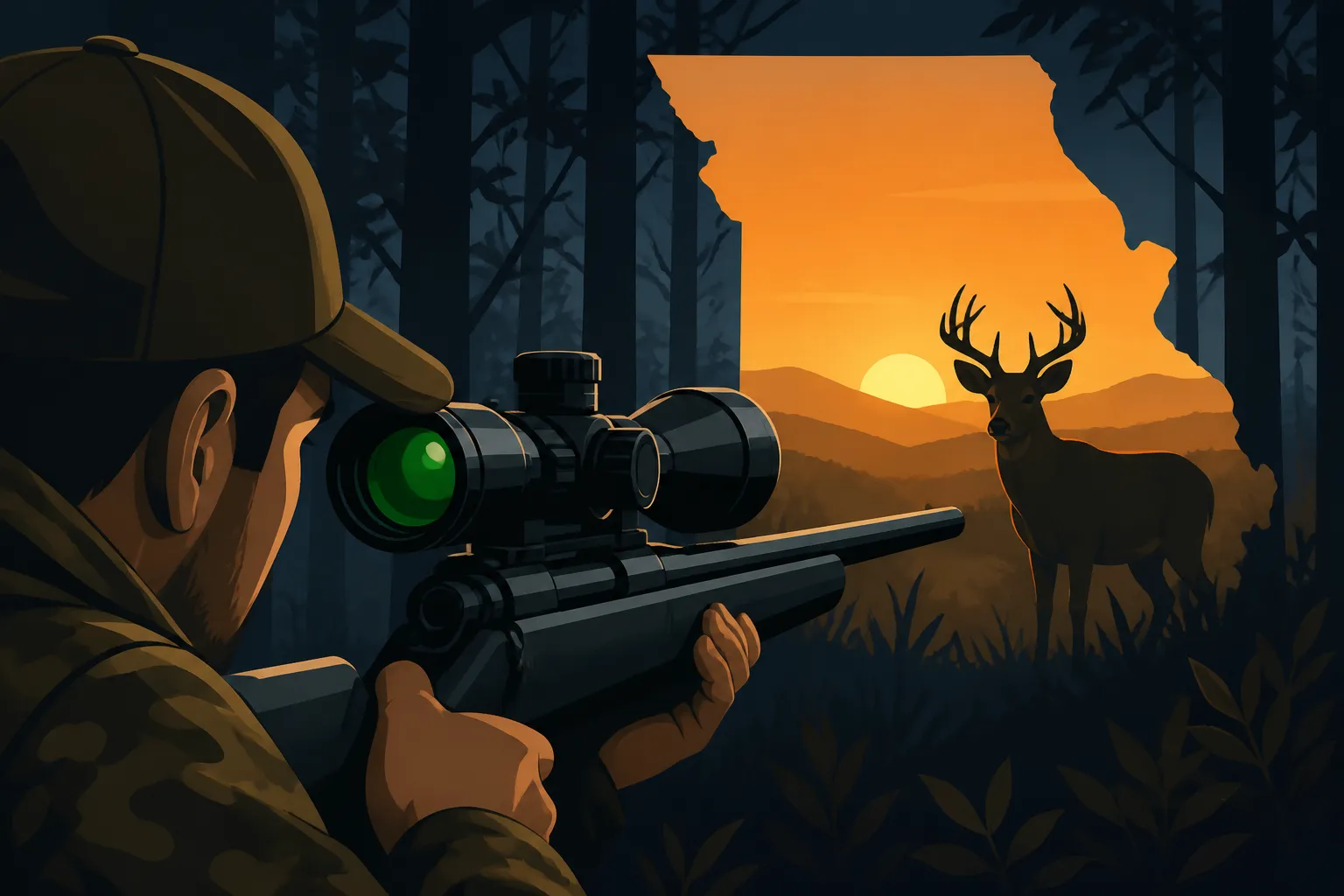
The sun dipping below the Missouri tree line, or just barely peeking over it in the morning, brings a whole new set of challenges when you're deer hunting in our timber. That crucial "golden hour" where deer move most freely is often a dim, shadowy affair under the dense canopy of hardwoods, and without the right equipment, that fleeting glimpse of a buck can turn into a frustrating "what if" story. This guide is all about helping you understand how to choose a rifle scope that truly performs in those demanding, low-light timber conditions, ensuring you can make the most of every precious hunting moment in Missouri.
Understanding the Challenge of Low-Light Timber Hunting in Missouri
Hunting in Missouri's timber, whether it's the sprawling Ozarks or the dense river bottoms, presents a unique optical challenge, especially during those prime hunting hours of dawn and dusk. It's not just about hitting a target; it's about discerning a target, separating it from the shadows, and confirming it's the animal you want to harvest.
The Missouri Timber Environment at Dawn and Dusk
Picture this: you're settled into your treestand before legal shooting light, the air is crisp, and the woods are slowly waking up. As the sky lightens, the forest floor beneath the thick canopy remains stubbornly dark. Patches of fog might cling to the hollows, or a heavy cloud cover could turn a promising morning into a perpetual twilight. This isn't the wide-open prairie where a distant shot in bright sun is the norm. Here, in the mature oaks and hickories of the Deer Hunting the Missouri Ozarks or the dense brush of Hunting North Missouri's Big-Buck Farm Country, shadows are deep, contrasts are subtle, and light is at an absolute premium.
The dense leaf cover, even after the fall drop, can create a dark ceiling that filters out much of the available light. When deer move through these areas, their camouflage works exceptionally well against the backdrop of dark bark and dappled light. You might see movement, a vague outline, but identifying antlers, let alone counting points, can be nearly impossible with an inadequate scope. This is where a scope designed for true low-light performance becomes your most valuable asset, transforming vague shapes into clear targets.
The Crucial 'Golden Hour' in Missouri Deer Hunting
Every Missouri deer hunter knows the magic of the "golden hour"—that brief window at dawn and dusk when whitetails are most active, moving between bedding areas and food sources. It's the time when that mature buck you've been after is most likely to step out. But in the timber, this golden hour often feels more like a "twilight struggle" for your optics. You can scout relentlessly, set up the perfect Treestand Setups in Hardwood Timber, and even master calling techniques, but if your scope can't perform when it counts, all that effort can be for naught.
There's nothing more frustrating than having a deer appear, perfectly broadside, but being unable to take a shot because your crosshairs are lost in the animal's dark hide or the surrounding timber. Your eye might pick up the shape, but if your scope's ability to gather and transmit light, or provide clear contrast, isn't up to snuff, that opportunity vanishes. This is why investing in a quality low-light scope isn't a luxury for timber hunters; it's a necessity that directly impacts your success and, more importantly, ensures an ethical, clean shot when the moment arrives.
Key Optical Properties for Low-Light Performance
When you're sifting through the vast array of rifle scopes, trying to figure out which one will truly cut through the gloom of a Missouri timber stand, it can feel like deciphering a secret code. But understanding a few key optical properties will empower you to make an informed decision, focusing on what truly matters for those critical dawn and dusk encounters.
Objective Lens Size and Light Gathering
The objective lens is the "front door" of your scope, the first point of contact for light. Simply put, the larger the objective lens, the more light it can gather. This is why you often see hunters opting for scopes with 40mm, 44mm, or even 50mm objective lenses for low-light situations. More light hitting your eye means a brighter, clearer image. However, it's not a simple case of "bigger is always better."
A larger objective lens means a larger, heavier scope. This can affect the balance of your rifle, especially if you're Still-Hunting a Missouri Ozark Hollow and carrying your rifle for miles, or climbing into a stand where bulk can be a hindrance. It also dictates how high your scope needs to be mounted, which can impact your cheek weld and overall shooting comfort. For timber hunting, where shots are typically shorter and often taken quickly, there's a sweet spot. A 40mm or 44mm objective often provides an excellent balance of light-gathering capability without adding excessive weight or making the scope feel unwieldy in dense cover. A 50mm can be fantastic for maximizing light, but ensure your rifle setup still feels natural and comfortable.
Exit Pupil and Your Eye's Response
The exit pupil is essentially the diameter of the light beam that exits the eyepiece and enters your eye. It's calculated by dividing the objective lens diameter by the magnification setting (e.g., a 40mm objective at 8x magnification has a 5mm exit pupil). For optimal low-light viewing, you want an exit pupil that matches or exceeds the dilation of your own pupil. In dim light, the human pupil can dilate up to 7mm (though this decreases with age).
A larger exit pupil gives you more "play" in eye placement behind the scope, making it easier to acquire a full, bright sight picture quickly. If your scope's exit pupil is smaller than your eye's pupil, your eye isn't receiving all the light the scope gathered, effectively "wasting" potential brightness. This is particularly crucial for us older hunters whose pupils don't dilate as much as they used to. A scope with a generous exit pupil (5mm or more, especially at the lower magnification settings you'd use in timber) makes a noticeable difference. When that deer steps into a gloomy timber opening, you don't want to be fumbling to find the perfect eye position; you want that bright image instantly available. This concept is vital for achieving optimal Low-Light Performance in a Scope.
Glass Quality and Coatings
You can have the biggest objective lens and a perfect exit pupil, but if the glass itself isn't high quality, or if it lacks proper coatings, your low-light image will still suffer. Think of it like a window: a big window is great, but if the glass is hazy or dirty, you still can't see clearly. High-quality glass, often referred to as "ED" (Extra-low Dispersion) or "HD" glass, minimizes chromatic aberration (color fringing) and improves resolution, which translates to a sharper, more true-to-color image.
Beyond the raw glass, coatings are absolutely critical. Most modern scopes use multiple layers of anti-reflective coatings applied to all air-to-glass surfaces. These coatings dramatically reduce light loss due to reflection and increase light transmission through the scope. A scope that boasts "fully multi-coated" lenses is a good start. These coatings don't just make the image brighter; they improve contrast, which is essential for distinguishing a deer from a dark tree trunk or shadows. Better contrast helps define edges and makes subtle details pop, even when light is scarce. Don't skimp on glass and coatings; they're the engine of your scope's low-light performance. Many reputable brands offer excellent glass, and resources like GoHunt often provide detailed reviews and comparisons of different optics, highlighting their glass quality.
Reticle Choices for Dark Timber
The reticle—those crosshairs or aiming points inside your scope—is just as critical as the glass itself when it comes to low-light timber hunting. What good is a bright, clear image if you can't see your aiming point against a dark background? The right reticle can make the difference between a confident shot and a missed opportunity.
Traditional Duplex and Heavy Post Reticles
For decades, the simple duplex reticle has been a workhorse for hunters, and for good reason. It features thick outer bars that taper down to finer crosshairs in the center. In low light, those thick outer bars naturally draw your eye to the center, even when the finer crosshairs become difficult to see against a dark animal. The beauty of the duplex is its simplicity and speed. You're not cluttering your field of view with unnecessary markings when clarity and quick target acquisition are paramount.
The heavy post reticle takes this concept a step further, often featuring a thick post that rises from the bottom of the field of view, tapering to a fine point or crosshair at the top. This provides an even more robust aiming reference in extremely dim conditions. While it might seem overly simplistic in today's world of complex ballistic reticles, for typical Practical Range in Missouri Timber shots, which are often under 100 yards, the unfussy nature of a heavy duplex or post reticle is a significant advantage. It allows you to quickly center on your target without distraction, making it an excellent choice for a shotgun or a rifle used in tight timber.
Illuminated Reticles: A Modern Solution
Illuminated reticles have become incredibly popular, and for good reason—they directly address the problem of a lost reticle in low light. These scopes allow you to light up the central aiming point (or the entire reticle) with a small, battery-powered LED. This glowing dot or crosshair stands out vividly against any background, no matter how dark, giving you an undeniable aiming point.
However, there are nuances. Not all illuminated reticles are created equal. You want a system with variable brightness settings, allowing you to dial down the intensity to a subtle glow. A reticle that's too bright in dim conditions can cause your pupil to constrict, actually hindering your low-light vision and creating a distracting "halo" effect. Battery life is another consideration; you don't want your battery to die at the critical moment, so always carry spares. Also, consider the color: red is common, but some prefer green. While a fantastic tool, it's essential to practice with your illuminated reticle to understand its settings and how it impacts your natural vision. For a dedicated timber hunter, an illuminated reticle can be a game-changer, turning a vague outline into a precisely aimed shot.
Ballistic and BDC Reticles in Timber Settings
Modern scopes often come equipped with complex ballistic reticles or BDC (Bullet Drop Compensator) reticles, designed with multiple holdover points for long-range shooting. While these are incredibly useful for open-field hunting or dialing in precise shots across vast distances, they can often be overkill—and even a hindrance—in Missouri's dense timber.
The reality of Hunting a Timbered Draw in Row-Crop Country or deep woods is that most shots are relatively close, typically within 150 yards, and often much less. A complex reticle with many hash marks can clutter your sight picture, making it harder to quickly acquire your target in low light. In those fleeting moments when a deer slips through the trees, simplicity often wins. For timber hunting, a clean, simple reticle (perhaps with a single holdover dot if you practice at varying ranges) is generally more effective. You want to focus on the animal and your precise aiming point, not on deciphering multiple lines under pressure. Save the elaborate ballistic reticles for wide-open fields; in the timber, less is often more.
Scope Construction and Features for Rugged Missouri Hunting
Beyond the purely optical aspects, the physical construction and specific features of a rifle scope play a huge role in its reliability and usability in the demanding conditions of a Missouri hunt. You need a tool that can stand up to the elements and perform consistently, season after season.
Durability and Weatherproofing
Missouri weather is notoriously unpredictable. One day it's a crisp, sunny November morning; the next, you're sitting through a cold, driving rain or dealing with heavy fog in a river bottom. Your scope needs to be built like a tank to withstand these conditions. Look for scopes that are explicitly advertised as waterproof, fog-proof, and shockproof.
Waterproofing is typically achieved through O-ring seals throughout the scope's body, preventing moisture from entering. Fog-proofing comes from purging the scope's interior with an inert gas, usually nitrogen or argon, which prevents internal condensation from forming due to rapid temperature changes. Imagine climbing into your stand on a cold morning, your body heat warming the scope, only for it to fog up internally when the ambient temperature drops again – a completely useless optic in the most critical moments! Shockproofing ensures the internal components can withstand the recoil of your rifle and the inevitable bumps and knocks that come with trekking through the woods. A truly durable scope will continue to hold its zero and function perfectly, regardless of what Mother Nature or rough handling throws at it.
Magnification Range for Timber Hunting
It's tempting to think that a scope with a huge magnification range (e.g., 4-16x or 6-24x) is always better. However, for timber hunting, where shots are generally closer and target acquisition needs to be fast, an overly high maximum magnification can be a detriment. In dense cover, high power dramatically shrinks your field of view, making it difficult to scan for deer or follow movement, especially if a deer is on the move.
For most Missouri timber hunting, a magnification range of 1.5-6x, 2-7x, or 3-9x is ideal. A lower minimum magnification (1.5x, 2x, or 3x) provides a wide field of view, which is critical for quick target acquisition when a deer suddenly appears in a thicket. This wider view also allows you to process more of your surroundings, helping you anticipate movement. The upper end of 6x or 9x is more than sufficient for ethical shots out to 150-200 yards, covering the vast majority of Practical Range in Missouri Timber scenarios. Prioritize a versatile, lower-end magnification that offers a broad field of view rather than chasing extreme high power that you'll rarely use in the woods.
Eye Relief and Field of View
Two often-overlooked but crucial features for timber hunting scopes are eye relief and field of view. Eye relief is the distance your eye needs to be from the eyepiece to see a full, clear image. Generous eye relief (typically 3.5 inches or more) is important for safety, especially with larger caliber rifles, to prevent the scope from hitting your brow under recoil. It also provides more flexibility in head position, which can be a lifesaver when you're contorted in a treestand or taking a quick shot from an awkward angle.
Field of view (FOV) refers to the width of the area you can see through the scope at a given distance (usually 100 yards). As mentioned with magnification, a wider FOV is invaluable in timber. It allows you to pick up movement sooner, track a deer through thick cover, and get on target faster. When a buck is ghosting through the trees, a wide FOV on a lower magnification setting can make all the difference in seeing him, rather than just seeing a tiny sliver of his flank. When evaluating a scope, pay close attention to the eye relief and FOV specs, particularly at the lower magnification settings you'll be using the most in the woods.
Practical Considerations and Recommendations
Choosing a rifle scope for low-light timber hunting isn't just about technical specifications; it's about how those specs translate into real-world performance for your hunting style and budget. Let's talk about bringing it all together.
Balancing Cost and Performance
Here's the tough truth: genuinely good low-light performance in a scope often comes with a higher price tag. This isn't just about brand names; it's about the quality of the glass, the precision of the coatings, the robust construction, and the engineering that goes into making all those elements work together seamlessly. A cheap scope might look similar on paper, but it will almost certainly fall short when the light begins to fade. However, that doesn't mean you need to break the bank for every hunt.
The trick is to prioritize. If low-light performance in Missouri's dense timber is your primary concern, then allocate a significant portion of your optics budget towards a scope with excellent glass, effective coatings, and a generous exit pupil. You might compromise slightly on maximum magnification (which you won't use much in timber anyway) or fancy ballistic reticles if it means getting superior light transmission. Research is key here. Read reviews from trusted sources, and check out comparisons on sites like GoHunt, which often delves into the real-world performance of various optics. Remember, a good scope is an investment that will last for many hunting seasons, often outliving the rifle it's mounted on.
Mounting and Zeroing for Timber Use
Even the best scope in the world is useless if it's not mounted correctly or if your rifle isn't properly zeroed. For timber hunting, sturdy, reliable rings and bases are non-negotiable. Loose mounts are a recipe for frustration and missed shots. Consider using a torque wrench to ensure all screws are tightened to the manufacturer's specifications. If you're using a heavier scope with a larger objective, make sure your rings provide enough clearance for the objective bell to clear the barrel.
When it comes to zeroing, think about your typical shooting distances in the timber. While many hunters zero their rifles at 100 or 200 yards, a 50-75 yard zero might be more practical for tight timber. This will give you a "point-blank" range that covers most of your close-range shots without significant holdover or holdunder. Always confirm your zero before the season, and if possible, do so in varying light conditions to simulate what you'll encounter in the woods. Even a quick check at 25 yards can confirm if your scope is still on after a bumpy truck ride or a hard fall. Consistency is everything when that moment of truth arrives. You can find more specific advice on Zeroing at 100 Yards or adjusting for shorter distances.
Maintenance and Care for Your Low-Light Optic
Your rifle scope is a precision instrument, and like any fine tool, it requires proper care to maintain its performance, especially one relied upon for critical low-light situations. The lenses are the most vulnerable part. Always use a dedicated lens cleaning kit (brush, lens cloth, and optical cleaning solution) to remove dirt, dust, and smudges. Never wipe dry lenses with your shirt or a rough cloth, as this can scratch the coatings.
After a hunt in wet conditions, make sure to dry your scope thoroughly before putting it away. Remove any moisture from the exterior, paying close attention to turrets and crevices. When not in use, store your rifle and scope in a dry, temperature-stable environment, preferably in a padded case to protect it from bumps. Periodically check your mounting screws for tightness, as recoil and vibrations can sometimes loosen them over time. A well-maintained scope isn't just about aesthetics; it ensures that the delicate internal mechanisms and crucial lens coatings continue to perform optimally, delivering that bright, clear image when you need it most in the Missouri timber.
| Feature | Benefit for Low-Light Timber | Considerations | Ideal for Missouri Timber |
|---|---|---|---|
| Objective Lens | More light gathering | Weight, mounting height | 40mm – 44mm (good balance), 50mm (max light) |
| Exit Pupil | Brighter image, easier eye relief | Magnification dependent | 5mm+ (at desired hunting magnification) |
| Glass Quality | Sharper, clearer image, better contrast | Cost | ED/HD Glass, Fully Multi-Coated Lenses |
| Reticle Type | Visible in low light | Clutter, battery reliance | Heavy Duplex, Illuminated (variable brightness) |
| Magnification | Wide FOV, quick acquisition | Narrows FOV at high power | 1.5-6x, 2-7x, 3-9x |
| Durability | Reliability in elements | Build quality | Waterproof, Fog-proof (Nitrogen/Argon purged), Shockproof |
| Eye Relief | Safety, comfort, flexibility | Recoil, head position | 3.5 inches+ |
Disclaimer
This article is for general informational purposes only and does not constitute professional advice. Laws, prices and regulations vary by location and change over time. Consult a qualified professional for guidance on your specific situation.