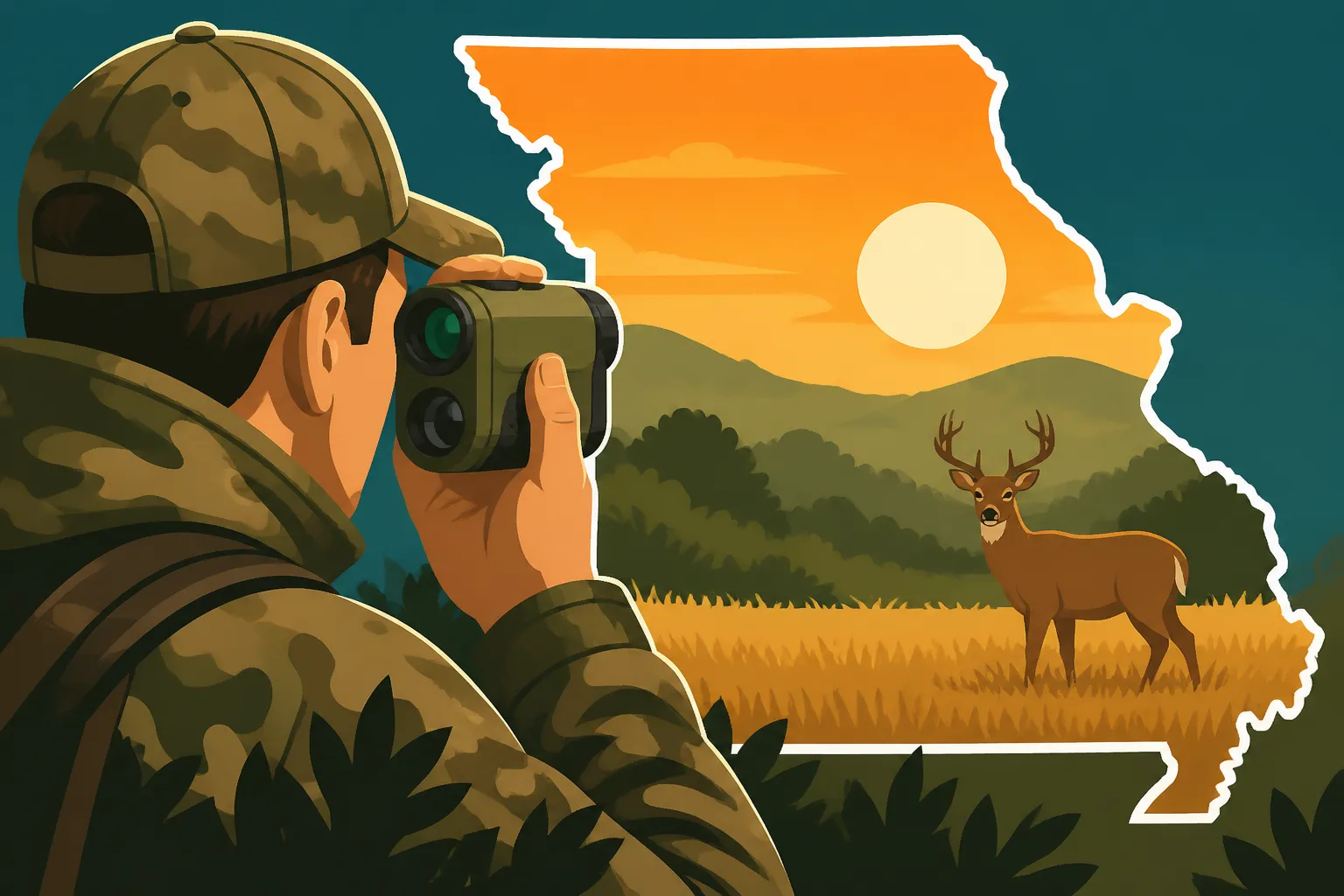
Rangefinders Under 100 Yards
Many Missouri hunters find themselves questioning the necessity of a rangefinder, especially when they primarily hunt in thick timber or smaller fields where "long shots" might only be 50 or 70 yards. It's easy to think, "I can eyeball that," or "My stand is only 20 yards from that trail, so why bother?" But the truth is, even in close quarters, misjudging distance by just a few yards can mean the difference between a clean kill and a missed opportunity, or worse, a wounded animal. This guide will walk you through why a rangefinder is an indispensable tool for every Missouri hunter, even for those seemingly short distances, and how to choose and effectively use an affordable model that won't break the bank.
The Overlooked Importance of Close-Range Accuracy in Missouri
It’s a common misconception that rangefinders are only for long-range western hunting or wide-open crop fields. Here in Missouri, where we often find ourselves tucked into a brushy fencerow or perched on a tree stand overlooking a timbered draw, distances can be incredibly deceptive. That deer might appear to be 30 yards away, but a quick check with a rangefinder could reveal it's actually 45, or even 20. These small differences have huge implications for shot placement, especially for archers or muzzleloader hunters.
Think about bowhunting in a classic Missouri hardwood timber stand. You've got trees, fallen logs, thick underbrush, and constantly shifting light. Your target might be standing near a cluster of oaks, and without a rangefinder, your brain might automatically shorten or lengthen the distance due to the visual clutter. This is precisely where an affordable rangefinder shines. It takes the guesswork out of the equation, giving you a definitive number that builds confidence and improves accuracy. Nobody wants to regret a shot because they thought they knew the yardage.
Deceptive Distances in Timber and Brush
Hunting deer in the dense timber of the Ozarks or the brushy creek bottoms of North Missouri presents unique challenges for judging distance. Trees create visual tunnels, and shadows play tricks on the eyes. A deer might step out from behind a thick oak, and your mind immediately tries to gauge the distance based on landmarks you think you pre-ranged, but those landmarks might be slightly off, or the deer might be positioned differently than you anticipated.
For instance, you might be set up overlooking a well-used game trail winding through heavy cover. You've got a couple of shooting lanes cut, and you've visually estimated them at 25 and 35 yards. But when a nice buck slips through, often moving quickly, confirming that distance instantly is critical. Is it exactly 25, or is it 28? Is that 35-yard lane truly 35, or is it 40, pushing the edge of your comfortable bow range? Practical Range in Missouri Timber is often much shorter than we practice for, making precise rangefinding even more important. A rangefinder removes that doubt, allowing you to focus purely on the shot itself.
The Critical Difference for Archery and Muzzleloaders
For archers, every single yard matters. A 20-yard pin versus a 30-yard pin can be a difference of many inches in drop, and if you’re shooting 40 yards, adding 5 or 10 yards can lead to a complete miss over the deer's back or a shot under its chest. The same goes for muzzleloader hunters, where the trajectory can be more pronounced than with modern rifles, and every yard affects impact point.
Even for centerfire rifle hunters who might have a flatter trajectory out to 100 yards, knowing the precise range can make a difference in where you hold the crosshairs. If you're zeroed at 100 yards, but your target is at 70, or 120, understanding the minor adjustments your rifle makes can be important for a perfectly placed shot, especially if you're dealing with a smaller target like a coyote. Ultimately, a rangefinder under 100 dollars provides an objective data point in a high-pressure situation, giving you an undeniable advantage.
Essential Features to Look for in a Budget Rangefinder
When you're looking for a rangefinder that won't require taking out a second mortgage, you'll be surprised at how many solid options exist. The key is to prioritize the features that truly matter for hunting in Missouri's typical environments and to understand what you might be sacrificing compared to high-end models. Don't fall into the trap of thinking you need every bell and whistle. For close-range accuracy, a basic, reliable unit is often more than sufficient.
Focus on core functionality: accurate distance readings, ease of use, and durability. You're not looking to range across a mile-wide canyon; you're looking to confirm that the deer browsing on the edge of the Hunting a Missouri Fencerow Between Fields is indeed 60 yards, not 75. Knowing these crucial distinctions will help you make a smart purchase without feeling like you're missing out.
Accuracy and Speed at Shorter Ranges
The number one feature you need is reliable accuracy, particularly at closer ranges (under 100 yards). Most budget rangefinders boast accuracy to within +/- 1 yard, which is perfectly acceptable for hunting. What's more important than absolute pinpoint precision (which often only matters at extreme distances) is consistency. Does it give you the same reading repeatedly when ranging the same object? That consistency builds trust.
Speed is also a factor. In hunting situations, deer don't always stand still waiting for you. A quick read, ideally under a second, allows you to get the number and make your shot decision promptly. While some high-end models offer sub-half-second readings, a rangefinder that takes 1-2 seconds is usually fine for hunting in Missouri where targets often pause in cover. Look for models that emphasize fast target acquisition and display.
Clear Display and Simple Operation
A clear, easy-to-read display is non-negotiable. Many budget rangefinders use a basic LCD display, which works well in most conditions. Some might offer a red reticle for better visibility in low light, but this isn't always standard at the lowest price points. Ensure the numbers are large enough to see quickly without fumbling.
Simplicity in operation is also key. You don't want to be fumbling with multiple buttons or complex menus when a deer is in front of you. Most budget rangefinders have one or two buttons: one to power on and range, and maybe another to change modes (like continuous scan or unit of measure). The simpler, the better, especially when adrenaline is pumping during Missouri's Eleven-Day November Firearms Deer Season. You want to be able to pull it up, press a button, and get your number without thinking twice.
Durability and Weather Resistance
Missouri weather can be unpredictable. One minute it's crisp and clear, the next a drizzle rolls in, or heavy fog blankets the timber. Your rangefinder needs to be able to withstand these conditions. Look for models that are advertised as water-resistant or, even better, waterproof. While a full dunk might be too much for some, it should be able to handle light rain, dew, or the occasional splash.
The build quality also matters. It doesn't need to be bomb-proof, but a slightly rubberized casing can help with grip and offer some protection against minor drops or bumps. Remember, this tool will be hanging around your neck or tucked into a pocket, exposed to the elements and the rigors of hunting. Even an inexpensive tool needs to be rugged enough to survive a season or two in the field.
Using Your Budget Rangefinder Effectively in Missouri's Diverse Terrain
Once you've got your hands on a capable rangefinder, the next step is to integrate it seamlessly into your hunting routine. It’s not just about ranging a deer when it appears; it’s about preparation and practice. Missouri offers such a variety of terrain, from the sprawling crop fields up north to the steep, rocky draws of the Ozarks, that knowing how to maximize your rangefinder's utility in each situation is a skill worth developing.
Thinking ahead about potential shot opportunities and how you’ll confirm distances is a game-changer. Whether you're scouting new ground with a mapping app like GoHunt or just walking into a familiar stand, taking a few moments to range key landmarks before the action starts can make all the difference when a buck finally steps into view.
Pre-Ranging Your Stand or Blind
Before legal shooting light, or as you're setting up your ground blind or treestand, take a few minutes to range key landmarks. Identify prominent trees, rocks, stumps, or even fence posts that are within your shooting lanes. Note these distances in your head or jot them down. This proactive approach saves critical seconds when a deer shows up.
For example, if you're hunting a food plot, range the corners, the far side, and any distinctive brush piles or entry trails. If you're Setting Up on a Bench Above a Creek, range the opposite bank, specific trees along the ridge, or any openings in the understory. When a deer appears, you'll immediately have a good reference point, and you can quickly range the deer to confirm, minimizing movement and maximizing your shot window. This also helps you quickly assess if a deer is within your comfortable shooting range for archery or muzzleloader.
Utilizing Scan Mode for Moving Targets
Many budget rangefinders include a "scan mode," which is incredibly useful for hunting. Instead of just giving a single static reading, scan mode provides continuous updates as you pan the rangefinder across a landscape. This is invaluable for tracking a deer that is slowly moving through cover, or for quickly getting multiple readings on different objects without having to repeatedly press the button.
Imagine a scenario where a group of turkeys is slowly feeding across a field edge, moving in and out of view. Using scan mode, you can constantly update their range as they move, giving you a better idea of their path and potential shot opportunities. Or, if a buck is quartering away and walking, you can scan and keep a running tab on its distance, ready for the moment it pauses. This feature truly helps take the guesswork out of ranging dynamic situations in Missouri's often thick terrain.
Handling Angled Shots from a Treestand
One of the trickiest aspects of hunting from a treestand is dealing with angled shots. The horizontal distance to a deer standing directly below your stand is very different from the actual line-of-sight distance the rangefinder reads. Gravity only affects the horizontal distance, not the straight-line distance. Many hunters, especially bowhunters, often shoot over a deer's back on steep downward angles because they don't account for this.
While many high-end rangefinders have "angle compensation" technology, most budget models do not. This means you need to be aware of the effect. For deer directly under your stand, the rule of thumb is that the closer the deer is to the base of your tree, the less compensation is needed (as the actual horizontal distance approaches the vertical distance to the ground). For shots out to 30-40 yards from a typical stand height, the difference is usually negligible (a yard or two). But if you're taking a shot at a very steep angle to a deer only 10-15 yards away, you might need to aim as if it's 2-3 yards closer than your rangefinder reads. Practice is key here; know your equipment and your limitations from a height.
Limitations of Budget Rangefinders and How to Work Around Them
While budget rangefinders are fantastic tools for most Missouri hunting scenarios, it's important to understand their limitations. They won't perform like their high-dollar counterparts, and expecting them to do so will only lead to frustration. Knowing what they can't do helps you appreciate what they can do, and allows you to adapt your tactics to get the most out of your investment.
These limitations are often related to advanced features, extreme range, and performance in adverse conditions. But for the average hunter pursuing deer, turkey, or small game in Missouri, these drawbacks are usually manageable with a bit of foresight and practical application. Don't let the lack of premium features deter you from the significant advantages a sub-$100 rangefinder provides.
Challenges with Reflectivity and Small Targets
One area where budget rangefinders can sometimes struggle is with less reflective targets or very small objects, especially at the outer limits of their effective range. For instance, ranging a deer in deep shadows might be slower or yield less consistent readings than ranging a tree trunk in direct sunlight. Similarly, trying to range a single turkey head popping up over a small rise might be more difficult than ranging the entire body.
To work around this, try to range a more reflective object near your target. If a deer is standing next to a tree, range the tree. If it's near a bush, range the bush. Many rangefinders, even budget ones, have a "last target priority" mode which helps it ignore foreground objects like leaves or grass and give you the distance to the farthest object it sees within the reticle. Familiarize yourself with this feature if your unit has it. Sometimes, using a GoHunt map on your phone can help confirm general distances, but the rangefinder is for precise, real-time confirmation.
No Angle Compensation and Extreme Range Limitations
As mentioned, most rangefinders in the under-$100 category will not offer angle compensation for treestand or hilly terrain shots. This means the number displayed is the line-of-sight distance, not the "shoot-for" horizontal distance. For rifle hunters at typical Missouri ranges (under 200 yards), this difference is usually minor. However, for archers or muzzleloader hunters taking steeper shots, it's a factor. You need to mentally or manually adjust.
Additionally, while many budget rangefinders might advertise ranges up to 500 or 600 yards, their performance often degrades significantly beyond 150-200 yards, especially on non-reflective targets like animals. If you're hunting wide-open fields or doing any kind of long-range target shooting, you'll notice their limits quickly. For the vast majority of deer and turkey hunting in Missouri, however, where shots rarely exceed 100-150 yards, this isn't a significant drawback. Know your comfortable shooting distances and stick to them. For specific long-range shots, sometimes just knowing your Zeroing at 100 Yards makes all the difference.
Battery Life and Eyestrain
Some budget rangefinders might have slightly shorter battery life compared to premium models, or they might use less common battery types. Always carry a spare battery, especially during extended hunts or cold weather, which can drain batteries faster. Simple CR2 batteries are often used, which are usually available at most hardware or convenience stores.
Another minor issue can be eyestrain. Lower-quality optics in some budget models might not be as comfortable for prolonged use. However, for hunting, you're usually only using the rangefinder for quick glances and readings, not for extended glassing sessions like you would with binoculars. So, while it's a consideration, it's often not a deal-breaker. Focus on clarity during those critical few seconds of use.
Here's a quick look at common features and what to expect in an under-$100 rangefinder:
| Feature | What to Expect in Budget Rangefinders (<$100) | Why It Matters for Missouri Hunters |
|---|---|---|
| Accuracy | Typically +/- 1 yard, consistent on close to mid-range targets. | Essential for precise shot placement, especially for archery/muzzleloader. |
| Max Range (Advertised) | 400-600 yards, but effective on game usually 150-200 yards. | Sufficient for most Missouri hunting scenarios where shots are closer. |
| Display Type | Standard black LCD display; may be harder to see in low light. | Clear readings are crucial for quick decisions in the field. |
| Scan Mode | Often included, provides continuous readings. | Great for ranging moving game or multiple objects quickly. |
| Angle Compensation | Rarely included. Reads line-of-sight distance only. | Requires manual adjustment for steep treestand shots, especially for bowhunters. |
| Water Resistance | Usually rated as water-resistant, can handle light rain. | Protects against unpredictable Missouri weather. |
| Optics Magnification | 6x or 7x is common, adequate for target acquisition. | Helps identify and range targets effectively. |
| Battery Type | Often CR2 lithium; sometimes AAA. | Easy to find replacements, crucial for preparedness. |
| Build Material | Plastic chassis with some rubberized grip points. | Provides basic durability and a secure hold. |
Disclaimer
This article is for general informational purposes only and does not constitute professional advice. Laws, prices and regulations vary by location and change over time. Consult a qualified professional for guidance on your specific situation.