Rangefinding Binoculars Worth the Cost
For many of us who hunt Missouri, especially when chasing whitetails in diverse terrain, the moment of truth often comes quickly, and precision is paramount. Fumbling with separate binoculars and a rangefinder can cost you precious seconds and even the opportunity at a deer of a lifetime. This guide is all about diving deep into whether rangefinding binoculars are a worthwhile investment for your hunting style, helping you decide if consolidating these two essential tools will truly enhance your experience in the field.
What Are Rangefinding Binoculars?
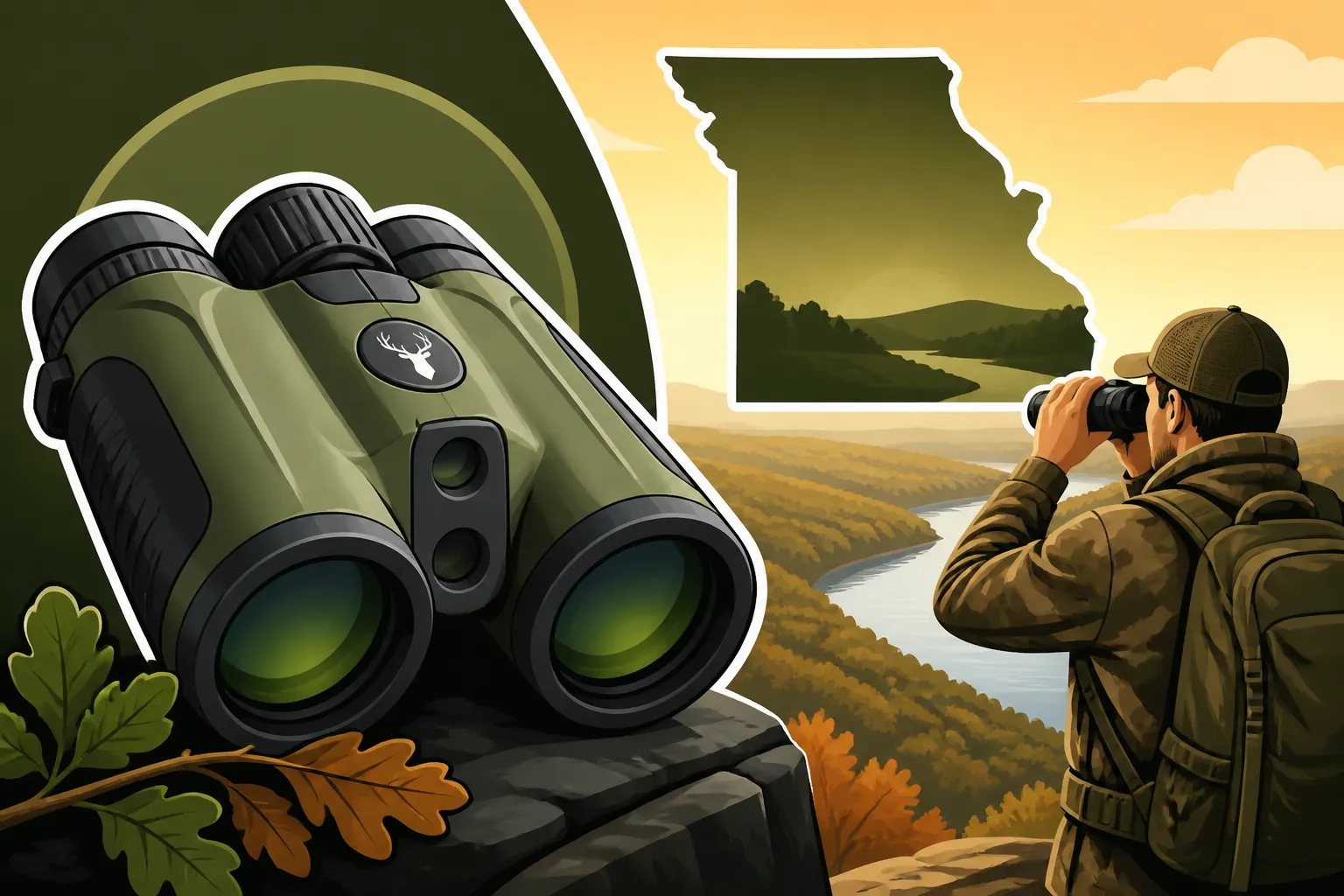
Let's cut right to the chase: rangefinding binoculars are exactly what they sound like – a single optical device that combines the magnification and light-gathering capabilities of traditional binoculars with the distance-measuring function of a laser rangefinder. It's an elegant solution to a common field problem, bringing two critical pieces of gear into one streamlined package. For hunters who value efficiency and reducing clutter, they represent a significant step forward in equipment integration.
Combining Two Essential Tools
Think about your typical deer hunting setup. You likely have a good pair of binoculars hanging around your neck or in a chest harness, used for spotting deer, identifying antler points, and generally surveying your surroundings. Right alongside that, or perhaps tucked into a pocket, is your laser rangefinder, a tool you pull out when a deer approaches to confirm the exact yardage before you even consider drawing your bow or raising your rifle. This dance of swapping gear can be clunky, noisy, and, in high-pressure situations, agonizingly slow.
The beauty of rangefinding binoculars is that they eliminate this frantic exchange. You're already glassing with your binoculars, spotting movement, and then, with a simple press of a button, you get an instant, precise range to your target without ever taking your eyes off the prize or shifting your hands. This seamless transition can be a real game-changer when a Missouri buck slips out from behind a thick cedar thicket or pauses briefly in a food plot edge. It’s about more than just convenience; it’s about maintaining focus and readiness.
How the Technology Works
At its core, a rangefinding binocular employs a laser beam to determine distance. When you press the firing button, an invisible, eye-safe laser pulse is emitted from the device. This pulse travels to your target, bounces off it, and returns to a receiver within the binocular. The device then measures the incredibly short time it took for the laser to make this round trip and, using the speed of light, calculates the precise distance. This entire process happens in milliseconds, giving you a digital readout, often within the view of one of the binocular lenses.
Many modern rangefinding binoculars go a step further, incorporating inclinometers that can calculate "angle compensated distance" or "horizontal distance." This is particularly crucial for hunters in places like the Missouri Ozarks, where you might be shooting downhill from a ridge into a hollow or uphill from a creek bottom. A true ballistic range is often shorter than the line-of-sight distance on angled shots, and these devices account for that, helping you avoid overshooting or undershooting your target due to elevation changes. This level of sophistication provides critical data for making an ethical shot, especially for those who spend time hunting the Missouri Ozarks.
The True Value Proposition for Missouri Hunters
So, are these advanced optics truly worth the often-hefty price tag for hunters in the Show-Me State? For many, the answer is a resounding yes, especially when considering the varied landscapes and dynamic hunting scenarios Missouri presents. From the rolling hills of northern farm country to the steep, timbered hollows of the Ozarks, the advantages can be significant.
Precision in Varying Terrain
Missouri offers a fantastic mix of hunting environments. Imagine you're bowhunting in the big-buck country of northern Missouri, perched in a treestand overlooking a vast soybean field that butts up against a creek bottom. A buck steps out at 250 yards, then quickly moves into the timber, reappearing intermittently at 60 yards, then 30, then potentially 15. With separate units, you'd be glassing, lowering, ranging, lowering, then raising your bow. With rangefinding binos, you can constantly monitor the deer's movement and instantly range at each pause, all through the same optic. This continuous feedback is invaluable.
The same holds true in the rugged Ozarks. When you're hunting Missouri ridge saddles and benches or navigating dense timber, shots can be surprisingly close, but also unexpectedly long across draws or down into valleys. Knowing that precise distance, without breaking your concentration to grab a separate tool, can mean the difference between a clean harvest and a missed opportunity. This is particularly true in early morning or late evening light when deer are most active and visibility is limited, making precise target acquisition and ranging even more challenging.
Speed and Efficiency in the Field
Time is a critical factor in hunting, especially when a wary whitetail presents a fleeting shot opportunity. The integrated design of rangefinding binoculars drastically reduces the time it takes to identify a target, acquire its range, and prepare for a shot. This speed can be a tremendous asset, whether you're still-hunting through thick cover and catch a buck moving through an opening, or sitting in a blind on a field edge and a deer steps out at an unexpected angle.
Consider the intense, fast-paced nature of Missouri's Eleven-Day November Firearms Deer Season. With deer on the move and other hunters in the woods, opportunities can arise and vanish in a blink. Being able to glass a deer, instantly range it, and then quickly bring your rifle up, all within a few fluid motions, provides a clear advantage. For bowhunters during Bowhunting Missouri's Four-Month Archery Season, where shot distances are typically much shorter, the speed might be less about maximizing long-range precision and more about quickly confirming the exact yardage to a deer that's within 20-40 yards, allowing for confident pin selection. This seamless operation also means less movement and noise, which can be critical for not spooking game.
Confidence for the Ethical Shot
Ultimately, hunting is about making clean, ethical shots. Knowing the exact distance to your target is perhaps the most crucial piece of information for any shot beyond point-blank range. Rangefinding binoculars instill confidence because they provide that precision instantly. There's no guessing, no estimating, no fumbling with a separate device that might scare off the animal. This confidence translates directly into better shot placement.
For archers, especially, understanding those exact increments is huge. Is it 28 yards or 32? That difference can mean a clean pass-through or a marginal hit. For rifle hunters, especially those using calibers that might have more significant bullet drop at extended ranges, precise rangefinding is absolutely non-negotiable for an ethical shot. Having that range data seamlessly integrated into your primary viewing optic allows you to focus on shot placement, breathing, and trigger control, rather than scrambling for yardage. Good planning with tools like GoHunt for understanding your hunting area, combined with precise optics, creates a powerful preparation strategy.
Considering the Downsides and Alternatives
While the benefits are clear, it's also important to be realistic about the drawbacks of rangefinding binoculars. They aren't for everyone, and for some hunters, the negatives might outweigh the positives. Being informed about these factors is key to making the right gear choice for your personal hunting style and budget.
The Significant Financial Investment
Let's be honest: good optics are expensive, and combining two high-quality optical devices into one package only amplifies that cost. Rangefinding binoculars represent a substantial financial commitment, often costing significantly more than purchasing a high-quality binocular and a good rangefinder separately. For many hunters, this price point alone is a deal-breaker, or at least a reason to pause and seriously consider their budget and priorities.
It’s crucial to assess whether the added convenience and integration justify this investment for your specific hunting needs. If you hunt only in very dense timber where shots are always under 50 yards, or if your budget is already stretched thin, that extra expenditure might be better allocated to other gear, like a better rifle scope for low-light timber or quality cold weather sitting strategy clothing. Sometimes, the raw cost is simply too high for the perceived benefit, and there’s no shame in acknowledging that.
Weight, Bulk, and Battery Life
While these devices consolidate two tools, they often come with a slight increase in weight and bulk compared to a non-ranging binocular of comparable quality. This might not be a huge deal if you’re primarily hunting from a stationary treestand or ground blind. However, if you're a hunter who covers a lot of ground, perhaps still-hunting a Missouri Ozark hollow or actively walking quail cover, every ounce and every bit of bulk can start to feel magnified over the course of a long day.
Another consideration is battery life. Because they contain electronics for the rangefinding function, these binoculars rely on batteries. While modern optics are very efficient, a dead battery means you've lost half the functionality of your expensive device. This adds another layer of preparedness – carrying spare batteries, especially during cold weather when batteries drain faster, becomes essential. It's a small detail, but one that can impact your hunt if overlooked.
Separate Units: Binoculars and Rangefinder
Before rangefinding binoculars became widely available, and even for many hunters today, the go-to setup is separate binoculars and a standalone rangefinder. This approach offers its own set of advantages. Primarily, if one unit fails (e.g., your rangefinder battery dies), you still have the functionality of the other (your binoculars). You're not putting all your eggs in one basket.
| Feature | Integrated Rangefinding Binoculars | Separate Binoculars + Rangefinder |
|---|---|---|
| Convenience | Excellent (one device, seamless transition) | Good (two devices, requires swapping) |
| Speed in Use | Very High (instantaneous ranging while glassing) | Moderate (time lost in switching hands/devices) |
| Cost | High (premium investment for combined technology) | Moderate (can mix and match quality/price points) |
| Weight/Bulk | Moderate (slightly heavier than non-ranging binos) | Moderate (two items, but individually lighter) |
| Battery Life | Single point of failure (if battery dies, rangefinder is out) | Independent (if one battery dies, other still works) |
| Redundancy | Low | High |
| Customization | Limited to specific combined models | High (choose best binos, best rangefinder) |
Furthermore, purchasing separate units often allows you to optimize each piece of gear independently. You can pick the absolute best binocular for your budget and specific glassing needs (e.g., 8×42 Versus 10×42 in the Woods) and then select a rangefinder that excels in its ranging capabilities. This flexibility can be appealing to hunters who prioritize specific performance characteristics in each tool. Tools like GoHunt can help you research and compare these different gear options to make an informed decision before purchasing.
Making the Decision: Are They Right for Your Hunting Style?
So, after weighing the pros and cons, how do you make the call? Ultimately, the decision to invest in rangefinding binoculars comes down to a few personal factors: your primary hunting method, your budget, and whether the convenience truly aligns with how you approach your time in the woods. There's no one-size-fits-all answer, but by asking yourself some pointed questions, you can arrive at the right conclusion for you.
Assessing Your Primary Hunting Method
Think about how you hunt most often in Missouri. Are you predominantly a bowhunter, spending your time in treestands or ground blinds, with most shots typically within 40 yards? While rangefinding binoculars still offer convenience, the critical need for lightning-fast, ultra-precise ranging at longer distances might be less pronounced than for a rifle hunter. However, even for bowhunting, removing the extra movement and sound of grabbing a separate rangefinder can be a significant advantage, especially during bowhunting through the Missouri firearms portion when deer are jumpy.
If you're a rifle hunter who frequents open fields, power lines, or vast stretches of hunting North Missouri's big-buck farm country where shots might extend well beyond 100 yards, the integrated rangefinding capability becomes much more critical. The speed and precision offered by these devices can dramatically improve your confidence and accuracy for those longer shots. Similarly, if you enjoy scouting Missouri public land before season and like to have all your tools in one place, they can be quite handy.
The Importance of Budget and Priorities
Let's revisit the budget. If spending a premium on optics means sacrificing quality in other essential gear areas—like a reliable firearm, quality ammunition, or effective clothing for a Missouri November—then rangefinding binoculars might not be the wisest first investment. It’s about building a balanced setup. However, if you already have your foundational gear dialed in and are looking for an upgrade that streamlines your process and enhances your efficiency, then the cost might be easier to justify.
Consider what you prioritize most: maximum performance from individual units, or seamless integration and speed? Do you often find yourself fumbling with separate devices, wishing for a more fluid experience? For hunters who value the latest technology and the utmost efficiency, and whose budget allows, these devices can be a game-changer. For others, the financial outlay might be better spent on things like a new climbing stand or a trip to a new Missouri Conservation Area.
Getting Hands-On Experience
The best way to truly decide if rangefinding binoculars are for you is to try them out. Visit a reputable outdoor retailer and spend some time looking through different models. Feel their weight, operate the buttons, and compare the optical quality. If you have friends who own them, ask to borrow them for a scouting trip or even a simulated hunting scenario. This hands-on experience will give you a much clearer idea of whether the ergonomics, optical performance, and integrated functionality resonate with your preferences.
Ultimately, the choice is personal. Rangefinding binoculars offer an undeniable advantage in terms of speed, convenience, and precision for many Missouri hunters. They allow you to maintain focus on the animal, reduce movement, and make more confident, ethical shots. But they come with a significant price tag and minor trade-offs in weight and battery dependency. Weigh these factors carefully against your hunting style, budget, and priorities, and you'll make the decision that's right for you and your adventures in the Missouri woods.
Disclaimer
This article is for general informational purposes only and does not constitute professional advice. Laws, prices and regulations vary by location and change over time. Consult a qualified professional for guidance on your specific situation.