Bowhunting Missouri’s Four-Month Archery Season
Missouri's four-month archery deer season is both a blessing and a beast. It's an incredible opportunity to spend extended time in the deer woods, chasing whitetails from the sweltering days of early fall right through the bitter chill of mid-winter. But that sheer length, stretching from September to January, also presents a unique challenge, forcing bowhunters to adapt their strategies constantly as the deer, the weather, and the landscape evolve. This guide is all about helping you unravel those complexities and find consistent success across the entire archery season.
Understanding Missouri's Archery Season Structure
It’s easy to look at the calendar and just see "archery season," but true success hinges on understanding the distinct phases within that four-month window. Missouri's deer management unit, the Missouri Department of Conservation (MDC), has structured the season to balance hunter opportunity with wildlife conservation, and knowing the nuances is your first step toward filling a tag.
The Split Season Nuance
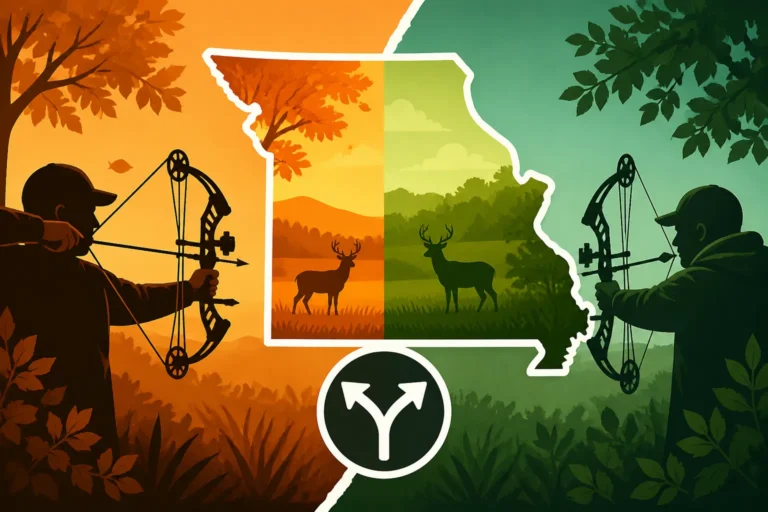
One of the most defining characteristics of bowhunting in Missouri is the "split" in the archery season. We start off strong in September, and that initial segment runs through mid-November. Then, things get a little hectic with the arrival of the Missouri's Eleven-Day November Firearms Deer Season, which is a massive event here in the Show-Me State. During that roughly two-week period, archers actually get a short break, though many choose to participate in the firearms portion as well. Once the smoke clears from the firearms season, usually around Thanksgiving, the archery season reopens and continues all the way through mid-January.
This split isn't just a calendar oddity; it profoundly impacts deer behavior and how you should approach your hunts. The early portion is generally calmer, with deer less pressured, but also still largely on nocturnal patterns as they recover from summer. The post-firearms portion, on the other hand, sees deer that have been thoroughly educated by pressure, often moving into thicker cover and becoming far more wary. Understanding this cycle, as covered in detail in posts like How Missouri's Archery Split Works, is crucial. It means you can't just hunt in January the way you did in September and expect the same results; constant adaptation is the name of the game. The deer that survive the firearms season are truly the smartest of the herd, and they demand a different level of stealth and strategy from bowhunters.
Key Dates and Permit Requirements
Let's talk brass tacks: when can you hunt, and what do you need in your pocket? Missouri's archery season typically kicks off around September 15th and runs until November 10th. It then pauses for the firearms portion, before reopening around November 22nd (give or take a day, always check the current year's regulations) and finally wrapping up on January 15th. These dates give us an incredibly generous amount of time in the woods, something many hunters in other states envy.
When it comes to permits, Missouri offers a straightforward system. For residents, you'll generally need a resident archery deer permit. Non-residents will need a nonresident archery deer permit. Both permit types typically allow for one antlered deer and two antlerless deer in most counties, though some counties have special restrictions or additional antlerless opportunities. You can purchase these permits conveniently online through the MDC website, via the MO Hunting app, or at any authorized permit vendor like a local sporting goods store or even some gas stations. Don't forget, if you plan to hunt other species, you might also need a small game permit or a combination hunting and fishing permit. It's always smart to double-check the current year's regulations for any changes or specific county antlerless limits, as those can sometimes shift based on population management goals. Posts like Missouri Archery Deer Permits and Tags provide more detailed guidance on permit types and how to acquire them. Always have your permits on your person, either physically or digitally on the app, when you're afield.
Early Season Archery Tactics September to Mid-October
The early season in Missouri is a completely different ballgame than what most folks picture when they think of deer hunting. Forget the crisp air and colorful leaves for a moment; we're often dealing with heat, humidity, and mosquitoes. But don't let that deter you; this time of year offers unique opportunities if you know where to look.
Targeting Summer Patterns and Food Sources
When September rolls around, deer are still largely running on their summer patterns. Their primary drivers are food, water, and security cover. During this time, focus intensely on identifying those key food sources. Early season favorites include lush alfalfa fields, standing soybeans that haven't been harvested yet, and the first drop of acorns, especially white oaks. White oaks are particularly critical because their acorns are less bitter than red oaks, making them a preferred food source that deer will hit hard as soon as they start falling. Finding a stand of white oaks dropping acorns can be an absolute goldmine.
Scouting becomes paramount here. Spend time glassing fields from a distance, watching for deer entering and exiting. Pay attention to specific trails leading into these fields or oak flats. Think about where deer are bedding close to these food sources. Often, they'll bed in thick pockets of cover just off a food plot or creek bottom. Your stand placement should be designed for early morning or late evening hunts, catching deer as they move between bedding and feeding areas. Consider how the prevailing wind will affect your approach and exit, especially with the higher temperatures. During these warmer periods, deer often visit water sources more frequently, so don't overlook pond edges or creek banks as potential ambush points.
The challenge of early season hunting, beyond the heat, is that deer are often still nocturnal. They might feed in fields all night but be tucked into bedding by dawn. That means your timing must be impeccable, and you might only get a short window right at daylight or dusk. This also means you need to prioritize finding those transition areas—the routes deer take from their beds to their food. These are often small, subtle trails that might not seem obvious at first glance, but with careful scouting, they become evident. Look for fresh tracks, droppings, and minimal disturbance.
The Importance of Scent Control and Entry/Exit
Let's be real: hunting in 80-degree weather means you're going to sweat. And sweat means scent, which is a whitetail's worst enemy. During the early season, deer are less tolerant of human presence than they might be later in the rut. Their guard is up, and they haven't been desensitized by constant hunting pressure. This makes meticulous scent control absolutely non-negotiable. It's not just about spraying down when you get to your stand; it's a full regimen.
Start with your laundry. Wash all your hunting clothes, including base layers, in scent-free detergent. Store them in airtight bags or totes with some natural elements like pine needles or cedar branches. On the day of the hunt, shower with scent-free soap and shampoo. Put on your hunting clothes only when you get to your hunting area, avoiding contact with anything else. Use scent-eliminating sprays on your boots and outer layers. Even something as simple as using a scent-free deodorant can make a difference. Every little bit helps.
Beyond minimizing your personal odor, think critically about your entry and exit routes. You want to move like a ghost. Never walk directly through a bedding area to get to your stand. Instead, find routes that use natural terrain features like creek beds, ditches, or dense cover to conceal your approach. Plan your route using an aerial map or a mapping app like GoHunt (more on those later) to identify low-impact paths. For instance, if you're hunting a small woodlot bordering a bean field, your ideal entry might be along a dry creek bed that winds to the back of the timber, allowing you to approach your stand from downwind of where you expect deer to be. Exiting is just as important; you don't want to blow out deer from a feeding area as you leave, potentially educating them for future hunts. If possible, wait until legal shooting light is over and the deer have moved into the field, or take a circuitous route to avoid disturbing them. Sometimes, it's better to wait a bit longer in the stand after dark to let the area clear out. This low-impact approach ensures you don't compromise future hunting opportunities.
The Pre-Rut and Peak Rut Strategies Late October to Mid-November
This is the time of year that gets every bowhunter's heart racing. As October gives way to November, a palpable shift happens in the deer woods. The bucks, previously elusive and nocturnal, start to become more visible and aggressive. The rut isn't just a switch that flips; it's a gradual build-up, a period of increasing activity that offers some of the best bowhunting of the entire season.
Hunting Scrapes, Rubs, and Funnels
As the days shorten and temperatures drop, bucks begin to shift their focus from food to finding does. This transition is marked by a dramatic increase in deer sign. You'll start to see fresh rubs on trees, where bucks are stripping bark with their antlers, marking their territory and leaving behind their scent. More importantly, you'll see scrapes—patches of ground pawed clear, often under a licking branch, where bucks urinate and deposit scent from their forehead glands. These are essentially calling cards, communication hubs for deer.
During the pre-rut, bucks will visit scrapes frequently, checking for does and refreshing their own scent. This is an excellent time to set up on active scrape lines. Look for multiple scrapes in a linear fashion, often along field edges, old logging roads, or ridge lines. A dominant scrape, often larger and visited more regularly, can be a particularly hot spot. Beyond scrapes and rubs, focus your attention on natural funnels and pinch points. These are geographical features that constrict deer movement, forcing them into predictable travel corridors. Think about saddles along a ridge, narrow strips of timber connecting two larger woodlots, or bends in a creek where deer have to cross in a specific spot. These areas become deer highways during the rut as bucks are actively cruising for does. Posts like Hunting the Pre-Rut in Late October delve deeper into deciphering these early rut signs. When the peak rut arrives in early November, as explored in Hunting the Peak Rut Week in Missouri, these funnels become even more critical, as bucks are moving almost constantly.
Calling and Decoy Tactics
The pre-rut and peak rut are prime times to incorporate calling and decoy tactics into your bowhunting strategy. Unlike the early season where calls might spook deer, during the rut, bucks are more tolerant and even aggressive towards sounds that mimic other deer. Grunt calls are your bread and butter. A simple tending grunt can often pique a buck's curiosity, making him stop or even come investigating. During the pre-rut, light grunting and doe bleats can be effective, mimicking the early stages of interaction.
As the rut intensifies, don't be afraid to get more aggressive. Rattling antlers, or a rattling bag, can simulate two bucks fighting, a sound that often brings curious bucks charging in to investigate the commotion, especially if they are looking to assert dominance. A snort-wheeze, mimicking a challenging buck, can also be a powerful tool, though use it sparingly. The key is to read the deer's body language. If a buck hangs up out of range, a soft grunt might be all it takes to close the distance. Check out Rattling and Grunting in the Rut for more in-depth advice on these tactics.
Decoys can also be incredibly effective, particularly a buck decoy or a doe decoy. The visual stimulus can often seal the deal when a buck is wary of just calls. Position your decoy strategically: facing slightly away from your stand, to make the approaching buck think the decoy is oblivious to its presence, and slightly quartering away from you to present a good shot angle. A buck decoy facing you can often entice a real buck to circle downwind to get a better look, bringing him right into your shooting lane. Just remember, once the firearms season hits, using a decoy might not be the safest or most effective strategy due to the influx of hunters. However, during the archery-only rut, a well-placed decoy, perhaps a Decoying a North Missouri Buck setup, can make all the difference, drawing attention away from you and setting up the perfect shot opportunity.
Navigating the Firearms Portion as an Archer
Ah, the firearms portion. For many Missouri deer hunters, this 11-day stretch in November is the highlight of the year. For bowhunters, it represents a significant shift in the woods, presenting both challenges and some surprising opportunities. You might be putting your bow down to pick up a rifle, or you might be one of the dedicated few who choose to continue bowhunting through this period. Either way, understanding how to navigate it is crucial for safety and success.
Orange Requirements and Safety Considerations
If you choose to Bowhunting Through the Missouri Firearms Portion, there's one non-negotiable rule: hunter orange. During the firearms portion, all hunters, regardless of weapon choice, are required to wear hunter orange. This isn't just a suggestion; it's a legal requirement designed for your safety. You need to wear a cap, vest, or coat of hunter orange, or an outer garment with at least 400 square inches of hunter orange visible from all sides. That means your safety harness, if it's not orange, won't count.
This rule, detailed in posts like Orange Requirements for Missouri Archers, is paramount. The woods during the firearms season are a much busier place, with many hunters potentially in unfamiliar territory or on the move. Your visibility is your number one defense. Beyond simply wearing orange, always assume there are other hunters around, even if you don't see them. Make extra noise as you walk in and out. Be absolutely positive of your target and what is beyond it before you even think about releasing an arrow, just as you would with a firearm. Avoid wearing any clothing with white patches, which can be mistaken for a deer's tail. Communication is key; if you're hunting with a group, ensure everyone knows each other's locations. This is a time for heightened awareness and conservative decision-making.
Deer Movement During Firearms Season
The influx of firearms hunters drastically changes deer behavior. Pressure makes deer move. Often, deer that were previously using open fields or easy-to-access timber will retreat into the thickest, nastiest cover they can find. Think cedar thickets, impenetrable briar patches, steep hollows in the Ozarks, or small pockets of timber that most hunters walk past. These become sanctuaries for deer trying to escape the pressure.
As an archer during this time, your strategy should shift from active cruising bucks to targeting these refuge areas. Focus on routes deer use to sneak between bedding areas and small, hidden food sources within this dense cover. Look for escape routes that lead into or out of these thickets. Sometimes, hunting near the edges of these sanctuaries, where a deer might just poke its head out before dark, can be effective. Another tactic is to capitalize on deer drives. While you might not be participating in a drive, knowing that drives are occurring on nearby properties or other parts of public land can push deer onto your stand. Position yourself on likely escape routes that lead away from areas where hunters are active. This is where Deer Drives on Missouri Public Ground strategies become relevant, even for solo archers. Deer will often circle back to familiar ground once pressure subsides, but during the actual firearms season, they're often on high alert and highly focused on survival. Your ability to read and react to these shifts in movement patterns will determine your success.
Late Season Archery Opportunities December to January
After the firearms season has come and gone, and the holidays are over, many hunters pack it in. But for the dedicated bowhunter, the late season in December and January offers some of the most challenging yet rewarding hunting of the entire year. The woods are quiet, the crowds are gone, and deer are focused on one thing: survival.
Locating Primary Food Sources and Thermal Cover
The late season is all about food and cover. The rut is long over, and bucks have depleted much of their fat reserves. Now, with colder temperatures and often snow or ice, deer are laser-focused on finding consistent, high-energy food sources. Forget the acorns—most are gone or rotten. Instead, look for standing grain crops like corn or soybeans that farmers didn't harvest. Food plots planted with winter wheat, brassicas, or turnips become magnets. Also, don't overlook natural browse in protected areas, or even lingering apples in an old orchard. Finding these concentrated food sources is absolutely critical, as deer will travel significant distances to access them repeatedly.
Coupled with food, deer need thermal cover to stay warm and conserve energy. This means dense cedar thickets, thick regenerating clear-cuts, and south-facing slopes that catch the sun and provide a break from the wind. These areas offer protection from the elements and often harbor small pockets of browse that deer can nip at throughout the day. Your goal is to find the intersection of these two necessities: a thicket adjacent to a standing cornfield, or a south-facing slope with good browse leading directly to a winter food plot. Posts like Late-Season Food Sources for Whitetails are invaluable for pinpointing these crucial areas. Deer movement will often be abbreviated, so look for bedding areas very close to these late-season food sources, minimizing their exposure to the elements and potential predators.
Adapting to Cold Weather and Hunting Pressure
The late season brings with it the brutal reality of Missouri winters. Frigid temperatures, biting winds, and often snow and ice make for challenging hunting conditions. To succeed, you have to be prepared to sit still and stay warm for extended periods. Layering is your best friend. Start with moisture-wicking base layers, add insulating mid-layers like fleece or down, and top it off with a windproof, waterproof outer shell. Don't forget insulated boots with plenty of room for thick socks, chemical hand and foot warmers, and a good insulated hat and face mask. Staying warm isn't just about comfort; it's about minimizing movement and maximizing your time on stand. A cold hunter is a fidgety hunter, and fidgety hunters don't kill late-season deer.
While the weather is tough on you, it also concentrates deer. They will often move more during daylight hours to feed, especially on the coldest, nastiest days, making them more visible. The good news is that hunting pressure is significantly reduced. Most hunters have either filled their tags, or simply given up on the cold. This means deer might feel a bit more relaxed, though still incredibly wary from the previous hunting seasons. This can be your advantage. Focus on areas that were heavily pressured earlier in the season, but are now quiet. The deer that survived the previous portions are the smartest, most elusive animals in the woods, but they are also hungry and tired. Being out there when no one else is, hunkered down and patient, often results in connecting with a mature deer that has eluded everyone else.
Here's a quick comparison of the archery season phases:
| Season Phase | Typical Dates | Key Deer Behavior | Primary Strategy Focus | Weather Conditions | Hunter Pressure |
|---|---|---|---|---|---|
| Early Season | Mid-Sept to Mid-Oct | Summer patterns, food-driven | Food sources, scent control | Warm, humid | Low |
| Pre-Rut | Late Oct | Increased buck movement, scrapes | Scrapes, rubs, funnels | Cooling, crisp | Moderate |
| Peak Rut | Early-Mid Nov | Bucks chasing does, aggressive | Funnels, calling, decoying | Cool, variable | High (before rifle) |
| Firearms Break | Mid-Nov (11 days) | Retreat to thick cover, pressured | Thick cover, escape routes | Cool, sometimes cold | Very High |
| Late Season | Dec to Mid-Jan | Survival, food/thermal cover | Primary food, thermal cover | Cold, often snow/ice | Low |
Essential Gear and Scouting for Year-Round Success
Bowhunting Missouri for four months means your gear needs to be versatile and reliable, and your scouting efforts relentless. This isn't just about showing up with a bow; it's about preparing for every scenario the season throws at you.
Bow Setup and Broadhead Selection
Your bow is your primary tool, so it needs to be in tip-top shape. Whether you shoot a compound, a recurve, or a longbow, consistency is key. Get your bow professionally tuned before the season starts. Ensure your arrows are flying true and consistently hitting your mark. For compounds, this means checking cam timing, limb deflection, and arrow rest alignment. For traditional bows, it's all about arrow spine and tiller. Practice, practice, practice! Shoot from different angles, out of a treestand, from a kneeling position, and at varying distances to simulate real hunting scenarios. This practice is crucial, as Bow Draw Weight for Missouri Whitetails is just one factor; consistent form and execution are what truly matter.
Broadhead selection is another critical component. There's a perennial debate between fixed-blade and mechanical broadheads. Fixed blades are known for their ruggedness and deep penetration, often preferred in heavy timber or for larger game. Mechanicals, with their expandable blades, offer larger cutting diameters and often fly more like field points, which can be appealing. For Missouri whitetails, either can be effective, but choose a broadhead that you can shoot accurately and that matches your bow's setup. A perfectly placed arrow with a quality broadhead is far more important than the specific type. Ensure your broadheads are razor sharp; a dull broadhead will lead to poor penetration and an ethical failure. Articles like Broadheads for Timber Shots often offer excellent advice for specific conditions you'll encounter here. I personally ensure all my broadheads are surgically sharp; if it can't shave hair off my arm, it doesn't go in my quiver.
Leveraging Technology and Year-Round Scouting
In today's bowhunting world, technology is an indispensable ally. Mapping applications like GoHunt (and others like onX Hunt or Basemaps) are absolute game-changers. They allow you to study aerial photos, identify property lines, locate potential funnels, bedding areas, and food sources, all from your phone or computer. I spend countless hours with my GoHunt app, marking potential stand locations, planning entry and exit routes, and identifying areas of public access like Public Hunting Land in Missouri or hidden pockets within the vast Mark Twain National Forest Hunting. These apps often show detailed topo maps, which are crucial for understanding terrain features, especially in the rugged Missouri Ozarks. Using these tools to scout remotely can save you countless hours of tromping through the woods during the season, minimizing disturbance.
Trail cameras are another essential piece of technology. They provide invaluable intelligence, showing you what deer are present, their antler size, their movement patterns, and their preferred travel times. Place them on trails, at scrapes, or overlooking food plots. Cellular trail cameras can even send photos directly to your phone, allowing you to monitor activity in real-time without having to disturb the area. Just remember to check the regulations for trail camera use on public land, as rules can vary.
Year-round scouting, however, remains the backbone of consistent success. It doesn't stop when the season ends. Shed hunting in late winter and early spring is an excellent way to take inventory of the bucks that survived and understand their winter range. In the spring and summer, focus on identifying new food sources, locating bedding areas, and watching for early season deer patterns. Scouting Missouri Public Land Before Season is not just a good idea; it's a necessity, especially on pressured ground. Pay attention to how the habitat changes with the seasons. Where are the thickest security covers in summer? What acorns drop first? Which creek bottoms hold water even in a drought? This knowledge, coupled with mapping apps and trail camera data, creates a comprehensive understanding of your hunting area, greatly increasing your odds of success. Learning how to effectively read Reading Aerial Photos for Ozark Deer will give you a significant edge in these efforts.
Public Land vs. Private Land Strategies
Missouri offers a diverse landscape for bowhunting, from vast public tracts to smaller private parcels. Each presents its own unique set of challenges and rewards, and understanding how to approach them effectively is key to a successful season.
Maximizing Public Land Opportunities
Bowhunting public land in Missouri, whether it's a Conservation Area (CA) or part of the Mark Twain National Forest, is often characterized by higher hunting pressure. This isn't a bad thing, it just means you need to adjust your strategy. The deer on public land are often more wary and nocturnal, and they know where to hide. To succeed, you have to be willing to work harder and walk farther than the average hunter. That might mean hiking a mile or more into an area that most people don't bother with. Find those overlooked pockets: steep hollows, dense briar patches, or areas separated from parking lots by natural barriers like creeks or muddy sections.
Utilize mapping apps to identify these secluded spots. Look for small, unpressured sections of timber that are difficult to access, or areas surrounded by private land where deer might retreat. Deer on public ground quickly learn that pressure comes from easily accessible areas, so they will gravitate towards places that offer more security. Setting up on travel corridors between these thick sanctuaries and smaller, hidden food sources is often your best bet. Think about the terrain: a small bench on a steep hillside or a hidden draw that most hunters walk past might be a major deer thoroughfare. Understanding Hunting Pressure on Missouri Public Ground is crucial, as it dictates how and where these deer move. If you are willing to embrace the challenge and put in the extra effort, public land can yield some fantastic deer. Remember that most public lands have specific rules regarding stand placement (often requiring them to be removed daily or weekly) and trail camera use, so always check the specific area's regulations.
Gaining and Maintaining Private Land Access
Hunting private land often offers the advantage of lower pressure and more predictable deer patterns. However, gaining access can be challenging, especially in prime deer country. The best way to get private land permission is by simply asking. Approach landowners respectfully, introduce yourself, and clearly state your intentions. Emphasize that you are a bowhunter (which is often seen as less intrusive than firearms hunting), and that you will be respectful of their property, clean up after yourself, and be a good neighbor. Offering to help with chores around the farm, like mending fences or clearing brush, can go a long way in building goodwill.
Once you gain access, maintaining that relationship is paramount. Always communicate with the landowner, letting them know when you plan to hunt and if you harvest an animal. Offer to share venison or give them a hand when they need it. Respect their boundaries and rules implicitly. Never drive off-road without permission, leave gates as you found them, and always be mindful of livestock or other activities on their property. A good relationship with a landowner can provide incredible hunting opportunities for years to come. In Missouri, good word-of-mouth travels fast, and a bad impression can quickly close doors. Building trust and demonstrating respect will set you apart and ensure you have places to hunt when others are scrambling.
Disclaimer
Please remember that hunting regulations, season dates, and permit requirements can change. Always consult the official Missouri Department of Conservation (MDC) regulations before heading afield. This guide is for informational purposes only and should not be considered legal advice. Stay safe, hunt ethically, and enjoy Missouri's incredible outdoors.