Bow Draw Weight for Missouri Whitetails
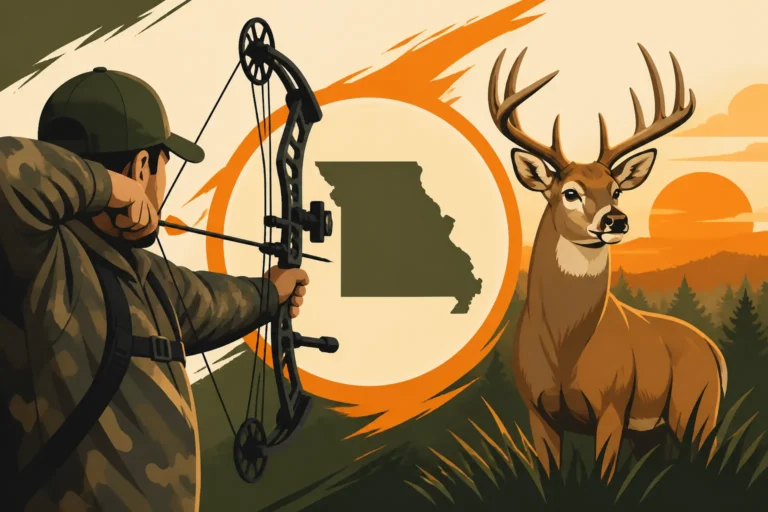
Many archers heading into the Missouri timber fret over one crucial question: "Am I pulling enough weight?" It's a valid concern, because effective arrow penetration on a whitetail deer isn't just about strength, it's about the right balance of equipment, ethics, and personal capability. This comprehensive guide will dive deep into everything you need to know about bow draw weight for hunting Missouri whitetails, helping you make informed decisions for a successful and humane hunt.
Understanding Bow Draw Weight for Archery Hunting
When you pick up a bow, whether it's a sleek modern compound or a traditional recurve, one of the first numbers you encounter is its draw weight. This isn't just an arbitrary figure; it's a critical component that dictates how much energy your arrow will carry and, consequently, how effectively it will perform in the field. Ignoring this number or misunderstanding its implications can lead to frustration and, more importantly, an unethical shot in the pursuit of Missouri whitetails.
What "Draw Weight" Actually Means
Simply put, draw weight is the amount of force, measured in pounds, required to pull your bowstring back to its full draw length. For traditional bows like recurves and longbows, the draw weight increases linearly as you pull the string back. So, a 50-pound recurve might require 25 pounds of force at half draw and the full 50 pounds at full draw. This consistent increase means you're holding the full weight at anchor, which requires significant strength and stamina.
Compound bows operate a bit differently, thanks to their cam systems. While they might still have a peak draw weight of, say, 70 pounds, the cams are designed to "let off" a significant portion of that weight once you reach full draw. This "let-off" allows you to hold a much lighter percentage of the peak weight at full draw – sometimes as little as 15-20% – making it far easier to aim steadily for an extended period. This technological advantage is a huge factor in why compound bows are so popular for hunting, especially in situations where a deer might hang up for a few extra seconds before offering a shot.
Knowing your bow's specific draw weight and how it behaves throughout the draw cycle is paramount. It’s not just about ego or what your buddies are pulling; it’s about what you can comfortably and consistently manage in real-world hunting scenarios, not just on the practice range.
Why Draw Weight Matters for Whitetails
The primary reason draw weight is so crucial for hunting is its direct correlation to the kinetic energy and momentum your arrow carries. A higher draw weight generally translates to more kinetic energy and momentum, which are vital for achieving adequate penetration through a deer's hide, muscle, and bone. When hunting a Missouri whitetail, especially a mature buck with dense bone structure, you need enough power to push a broadhead through vital organs for a quick, humane harvest.
Think of it this way: your arrow isn't just flying towards the deer; it's a miniature projectile designed to punch through resistance. If your draw weight is too low, or if you can't consistently achieve a full draw, your arrow won't have the necessary force to perform its job. This could result in a superficial wound, a lost animal, and a deeply disappointing outcome for the hunter. It's a matter of ethics and respect for the game, ensuring that if you take a shot, your equipment is capable of delivering a swift conclusion.
For example, imagine a situation where a mature Ozark buck is quartering away slightly, and your arrow needs to pass through a shoulder blade or a rib. If your bow is set too light, or you're struggling to hold it steady, that arrow might glance off bone or simply not achieve the deep penetration needed to reach both lungs. This isn't about bragging rights; it's about ensuring your equipment facilitates a responsible harvest every single time. Fixed Versus Mechanical Broadheads discusses how these choices also play a role.
Factors Influencing Your Ideal Draw Weight
Choosing the right draw weight isn't a "one size fits all" proposition. There are several personal and equipment-related factors that should guide your decision, ensuring you pick a weight that maximizes your effectiveness and comfort in the field. It’s a highly personal choice, and what works for one hunter might be completely wrong for another.
Your Physical Strength and Build
This might seem obvious, but it's often overlooked. Your physical strength, muscle memory, and even your overall build play a massive role in determining your ideal draw weight. Someone with a larger frame and more upper body strength will naturally be able to handle a higher draw weight than someone with a smaller build or less developed archery muscles. It's not just about being able to pull the bow back once but being able to do it repeatedly, smoothly, and quietly, even after sitting in a cold treestand for hours.
Consider the cumulative fatigue that sets in during a long hunt. You might be able to pull 70 pounds easily at the range, but can you do it with cold muscles at 5 AM after a brisk walk to your stand, with adrenaline coursing through your veins as a buck steps out? Struggling to draw your bow will lead to shaky aim, poor form, and ultimately, a missed or unethical shot. Prioritizing comfort and control over raw power is always the smarter play. If you're new to archery or returning after a break, starting with a lower draw weight and gradually increasing it as your strength improves is a wise strategy.
Bow Type and Hunting Style
The type of bow you shoot heavily influences your practical draw weight. As we touched on, a compound bow with significant let-off allows hunters to manage higher peak draw weights much more easily than traditional bows. A 60-pound compound with 80% let-off means you're only holding 12 pounds at full draw, while a 60-pound recurve means you're holding the full 60 pounds. This difference is astronomical when it comes to holding steady for an accurate shot.
Your hunting style also matters. If you plan on still-hunting through thick timber, you might need to draw your bow quickly from awkward positions, favoring a weight you can handle with less effort. If you hunt exclusively from a comfortable blind, you might tolerate a slightly heavier draw. Consider the terrain in Missouri—the rugged Ozarks often demand different physical approaches than the flat farm ground of North Missouri. Are you doing a lot of climbing, or sitting in a Ground Blinds on Crop Field Edges? All these factors feed into your decision.
The Importance of Draw Length and Form
Your draw length is the distance you pull the string back to your anchor point. This is absolutely critical for accuracy and comfort. An incorrect draw length can make even a moderate draw weight feel incredibly heavy or awkward, forcing your body into unnatural positions that lead to inconsistency. A bow that's too long in the draw will cause you to over-extend, while one that's too short will make you feel cramped and limit your power stroke.
Proper form is equally, if not more, important than draw weight itself. A well-executed shot with good form from a 45-pound bow will be far more lethal than a poorly executed, shaky shot from a 70-pound bow. Good form ensures that the energy you generate is efficiently transferred to the arrow, maximizing its flight and penetration. If you find yourself struggling with a particular draw weight, don't just reduce the weight; also have a qualified coach or experienced archer observe your form. Often, a minor adjustment in posture or grip can make a world of difference.
Missouri's Legal Requirements and Ethical Considerations
Beyond personal capability, there are specific regulations and, more importantly, ethical responsibilities that govern draw weight for archery hunting in Missouri. Understanding these ensures you're hunting legally and, most critically, humanely.
Minimum Legal Draw Weight for Deer in Missouri
The state of Missouri does have regulations concerning the legal minimum draw weight for archery equipment used to hunt deer and other big game. As a general rule, you'll find that for compound bows, there isn't a specific minimum stated in pounds, but rather a focus on equipment capable of casting a legal arrow. For traditional bows (recurve and longbows), it's typically set at a minimum of 40 pounds. It's always essential to consult the most current Missouri Department of Conservation (MDC) hunting regulations manual, which is updated annually. These rules are designed to ensure that any animal legally shot with archery equipment has a high probability of a quick, clean harvest, preventing undue suffering.
These minimums aren't just arbitrary numbers; they are based on research into what it takes to ethically dispatch an animal like a whitetail deer. Below these minimums, there's a significantly increased risk of poor penetration, which can lead to wounded game that is difficult to track and recover. Even if you meet the minimum, if you're struggling to draw or shoot accurately, you might still be operating at an unethical level for your personal capabilities. The legal minimum is a floor, not necessarily an ideal target for everyone.
Balancing Power with Shot Placement and Penetration
Here's the often-missed point: power is meaningless without precision. An arrow traveling at lightning speed with maximum kinetic energy won't matter if it hits the wrong spot. Ethical bowhunting demands that you can consistently place your shot into the vital zone of a deer. This means being able to draw your bow smoothly, hold it steadily, and execute a clean release without flinching or jerking, even under the immense pressure of a deer standing broadside at 20 yards.
If you have to sacrifice shot placement or form to pull a heavier draw weight, you've made the wrong choice. It's far better to shoot a lighter bow that you can control perfectly, ensuring a double-lung shot, than to struggle with a heavy bow and risk a gut shot or a single-lung hit. Remember, the goal is a quick, humane kill, not simply sending an arrow at high speed. A lower draw weight that allows for perfect form and repeatable accuracy is always superior to a heavier one that introduces wobble and inconsistency. This balance is key to responsible hunting in Missouri, especially when you're targeting animals in varying terrains and conditions, from dense timber to open fields. Missouri Archery Deer Permits and Tags are your entry into this challenging but rewarding pursuit.
Finding Your Optimal Draw Weight and Practicing Effectively
So, how do you figure out your ideal draw weight? It's a combination of self-assessment, professional guidance, and consistent practice. It's not a set-it-and-forget-it deal; your strength and comfort can change over time.
How to Determine Your Comfortable Hunting Weight
The best way to find your comfortable hunting weight is to start low and work your way up. Most modern compound bows allow for a significant range of draw weight adjustment, often 10-15 pounds or more on either end of the cam system. Begin with a weight that feels incredibly easy to draw and hold. You should be able to draw the bow back smoothly, hold it at full draw for at least 30 seconds without significant strain or shaking, and let it down slowly without short-stopping. This slow let-down is a critical indicator of whether the weight is too much; if you have to "dump" the string forward, it's too heavy.
Once you can comfortably manage this, incrementally increase the draw weight by a few pounds. Repeat the process of drawing, holding, and letting down. Also, consider simulating real-world hunting scenarios. Can you draw the bow while seated? What about drawing it while standing in a confined space? Can you draw it after a brisk walk to simulate exertion? A reputable archery pro shop is invaluable here. They can observe your form, help you adjust your bow, and provide expert advice. Don't be afraid to dial back the weight if you find yourself struggling; your ego has no place in ethical hunting.
Practice Routines for Sustained Performance
Consistency is king in archery. Once you've found a comfortable draw weight, your practice routine should focus on maintaining that strength and reinforcing perfect form. Don't just shoot a few arrows once a week. Incorporate regular, short practice sessions into your schedule. For instance, shooting 10-20 arrows several times a week is often more beneficial than one long, exhausting session.
Vary your practice. Don't just shoot from a standing position at a fixed distance. Practice drawing from a seated position, from your knees, and from elevated platforms if you hunt from a treestand. Incorporate movement; walk 50 yards, then draw and shoot. Simulate cold weather by practicing with gloves or heavier clothing. Consider using tools like a bow trainer or resistance bands on off-days to build and maintain the specific muscles used in archery. This comprehensive approach will ensure that when that trophy buck steps out during Bowhunting Missouri's Four-Month Archery Season, you're physically and mentally ready to execute a perfect shot. Many archers use platforms like GoHunt to scout areas and then practice shooting scenarios that match what they expect to encounter.
The Synergy of Draw Weight with Arrow and Broadhead Choices
Draw weight isn't a standalone factor; it's part of an interconnected system that includes your arrow and broadhead. These components must work in harmony to maximize penetration and ensure a clean kill.
Matching Arrow Weight to Draw Weight and Target
The weight of your arrow significantly impacts its performance. A heavier arrow, while slower, carries more momentum and kinetic energy, which translates to better penetration. A lighter arrow will fly faster, resulting in a flatter trajectory, but it will shed energy more quickly and might struggle with penetration on tougher shots. The key is to find a balance that works for your draw weight and the game you're pursuing. For Missouri whitetails, you generally want an arrow that's not too light, as momentum is your friend for punching through bone and tissue.
A good rule of thumb is to aim for an arrow weight that provides sufficient kinetic energy for your draw weight, often falling in the range of 350-500 grains for whitetail deer. The specific spine (stiffness) of your arrow must also match your draw weight and draw length. An improperly spined arrow will flex incorrectly during launch, leading to inconsistent flight and poor accuracy. Consulting a pro shop is essential for getting the correct arrow spine and total arrow weight for your setup. They can calculate your ideal Arrow Weight for Short Shots or longer ones and help ensure it's properly matched to your bow.
Broadhead Selection for Maximum Effectiveness
Your broadhead is the business end of your arrow, and its design has a massive impact on penetration. Fixed-blade broadheads are known for their strength and reliability, often excelling at punching through bone. Mechanical broadheads, with their expandable blades, can create larger cutting diameters, leading to more hemorrhage, but they require sufficient kinetic energy to deploy properly and achieve deep penetration.
The choice between a fixed or mechanical broadhead should consider your draw weight. If you're shooting a lower draw weight (e.g., 40-50 pounds), a well-designed fixed-blade broadhead with excellent flight characteristics might be a more reliable choice for penetration, as it doesn't expend energy on blade deployment. If you're shooting a higher draw weight (60+ pounds), a mechanical broadhead with a good track record can be very effective, provided you have the energy to deploy it. Regardless of your choice, ensure your broadheads are razor sharp and spin true on your arrows. A dull broadhead will push tissue aside rather than cut, severely hindering penetration.
| Bow Type | Recommended Draw Weight Range (LBS) | Ethical Minimum (LBS) | Primary Penetration Factor |
|---|---|---|---|
| Compound Bow | 40-70+ | ~40* | Kinetic Energy & Momentum |
| Recurve/Longbow | 40-60 | 40 | Momentum & Blade Sharpness |
*While Missouri typically doesn't specify a minimum for compounds, the capability of the bow to effectively harvest game is implied, generally requiring enough energy to reliably pass through a deer with a sharp broadhead, which usually means around 40-45 lbs for most setups. Always check current regulations.
Common Misconceptions and Advanced Tips
Navigating the world of bow draw weight can be confusing, especially with so much information (and misinformation) out there. Let's clear up some common myths and offer some advanced tips to help you become a more proficient bowhunter.
Dispelling "More is Better" Myths
One of the most persistent myths in archery is that "more draw weight is always better." While higher draw weight can generate more kinetic energy, it only translates to better hunting success if you can handle it flawlessly. If pulling a 70-pound bow causes you to shake, rush your shot, or develop poor form, you are actively decreasing your chances of a clean kill. The deer's vitals are only a few inches in diameter; hitting them precisely is far more important than how fast your arrow gets there.
Many experienced hunters have moved down in draw weight over the years, realizing that perfect form and shot execution at 55-60 pounds is vastly superior to struggling with 70 pounds. Don't fall prey to the machismo of pulling maximum weight. Focus on developing consistent accuracy and confidence with a draw weight that feels comfortable and natural for you. This mindset is essential for ethical Bowhunting Through the Missouri Firearms Portion or during any other archery season. Platforms like GoHunt often feature articles by seasoned hunters who advocate for accuracy over raw power.
Adapting to Hunting Conditions and Fatigue
Your ability to handle draw weight can fluctuate with various factors you'll encounter in the Missouri woods. Cold weather, for instance, can stiffen muscles and make a familiar draw weight feel much heavier. Adrenaline, when a buck steps out, can cause shakiness or a rushed draw. Sitting motionless in a treestand for hours can lead to muscle fatigue, making that draw harder later in the day.
Smart hunters adapt. If you know you'll be hunting in freezing temperatures, practice drawing your bow in those conditions. If you're feeling particularly fatigued on a long sit, consider passing on a marginal shot rather than risking a poor hit. You might also consider setting your bow a few pounds lower than your absolute maximum, giving you a small buffer for those less-than-ideal conditions. Being aware of how your body reacts to the elements and the stress of a hunt will make you a more prepared and ethical archer. Remember to factor in these variables when you're doing your Treestand Setups in Hardwood Timber or preparing for a long morning sit.
Ultimately, choosing the right bow draw weight for Missouri whitetails is a personal journey. It’s about understanding the mechanics, respecting the animals you pursue, and being honest about your own capabilities. By focusing on accuracy, comfort, and ethical hunting practices, you'll set yourself up for many successful and rewarding seasons in the Missouri timber. Hunting the Pre-Rut in Late October is a great time to put these skills to the test.
Disclaimer
This article is for general informational purposes only and does not constitute professional advice. Laws, prices and regulations vary by location and change over time. Consult a qualified professional for guidance on your specific situation.