Rifle Scope Magnification for Missouri Deer
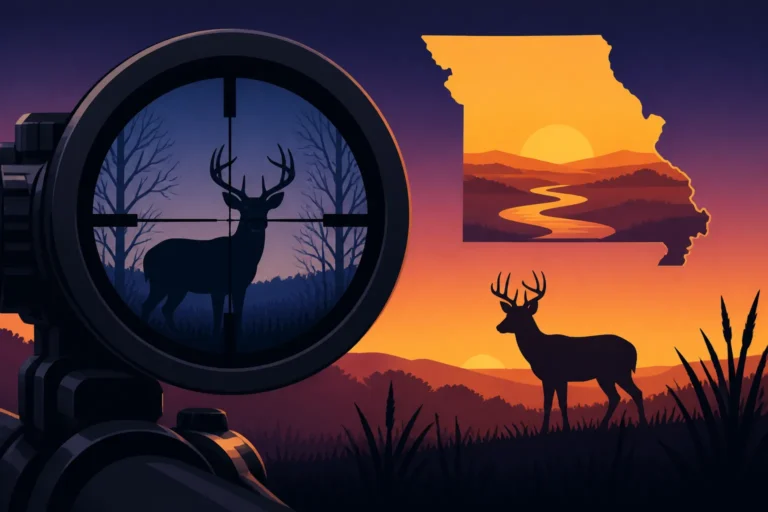
Many Missouri deer hunters find themselves staring through their scope, wondering if they chose the right one. That sprawling cornfield during the late season demands a different optical approach than the tight, tangled bottoms of an Ozark hollow. Getting the magnification wrong can lead to missed opportunities, frustration, or worse, an ethical shot compromised by a fuzzy sight picture. This guide is here to untangle the complexities of rifle scope magnification, helping you confidently select the ideal setup for your unique Missouri deer hunting situations.
Understanding Magnification Basics for the Missouri Hunter
When you look at a rifle scope, you'll often see numbers like "3-9×40" or "4-12×50." The first set of numbers (e.g., 3-9x) refers to the magnification range. The "3" means the object appears 3 times closer than it does to the naked eye, while the "9" means it appears 9 times closer. The "x" simply stands for "times." The second number (e.g., 40 or 50) is the diameter of the objective lens in millimeters, which affects how much light the scope gathers, influencing low-light performance. For a Missouri hunter, understanding this basic language is the first step in making an informed decision, especially when hunting at dawn or dusk, which are prime times here.
Variable power scopes, which allow you to adjust the magnification within a set range, are incredibly popular among Missouri hunters, and for good reason. They offer versatility, allowing you to dial down for close, fast shots in dense cover or crank up the power for longer distances across a field. Fixed power scopes, on the other hand, have only one magnification setting. While simpler and often more robust, they lack the adaptability crucial for the diverse landscapes we encounter, from the rolling hills of northern Missouri to the thick, unforgiving timber of the Ozarks. Most deer hunters in our state will lean heavily towards a quality variable power optic for their Rifle Setups for Missouri Timber and Fields.
The objective lens size also plays a significant role in your hunting experience. A larger objective lens, like a 50mm, can gather more ambient light, which is a huge advantage during those critical low-light periods at first and last light. However, larger objective lenses also mean a heavier, bulkier scope, and they often require higher rings to mount, which can affect your cheek weld and shooting comfort. A 40mm or 44mm objective is often a sweet spot for many Missouri hunters, offering a good balance of light transmission and manageable size. It's about finding that compromise that works best for your specific hunting style and the conditions you face most often.
Think about how many times you've been in a stand or blind, and as the sun begins to set, those deer just seem to materialize out of the shadows. That's when your scope's ability to gather light becomes paramount. A high-quality scope with good glass and a decent objective lens will give you precious extra minutes of shooting light compared to a cheaper, smaller-lensed option. This isn't just about spotting a deer; it's about confidently identifying it, ensuring it's a legal animal, and placing your shot precisely. This is exactly why specialized Rifle Scopes for Low-Light Timber are such a valuable investment.
Matching Magnification to Missouri's Diverse Terrain
Missouri hunting isn't a one-size-fits-all endeavor, and neither should your scope be. The dense timber and rolling hills of the Ozarks demand a different approach than the wide-open fields and CRP ground of northern Missouri. For the vast stretches of hardwood timber, where shots rarely exceed 100 yards and are often much closer, a lower magnification range is your friend. Something like a 1.5-5x or a 2-7x is often ideal. This allows for a wider field of view, making it easier to track a deer moving through the trees and acquire your target quickly. Too much magnification in thick woods feels like looking through a straw, disorienting and slow. This is where understanding Practical Range in Missouri Timber becomes crucial.
Conversely, if your hunting grounds lean more towards the expansive farmlands of north Missouri, with big crop fields and long fencerows, you might find yourself needing to reach out a bit further. In these scenarios, a 3-9x or even a 4-12x magnification can be incredibly beneficial. The extra power allows you to precisely place a shot on a deer that might be 200 or even 300 yards away. Just remember, more magnification also amplifies any wobble or movement, so a solid rest becomes even more critical. Whether you're Hunting a Timbered Draw in Row-Crop Country or Hunting a Missouri Fencerow Between Fields, anticipating these longer shots informs your scope choice.
What about those "in-between" areas, like the transitional zones where timber meets fields, or Hunting Missouri Ridge Saddles and Benches in the Ozarks? These spots can offer both close-range encounters and opportunities for slightly longer shots. For this kind of versatile hunting, a classic 3-9×40 or 3-9×50 scope is often the go-to for many Missouri hunters. It provides a good balance, offering enough low power for quick target acquisition and enough high power for those slightly extended shots. It's a workhorse magnification range that handles a wide variety of typical Missouri hunting situations beautifully. When you're scouting with a tool like GoHunt's mapping features, you can visualize these transition areas and anticipate the shot distances, helping you choose the right scope.
It's tempting to think that "more is better" when it comes to magnification, but that's not always the case. A 20x or 25x power scope, while fantastic for target shooting or prairie dog hunting, is generally overkill and detrimental for deer hunting in Missouri. The narrow field of view, exaggerated shake, and reduced light gathering at such high powers make it impractical for quick, ethical shots on game. You'd be better served with a scope that aligns with realistic Missouri shot distances, focusing on clarity and ease of use over sheer power. Many of us aren't taking 500-yard shots in Missouri, and our gear should reflect that reality.
| Magnification Range | Ideal Missouri Terrain | Typical Shot Distance | Advantages | Considerations |
|---|---|---|---|---|
| 1-4x, 1.5-5x | Dense Timber, Brushy Areas, Still-Hunting | 10-75 yards | Wide field of view, fast target acquisition, lightweight, excellent in low light. | Limited for longer shots, less precise for small target areas at distance. |
| 2-7x | Medium Timber, Thicker River Bottoms, Mixed Cover | 20-125 yards | Good balance of field of view and magnification, still relatively compact. | May feel underpowered for very long field shots. |
| 3-9x | Versatile All-Around, Mixed Timber/Field Edges | 30-200 yards | The classic choice, adaptable to most Missouri scenarios. | Can be too much in extremely thick cover, sometimes not enough for extreme long-range. |
| 4-12x, 4-16x | Open Fields, Power Lines, Long Farm Transitions | 75-300+ yards | Excellent for precise long-range shooting, target identification. | Narrower field of view at high power, amplifies movement, heavier, less useful in thick cover. |
Practical Considerations and Setup Tips
Beyond the numbers, how you actually set up and use your scope profoundly impacts its effectiveness. Eye relief, the distance your eye needs to be from the ocular lens to see a full, clear image, is paramount. Too little, and you risk a "scope bite" (getting hit by the recoil); too much, and you're craning your neck. When you shoulder your rifle, you should naturally acquire a full sight picture without having to search for it. This means properly mounting your scope to ensure adequate eye relief, particularly at the highest magnification setting, where eye relief often diminishes slightly. A comfortable, consistent cheek weld is your best friend for accurate shooting, regardless of magnification. For more general advice on Optics for Missouri Deer Hunting, it always comes back to a comfortable setup.
Another critical consideration, especially for hunting in Missouri, is the quality of the glass and coatings. Even a 3-9x scope with superior glass can outperform a 4-16x scope with poor optics in low light or challenging conditions. High-quality lenses transmit more light and offer better clarity, contrast, and color rendition. This becomes invaluable when trying to differentiate a deer from shadows or brush just before legal shooting hours end. Don't let marketing hype about magnification numbers distract you from the foundational importance of good optical quality. Investing in better glass will pay dividends every time you hunt.
Zeroing your rifle correctly at a magnification appropriate for your primary hunting scenario is also key. If you hunt mostly dense timber, Zeroing a Rifle for Short Woods Shots at 50 or 100 yards with your scope set to a mid-range magnification (e.g., 5x or 6x) is often a smart move. This gives you a clear sight picture for those closer shots while still allowing for a little reach if needed. If you're primarily hunting open fields, a 200-yard zero might be more suitable, and you'll likely do your zeroing at a higher magnification. Remember to check your zero periodically, as temperature changes and bumps can affect it. Using an app with mapping features, like GoHunt, can help you mark your zeroing points and track shot data for future reference.
Many experienced hunters will tell you they rarely crank their variable scopes up to the maximum magnification unless they're taking a truly long shot or carefully inspecting a deer. The reason? Higher magnification generally means a smaller field of view, making it harder to find and track a moving animal. It also amplifies movement, making a steady hold more difficult, and it can reduce the amount of light transmitted to your eye, making the image appear darker. Often, a setting of 6x or 7x is plenty for shots out to 150-200 yards, offering a good balance of detail and field of view. When Scouting Missouri Public Land Before Season or reviewing maps, perhaps with The Missouri Conservation Atlas, consider the likely shot distances and terrain types to inform your scope choice and zeroing strategy.
The Trade-Offs: When More Magnification Isn't Better
It’s easy to get caught up in the "more power" mindset when shopping for a scope. However, for a deer hunter in Missouri, adding more magnification often comes with significant drawbacks that can actually hinder your success rather than help it. One of the most immediate trade-offs is the field of view. As you increase magnification, the area you can see through your scope shrinks dramatically. Imagine a deer suddenly appearing in a thicket at 40 yards; with a 3x setting, you'll pick it up almost instantly, but at 12x, you might only see a patch of brown fur, struggling to find the full animal and its vitals before it slips away. Quick target acquisition is critical, especially when deer are on the move.
Another common issue with higher magnification is its effect on light transmission and image brightness. While a larger objective lens helps, at very high magnifications, the exit pupil (the circle of light you see coming out of the eyepiece) becomes smaller. A smaller exit pupil means less light reaches your eye, making the image appear dimmer, especially at dawn or dusk. This is a crucial factor in Missouri, where prime hunting times often occur in low-light conditions. A scope that performs well at 6x in fading light might become practically unusable at 14x under the same conditions. This directly impacts your ability to make an ethical shot during legal shooting hours. Good low-light performance is often more valuable than extreme magnification for a Missouri deer hunter.
Stability is also a major concern. Any slight movement or tremor you have is magnified right along with the image. At 3x, a little shake is barely noticeable, but at 12x or 16x, that same shake can make it incredibly difficult to hold your crosshairs steady on a deer's vitals, even from a stable rest. This is particularly challenging if you find yourself needing to take an offhand or kneeling shot in the field. For most practical deer hunting in Missouri, where shots are generally within 200 yards, the benefits of extremely high magnification are rarely worth the stability challenges and reduced field of view. The goal is a clear, stable, and quick sight picture, not simply the ability to count antler tines at absurd distances.
Finally, consider the weight and bulk. Scopes with larger magnification ranges and objective lenses tend to be heavier and longer. For still-hunting through thick brush, climbing into a treestand, or just putting in miles on Shed Hunting on Missouri Public Land, every ounce matters. A heavy, bulky scope can throw off the balance of your rifle, making it less comfortable to carry and handle. It can also be more prone to snagging on branches or getting bumped. A streamlined, robust scope that prioritizes clarity and a practical magnification range will often serve a Missouri deer hunter far better than a massive, high-power optic that sacrifices practicality for rarely-used capabilities. When you're planning your hunt, perhaps checking boundaries with GoHunt's private land layers using What the MO Hunting App Does, think about the ground you'll cover and the equipment that will truly support your efforts.
Disclaimer
This article is for general informational purposes only and does not constitute professional advice. Laws, prices and regulations vary by location and change over time. Consult a qualified professional for guidance on your specific situation.