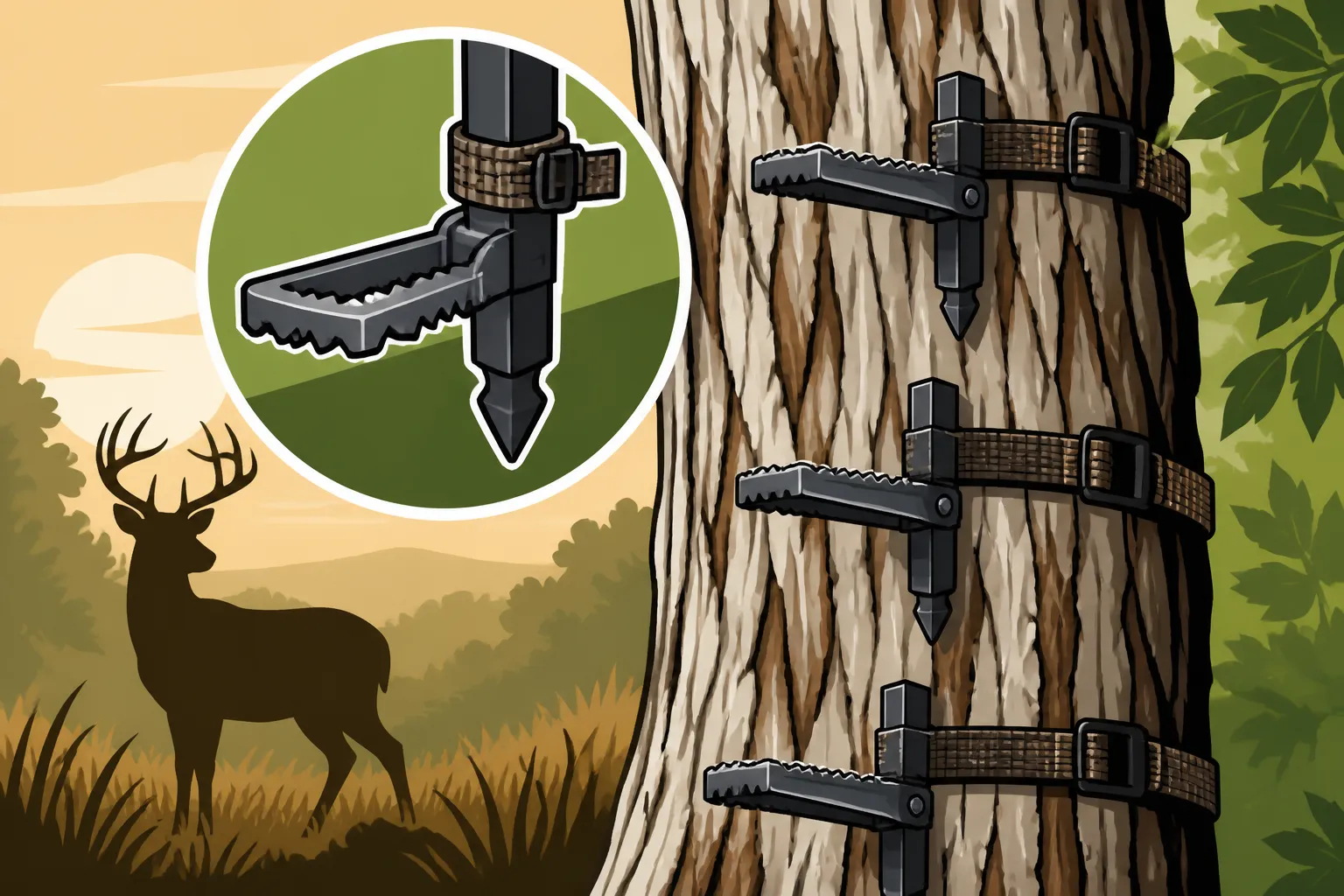
Climbing Sticks for Shagbark Hickory
If you've ever scouted a perfect-looking timber stand in Missouri, only to find the ideal tree is a monster shagbark hickory with that distinctively shaggy, peeling bark, you know the frustration. Trying to get a stand up safely and stealthily on one of these majestic trees can be a real headache, but with the right climbing sticks and a few smart techniques, you can turn that challenge into a prime hunting opportunity. This guide will walk you through everything you need to know about effectively using climbing sticks on shagbark hickory, ensuring your mobile setup is both secure and silent.
The Unique Challenges of Shagbark Hickory for Treestand Hunters
Missouri's timber stands, especially in the Ozarks and across the northern farm country, are often dotted with beautiful shagbark hickories. They're strong, long-lived trees that often stand tall, offering excellent vantage points. But if you’ve ever wrapped a treestand strap around one or tried to use screw-in steps, you know they come with their own unique set of problems. It’s not just any tree; it demands a specific approach to ensure safety and stability.
Understanding Shagbark Bark and Structure
The defining characteristic of a shagbark hickory is, of course, its bark. It peels away in long, vertical strips, giving the tree a rough, shaggy appearance that looks like it's wearing a tattered coat. While this texture is iconic and a sure sign you’ve found a hickory, it creates a real headache for hunters trying to secure climbing aids. This loose, irregular surface means there's rarely a smooth, consistent contact point for straps or cables, which can lead to slippage or an unstable ascent.
Beyond the bark, shagbark hickories often grow straight and tall, providing excellent cover and allowing for high stand placements. However, their girth can vary significantly, even within the same tree, as the bark layers stack up. This means what might be a tight fit for a strap at one point could be loose just a few feet up or down. You really have to get a feel for how your gear interacts with these trees, especially when you're thinking about Squirrel Hunting in Hickories and spending a lot of time eyeing those nut-laden branches. The natural structure is perfect for hiding you, but the bark makes getting there tricky.
Why Standard Climbing Methods Fall Short
Traditional screw-in steps, while convenient for some trees, are almost a non-starter on shagbark hickory. First, there's the ethical consideration and legality on public land – most conservation areas in Missouri prohibit anything that damages the tree. Even if you're on private land, trying to twist a step through thick, peeling bark is a monumental task. The threads just don't get a good bite into the underlying wood, and the loose bark prevents them from seating properly, making them incredibly unsafe and prone to breaking or pulling out mid-climb.
Then there are climbing tree stands, the kind that "walk" up the tree. These rely on consistent friction and a relatively smooth trunk for their cables or chains to grip. On a shagbark, that shaggy bark interferes with the grip, often causing the stand to slip, snag, or become extremely difficult to maneuver. The danger here is obvious and significant. Nobody wants to be halfway up a tree and feel their stand shifting or slipping. This isn't just an inconvenience; it's a serious safety hazard that can lead to falls and severe injury, making it clear why a different strategy is needed for a reliable Treestand Setups in Hardwood Timber.
Choosing the Right Climbing Sticks for Shagbark Hickory
Given the unique challenges presented by shagbark hickory, selecting the right climbing sticks is paramount. You need gear that's specifically designed to grip irregular surfaces, provide maximum stability, and ensure your safety during ascent and descent. Don’t just grab any old set; think about the specific features that will make your life easier and safer when faced with that shaggy bark.
Key Features for Bark-Friendly Design
When you're looking at climbing sticks for shagbark, pay close attention to the design of the standoffs – those parts that push against the tree. Look for sticks that feature a "V-shaped" or aggressive, serrated standoff. This design helps the stick cradle the irregular bark and dig into the surface just enough to prevent lateral movement without damaging the tree. The goal is to maximize contact and friction across the uneven surface. Wide contact points on the straps' attachment plates can also distribute pressure more evenly, leading to a more secure hold.
Beyond the standoffs, the strap system is crucial. Cam buckles that lock down tight, combined with strong, non-slip straps (often with a rubberized or textured underside), are essential. These allow you to cinch the sticks down firmly, compressing the loose bark slightly to achieve a solid purchase. While lightweight aluminum sticks are fantastic for mobile hunters covering ground, you also want to ensure the aluminum is robust enough not to flex under your weight, compromising the grip. Some hunters prefer steel for its inherent rigidity, though it comes at a weight penalty. You’ll want to research these nuances carefully, and resources like GoHunt can be invaluable here, offering detailed specifications and user reviews that highlight which stick designs perform best on challenging bark textures. They often provide insights into how specific models handle varying tree conditions, which is exactly what you need when facing a shagbark.
Considering Length, Weight, and Sections
For mobile hunting, especially if you're hiking into public land deep in the Missouri woods, the length and weight of your climbing sticks are critical. Longer sticks can mean fewer sections to carry and set up, but they can also be more awkward to pack. Shorter, multi-section sticks (think 20-30 inches per section) offer more flexibility. You can carry just the right number for your desired height, and they often pack down into a more manageable bundle. This modularity is key if you’re trying to balance reaching a high vantage point with keeping your pack light and streamlined.
The overall weight per stick is a major factor. Every ounce adds up, especially if you’re carrying several sections, a treestand, your bow, and your pack. Many modern climbing sticks are made from lightweight aluminum alloys to keep this weight down, typically around 2-3 pounds per stick. This makes a huge difference on a long walk into your hunting spot. The ability to carry your sticks efficiently means you're more likely to explore those hard-to-reach areas, improving your odds. Remember, the easier your gear is to carry, the more ground you'll cover and the less fatigued you'll be when you finally reach your ideal ambush point, like that perfect pinch point described in Hanging a Stand on a Ridge Saddle.
Safe and Effective Setup Techniques on Shagbark Hickory
Once you've got the right climbing sticks, the next step is mastering the setup technique. This isn't just about speed; it's about safety and achieving maximum stability on those tricky shagbark trunks. Don't rush it, and always prioritize your well-being. A solid, secure setup is the foundation of a successful and safe hunt.
Pre-Climb Scouting and Practice
Before you even think about hauling your climbing sticks into the woods, do your homework. Scouting is always crucial, but it's especially important when you're dealing with challenging trees. Look for a shagbark that offers good, consistent cover, clear shooting lanes, and is free of major dead limbs that could break off during your climb or while you're in the stand. Sometimes, a tree that looks perfect from 50 yards away reveals structural issues up close. You need a solid, healthy trunk for your sticks to grip.
I can’t stress enough the value of practice. Set up your sticks and stand in your backyard or on a non-hunting tree long before opening day. Get a feel for how your specific sticks interact with different bark textures. Learn to manage the straps and buckles smoothly, especially in low light or with cold fingers. This practice builds muscle memory and confidence, which are invaluable when you're out in the field trying to be stealthy and efficient. Being able to quickly and quietly set up your sticks without fumbling is a skill that pays dividends, especially when you've done your Scouting Missouri Public Land Before Season and know exactly where you need to be.
Step-by-Step Installation for Stability
Here’s a breakdown of how to approach climbing a shagbark hickory:
- Start Low and Level: Begin by attaching your first stick as low as possible, ideally at foot level. Ensure it's perfectly level before cinching it down. On a shagbark, you might need to find a spot where the bark is slightly more compressed or where a flatter section allows for better strap contact. Really lean into it, put your weight on it, and make sure it’s absolutely solid.
- Mind the Bark: As you tighten the strap, you’ll feel the loose bark compress. Some sticks have integrated "teeth" or aggressive V-shaped standoffs designed to bite through this superficial layer slightly, ensuring contact with the firmer wood underneath. You want a snug fit that feels like the stick is part of the tree, not just resting against the bark. A good strategy is to place the standoff points on firmer sections of bark or even find a slight indentation.
- Three Points of Contact: As you ascend, always maintain three points of contact: two hands and one foot, or two feet and one hand. This is basic climbing safety, but it's especially critical on a tree with irregular bark. Don’t rush the climb. Take your time to assess each step before committing your weight.
- Stagger and Secure: Once you've established your first stick, carefully climb up to it and attach the next stick. Try to stagger the sticks slightly to make the climb more comfortable and natural, like walking up a spiral staircase. Always use a lineman's belt or safety harness to remain tethered to the tree while you're putting up additional sticks. Many hunters now opt for a full body harness with a tree strap from the moment their feet leave the ground, ensuring they're connected at all times. This constant connection is not just a recommendation; it's a non-negotiable safety measure, especially if you plan on hunting during Bowhunting Missouri's Four-Month Archery Season.
Maximizing Your Mobile Setup with Sticks
Climbing sticks are the backbone of a truly mobile hunting strategy, allowing you to adapt to changing deer patterns, pressure, and wind conditions on the fly. Paired with a lightweight treestand or a saddle, they unlock a whole new level of flexibility in the Missouri woods.
Integrating with Your Treestand or Saddle
The beauty of climbing sticks shines when they're combined with a lightweight treestand or, increasingly popular, a saddle hunting setup. For a traditional stand, you'll climb your sticks to your desired height, then attach your stand, ensuring it's level and secure. The sticks provide the ladder, and your stand becomes the platform. With a saddle, the sticks get you to height, and you might use a small platform or an additional stick as your standing platform, allowing you to shoot 360 degrees around the tree.
When planning your setup, consider how you’ll transition from your sticks to your platform. You want the top stick to be at a comfortable height relative to your stand or platform so you can easily step off and onto your hunting perch. GoHunt is a fantastic resource for researching and comparing different treestands and saddle systems that are designed for lightweight, mobile hunting. They often feature detailed reviews on how well these systems integrate with various climbing stick brands, giving you the complete picture you need to build an efficient, quiet, and reliable mobile setup that will let you get into those secluded spots where Finding Ground Others Walk Past is possible.
Stealth and Efficiency in the Field
Being mobile isn't just about getting to the tree; it's about doing it quietly and efficiently. When packing your climbing sticks in, use bungee cords or specialized carrying systems to prevent them from clanking together. Many hunters add rubber silencers or wrap camouflage tape around sections to minimize noise. Every little bit of noise reduction helps, especially when you're trying to sneak into an area where deer are already on high alert.
Taking your sticks down after a hunt also requires stealth. If you're hunting the evening, you might not want to start clanging your sticks as soon as legal shooting light ends. Wait a bit, let the woods settle, and then carefully, methodically, lower each stick. Practice makes perfect here too; the smoother your movements, the less noise you'll make. When it comes to packing them back out, ensure they're secured to your pack so they don't snag on branches or rustle as you move through thick cover. A quiet entry and exit are just as important as a quiet setup, contributing to your overall success in the field, whether you're trying to connect on a mature buck during Hunting the Missouri Rut in Early November or just trying to not spook the local wildlife while Still-Hunting a Missouri Ozark Hollow.
Choosing Climbing Sticks for Shagbark Hickory: A Comparison
To help you visualize the ideal features for climbing sticks suited to shagbark hickory, here's a quick comparison of key aspects to consider.
| Feature | Ideal for Shagbark Hickory | Why It Matters |
|---|---|---|
| Standoff Design | V-shaped, aggressive teeth, wide contact points | Cradles irregular bark, prevents slippage, bites into wood (safely) |
| Attachment System | Cam buckles, sturdy straps with anti-slip texture | Provides secure, tight grip around shaggy bark; easy to adjust and remove |
| Material | Lightweight aluminum or durable steel | Aluminum for mobile hunters; steel for extreme durability/less flex |
| Sections/Length | Stackable, multiple short sections (20-30 inches) | Adapts to tree height variations, easier transport, more flexible placement |
| Weight per Stick | As light as possible (e.g., 2-3 lbs) | Crucial for comfortable packing, especially on long walks into public land |
| Platform Step Size | Adequate foot room, grippy surface, level | Safety and comfort during ascent/descent, especially in the dark |
This table highlights that specific design choices can make a significant difference in how effectively and safely your climbing sticks perform on Missouri's challenging shagbark hickories. When you're carrying your gear, perhaps with a Packs for a Day on Public Land setup, every detail contributes to a smoother hunting experience.
Disclaimer
This article is for general informational purposes only and does not constitute professional advice. Laws, prices and regulations vary by location and change over time. Consult a qualified professional for guidance on your specific situation.