Calling Ducks in Tight Timber Holes
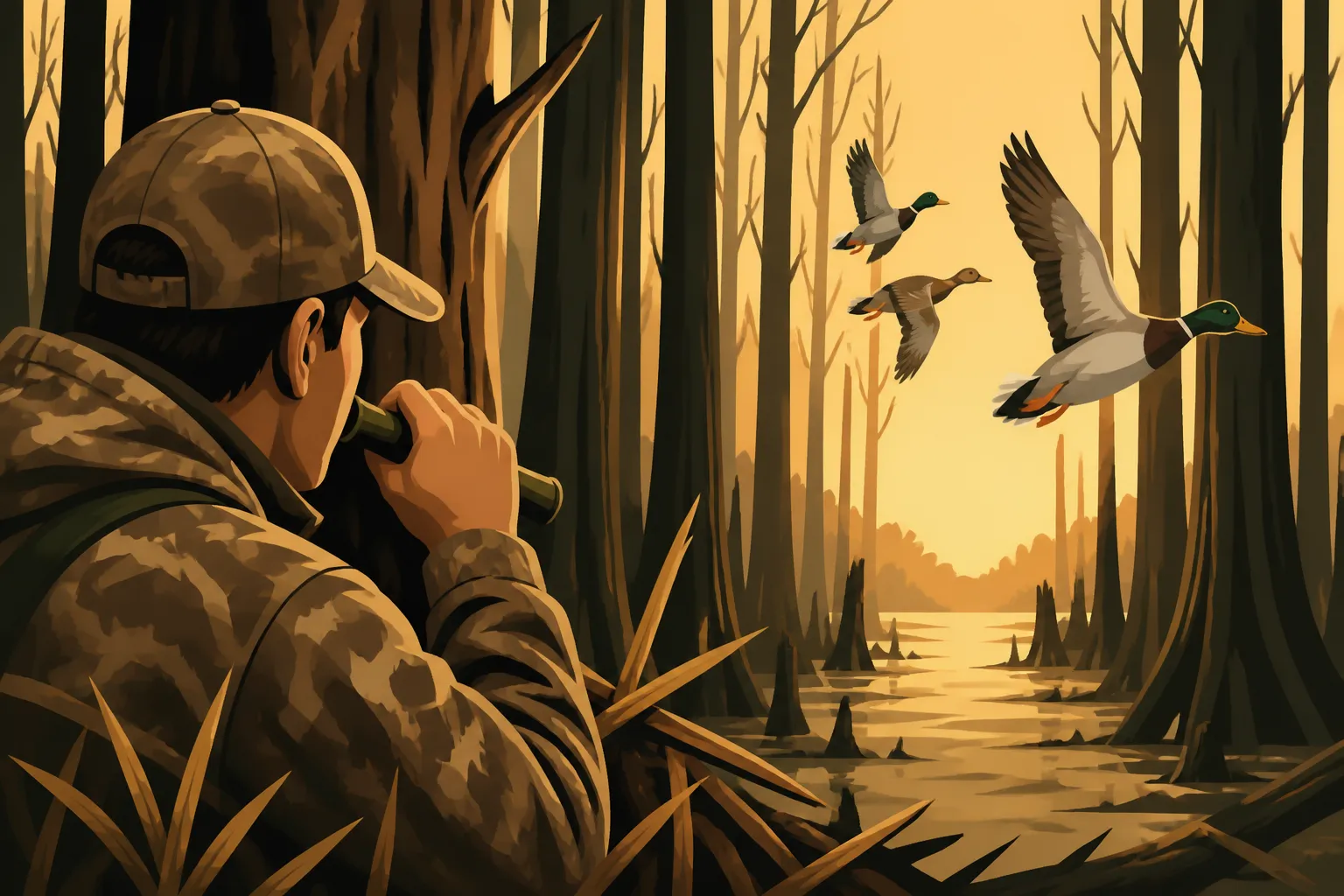
There's nothing quite like the experience of hunting ducks in Missouri's flooded timber, but it also comes with its own unique set of challenges. One minute, those mallards are circling high above, and the next, they're suddenly in your face, catching you off guard. The frustration often comes when ducks seem to appear out of nowhere, or they completely ignore your booming calls in the tight confines of the woods. This guide will help you understand the art of calling ducks in those close, often chaotic, timber holes, transforming those missed opportunities into ducks on the water.
The Unique Challenges of Timber Calling
Calling ducks in the tight, echoing environment of flooded timber is a completely different ballgame than yelling across an open field or a big reservoir. What works beautifully in wide-open spaces can often spook birds or fall flat when you're surrounded by trunks and branches. Understanding these distinctions is the first step to becoming a more effective timber caller.
Sound Travel in Dense Cover
Imagine trying to have a conversation in a crowded, carpeted room versus a tile-floored gymnasium. The sound behaves completely differently, right? The same principle applies to calling ducks in the woods. Timber, especially dense stands of hardwoods like pin oaks and water oaks, acts like a giant sound sponge and an echo chamber all at once. The leaves, branches, and tree trunks absorb your call's sound, muffling its projection, but they also create a confusing echo that can make it hard for ducks to pinpoint your exact location.
This means that the booming, high-volume calls you might use to pull birds from a mile away on a big lake will likely be too aggressive, too loud, and ultimately counterproductive in the timber. Ducks in the woods are often much closer before you even see them, and that loud, frantic calling can feel like an ambush, sending them flaring out of the hole just as quickly as they appeared. It's about controlling your volume and knowing that a softer, more subtle approach will carry just as effectively, if not more so, within the confines of the trees. Think about it: a duck quacking in a natural timber hole isn't yelling; it's communicating in a relatively quiet, confined space. We need to mimic that realism.
Close-Quarters Decoy Spreads
In flooded timber, your decoys are often set much closer to your hiding spot, sometimes only 10 or 15 yards away. There's less room for grand, elaborate spreads, and the ducks are committing to a landing zone that's right in front of your face. This proximity means they get a really good look at everything, from your spread to your hiding spot, and yes, to the realism of your calling. When birds are working in tight, they're scrutinizing every detail.
Aggressive, unrealistic calling at this stage is a death knell. If your calls are too loud, too sharp, or don't sound like a contented hen, those ducks will quickly realize something is off. They've flown into a seemingly safe, sheltered spot, and if the "locals" sound panicked or too eager, it's a huge red flag. This is why subtlety is paramount. Your calling needs to reassure them, to sound like the very picture of calm, feeding ducks, enticing them to drop their feet into your carefully crafted landing zone. It’s about creating an atmosphere of safety and plenty, not urgency or alarm. For more insights on decoy placement in these spots, check out Decoy Numbers for Green Timber.
The Pressure Cooker of Public Land
Missouri is blessed with a lot of fantastic public hunting opportunities, including some incredible flooded timber areas. However, this also means that the ducks flying through these spots, especially later in the season, have often been called at extensively. They're what we call "educated" birds, and they've heard every highball, comeback call, and feeding chatter in the book. A lot of those calls probably sounded like the same old thing, and likely ended in a bad experience for them or their buddies.
On public ground, or even pressured private land, aggressive, cookie-cutter calling can often be a detriment. These ducks have developed a sixth sense for anything that sounds too "hunter-like." They'll work wide, circle high, and often just keep flying to find a quieter, safer spot. This is where truly subtle, realistic, and often minimalist calling becomes your greatest asset. It's about being different, sounding less like a hunter and more like the real thing. It's about understanding that sometimes the best call is no call at all, or a very quiet, almost imperceptible murmur of contentment. Learning to adapt your strategy for these scenarios is crucial for success, as outlined in Missouri Flooded Timber Duck Tactics.
Mastering the Soft Stuff: Key Calls for Timber
When you're tucked into the roots of an old oak tree, with water swirling around your waders, the last thing you want to do is blast out a highball like you're trying to reach ducks on the next county over. Timber calling is all about finesse, realism, and a keen understanding of what ducks sound like when they're relaxed and feeding.
The Importance of the Greeting Call and Lull
The greeting call, often a series of five to seven distinct quacks, is your initial invitation. In the timber, this needs to be softer, more inviting, and less urgent than its open-water counterpart. Instead of a loud, attention-grabbing series, think of it as a friendly "hello" to birds that might already be close by, circling above the canopy. You're not shouting across a football field; you're speaking across a living room.
Following that, the "lull" or "chuckle" is your secret weapon. This isn't a single call but a sequence of soft, contented quacks, almost like a whisper, often interspersed with feeding chatter. It sounds like a happy duck, content and secure in its surroundings. This is the sound that brings ducks down those last few feet, convincing them that your spot is safe, filled with other happy ducks, and free from danger. When they're circling, give them a soft greeting, and then drop into that quiet, reassuring lull. It’s the sound of a private party they’re welcome to join. It makes them feel comfortable enough to commit.
Feeding Chattering and Whistles
Feeding chatter is absolutely vital in the timber. It's the sound of ducks going about their business, dipping their heads, sifting through the water for acorns and submerged seeds. This continuous, low-volume sound tells incoming ducks that there's food, and the birds already there are too busy eating to worry about anything else. It’s the ultimate sign of security.
To create effective feeding chatter, focus on short, choppy quacks, varying in rhythm and length. Avoid making it sound like a machine gun; real ducks aren't perfectly synchronized. Practice making it sound natural, like several birds are gently murmuring and dipping. Some calls even offer a dedicated "whistle" note, which can mimic pintails, wigeon, or even the soft wing-beats of a landing duck. A soft, occasional pintail whistle can add another layer of realism to your timber spread, hinting at a diverse and busy feeding ground. It helps break up the monotony of mallard quacks and adds another layer of realism to your sound.
The Comeback Call and Whines
Sometimes, ducks will work your hole, get close, and then start to drift or even try to leave. This is when the comeback call, judiciously applied, comes into play. In the timber, this isn't a frantic, ear-splitting series of quacks. Instead, it’s a slightly more urgent, but still controlled, series of greeting quacks, perhaps a bit louder than your initial greeting, but still far from a full-volume highball. You're trying to pique their interest again, to remind them what they're missing.
Accompanying this, or sometimes as a standalone, is the "whine" or "pleading call." This is a soft, drawn-out quack, almost like a question, that mimics a hen trying to gather stray ducks or signal for company. It's a sound of longing, of wanting companionship. Used correctly, it can be incredibly effective at turning ducks that are starting to drift away, pulling them back for one more look. The key is never to overdo it. If they start to turn, immediately soften back to contented lulls and feeding chatter. You want to make them want to come back, not feel like they're being chased.
Call Selection and Setup for Tight Timber
Choosing the right duck call and knowing how to use it effectively in the unique acoustical environment of flooded timber can make all the difference. It's not just about having a call; it's about having the right call and the skills to make it sing (or quietly chatter) when it counts. For overall waterfowl planning, check out Missouri Waterfowl Seasons and Duck Zones.
Single-Reed Versus Double-Reed for Control
The debate between single-reed and double-reed calls is a classic one, and both have their place, but in tight timber, the nuances become even more important.
Single-Reed Calls: These calls typically offer a wider range of tones and are generally louder and more versatile. They demand more air and more control from the caller, but in the hands of an experienced hunter, they can produce incredibly realistic, raspier, and guttural mallard sounds. For timber, a single-reed allows for subtle changes in inflection and volume that can mimic a real hen beautifully. The challenge is in controlling that volume. It's easy to over-blow a single-reed and sound too aggressive. However, if you can master the soft, whisper-quiet quacks, the deeper, richer tone of a single-reed can be incredibly convincing in the close confines of the timber. They shine when you need that varied, realistic duck vocabulary without excessive volume.
Double-Reed Calls: Often considered more forgiving, double-reed calls are generally easier to blow and produce a more consistent, often higher-pitched, sound. They are excellent for beginners because they don't require as much air control to produce a decent duck quack. In timber, a double-reed can be great for consistent, soft feeding chatter and contented lulls without the risk of over-blowing. The drawback is sometimes a slightly less realistic, less "raspy" sound compared to a well-played single-reed. However, for sheer ease of producing those vital soft sounds, a double-reed is a solid choice. Many timber hunters carry both, using the double-reed for soft, consistent chatter and the single-reed for more nuanced, individual hen quacks when needed.
Here's a quick comparison:
| Call Type | Tone Range | Volume Control | Ease of Use | Best For in Timber | Potential Drawback |
|---|---|---|---|---|---|
| Single-Reed | Wide, raspier, guttural | More challenging | Higher skill | Nuanced, realistic hens | Easy to over-blow |
| Double-Reed | Consistent, often higher | Easier, more forgiving | Beginner-friendly | Soft chatter, contented lulls | Less varied/raspy tone |
Volume Control and Tone Boards
Regardless of whether you choose a single or double reed, understanding volume control is paramount in the timber. It’s not just about how hard you blow, but how you manipulate the call's tone board. Many modern calls are designed with tone boards that allow for incredible versatility, from loud highballs to soft murmurs.
When calling in timber, you’ll primarily be using the bottom end of your call's volume range. This means gentle air pressure, often with less air from your lungs and more from your diaphragm to get a soft, reedy sound. Experiment with different amounts of air and tongue placement to achieve those quiet, contented sounds. The tone board's design plays a huge role here; some calls are inherently "softer" than others. Look for calls specifically advertised as "timber calls" or "close-quarters calls," as these are often designed with shorter tone boards or specific reed configurations that make them easier to run softly. Practicing at home, focusing on quiet quacks, lulls, and feeding chatter, will make you more effective in the field.
Partner Calling and Spacing
If you're hunting with a partner in a flooded timber hole, coordinating your calling can elevate your success significantly. Instead of both hunters blasting away, which can sound unnatural and overwhelming, think of it as a duet. One hunter can be the "primary" caller, focusing on greeting calls and comeback calls when birds are distant, while the other acts as the "secondary" caller, providing a constant, soft backdrop of feeding chatter and contented lulls.
This division of labor creates a more realistic soundscape, mimicking a small flock of ducks on the water. Make sure you're spaced out a bit in the timber hole, not right next to each other. This spatial separation allows your calls to emanate from slightly different points, further enhancing the illusion of multiple birds. When ducks are working close, both callers should transition to very soft, minimalist calling, focusing on quiet feeding sounds. And most importantly, know when to shut up completely. Sometimes, the most convincing sound is the gentle splash of water as ducks drop in. You can refine these techniques by studying different approaches, like those in Duck Calling in Timber Versus Open Water.
Reading the Birds and Adapting Your Cadence
Calling ducks in the timber isn't a set routine; it's a dynamic conversation. The ducks tell you what they want, and your job is to listen and respond appropriately. Ignoring their cues is often why birds flare or pass by.
When to Shut Up
This is perhaps the single most important lesson for any timber hunter: knowing when to stop calling. It's a common mistake, especially for eager hunters, to keep calling even when ducks are locked up and committed. The moment ducks commit, their wings set, and their feet drop, stop calling. Any further calling can make them nervous. They're looking for the source of the sound, and if they see a hunter still blowing a call when they're expecting to see a contented hen, it's a huge red flag.
Think of it this way: if you invite someone over for dinner, you don't keep yelling at them once they're at your door and walking inside. Once they've committed to the landing zone, let the visual of your decoys and the perceived safety of the spot do the rest of the work. If you're running a jerk rig, that motion should be all the "convincing" they need at this point. Silence at the right moment can be more powerful than any call.
Deciphering Duck Reactions
Ducks are constantly communicating through their flight patterns and body language. Learning to read these signals is key to knowing how to adjust your calling cadence.
- High and Wide Circles: If ducks are circling high and wide, or passing by without much interest, you might need to increase your volume slightly (but still within timber limits) or add a little more urgency to your greeting calls. A soft comeback call might also be appropriate to grab their attention and bring them closer for a look.
- Decoy Interest: When ducks start to turn towards your decoys, dropping a bit lower on subsequent passes, your calls are working! Now is the time to start softening your approach. Transition from greetings to contented lulls and feeding chatter. You want to reassure them and make them feel safe.
- Flaring or Pulling Away: If ducks suddenly veer off, gain altitude, or seem agitated, you’ve likely overcalled or called too aggressively. Immediately back off on the volume and frequency. Go completely silent, or offer just the barest whisper of contented feeding chatter. Sometimes, a full minute of silence is exactly what they need to regain confidence and swing back around.
- Locked Up and Coming In: As mentioned, when they commit and drop their feet, shut up! Any sound at this point can break the spell. They’re looking for the source of the sound, and seeing you with a call in your mouth isn’t it.
Observe, adapt, and don't be afraid to experiment with different cadences. Every group of ducks is different, and what works one day might not work the next. This adaptability is critical for successful Flooded Timber Duck Hunting in Missouri.
The "Finish" and Setup Shots
The final stage of calling in timber is about guiding the ducks to the perfect landing zone for the shot. This is where subtle calling really shines, even as you prepare to shoulder your gun. As ducks cup their wings and commit, remember the "shut up" rule. However, if they're still 30-40 yards out and seem a little hesitant, a very soft, quiet series of contented quacks or a gentle chuckle can sometimes coax them those last few yards. It's not about making noise; it's about providing a subliminal reassurance.
Your setup, including your concealment, is just as crucial as your calling at this stage. Make sure your blind or hide is brushed in naturally. Ducks in timber are often low and slow, giving them ample time to look things over. The goal is to get them to hang up just above your decoys, allowing for clean, ethical shots. When they're in range, rise smoothly and pick your bird. Once the shooting starts, remember your Missouri Duck Daily Bag Limit and enjoy the fruits of your patient, subtle calling.
| Duck Reaction | Recommended Calling Adjustment |
|---|---|
| High, wide circles | Soft, slightly more urgent greetings; subtle comeback calls. |
| Turning towards decoys | Transition to contented lulls, soft feeding chatter. |
| Flaring or pulling away | IMMEDIATELY soften volume; go silent, or whisper feeding chatter. |
| Locked up, feet down | SHUT UP completely. Let decoys and silence do the work. |
| Hesitant, 30-40 yards out | Very soft, contented quacks or chuckles to reassure. |
Mastering the art of calling ducks in tight timber holes is a journey, not a destination. It requires patience, keen observation, and a willingness to embrace subtlety over aggression. The satisfaction of watching those mallards drop through the canopy, commit to your spread, and land within feet of your position, all because of your soft, realistic calls, is truly one of the greatest joys of Hunting North Missouri's Big-Buck Farm Country – or anywhere else you find flooded timber ducks.
Disclaimer
This article is for general informational purposes only and does not constitute professional advice. Laws, prices and regulations vary by location and change over time. Consult a qualified professional for guidance on your specific situation.