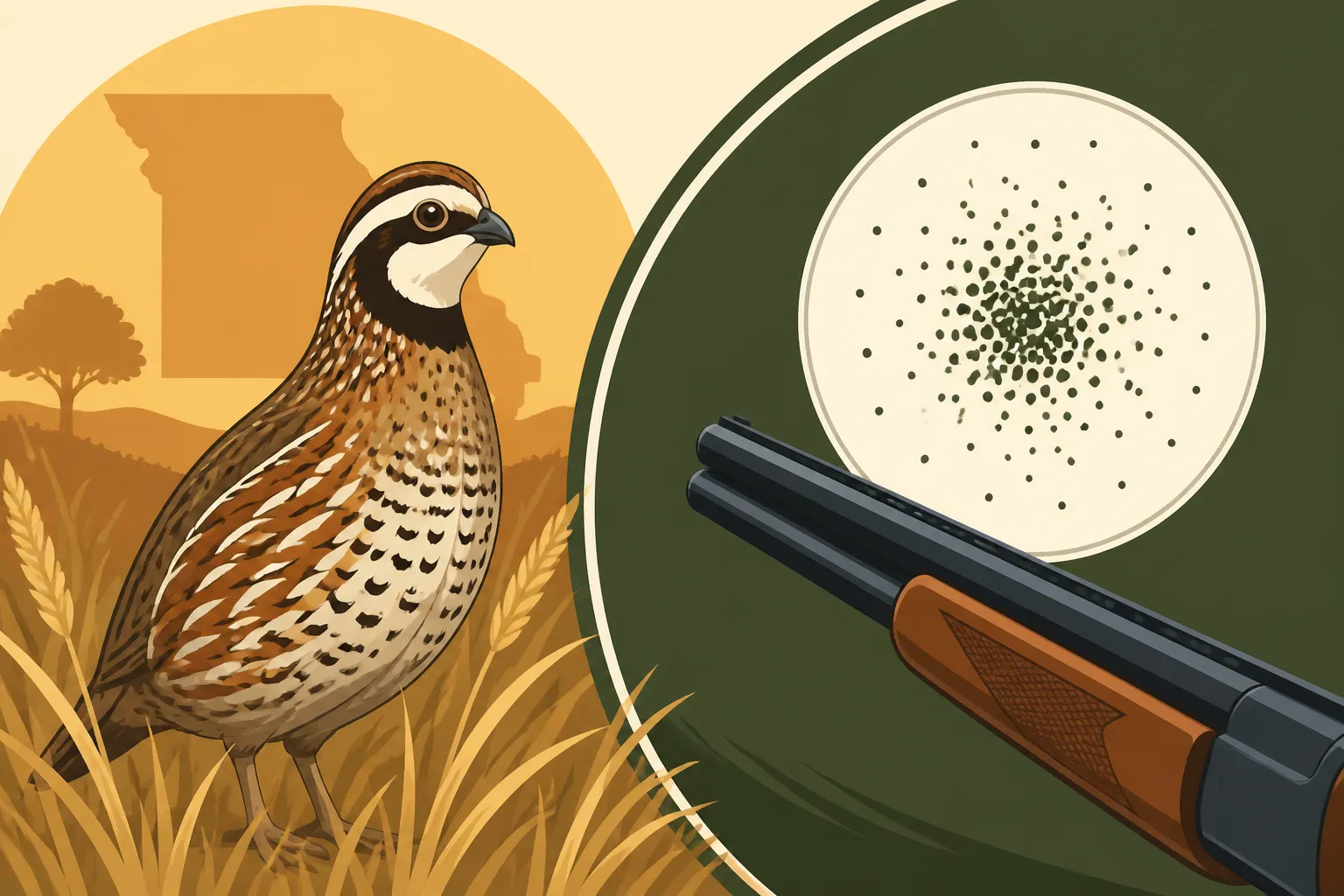
Shot Size for Missouri Bobwhites
Hunting Missouri bobwhite quail is a truly special experience, a walk back in time for many of us who cherish the tradition. But if you’ve spent any time chasing these explosive little rockets, you know the frustration of either blowing a bird to bits at close range or watching one sail away seemingly untouched after a distant flush. The key to consistent, ethical harvests often comes down to the details, and one of the most critical details is choosing the right shot size. This guide is all about helping you understand the nuances of selecting the perfect shot for those exhilarating Missouri quail flushes, ensuring you make the most of your time in the field.
Understanding the Missouri Bobwhite Quail
Before we dive into the nitty-gritty of shot sizes, let's take a moment to appreciate the bobwhite quail itself. These aren't huge birds; in fact, they're relatively small, weighing in at just a few ounces. Their small stature and often rapid, erratic flight patterns make them a challenging, yet incredibly rewarding, target. They're built for quick bursts from dense cover, and their vulnerability means we, as hunters, have a responsibility to use appropriate gear for a clean, swift harvest.
The Delicate Nature of Quail
Missouri bobwhite quail are not built like robust pheasants or large ducks. Their bone structure is fine, and their body mass is relatively low. This means they don't require heavy, deeply penetrating pellets to bring them down effectively. In fact, using shot that's too large can result in excessive damage, rendering a good portion of the bird inedible – a real shame after all the effort you put into finding them. The goal is enough energy and pellet count to ensure multiple hits that incapacitate the bird quickly without turning it into a feathered grenade.
Think about it: you've just spent an hour walking through thorny thickets and tall grass, your heart pounding as your dog goes on point, and then the covey explodes. You pick a bird, swing through, and pull the trigger. If that bird is shredded, or worse, wounded and lost, it defeats the purpose of ethical hunting. Understanding the bird's fragility directly informs our shot size choice.
Typical Flushing Scenarios in Missouri
Quail in Missouri can be found in a variety of habitats, from the edges of row crops and fencerows in north Missouri to the glades and timber edges of the Ozarks. Each scenario can present different flushing distances. Sometimes, a covey will bust right at your feet, making for a super close shot. Other times, especially with pressured birds or in more open cover, they might flush at the edge of effective shotgun range.
- Close Flushes (10-20 yards): These are common in dense briar patches, plum thickets, or tall, undisturbed CRP fields. The birds erupt almost underfoot, and you have to react quickly. Too large a shot, or too tight a choke, and you're going to over-pattern and damage the bird.
- Mid-Range Flushes (20-30 yards): This is perhaps the most common scenario for many flushes. The birds get up with a little warning, giving you a chance to mount the gun and make a solid swing. This range is often the sweet spot for a balanced shot size.
- Distant Flushes (30-40+ yards): Less common for initial covey flushes but can happen with singles or highly pressured birds. These shots require good pattern density and enough energy from your pellets to reach out effectively. You might be Working Field Edges and Draws for Quail where birds have a bit more room to get up and away.
Considering these varying scenarios helps us lean towards a shot size that offers a good balance across the board, or perhaps prompts us to consider two different loads if we anticipate very specific conditions.
Shot Size Recommendations for Missouri Bobwhites
When it comes to picking a shot size for bobwhites, hunters often gravitate towards smaller pellets. The logic is simple: smaller pellets mean more pellets per shell, which translates to a denser pattern. A denser pattern increases the odds of multiple hits on a small, fast-moving target.
The Case for #7.5 Shot
For many Missouri quail hunters, myself included, #7.5 shot is the gold standard. It strikes a fantastic balance for bobwhites.
- Pellet Count: A standard 12-gauge 1 1/8 oz load of #7.5 shot contains roughly 390 pellets. Compare that to #6 shot, which has around 250 pellets in the same load. That's a significant difference in potential hits.
- Pattern Density: At typical quail flushing distances (15-30 yards), #7.5 shot delivers a wonderfully dense pattern. This density is crucial for consistently putting enough pellets on a small bird for a clean kill. You’re aiming for a pattern that provides full coverage to minimize the chances of a bird slipping through without a debilitating hit.
- Energy and Penetration: While #7.5 pellets are smaller, they still carry more than enough energy to penetrate the delicate body of a bobwhite quail and reach vital organs. Remember, we're not trying to anchor a goose. Adequate penetration, coupled with multiple hits, is what we're after.
- Less Meat Damage: Because the pellets are smaller, the individual damage from each pellet is less significant than from larger shot. This means you’re more likely to retrieve a bird with minimal bruising or tearing, preserving more of that delicious wild game meat.
I’ve had countless successful hunts through the scrubby fencerows near my place in Chariton County, and out on the public ground where I often find myself Walking Missouri Quail Restoration Landscapes, and #7.5 has rarely let me down. It’s versatile enough for both the tight, explosive flushes and those birds that get up a little further out.
When to Consider #6 or #8 Shot
While #7.5 is a fantastic all-around choice, there are arguments for using slightly larger or smaller shot in specific situations.
#6 Shot for More Open Country or Mixed Bags
If you’re hunting in more open fields where birds might flush a bit further, or if you anticipate a mixed bag that might include a pheasant or a larger rabbit, #6 shot can be a viable option.
- Increased Energy and Range: Larger #6 pellets retain more energy at longer distances, offering a bit more punch if you find yourself taking shots at the edge of 35-40 yards. This can be beneficial if you're hunting expansive areas in northern Missouri where birds might be wary.
- Lower Pellet Count: The trade-off is fewer pellets per shell, which means a less dense pattern. For the small target a bobwhite presents, this reduction in density increases the chance of a missed bird or a wounded bird that flies away.
- More Meat Damage: While still effective, #6 shot will naturally cause more damage to a small quail than #7.5, especially on closer shots. If meat preservation is a top priority for you, it's something to consider.
I typically shy away from #6 for quail-only hunts in Missouri, but if I’m walking field edges on a crisp November morning hoping for both quail and a wily pheasant, then a load of #6 makes sense.
#8 Shot for Very Close Flushes or Early Season
For those extremely tight cover situations, or perhaps early in the season when birds are holding incredibly tight, #8 shot can be an option.
- Maximum Pellet Count: #8 shot offers the highest pellet count per shell, delivering an incredibly dense pattern. This can be deadly effective on birds that flush literally at your feet, almost ensuring a hit.
- Limited Range: The primary drawback is limited effective range. #8 pellets lose energy and penetrate less effectively at longer distances. Beyond 25-30 yards, the performance drops off significantly, increasing the risk of wounding rather than cleanly harvesting.
- Too Much Damage at Close Range: Ironically, while smaller, the sheer density of #8 shot at very close range can still cause excessive meat damage. It's a fine line.
For me, #8 shot is usually reserved for skeet shooting practice. For actual hunting, I find #7.5 offers a better compromise of density and range, minimizing the need to switch loads throughout the day. It's all about finding that sweet spot for Covey Rise Shooting Discipline.
Here’s a quick comparison of popular shot sizes for quail:
| Shot Size | Approximate Pellets (12 ga, 1 1/8 oz) | Typical Effective Range | Advantages for Quail | Disadvantages for Quail |
|---|---|---|---|---|
| #8 | ~460 | 10-25 yards | Extremely dense pattern, ideal for very close flushes | Limited range, can cause excessive damage at close range |
| #7.5 | ~390 | 15-35 yards | Excellent balance of pattern density and range, less damage | May not reach out quite as far as #6 on rare occasions |
| #6 | ~250 | 25-40 yards | Good for longer shots, mixed bags, more penetration | Lower pellet count, more potential for meat damage |
Considering Other Factors: Choke, Gauge, and Environment
Shot size is just one piece of the puzzle. How it interacts with your shotgun's choke, gauge, and the environment you're hunting in can significantly impact performance.
The Role of Choke Selection
Your choke constricts the shot charge as it leaves the barrel, affecting the pattern's spread. For quail, you want a pattern that opens up quickly enough at close range to avoid blowing the birds apart, but remains dense enough to be effective at slightly longer distances.
- Improved Cylinder (IC): This is arguably the most popular choke for quail hunting, and for good reason. It provides a relatively open pattern that's forgiving on close flushes, allowing the shot to spread out enough to cover a small target quickly. It pairs beautifully with #7.5 shot, giving you a dense yet broad enough pattern for the 15-30 yard sweet spot.
- Skeet or Cylinder: Even more open than IC, these chokes are excellent for extremely tight cover where shots are almost guaranteed to be very close. However, their effectiveness drops off quickly beyond 20-25 yards, which might be too limiting for some hunting situations.
- Modified: While good for longer shots on larger birds, a Modified choke can be too tight for quail, especially at close range. It concentrates the pattern too much, leading to either clean misses if you're slightly off, or significant meat damage if you hit the bird square in the center of a dense pattern.
If you’re running a double barrel or an over/under, you have the luxury of choosing two different chokes, which can be fantastic for quail. Many hunters will run an IC in the first barrel for the initial close flush, and a Light Modified or Modified in the second barrel for follow-up shots on singles that might be flying further away. This strategy, combined with a versatile load like #7.5, really covers your bases.
Gauge and Shell Load
While the 12-gauge is incredibly popular, many dedicated quail hunters prefer smaller gauges like the 20-gauge or even the 28-gauge.
- 20-Gauge: Often considered the ideal quail gun. It’s lighter to carry all day, swings quickly, and with a 7/8 oz or 1 oz load of #7.5 shot, it delivers excellent patterns with plenty of killing power for bobwhites. A lot of hunters find that the reduced recoil of a 20-gauge helps them stay on target for follow-up shots, which is crucial when a whole covey busts. If you're walking Missouri's big timber edges, a lighter gun makes all the difference.
- 28-Gauge: The darling of many upland enthusiasts. With its light weight and minimal recoil, it's a joy to carry. While shot charges are smaller (typically ¾ oz), a load of #7.5 or even #8 in a 28-gauge still carries more than enough pellets and energy for bobwhites. Its patterns are often incredibly uniform.
- 12-Gauge: Perfectly effective, especially with lighter field loads (like 1 1/8 oz or even 1 oz) of #7.5 shot and an open choke. The main drawback can be the heavier weight of the gun for long walks, and potentially more recoil if you’re using heavy loads, but for sheer versatility, it's hard to beat.
The key across all gauges is to match the shot size to the target and ensure your chosen load patterns well in your specific gun and choke combination. Always pattern your shotgun before the season opens to truly understand how your chosen ammunition performs. This is a step many skip, but it's invaluable for confidence in the field.
Environmental Considerations
Missouri’s quail season typically runs from early November into January, meaning you'll encounter a wide range of weather and cover conditions.
- Early Season (November): Birds are often holding tight in dense cover. Shots are likely to be closer, and vegetation is still relatively thick. This reinforces the choice of #7.5 shot with an open choke. You might be hunting Missouri Quail and Rabbit Seasons and enjoying milder weather.
- Late Season (December/January): As winter progresses, cover can thin out, and birds might become warier, flushing at longer distances. While #7.5 still works well, some hunters might consider a slightly tighter choke for their second shot, or even a switch to #6 if they anticipate consistently longer flushing distances on very open ground. Late-Season Quail and Longer Flushes often require a bit more reach.
Using tools like the Missouri Conservation Atlas or online mapping services can help you scout potential quail cover before the season. A lot of the time, I'm checking areas on something like a GoHunt mapping app to see changes in cover from year to year. Knowing the type of cover you're going into, and how dense it is, can give you a pretty good idea of expected flushing distances, helping you fine-tune your shot size and choke selection.
Ethical Harvest and Hunter Responsibility
Ultimately, choosing the right shot size for Missouri bobwhite quail boils down to ethical hunting and responsible sportsmanship. We want to enjoy the hunt, but we also owe it to the game we pursue to make clean, quick kills.
Minimizing Wounded Birds
There are few things more disheartening than a bird that flies off apparently wounded. Using an appropriate shot size and choke combination, and practicing your swing, significantly reduces the chances of this happening. #7.5 shot, with its excellent pattern density for a small bird, helps ensure multiple pellet strikes, which are key to a quick, humane dispatch.
Practicing on clays throughout the off-season is invaluable. You might be a seasoned hunter, but a quick round of trap or skeet can help keep your reflexes sharp and your swing smooth for those explosive covey flushes. Consistent practice helps you make the most of your chosen ammunition.
Preserving the Meat
For many of us, the hunt culminates in a delicious meal. Bobwhite quail are incredible table fare, and using a shot size that minimizes meat damage ensures you get to enjoy more of it. As discussed, #7.5 shot generally provides that balance, delivering lethal hits without turning the breast meat into Swiss cheese. Remember, a clean kill not only respects the animal but also enhances your harvest.
Checking Regulations and Local Rules
Before heading out, always double-check the current Missouri hunting regulations. While shot size typically isn't regulated for upland birds, understanding bag limits, season dates, and any specific rules for the conservation area or private land you’re hunting is paramount. A quick glance at the Missouri Quail Daily Bag Limit can refresh your memory. Many areas have unique rules, and a tool like a GoHunt platform can help you keep track of property boundaries and local regulations easily.
Every hunter has a responsibility to know and follow the rules, and to practice ethical hunting. From understanding Missouri Hunter Education Requirements to knowing how many birds you can legally harvest, it’s all part of being a good steward of our wildlife resources.
Conclusion
Choosing the right shot size for Missouri bobwhite quail doesn't have to be complicated, but understanding the "why" behind the recommendations can make all the difference in your success and satisfaction in the field. For most scenarios, a good quality #7.5 lead shot, paired with an Improved Cylinder choke in a 12-gauge or 20-gauge, will serve you exceptionally well. It provides the ideal balance of pellet count, pattern density, and energy for these delicate, fast-flying birds, helping you achieve clean kills and preserve that delicious wild game.
Remember to factor in your specific hunting environment, anticipated shot distances, and most importantly, practice your shooting. There’s no substitute for knowing your gun and your load. The thrill of a covey rise is truly unique, and with the right ammunition, you’ll be ready to bring those Missouri bobwhites home for the table. Good luck out there, and happy hunting!
Disclaimer
This article is for general informational purposes only and does not constitute professional advice. Laws, prices and regulations vary by location and change over time. Consult a qualified professional for guidance on your specific situation.