Working Field Edges and Draws for Quail
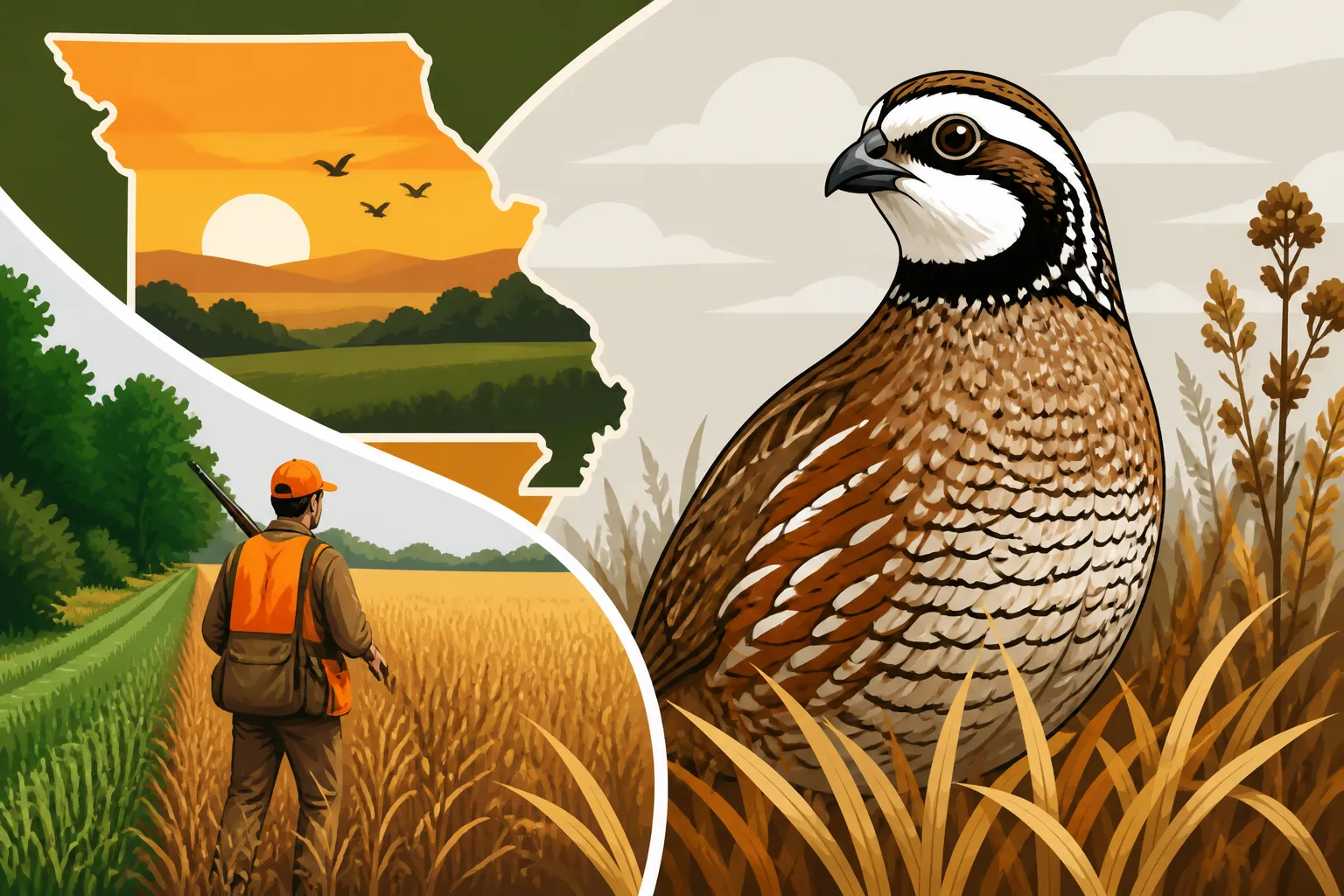
It can be incredibly frustrating to spend hours walking through what you think is prime quail cover in Missouri, only to come up empty-handed. Many hunters get stuck in the mindset of "big blocks of cover" or "open fields," often overlooking the dynamic, life-giving zones where these two worlds meet. This guide is here to unravel the mystery of those elusive coveys, focusing on how working field edges and draws can dramatically increase your chances of finding Missouri bobwhites.
Understanding Quail Habitat Preferences in Missouri
Missouri's bobwhite quail are creatures of specific habits, and understanding what makes a piece of ground appealing to them is the first step toward a successful hunt. They aren't just looking for any cover; they're looking for a very particular blend of food, protection, and accessibility.
The Edge Effect and Why Quail Love It
The "edge effect" is a well-known ecological principle, and nowhere is it more evident than in good quail country. Essentially, it means that the boundary between two different habitat types is often more productive for wildlife than either habitat type on its own. For bobwhites, this edge isn't just a dividing line; it's their entire world. Think about it: a covey needs dense, brushy cover to escape predators and shelter from harsh weather, but they also need open, grassy areas with seeds, insects, and grit for feeding.
A healthy field edge provides both. On one side, you might have a crop field offering abundant waste grain or seeds from weeds that thrive along the border. On the other, you have a fencerow choked with thorny shrubs like multiflora rose or osage orange, providing an impenetrable fortress against hawks and coyotes. This juxtaposition allows quail to feed actively, then sprint mere yards into safety when danger appears. It’s this constant access to multiple resources without having to travel long, exposed distances that makes the edge such a prime piece of real estate for these birds. Understanding this concept is key to truly Walking Missouri Quail Country.
Draws as Natural Travel Corridors and Refuges
Beyond the linear field edges, draws and drainages are often overlooked gems for quail hunters. These aren't just low spots in the topography; they are natural travel corridors and vital refuges, especially in rolling or hilly terrain. Imagine a gentle depression that funnels rainwater, leading to slightly richer soil and, consequently, denser, more diverse vegetation than the surrounding upland.
These draws can be packed with native grasses, briars, and even small thickets of woody shrubs. During hot Missouri days, the cooler, shaded microclimates within a draw offer relief. In winter, the thick cover provides critical thermal protection from bitter winds and snow. Quail use these features like highways, moving from one feeding area to another under the relative safety of cover, avoiding the exposed open ground above. They also use draws as staging areas, congregating before heading out to feed, or retreating to them quickly if disturbed. Often, if you bust a covey out in an open field, they'll head straight for the nearest draw to regroup.
Key Elements to Look For Along Field Edges
Not all field edges are created equal. To be successful, you need to be able to read the landscape and identify the specific features that truly hold quail.
Brushy Fencerows and Hedgerows
These old, often neglected lines of vegetation are absolute magnets for quail. We're talking about the fencerows that haven't been meticulously cleared, where decades of neglect have allowed thorny shrubs, small trees, and a tangle of vines to grow into an almost impenetrable barrier. Species like multiflora rose, with its dense, thorny branches, or the gnarled, low-hanging limbs of osage orange (also known as hedge apple) create a canopy of protection that predators struggle to penetrate. These aren't just good for hiding; the dense growth also holds moisture, supports a rich insect population, and often drops small fruits or seeds that quail relish.
These fencerows also act as vital connectors. In fragmented Missouri landscapes, where fields might be separated by open pasture or roads, a continuous hedgerow provides a safe travel route, allowing coveys to move between different patches of habitat without being exposed. When Hunting a Missouri Fencerow Between Fields, it's not just about the fencerow itself, but how it links everything together for the birds. Pay close attention to where these brush lines widen, where they intersect with another line of cover, or where they meet a small patch of timber – these are often high-traffic intersections for a covey.
Transition Zones from Row Crops to Timber
Picture a vast corn or soybean field, then immediately adjacent to it, a mature timber stand. The narrow band where these two distinct habitats collide is another prime location for quail. The row crops provide an abundant food source – waste grain after harvest, or the seeds of various weeds that spring up between the rows. But quail can't live in the middle of a barren, harvested field; they need immediate escape cover.
The timber's edge offers just that. It might be a thicket of young saplings, a tangle of briars, or simply the lower branches of mature trees providing a visual break. This transition zone allows quail to slip out into the field to feed in the early morning or late afternoon, and then quickly retreat into the relative safety of the timber's edge if a hawk or coyote makes an appearance. During the colder months, the timber can also provide crucial thermal cover, shielding them from wind and offering a bit more warmth than an exposed field. Look for areas where the timber line isn't a perfectly straight edge, but has small points or indentations, creating even more linear feet of valuable edge habitat.
Grass Buffer Strips and Native Prairie Patches
Fortunately, more landowners and conservation agencies are recognizing the value of leaving uncultivated areas, often resulting in grass buffer strips or small patches of native prairie. These can be absolute goldmines for quail. Programs like the Conservation Reserve Program (CRP) have encouraged the establishment of tall native grasses and wildflowers along field borders or in areas that are less productive for farming. These strips, particularly those with a diverse mix of warm-season grasses and broadleaf plants, offer ideal nesting and brooding cover in the spring and summer.
Crucially, they also provide excellent foraging opportunities for seeds and insects throughout the fall and winter. When these grass strips are adjacent to or connect with brushy fencerows or timber, they create a near-perfect habitat mosaic. A covey can nest and raise chicks in the dense grass, then move to the brush for predator protection, and finally utilize the nearby crop field for supplementary food. These "restoration landscapes" are often where Missouri Quail Restoration Landscapes are seeing success, and learning to identify them, sometimes with tools like GoHunt that layer land-use data on aerial maps, can give you a significant advantage.
Decoding Quail Activity in Draws and Drainages
Just like field edges, not all draws are created equal. Knowing what specific features to look for within these depressions can make all the difference.
Dense Cover in Low-Lying Areas
The magic of a productive quail draw lies in its dense, protective cover. Because draws collect moisture and often have slightly different soil compositions, they can support a more robust and diverse array of vegetation. Think about areas choked with briars, wild plum thickets, dense stands of broom sedge, or even small groves of cedar trees. This thick, low-lying growth creates an almost impenetrable fortress against ground predators like foxes and raccoons, while also providing critical overhead cover from avian threats.
In the height of summer, these draws offer shade and cooler temperatures, acting as a sanctuary during the hottest parts of the day. In winter, the same dense cover provides crucial thermal insulation against biting winds and snow. A covey can hunker down in a briar patch in a draw and be surprisingly protected from the elements. When you're scouting, look for draws that maintain their cover density for a good length, offering a continuous ribbon of refuge through the landscape.
Water Sources and Food Plots Within Draws
While quail don't require open water in the same way ducks do, draws often hold moisture longer, leading to lusher vegetation that provides dew and succulent plants for hydration. More importantly, the unique conditions in draws can sometimes lend themselves to linear food plots. A smart landowner looking to enhance wildlife habitat might plant a narrow strip of milo, sunflowers, or various seed-producing legumes directly within a draw.
These linear food plots, combined with the natural cover of the draw, create an irresistible combination for quail. They can feed in relative safety, always being just a few feet from the dense escape cover. These types of features are less common on heavily farmed ground but can be a real find on properties managed with wildlife in mind. You might need to do some more detailed scouting, perhaps using a mapping app like GoHunt to examine contours and vegetation types, to spot these specific enhancements.
Navigating Draws with Dogs
Hunting draws with a good bird dog is often both rewarding and challenging. The dense cover that makes draws so attractive to quail also makes them tough for dogs and hunters to penetrate. Your dog will need to work diligently, often out of sight, relying heavily on their nose. The scent tends to hang in these low-lying areas, which can be a double-edged sword: great for dogs to pick up a covey, but sometimes difficult for them to pinpoint the exact location if the birds are running.
When approaching a draw, try to work it into the wind if possible. This allows your dog to scent the birds more effectively. Be prepared for coveys to hold tight, sometimes flushing right at your feet or within a few yards. Communication with your dog is paramount; frequent checks and commands will keep them working efficiently through the thick stuff. Often, the best strategy is to have hunters walk on either side of the draw, or have one hunter push through while the other walks the edge, ready for birds that might try to flush out the sides. It's a workout, but the explosive Covey Rise Shooting Discipline that comes from a tight-holding covey in a draw is an unforgettable experience.
Effective Hunting Tactics for Edges and Draws
Finding the right habitat is only half the battle. Knowing how to hunt these areas effectively will translate directly into more birds in the bag.
Walking Patterns and Working the Wind
When approaching a field edge or a draw, your walking pattern is crucial. For field edges, try to walk a zig-zag pattern along the length of the cover, occasionally dipping into the adjacent field a few yards and then back into the edge. This helps flush birds that might be holding tight in the fencerow or feeding just out in the field. If you're hunting with multiple people, have one hunter walk slightly into the field, another along the dense edge, and if possible, a third just inside the timber or dense cover. This creates a wide front, minimizing the chance of birds slipping away unseen.
Always try to work into the wind. Quail typically flush into the wind, which slows their initial flight and makes for easier shooting. More importantly, working into the wind gives your dog the best chance to pick up scent and pinpoint the covey before they flush. If the wind is swirling or unpredictable, especially in hilly draws, pay extra close attention to your dog's behavior; they'll often tell you where the scent cone is strongest.
Approaching Likely Covey Roosts
Quail are creatures of habit, and they often roost in the same general areas. Look for signs like dusting bowls (small, dusty depressions where birds have taken a dust bath), droppings, and shed feathers. Coveys typically roost on the ground, forming a tight circle with their tails inward and heads facing out, to conserve heat and provide 360-degree vigilance. These roost sites are almost always in dense cover – a briar patch, a thick clump of native grass, or under a low-hanging cedar in a draw.
When you've located a likely roosting spot, approach it slowly and deliberately, ensuring your dog is working the area thoroughly. Birds will often hold incredibly tight, relying on their camouflage. Be ready for an explosive flush from a very small area. If you're Hunting Missouri Quail Without a Dog, your approach needs to be even slower and more methodical, kicking through every bit of cover that looks promising.
Flushing and Relocating Scattered Birds
The initial covey rise is exhilarating, but the hunt isn't over. Once a covey flushes, pay close attention to where the birds scatter. Often, they won't fly far, especially if there's good cover nearby. Mark the general direction and approximate distance the singles flew. This is where a good bird dog truly shines, as they can help you relocate those scattered individual birds, which typically hold tighter than the original covey.
Systematically work the area where you saw the singles drop, covering it thoroughly. Don't rush. Walk slowly, allowing your dog to methodically sniff out each bird. Singles often provide excellent, one-on-one shooting opportunities. Be aware that sometimes a few birds might regroup into a smaller "re-covey" within a few hundred yards, so always stay alert. Learning how to effectively hunt the scatter is a skill that will greatly increase your success rate and fill your Missouri Fall Turkey and Small Game Permits more completely.
Comparing Quail Habitat Along Edges and Draws
To really solidify your understanding, here's a quick comparison of the benefits each type of habitat offers for quail.
| Feature | Field Edge Advantages | Draw/Drainage Advantages |
|---|---|---|
| Cover | Linear escape cover, dense fencerows, shrub lines | Dense briar thickets, native grasses, thermal protection |
| Food | Waste grain, weed seeds from adjacent fields | Diverse seeds/insects, linear food plots (if present) |
| Protection | Quick access to cover from feeding areas | Overhead and ground predator cover, deep thermal cover |
| Travel | Connects fields to timber, often used as travel lanes | Natural corridors between habitat patches, holds scent |
| Hunting Effort | Easier walking, coveys can flush to open | Tougher walking, birds hold tighter, explosive flushes |
This table highlights that while both offer critical resources, the specific nature of the cover and how birds use it can differ. A well-rounded Missouri quail hunter will learn to recognize and hunt both with equal proficiency.
Conclusion
Hunting Missouri bobwhite quail is a true passion, and the birds truly are a gift when you find them. By shifting your focus from just "cover" to the dynamic and rich "edge effects" of field borders and the protective embrace of draws, you'll start to see the landscape through a quail's eyes. It takes effort, a keen eye for habitat, and often a patient, hardworking dog, but unlocking the secrets of these transition zones will undoubtedly lead to more covey rises and more memorable days in the field. So, lace up those boots, grab your shotgun, and go explore those edges and draws that often hold the Missouri bobwhites you've been looking for.
Disclaimer
The information provided in this article is for general guidance and informational purposes only. Hunting regulations and conditions can change rapidly. Always consult the official Missouri Department of Conservation (MDC) regulations and guidelines before planning any hunting activity to ensure compliance with all current laws and safety protocols.