Finding Sign in Big Timber
Stepping into a vast expanse of Missouri timber can feel like a daunting task, a labyrinth where deer could be anywhere and nowhere all at once. It's easy to feel overwhelmed, wondering how you're ever going to pinpoint those elusive whitetails in such a big, uniform forest. This comprehensive guide is here to help you cut through the confusion, teaching you how to effectively locate and interpret deer sign, transforming seemingly endless woods into a map of deer movement and opportunity.
Understanding the Challenges of Big Timber
Hunting big timber is a different beast entirely from hunting small woodlots or agricultural edges. The sheer scale, coupled with often uniform habitat, makes finding deer sign a true skill that takes time to hone. Many hunters feel lost, wandering aimlessly and missing critical clues simply because they don't know what to look for or how to approach such a massive landscape.
Navigating Expansive Landscapes
One of the biggest hurdles in big timber is simply covering ground efficiently and intelligently. You can walk for miles and see nothing, feeling like you've wasted precious scouting time. The key isn't to walk every square inch, but to identify areas where deer are most likely to concentrate their activity. This often means looking for subtle changes in topography, vegetation, or human impact that might go unnoticed by a casual observer. Think about how deer use these areas, not just how they look. A deer's comfort and security are paramount, and they'll gravitate towards features that offer both. This is where understanding broader patterns comes into play, rather than just focusing on individual pieces of sign.
Modern tools, like the mapping features on platforms such as GoHunt, can be incredibly valuable here. They allow you to virtually scout vast areas, identifying potential bottlenecks, ridge saddles, or creek bottoms that might funnel deer movement before you ever step foot in the woods. This helps you prioritize your boots-on-the-ground efforts, ensuring you're not just burning daylight in low-probability areas. It’s all about working smarter, not just harder, especially when you're facing thousands of acres of similar-looking trees.
Deciphering Subtle Clues
Unlike crop fields where deer activity can be glaringly obvious, sign in big timber often whispers rather than shouts. You're not always going to find a beaten-down deer trail running through the woods like a highway. Instead, you'll encounter faint tracks, lightly scraped earth, or barely visible rubs on saplings. The challenge is that these subtle clues are easily overlooked, especially if you're not moving slowly and deliberately, constantly scanning the forest floor and tree trunks. Many times, what seems like a random twig break or a patch of disturbed leaves could actually be part of a larger pattern of deer usage if you just slow down and pay attention.
The uniform nature of big timber can also hide these signs. If every tree looks the same, a small rub might not stand out. If the forest floor is covered in a thick layer of leaves, tracks are easily obscured. This is where experience and a keen eye become your best friends. It’s a skill developed over seasons of observing deer and their habits, learning to differentiate between a deer-made mark and something caused by wind or another animal. Don't get discouraged if you don't find a highway of tracks immediately; often, it's the subtle, interconnected network of faint signs that truly tells the story of deer movement.
Deciphering Rubs and Scrapes in Deep Woods
Rubs and scrapes are like deer calling cards, signaling their presence and intentions. In big timber, finding these can be incredibly exciting, as they tell you a buck is not only in the area but actively participating in the rut or establishing his dominance. However, their location and intensity can vary greatly compared to open country.
Interpreting Rub Lines
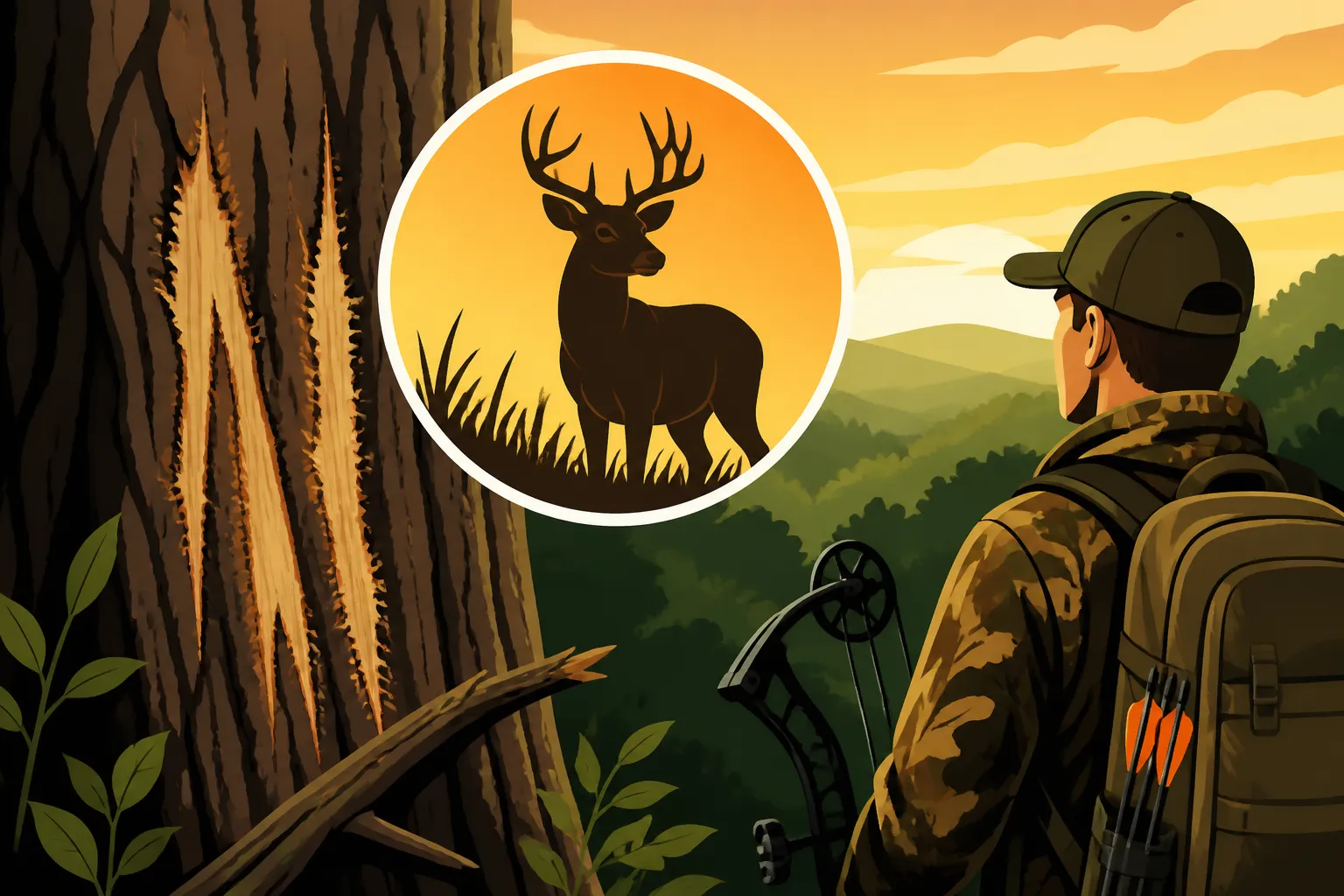
A single rub might not mean much in the grand scheme of things, but a series of rubs, or a "rub line," tells a powerful story. In big timber, these rub lines often follow subtle terrain features or dense cover. You might find them stretching along a creek bottom, up the side of a ridge, or skirting the edge of a thicket. These aren't just random acts of aggression; bucks are leaving scent and visual markers, often as they travel between bedding and feeding areas, or patrolling their core territory. The bigger the rub, generally the bigger the buck, and a progression of increasingly larger rubs along a line can indicate a dominant deer's preferred travel route.
When you're Scouting Missouri Public Land Before Season, pay close attention to these rub lines. They can lead you directly to transition areas where deer feel comfortable moving during daylight. What you're looking for isn't just one tree, but the direction and consistency of the rubs. Are they all facing one way, indicating travel from a certain direction? Are they fresh, with bright wood exposed, or old and weathered? Fresh rubs tell you a buck is currently active in the area. Often, bucks will rub smaller saplings with their foreheads, leaving forehead gland scent, and larger trees with their antlers. Noticing the height and diameter of the rubbed trees can give you clues about the size of the buck making them.
Finding Scrapes in Overlooked Spots
Scrapes, those patches of pawed-up earth with an overhanging branch, are communication hubs for deer. While often seen in open fields or on their edges, in big timber, scrapes can be tucked away in surprisingly subtle locations. They might be found along old logging roads, on the edges of dense cover, or even deep within a stand of mature hardwoods. The key to finding them here is to think about secluded, secure spots where a buck would feel safe enough to visit regularly, especially during daylight. These aren't always going to be obvious, high-traffic intersections.
A common mistake is to only look for large, obvious primary scrapes. In big timber, many scrapes might be smaller, secondary scrapes, almost hidden from plain view. These smaller ones, however, can be just as valuable if they indicate a consistent pattern of use. Look for an overhanging branch (the "licking branch") that has been chewed or frayed, and disturbed earth beneath it. The presence of fresh tracks in the scrape is a huge indicator. Keep in mind that a single scrape might be visited sporadically, but a cluster of scrapes, or scrapes found along a rub line, suggests a more significant buck presence. You'll often find these community scrapes at the confluence of several deer trails, even faint ones.
Locating Bedding Areas and Travel Corridors
The holy grail of deer sign in big timber is finding where deer bed and how they get there. Once you can consistently identify these, you're well on your way to effective hunting. It takes patience and a deep understanding of deer security needs to pinpoint these critical locations.
Pinpointing Secure Bedding Sites
Deer, especially mature bucks, crave security above all else when it comes to bedding. In big timber, this often means seeking out the thickest, nastiest cover available, or taking advantage of topographical features that offer a vantage point and scent-checking ability. Think about dense cedar thickets, brushy clear-cuts that are starting to regenerate, or areas of downed timber where visibility is limited, and travel is difficult for predators (and hunters!). On ridge tops, a buck might bed just below the crest on the leeward side, allowing him to scent-check below him while visually monitoring above. In the Missouri Ozarks, these bedding areas can often be found on benches or south-facing slopes, catching the sun on cold days, or tucked into the leeward side of a ridge out of the prevailing wind.
When you're scouting, look for impressions in the leaves or grass, often surrounded by droppings. These "beds" will be relatively flat spots where a deer has laid down. The challenge is often getting into these areas without blowing out deer. It requires extremely careful entry and exit, especially if you're venturing in during the season. Understanding Wind and Thermals in Ozark Hills is crucial when approaching bedding areas; you never want your scent blowing directly into where deer are resting. Remember, the nastier the cover, the more likely a mature buck is using it, as fewer hunters are willing to tackle such dense spots.
Identifying Natural Funnels and Bottlenecks
Deer in big timber aren't just wandering randomly; they use the landscape to their advantage, traveling along paths of least resistance or through natural funnels. These funnels could be subtle changes in elevation, a narrow strip of timber between two open fields, or a saddle on a ridge line. Think about how deer would move between their bedding areas, feeding zones, and water sources. They'll typically choose the easiest, safest route. These natural funnels are absolute goldmines for stand placement because they concentrate deer movement into predictable pathways. For example, a saddle between two hilltops on a large timber tract will often see significant deer travel, as it's easier for them to cross than going up and over a peak. This is why learning to read aerial photos effectively, perhaps with a tool like GoHunt, is invaluable when trying to identify potential funnels before you ever step foot on the property. You'll be able to spot these subtle dips and pinches that funnel deer, even if they aren't obvious from the ground.
A bottleneck, on the other hand, is a point where deer must pass through due to an obstruction, like a creek or a steep bluff. Imagine a large timber block bisected by a deep, uncrossable creek except for one shallow crossing point. That crossing becomes a major bottleneck. Another example might be a small timbered draw that connects two larger timber blocks, forcing all deer movement between those blocks into that narrow strip. These are prime locations for ambushing deer, as their travel is highly predictable. When scouting, look for concentrated tracks, rubs, and droppings in these areas. Pay attention to how deer approach and leave these features, as that will dictate the best approach and Treestand Setups in Hardwood Timber. It's all about finding where the deer's natural tendencies align with the terrain to create high-traffic zones.
Identifying Feeding Sign and Water Sources
Even in big timber, deer need to eat and drink. Understanding their food preferences and where they get water can help you locate concentrations of deer activity. This is particularly important when other sign might be sparse.
Locating Preferred Food Sources
In big timber, deer aren't typically relying on a single, massive food plot. Instead, their diet is more varied, consisting of browse, acorns, and other natural forage. Identifying these preferred food sources is crucial. In the fall, acorns, particularly from white oaks, are absolute magnets. Deer will abandon almost everything else to hit a consistent acorn drop. Learn to identify different oak species and look for fresh cuttings or deer scat under productive trees. During other times of the year, deer will browse on young saplings, briars, and other woody vegetation. Look for "browse lines" where the lower leaves and twigs have been nipped off at deer height. This kind of sign is often subtle but can tell you where deer are spending significant time feeding. If you find an area with a lot of fresh browse, you've found a pantry for deer.
It's also worth noting that food sources can change with the seasons. Early season might see deer hitting tender new growth, while late season often finds them focused on persistent forage like honeysuckle or leftover mast. Knowing the seasonal availability of these foods in your hunting area is key. For example, in the Missouri Ozarks, a strong acorn crop can completely change deer movement patterns, drawing them away from typical travel corridors into specific timbered ridges. If a particular area has a history of producing heavy mast crops, it's worth checking each year to see if the trees are dropping, especially for Hunting Deer the Missouri Ozarks.
Discovering Reliable Water Sources
While deer don't need a dedicated water source every day, especially if their diet is rich in moisture, reliable water can become a major attractant during dry spells or in areas where other resources are scarce. In big timber, this might mean small springs, seepages, or permanent creeks. Often, these water sources are hidden in hollows or at the bottom of steep ravines. Look for game trails leading directly to these wet spots, as well as tracks in the mud around the edges. Even a small, stagnant puddle can be a critical water source for deer in an otherwise dry timber block.
In summer and early fall, particularly warm periods, deer will be visiting water sources more frequently. This makes them excellent places to set up trail cameras or plan still-hunting routes. Sometimes, the only reliable water is a major creek or river, and deer will often travel along its banks or use specific crossing points. Knowing these critical water points can help you understand the larger picture of deer movement. Remember, deer will always prioritize security, so a water source tucked into heavy cover will be more appealing than one out in the open.
Here's a quick overview of what to look for:
| Sign Type | Description | Significance in Big Timber | Best Location to Find |
|---|---|---|---|
| Rubs | Scraped bark on trees, usually saplings to 4-5 inches diameter. | Bucks marking territory, often indicating travel routes or core areas. | Along ridge lines, creek bottoms, edges of thickets. |
| Scrapes | Pawed-up ground with an overhanging (licking) branch. | Communication hubs, especially during the rut. | Secluded openings, old logging roads, dense cover edges. |
| Beds | Impressions in leaves/grass, often with droppings. | Deer resting areas, indicating security cover. | Thick clear-cuts, cedar thickets, leeward ridge sides. |
| Trails | Faint paths through vegetation or leaves. | Consistent deer travel routes, connecting key areas. | Following contours, leading to water/food/bedding. |
| Browse | Nipped off twigs and leaves at deer height. | Active feeding areas, showing preferred forage. | Areas with young saplings, briars, honeysuckle. |
| Tracks | Impressions in soft earth, mud, or snow. | Confirms deer presence and direction of travel. | Around water sources, creek crossings, soft soil. |
| Droppings | Piles of deer scat. | Indicates deer feeding and bedding areas. | Under food trees, in beds, along trails. |
Advanced Scouting and Hunting Tactics for Timber
Finding sign is one thing; putting it all together to successfully hunt big timber is another. This requires a strategic approach to scouting, stand placement, and hunting during the season.
Integrating Technology for Deeper Insights
While boots on the ground are irreplaceable, modern technology can drastically improve your efficiency when Scouting Missouri Public Land Before Season. Online mapping applications, like GoHunt, allow you to study topography, identify potential funnels, bedding cover, and access points from the comfort of your home. You can mark waypoints for rubs, scrapes, and other sign, building a digital map of deer activity over time. This helps you visualize patterns that might not be obvious when you're just walking the woods. You can even use satellite imagery to identify subtle changes in timber density that could indicate prime bedding cover or travel corridors.
Trail cameras, placed strategically, can confirm deer presence and movement patterns, especially around scrapes or subtle funnels you've identified. Remember the rules for Trail Camera Rules on Missouri Public Land before deploying them. For instance, placing a camera on a faint trail leading to a water source or a secluded scrape deep in the timber can provide invaluable intel on deer frequency, time of day, and even the specific bucks using the area. This blend of traditional woodsman skills and cutting-edge technology gives you a serious advantage in decoding the secrets of big timber.
Strategic Stand Placement Based on Sign
Once you've identified key sign—rub lines, scrapes, bedding areas, and funnels—your next step is strategic stand placement. In big timber, this often means setting up away from obvious features and instead focusing on ambush points that intercept deer moving through their routine. Think about where a buck would feel safe traveling during daylight, especially during the rut. A stand on a bench above a creek, catching deer moving between different elevation levels, can be highly effective. Or, a ground blind brushed into a fencerow between two larger timber blocks might intercept deer funneling through that pinch point.
Remember to consider wind direction and thermal currents meticulously. In big timber, especially in hilly terrain, thermals can be tricky, often rising in the morning and falling in the evening. You need to ensure your scent is not blowing into the deer's anticipated travel path. This might mean having multiple stand locations for different wind directions. For Still-Hunting a Missouri Ozark Hollow, for instance, knowing how the wind will swirl in those drainages is critical. Don't be afraid to set up a stand well off a primary trail if you've identified an area of concentrated rub activity; a dominant buck might parallel the main trail just inside the thicker cover. The goal is to be invisible and odorless, intercepting deer where they least expect it.
Disclaimer
Please be aware that hunting regulations, seasons, and permit requirements can change. Always consult the latest Missouri Department of Conservation (MDC) regulations before heading into the field. This guide is for informational purposes only and does not supersede official MDC guidelines.