Hunting Standing Corn Before Harvest
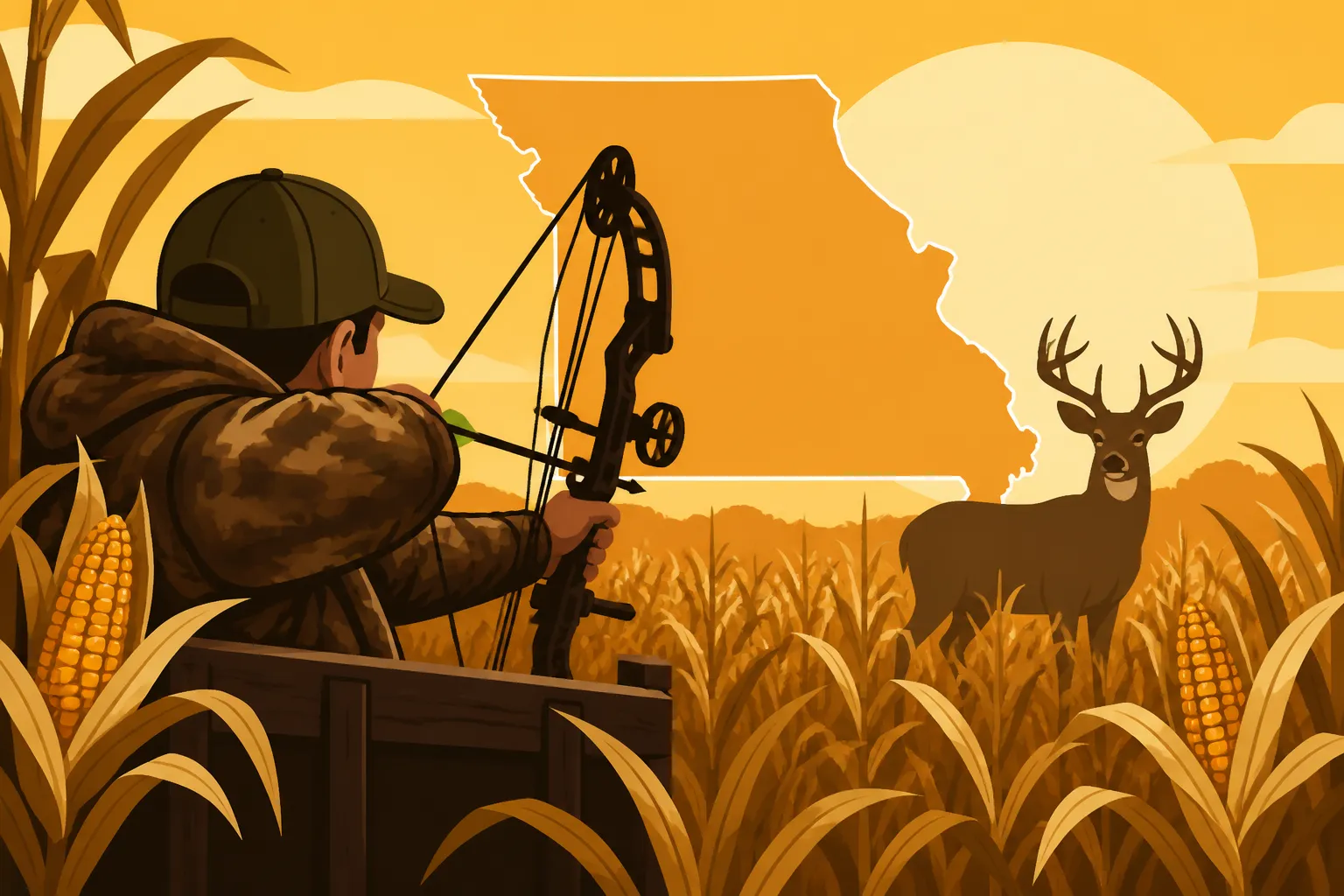
Oh, the standing corn. It's a love-hate relationship for so many Missouri deer hunters. On one hand, you know that golden sea of stalks is holding big, mature whitetails, offering them unparalleled cover and a seemingly endless buffet. On the other hand, actually hunting that standing corn before it’s chopped down feels like trying to find a needle in a haystack, and sometimes, it can be downright intimidating. This guide is all about demystifying the art of hunting these dense agricultural sanctuaries, giving you actionable strategies to turn that frustration into success.
Why Standing Corn is a Deer Magnet and a Hunter's Headache
There’s a reason deer absolutely flock to standing cornfields once those stalks reach maturity. It’s not just a passing fancy; it's a critical resource that offers everything a whitetail needs to survive and thrive, especially in the late summer and early fall. But what makes it so appealing to them often makes it incredibly frustrating for us hunters.
The Allure of Uncut Fields
Think about it from a deer's perspective. A massive cornfield isn't just food; it's a fortress. The tall, dense stalks provide incredible thermal cover, shielding them from the scorching Missouri sun in early season or those crisp autumn winds that can cut right through you. It's also an impenetrable visual barrier, allowing deer to move with confidence, often within mere yards of a road or busy trail, completely unseen. They feel safe, hidden from predators (including us), and can simply vanish into the green or golden rows at will.
Beyond the cover, the nutritional value of corn is off the charts for deer. They'll browse on the leaves, nibble the ears, and consume the fallen kernels, packing on critical calories and fat reserves ahead of the rut and the lean winter months. This makes standing corn a powerful attractant, drawing deer from surrounding timber blocks and fencerows. You can often pinpoint specific areas where they've been feeding heavily, with torn husks and nibbled stalks. This isn't just a place they visit; it's often Where North Missouri Bucks Bed during the daylight hours, especially mature bucks who are notoriously wary of open spaces. They can literally live inside a large cornfield for weeks on end, only emerging under the cover of darkness to visit other food sources or move to water.
Navigating the Obstacles
Now, let's talk about our side of the fence, or rather, our side of the corn rows. While deer are perfectly at home navigating the dense foliage, we humans often struggle. Visibility is practically zero once you step a few yards in, making shot opportunities incredibly rare and tracking a wounded animal a nightmare. Scent control becomes even more critical because the wind swirls and eddies within the rows, carrying your scent in unpredictable ways. Trying to still-hunt or track through thick corn is not only loud but also disorienting, and you might end up bumping deer without even knowing it.
Furthermore, getting a stand into a standing cornfield, or even finding a suitable tree on the edge, presents its own set of challenges. Most cornfields are immense, unbroken expanses, meaning access points are limited, and any movement you make is likely to be detected by the hyper-vigilant whitetails within. The sheer scale of these fields can be overwhelming, making it difficult to pinpoint exact deer travel patterns or bedding areas. It's a game of patience, stealth, and often, a little bit of luck, but with the right approach, you can definitely tip the odds in your favor.
Scouting Strategies for Cornfield Whitetails
Effective scouting is always the cornerstone of successful deer hunting, but it takes on an almost obsessive quality when you’re dealing with standing corn. Because of the limited visibility and the deer’s tendency to disappear into the rows, you need to rely heavily on intel gathered before the hunt. This involves a mix of aerial reconnaissance and meticulous ground work, focusing on predicting how deer will use these expansive, temporary sanctuaries.
E-Scouting and Aerial Intel
Before you ever set foot in the field, fire up your favorite mapping app. Tools like GoHunt are invaluable for this type of scouting. What you're looking for are patterns and pinch points that might concentrate deer movement. Zoom in on satellite imagery to identify areas where the cornfield meets other types of cover, like timber blocks, fencerows, or overgrown ditches. These transition zones are often high-traffic areas, serving as natural highways for deer moving into and out of the corn. Look for small internal draws or low spots within the field itself that might not be planted, creating a natural funnel or bedding island.
Pay close attention to neighboring properties, too. Even if you don't have permission to hunt them, understanding the surrounding landscape can help you predict how deer will enter and exit the corn you can hunt. Identify potential bedding areas in nearby timber, water sources, and other food plots. The more comprehensive your aerial overview, the better you’ll understand the larger puzzle of deer movement. You might notice subtle changes in topography, even slight elevations, that could indicate a natural travel corridor. For instance, a small finger of timber jutting into the corn, or a utility right-of-way, could be a key entry point. This kind of detailed analysis is crucial for determining Entry Routes on Rolling Farm Ground and can save you countless hours of unproductive walking.
Boots-on-the-Ground Recon
Once you have a general idea from your e-scouting, it’s time to get your boots dirty – but strategically. During the off-season or even early in the archery season, when deer might be less pressured, walk the edges of the cornfield. Look for distinct entry and exit points into the standing corn. These will often be well-worn trails, sometimes as wide as a cow path, where deer habitually enter and leave. Pay attention to how these trails intersect with adjacent cover, especially heavily timbered areas or dense brush where deer might stage before entering the field or retreat to after feeding.
Walk the fencerows and ditches bordering the corn. These often provide hidden travel corridors. You’re looking for fresh tracks, droppings, and rubbed or scraped trees. A series of rubs or a prominent scrape line along a fencerow can indicate a buck’s preferred travel route. Be mindful of your scent and disturbance, especially if you’re scouting during the season. The goal is to gather information without alerting the deer to your presence. Sometimes, a quick walk-through on a wet day after a rain can reveal tracks much more clearly, allowing you to gauge recent activity without leaving too much human scent. Consider scouting early in the morning when the dew is heavy, as it often helps to dull your scent trail. Remember, a thorough Scouting Missouri Public Land Before Season will often involve this level of detail, even for private ground.
Effective Hunting Tactics in Standing Corn
Hunting standing corn requires a different approach than hunting open timber or food plots. You're dealing with extremely limited visibility and deer that feel completely secure. This means you need to prioritize stealth, scent control, and smart positioning.
Strategic Stand Placement on Edges and Draws
The most common and often most effective strategy for hunting standing corn is to set up on its perimeter. Look for natural pinch points where deer are forced to condense their movement. This could be where two cornfields meet at a point, where the cornfield funnels down to a narrow strip, or where it meets a timbered draw. These areas serve as prime locations for a treestand or a well-brushed-in Ground Blinds on Crop Field Edges. When choosing a stand location, always consider the prevailing wind direction and your entry and exit routes. You want to be able to get to and from your stand without alerting deer that are either already in the field or approaching it.
A particularly potent setup is where a timbered draw or a fencerow cuts through or along the edge of a cornfield. Deer often use these linear features as safe travel corridors within the larger agricultural landscape. Setting up a stand in a tree overlooking such a feature, especially where it intersects with a primary entry trail into the corn, can be deadly. You might find success with a mobile treestand, moving it based on fresh sign, or even by carefully hanging a stand in a prominent tree along a fencerow. If you are hunting a timbered area adjacent to a cornfield, consider a classic Treestand Setups in Hardwood Timber that gives you a view of the transition zone. Even a small opening or a bottleneck between corn and woods can be a hot spot.
| Tactic | Pros | Cons | Ideal Conditions |
|---|---|---|---|
| Edge Stand/Blind | Good visibility; targets entry/exit; less intrusive | Limited shot opportunities into thick corn; wind exposure | Strong wind to carry scent away; clear trails on edge |
| Still-Hunting Rows | Highly active; covers ground; direct engagement | Extremely low visibility; noisy; high risk of bumping deer | Wet ground (quieter); light rain to dampen sound; very slow pace |
| Cornfield Drive | Effective for pushing deer out; covers large areas | Requires multiple hunters; unpredictable deer movement; safety concerns | 3-5+ hunters; good communication; known escape routes |
| Observation Setups | Gathers intelligence; low pressure; aids future hunts | No immediate shot opportunity; requires good optics | Early season, calm conditions; used for scouting rather than direct hunting |
Still-Hunting the Rows
Still-hunting inside a standing cornfield is arguably one of the most challenging and rarely successful tactics, but it can be done under very specific circumstances. This isn't your typical still-hunt through timber; it's more like a slow, deliberate, incredibly quiet crawl. You need conditions that absolutely work in your favor: a damp, preferably rainy or misty day to muffle your footsteps, and a steady, predictable wind that you can use to your advantage. Your visibility is going to be measured in feet, not yards, so every step must be intentional.
The goal isn't necessarily to see a deer at a distance, but to bump one at close range, hoping it stops for a shot. Walk directly into the wind, moving parallel to the rows or diagonally, stopping every few steps to listen intently. Focus on patches of disturbance, like bent or broken stalks, or areas of heavy feeding. This is an exercise in extreme patience and stealth. You’ll need to stop for long periods, sometimes several minutes, listening for the subtle rustle of leaves, the snap of a twig, or the sound of a deer chewing. This is a very active form of hunting, but it carries a high risk of blowing deer out of the field. Only attempt this if you are confident in your ability to move silently and react quickly to a close-range encounter. It’s definitely not for the faint of heart, or for someone who gets easily disoriented!
Drive Tactics for Group Hunts
For larger cornfields or when you have a group of hunters, a well-executed deer drive can be a highly effective way to hunt standing corn. The principle is simple: drivers push through the corn, attempting to move deer towards "standers" positioned on the field edges or at known escape routes. Communication and safety are absolutely paramount here. Before the hunt, everyone needs to know the plan, the boundaries, and exactly where each person will be positioned. Using two-way radios can be a lifesaver for coordinating.
Drivers should move slowly and methodically, making noise by clapping, yelling, or hitting stalks with a stick. They should also maintain their lines, ensuring no deer slip through undetected. Standers, on the other hand, need to be absolutely still and ready, anticipating deer to emerge from the corn. Position standers at natural funnels, timber lines, or where the corn gives way to open ground. It’s also crucial to place standers downwind of the anticipated exit points, as deer will often circle back to use the wind to their advantage. Remember, safety is the number one priority, especially when Deer Drives on Missouri Public Ground or any ground where visibility is limited. All hunters involved must be wearing adequate hunter orange, and clear shooting lanes should be established beforehand where possible.
Overcoming the Challenges and Staying Safe
Hunting standing corn is not without its unique set of challenges and inherent risks. Acknowledging these and proactively planning for them can make the difference between a frustrating, potentially dangerous hunt and a rewarding, safe experience.
Wind, Scent, and Visibility Concerns
As mentioned, scent control is magnified in standing corn. The dense stalks create a micro-environment where wind currents can be unpredictable. A steady breeze that feels consistent on the field edge can become a swirling vortex just a few yards into the corn. This means you need to be hyper-vigilant about your wind direction and utilize scent-eliminating sprays or clothing, like those from reputable brands, to minimize your human odor. Always try to set up where the wind is blowing your scent away from where you expect deer to approach or bed. If the wind is shifty, it might be better to choose another spot or another day.
Visibility, or the lack thereof, is another significant hurdle. When still-hunting, you might only have a few feet of clear view. This limits shot opportunities and makes identifying your target quickly and safely extremely difficult. It also makes tracking a wounded animal incredibly tough; a blood trail can be almost impossible to follow through the dense, dry cornstalks. This low visibility also applies to your ability to see other hunters. If you're walking through the corn, you might not see a fellow hunter until you're right on top of them.
Safety Considerations in Thick Cover
Safety simply cannot be stressed enough when hunting in standing corn. The limited visibility and the potential for multiple hunters in a field necessitate extreme caution. Always wear your required amount of blaze orange (at least 400 square inches in Missouri during firearms portions) – even if you’re archery hunting near an active firearms area or during portions when orange is required for all hunters. This makes you visible to other hunters who might not expect someone to be inside the dense rows. This is especially true when Bowhunting During the Firearms Portion.
Before embarking on any hunt, especially a drive, ensure everyone knows the plan, designated shooting lanes (if any), and emergency protocols. Carry a fully charged cell phone or a two-way radio for communication. If still-hunting alone, tell someone your exact plan and expected return time. Getting lost or disoriented in a large cornfield is easier than you think, especially on an overcast day. A GPS unit or a reliable mapping app like GoHunt can be critical for maintaining your bearings and navigating safely. Always clearly identify your target and what lies beyond it before taking any shot. The dense nature of corn means a bullet or arrow can travel a surprising distance, so be aware of your surroundings and potential hazards like roads, homes, or other hunters.
Disclaimer
Please remember that hunting regulations and local conditions can change. Always consult the latest Missouri Department of Conservation (MDC) regulations before heading into the field. Safety should always be your top priority.