Field Hunting Geese in North Missouri
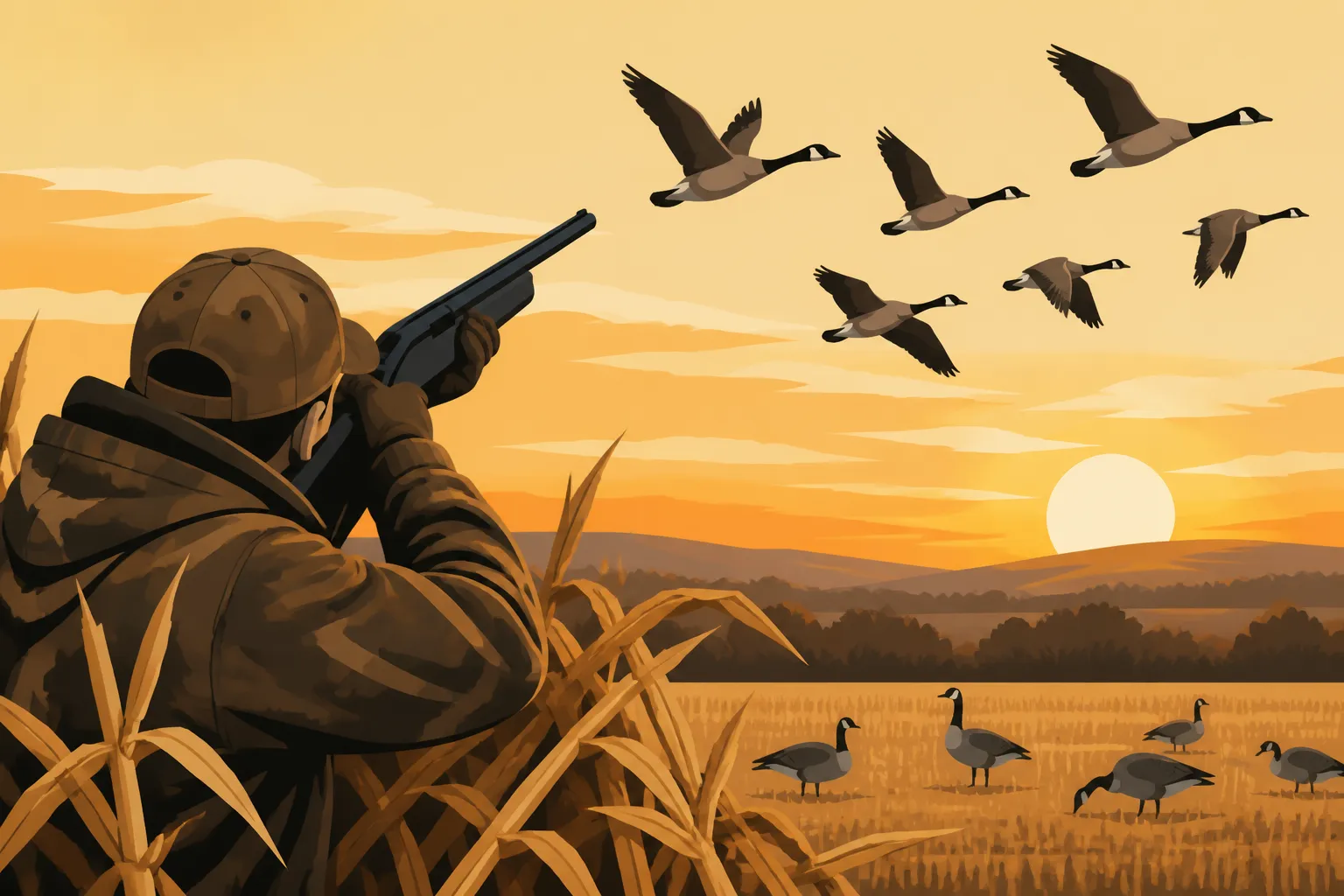
There’s nothing quite like the sight of a thousand geese lifting off a distant reservoir at first light, setting their wings for a nearby cut cornfield. But for those of us who've spent countless hours meticulously setting out spreads, only to watch those same birds bank hard at 200 yards and land in the next field over, field hunting geese in North Missouri can feel like a lesson in humility. This isn't just about throwing out some decoys; it's a chess match with highly intelligent birds, and success hinges on understanding their patterns, their preferences, and yes, even their stubbornness. If you’re tired of being outsmarted, this guide is for you.
Understanding North Missouri Goose Habits and Migration
To consistently put geese in the bag in North Missouri, you first have to understand the birds themselves. They aren't just flying targets; they're creatures of habit, driven by instinct, weather, and an ever-present need for food and safety. Knowing what makes them tick is the first step to figuring out how to intercept them.
Species and Seasonal Movement Patterns
When we talk about field hunting geese in North Missouri, we're primarily talking about Canada Geese, though you might occasionally encounter Lesser Canadas, and if you're targeting specific opportunities, even Snow Geese during their massive spring migration. The season here really breaks down into a few distinct phases.
Early in the season, typically in September and October, you’re often dealing with local, resident birds. These are geese that hatched and raised their young right here in Missouri, and they tend to have predictable patterns, often frequenting the same fields day after day. They're usually less wary, but they also might not travel as far from their roosts. As the calendar flips to November and December, things change dramatically. This is when the true migrators start pushing down from the north, following the mighty Mississippi Flyway. These northern birds are often much warier, having encountered hunters along their entire journey, and they can bring a whole new challenge to your field setup. Then, as winter deepens and brutal cold fronts roll in, you'll see a big push of birds looking for easy calories before pushing further south or settling in for the long haul. Understanding these different phases helps you predict numbers, wariness, and even preferred feeding times.
Preferred Forage and Roosting Areas
Geese are absolute pigs when it comes to food, especially during migration or in the cold grip of winter when they need to pack on calories. In North Missouri's rich agricultural landscape, their menu is usually pretty straightforward: waste grain. Cut cornfields are an absolute magnet, providing abundant, high-energy kernels left behind by the combines. You'll also find them heavily utilizing bean fields after harvest, winter wheat that's just sprouting, and even some well-maintained pasture or cover crops if grain isn't readily available. They pick a field not just for the food, but also for its safety. Open fields with good visibility allow them to spot predators from a distance, and being close to a reliable water source is a huge bonus.
Speaking of water, their roosting areas are just as critical to understand as their feeding grounds. Geese need large, open bodies of water where they feel safe from coyotes and other threats, especially overnight. This could be a large reservoir like Smithville Lake or Stockton Lake, larger private farm ponds, or sections of major rivers like the Missouri River that offer wide-open stretches. Their daily routine is incredibly consistent: fly from roost to feed at first light, spend a few hours gorging, sometimes fly back to water for a mid-day break, then back out to feed in the afternoon before returning to the roost just before dark. This predictable pattern of flight lines from roost to feed is your golden ticket, and tools that help you visualize these paths, or even track historical goose movements, are invaluable for setting up strategically. This is where researching Reading Roost-to-Field Flight Lines can provide deeper insights into their daily commutes.
Scouting: The Absolute Key to Field Goose Hunting Success
If there’s one aspect of field hunting geese that separates the consistently successful hunters from those who just get lucky, it’s scouting. You simply cannot overstate its importance. These birds are intelligent, their patterns change daily, and showing up blind on opening morning is almost always a recipe for disappointment.
Day-to-Day Field Observation
Geese don't stay in the same field forever. A field that was hot yesterday might be barren today, or vice-versa. That's why dedicated, day-to-day scouting is non-negotiable. You need to be out there, binoculars and spotting scope in hand, observing from a distance. The goal is to locate the field they are actively using, not just a field they might use. Look for large numbers of birds feeding contentedly, but also look for signs they leave behind: fresh droppings (which indicate recent use), plucked stubble from corn or beans, and distinct tracks in muddy areas.
A crucial part of this process is doing it discreetly. You don't want to spook the birds you intend to hunt. Drive back roads, use topography to your advantage, and never walk directly into a field where geese are feeding. Give them their space. Once you identify a hot field, make notes: time of day, wind direction, flight path, and approximate number of birds. This is where modern hunting apps can be a game-changer. Using a mapping tool like GoHunt, you can easily mark these fields, plot potential access routes, and even record observations with geotagged notes. This digital record helps you track patterns over time, and can also help identify property lines so you know who to talk to for permission. The more data you collect, the better your chances of intercepting them.
Permission and Access
North Missouri is prime agricultural country, and that means most of the best goose fields are on private land. This reality makes securing permission an even more critical component of your scouting strategy. You can find the best feeding field in the county, but if you don't have permission to hunt it, it's useless.
Start early, well before the season, if possible. Knock on doors, be polite, and be prepared to be told "no" more often than "yes." Farmers are busy, and many are wary of strangers. Explain exactly what you want to do – field hunt geese, set up layout blinds, pick up all your spent shells. Offering to share some of the harvested birds or help with a small chore can sometimes open doors. Reiterate that you'll be respectful of their property, gates, and crops. Always get clear instructions on where to park, which roads to use, and any areas they prefer you avoid. Building a good relationship with landowners is a long-term investment that pays dividends for years to come. While public land opportunities for dedicated field hunting geese are limited in North Missouri compared to other states or regions, it's always worth checking specific Conservation Areas or federal lands for unique situations where field access might be allowed. Just remember that hunting pressure can be much higher on these areas.
Essential Gear for North Missouri Field Spreads
Once you've done your due diligence in scouting and securing permission, the next step is to make sure you have the right tools for the job. You wouldn't bring a spoon to a knife fight, and you certainly shouldn't go field hunting geese with inadequate gear.
Decoys: Quantity and Quality
This is where the rubber meets the road. Geese are herd animals, and they feel safety in numbers. To convince them to drop into your spread, you generally need to replicate that sense of security. This often means a significant investment in decoys.
Full-body decoys are widely considered the gold standard. They offer incredible realism, both in shape and texture, especially from directly above where incoming birds will see them. Brands like Avian-X and Dakota Decoy Co. offer fantastic detail and durability. The downside, of course, is their cost and bulk. You’ll need a truck or a large trailer to transport a significant number of full-bodies. Shell decoys are a more economical and transport-friendly option. They are essentially the top half of a goose, designed to sit on the ground, and can be stacked for easy transport. While not as realistic as full-bodies from every angle, they're great for adding bulk to a spread. Silhouettes are the most budget-friendly and portable option, allowing you to quickly deploy hundreds of "birds" to create an illusion of a massive flock. They shine in numbers, making your spread visible from a great distance. A smart strategy often involves mixing and matching: a core group of realistic full-bodies where birds are expected to land, backed up by shells and silhouettes to create volume and draw attention. For Canada Geese, you'll want at least 5-10 dozen, but for larger species like Snow Geese, serious hunters might run hundreds, even thousands, of decoys. Don't forget motion! A few flapping flags or a motorized "flapper" decoy can add crucial realism on calm days. For more detailed tips on arranging your spread, check out resources on Setting a Goose Spread in Cut Corn.
Blinds, Clothing, and Other Must-Haves
Good concealment is paramount. Geese have incredible eyesight, and they'll spot anything out of place. For field hunting, layout blinds are the undisputed champion. These low-profile blinds allow you to lie flat in the field, pop up quickly for the shot, and, most importantly, be brushed in seamlessly with the surrounding environment. Look for durable construction, comfortable padding, and an effective quick-opening door. Brands like Avery, Final Approach, and Rogers Sporting Goods offer a wide range of options.
Beyond the blind, your personal camouflage is crucial. Your jacket, pants, and hat should match the stubble or dirt of the field you're hunting. Cornstalk patterns, marsh grass patterns, or simply drab browns and tans are generally effective. And don't forget the face mask and gloves! A flash of skin can be all it takes to flair birds. For clothing, layering is key, especially during Missouri’s unpredictable fall and winter. You’ll be lying still for long periods, so warmth is essential, but you also need to be able to shed layers if the sun comes out. Insulated, waterproof outerwear is a must for those damp, cold mornings. Consider specialized wind-blocking outerwear for open fields to stay comfortable. Don't underestimate the need for waterproof boots, either; even a dry field can have damp spots. Lastly, always pack extra shells (and choose steel shot, as lead is prohibited for waterfowl), a good thermos of coffee or hot chocolate, and some snacks to keep you fueled through the morning. A good game strap or sled for hauling out your birds can also be a real back-saver.
Decoy Spreads and Blind Placement Strategies
So you've got your dozens of decoys and your comfy layout blind. Now what? Simply scattering decoys randomly isn't going to cut it. There's an art and a science to arranging your spread and positioning yourself for the shot.
Reading the Wind and Goose Flight Paths
Geese, like most birds, prefer to land and take off into the wind. This is a fundamental principle that must dictate your decoy and blind placement. Your "kill hole"—the sweet spot where you want the geese to land—should always be directly into the wind from your blinds. This forces the birds to turn, slow down, and offer clean, broadside shots as they descend.
When scouting, pay close attention to the prevailing wind direction and how birds approach the field. If the wind is out of the north, your blinds should be placed with the wind at your back, and your landing zone in front of you. This ensures the geese are facing away from you, presenting their underside as they come in, and then turning directly into your landing zone and ideally into the wind. Think about typical flight paths too. If geese are consistently approaching from a specific direction, you might want to extend one "arm" of your decoy spread further in that direction to guide them in. Sometimes, simply knowing the lay of the land, especially if you've studied Hunting Missouri Ridge Saddles and Benches or Reading an Ozark Hollow for Deer Movement, can help you predict natural flight corridors even for waterfowl.
Creating Realistic Spreads and Concealment
The goal of your decoy spread is to look like a happy, relaxed flock of geese feeding in the field. This means avoiding perfectly symmetrical lines or too much spacing. Geese feed in family groups, so grouping your decoys in clusters of 3-7, with a few singles scattered around, creates a much more natural appearance.
Common spread patterns include the "U" or "J" shape, with the open end of the "U" facing into the wind, acting as your landing zone. Place your blinds at the closed end of the "U" or "J," roughly 20-30 yards from the nearest decoys, giving you good shooting range for incoming birds. Mix up your decoy positions: some active feeders, some sentinels (upright heads), and some resting birds. The more varied and natural, the better. And don't forget about spacing. Too many decoys packed together looks unnatural; give them some room, but not so much that they look isolated.
Concealment, as mentioned earlier, is absolutely critical. Your layout blind should disappear into the field. This means "brushing it in" meticulously. Take stubble, corn stalks, or whatever natural vegetation is present in the field, and weave it into the loops and straps of your blind. Cover every inch, making sure there are no unnatural straight lines or dark shadows. Even the smallest oversight can be a giveaway to sharp-eyed geese. The idea is to make your blind look like just another clump of natural debris. Remember to keep your head low in the blind until the very last moment, and use face paint or a mask to break up the outline of your face. You might also want to study how hunters manage Brushing In a Blind on a Field Edge for deer, as many of those principles apply to waterfowl concealment as well.
Calling Techniques and Situational Awareness
A good decoy spread is half the battle, but effective calling is what often seals the deal. It’s the conversation that convinces wary geese to drop their guard and commit to your field.
Mastering Goose Calls and Vocalizations
Canada goose calling, particularly with short-reed calls, is a complex art form, but a few basic vocalizations will cover most situations. The most fundamental is the "honk" or "hail call"—a loud, drawn-out call used to get the attention of distant birds. Once they're looking your way, you'll switch to "clucks" and "moans"—shorter, softer, more contented sounds that tell incoming birds, "Everything is safe here, come on down." The "murmur" or "feed call" is a rapid series of low clucks that imitates multiple birds happily feeding, adding to the illusion of a safe, productive field.
A "comeback call" is typically a louder, more urgent series of honks and clucks, used when birds are turning away or losing interest. It’s an attempt to regain their attention and pull them back into the flight path. Flute calls, while perhaps less common than short-reeds for close-in work, are excellent for producing deep, resonant honks that carry a long distance and can imitate the larger, older birds in a flock. The key is practicing regularly, listening to real geese, and trying to replicate those sounds. Watch YouTube videos, attend calling seminars, and don't be afraid to experiment with different calls until you find one that resonates with you and the birds.
Reading the Birds and Adapting Your Approach
Calling isn't just about making noise; it's about having a conversation. You need to read the birds and adapt your calling to their reactions. When a flock is distant and heading your way, hit them with a loud hail call. If they turn and look, you've got their attention. As they get closer, transition to softer clucks and moans. If they start to turn away, a comeback call might be appropriate.
The most critical moment is when geese start to commit, dropping altitude and setting their wings. At this point, often less is more. Many hunters continue to blast away on their calls, which can actually spook birds that are looking for a calm, safe place. Often, a few soft clucks or even complete silence is the best approach to finish them the last 100 yards. Watch their feet and their wing beats. If their feet are down and their wings are cupped, they’re coming. Remain absolutely still and quiet in your blind. The moment you see their legs dropping and they’re at optimal shooting range (typically 20-30 yards over the kill hole), that's your cue to rise and shoot. Remember, it's not about how loud or how much you call, but how effectively you communicate with the birds.
Timing Your Hunt and Ethical Considerations
Just like any form of hunting, strategy extends beyond the mechanics of calling and decoy spreads. When you choose to hunt and how you conduct yourself are just as important for success and for the future of the sport.
Optimal Hunting Times and Weather Conditions
For field hunting geese, the vast majority of the action happens at first light. Geese are driven by hunger and will fly from their roost to their feeding grounds shortly after dawn. This makes being set up, brushed in, and ready to go before the sun even peeks over the horizon absolutely critical. The morning flight typically lasts a few hours, then birds might head back to water or remain in the fields, often getting up to move again later in the afternoon for another feeding session before returning to their roosts. These late afternoon flights can also be very productive.
Weather plays a huge role. Cold fronts, especially those accompanied by snow or strong winds, can invigorate geese, making them more active and less wary as they search for food. Cloudy, dreary days are often preferred over bright, sunny ones, as the subdued light can make your blinds and decoys appear more natural. Conversely, bluebird days with no wind can make geese very cautious, often causing them to circle high or land far out. Always check the Missouri Goose and Snow Goose Seasons for legal dates and shooting hours for your specific zone. Being prepared for the full range of Missouri's weather, from mild fall mornings to brutal winter blizzards, is part of the game.
Ethical Hunting and Post-Harvest Care
As hunters, we have a responsibility to uphold the highest ethical standards. For field hunting geese, this means several things. First, always positively identify your target. Ensure it's a legal species and that you're within your bag limit. Second, make clean, ethical shots. Geese are large birds, and a good pattern from your shotgun with appropriate steel shot is necessary to ensure a quick, humane kill. Do not "sky bust" at birds out of range; it only educates them and often leads to wounded birds.
Once a bird is down, retrieve it quickly. A good retrieving dog is invaluable here, but if you don't have one, mark the bird carefully and go directly to it. Respect the landowner's property during retrieval—don't drive through standing crops or leave gates open. After the harvest, proper care of the bird is important. If it's a warm early-season hunt, getting the bird cooled quickly is essential to preserve the meat. Field dressing the bird right away and placing it on ice can help. For more general guidelines on how to care for your harvest, you might find tips in resources like Field Dressing a Deer in Warm Weather to be helpful, applying similar principles of quick cooling. Remember to Telecheck your harvest as required by the Missouri Department of Conservation (MDC) to ensure accurate data for wildlife management.
Here's a quick comparison of decoy types for field hunting geese:
| Decoy Type | Realism (Appearance) | Portability | Durability | Cost (per dozen) | Best Use |
|---|---|---|---|---|---|
| Full-Bodies | Excellent | Low | High | $$$$ | Core of the spread, landing zone, creating realistic family groups |
| Shells | Good | Medium | Medium | $$ | Adding bulk and numbers, stacking for easy transport |
| Silhouettes | Fair (profile only) | High | High | $ | Building massive spreads, distant visibility, creating illusion of size |
| Motion | Excellent | Medium | Medium | $$$ | Adding realism on calm days, drawing attention, especially flags |
Disclaimer
Please note: Hunting regulations and seasons can change. Always consult the latest Missouri Department of Conservation (MDC) regulations before heading afield. This content is for informational purposes only and does not constitute legal advice. Adhere to all local, state, and federal laws.