Hunting Turkeys With a Bow
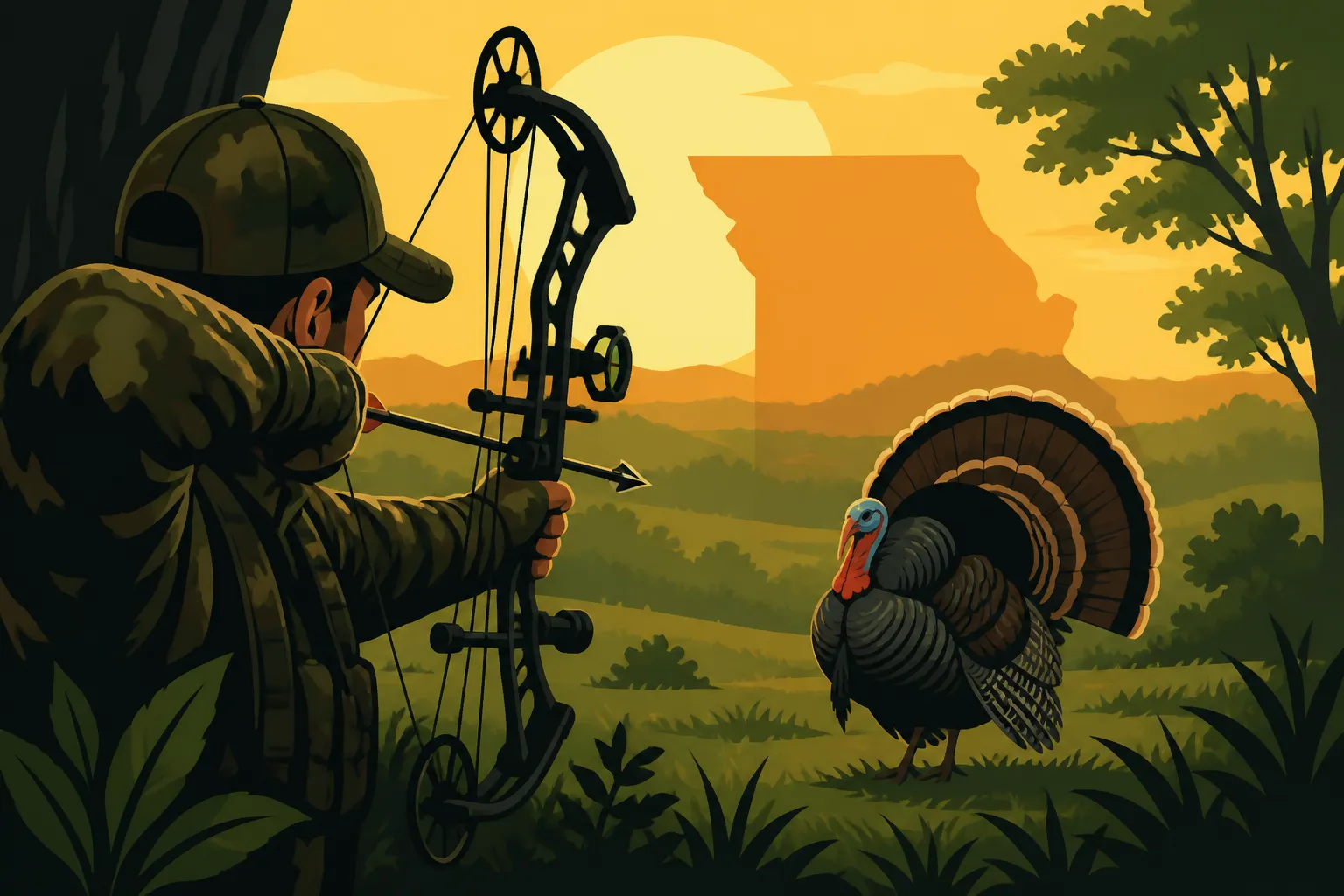
There’s a special kind of thrill, and often a deep well of frustration, that comes with trying to outsmart a wily Missouri gobbler with a bow. You’ve put in the time at the range, your arrows are flying true, and now you’re facing the ultimate test: getting a sharp-eyed, keen-eared tom close enough for an ethical shot, often from a static position. This guide is dedicated to helping you navigate the unique challenges and immense rewards of hunting turkeys with a bow in the Show-Me State, covering everything from dialing in your gear to mastering those up-close tactics that make all the difference.
The Unique Challenge of Bowhunting Missouri Turkeys
Bowhunting turkeys isn't just a different weapon; it's a completely different game compared to shotgun hunting. While a shotgun offers a wide pattern and a bit more forgiveness at moderate ranges, a bow demands pinpoint accuracy, unwavering patience, and an intimate understanding of turkey behavior to succeed. Many hunters, myself included, have felt that crushing disappointment as a gobbler hangs up at 70 yards, just out of effective bow range, or spots the slightest movement from a ground blind. It’s this demanding nature that makes a successful bow harvest so incredibly rewarding.
The Close-Range Game
When you're hunting turkeys with a bow, your effective range shrinks dramatically. We’re talking about getting a bird within 20-30 yards, sometimes even closer, to ensure a clean, ethical shot. This isn't like deer hunting where you might comfortably take a 40-yard shot. Turkeys offer a small, vital target area, and a poorly placed arrow is almost guaranteed to result in a wounded bird and a heartbreaking search. This necessity for close quarters means your setup, camouflage, and calling strategy must be absolutely flawless. It’s a constant battle of wits, trying to convince a bird that your setup is safe and irresistible, even as its razor-sharp vision and hearing are working overtime to detect any hint of danger.
Limited Movement and Decoy Reliance
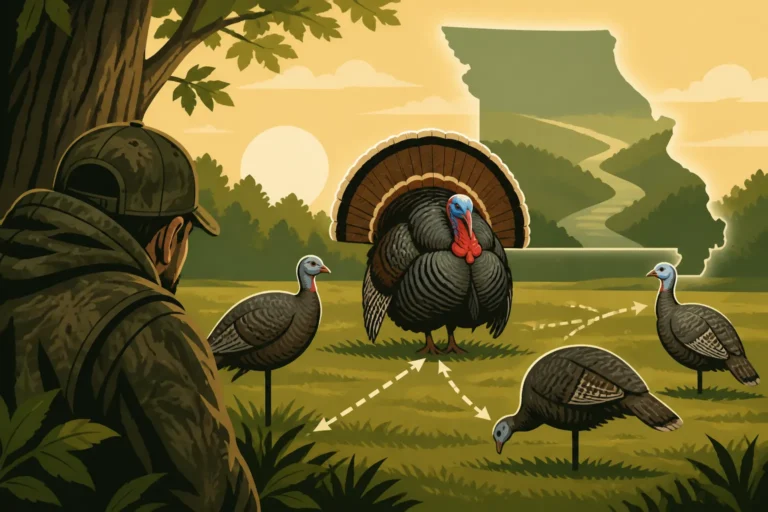
Unlike shotgun hunting where you might swing on a bird or quickly shoulder your weapon, bowhunting requires minimal movement, especially at the moment of truth. This often means hunting from a ground blind or a well-camouflaged treestand position. You can’t just stand up and draw; every motion needs to be slow, deliberate, and concealed. Because of this restriction, decoys become incredibly important. They act as the focal point for the gobbler, drawing its attention away from your hiding spot and hopefully providing those precious few seconds you need to draw your bow undetected. Choosing the right decoy setup and knowing when and where to deploy them is half the battle when trying to bring a bird into those tight archery ranges. Understanding various Decoy Setups for Pressured Gobblers can be the key to success.
Essential Gear and Setup for Archery Turkeys
Preparing your gear for bowhunting turkeys goes beyond just having a bow that shoots straight. You need to consider how your entire setup functions for static, close-range encounters with incredibly wary birds. Every piece of equipment, from your broadheads to your blind, plays a critical role in increasing your chances of success. It's an investment, not just of money, but of time spent practicing and perfecting your system.
Bow and Arrow Specifics
When it comes to your bow, reliability and a smooth draw are paramount. Most modern compound bows are perfectly suitable for turkeys, but ensure your draw weight is comfortable enough for you to hold at full draw for an extended period if a bird hangs up. For arrows, a heavier arrow with good kinetic energy is always a solid choice. However, the real game-changer for turkeys is your broadhead. While you might use a smaller fixed-blade or mechanical for deer, many turkey bowhunters opt for large, cutting-diameter mechanical broadheads designed to create massive wound channels. These broadheads, often with 2-inch or larger cutting diameters, are specifically engineered to deliver maximum damage and a quick, ethical kill on a bird known for its toughness. They don't need to penetrate as deeply as they would on a deer; instead, they focus on tearing through vital organs and breaking bone for a quick knockdown. Make sure your bow is perfectly tuned for these broadheads, as any wobble could spell disaster on a small target.
Ground Blinds and Camouflage
A quality ground blind is almost non-negotiable for bowhunting turkeys. It provides the concealment you need to draw your bow without being seen, and it helps break up your outline against the background. Brands like Primos, Barronett Blinds, and Ameristep offer excellent options, with features like black-out interiors and shoot-through mesh. When setting up your blind, consider the sun's position and prevailing winds. You want the sun at your back, not in your face, to minimize glare and make it harder for turkeys to spot movement.
Beyond the blind, your personal camouflage needs to be top-notch. Full head-to-toe camo, including a face mask and gloves, is essential. Any exposed skin or shiny surfaces will act like a beacon to a sharp-eyed gobbler. Many hunters also swear by bringing a small, dark cloth to drape over their bow limbs or quiver to minimize shine and further reduce their profile inside the blind. Even the smallest details matter when you're trying to fool a bird that literally sees in high definition.
Decoys and Calling Devices
As mentioned, decoys are your best friend. A common and effective setup is a jake or breeding gobbler decoy paired with one or two hen decoys. The jake or gobbler acts as a challenge to incoming birds, while the hens provide a sense of security. Positioning these decoys 10-15 yards in front of your blind, slightly quartering away, encourages the gobbler to approach and present a broadside or quartering-away shot. Remember, the goal is to draw the bird’s attention to the decoys, not to your blind. When scouting locations, using detailed maps or apps from services like GoHunt can help you visualize optimal decoy placement in relation to terrain and potential turkey travel corridors.
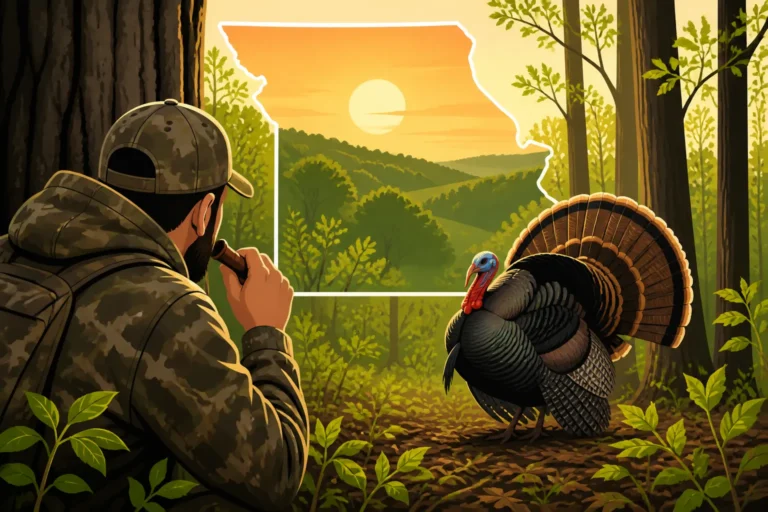
For calling, you’ll want a versatile arsenal. Mouth calls, slate calls, and box calls each have their place. Mouth calls are excellent for hands-free operation, allowing you to keep your bow ready. Slate and box calls can produce louder, more realistic sounds that carry farther. Practice different hen yelps, clucks, purrs, and even gobbler calls to add realism. The key is to sound like an entire flock, not just a single hen. For a deeper dive into vocalizations, check out Turkey Calls Worth Carrying in Missouri.
Mastering Turkey Bowhunting Tactics in Missouri
Bowhunting turkeys is as much about mental fortitude as it is about physical skill. You'll sit for long periods, endure missed opportunities, and learn to appreciate the smallest victories. The right tactics, however, can dramatically improve your odds. Success often comes down to knowing when to be aggressive and when to be still as a statue.
Setting Up for Success
Location, location, location. This old adage is especially true for bowhunting turkeys. You need to be where the birds want to be, whether that’s a field edge, a food plot, or open timber. Early morning setup is crucial, often before legal Turkey Shooting Hours. Many successful hunts start by locating birds on the roost the evening before. Getting into your blind silently and well before daylight is key. Pay attention to strutting zones, dusting bowls, and fresh tracks. These tell-tale signs indicate where gobblers are most comfortable and likely to perform.
Once you’ve picked your spot, think about your entry and exit routes. You want to be able to get in and out without spooking birds. This is where detailed topographic maps from a source like GoHunt can really shine, helping you identify subtle draws or timber edges that offer concealed access. Consider the terrain; a slight rise can give you a better view, but also makes you more visible. In open country, especially in North Missouri's big-buck farm country, understanding Turkey Tactics for Crop Country can also translate well to gobbler behavior.
Calling Strategies and Patience
Your calling strategy needs to be adaptive. Start with soft tree yelps and clucks before dawn, mimicking a waking hen. Once birds are on the ground, increase your volume and repertoire. Don't be afraid to try some aggressive calling, like cutting and fly-down cackles, especially if birds seem hesitant. However, the most important calling tactic is knowing when to shut up. If a gobbler is heading your way, resist the urge to overcall. Let him come. Remember, you're trying to create a realistic scenario, and oftentimes, silence is more convincing than constant chatter.
Patience is your secret weapon. Turkeys can take their sweet time. They might circle, hang up, or even appear to walk away before committing. Your job is to stay absolutely still, keep your bow ready, and wait for that perfect shot opportunity. Drawing too early, or making any sudden movement, will send a bird running faster than you can blink. For more advanced calling techniques, exploring resources like Spring Turkey Calling in Missouri Timber can provide valuable insights.
Shot Placement and Ethical Recovery
Making a clean, ethical kill is the ultimate goal for any hunter, and for bowhunting turkeys, it requires precise shot placement. Unlike the relatively large vital zone of a deer, a turkey's vitals are compact and well-protected. Knowing exactly where to aim and what to do after the shot are crucial for a quick recovery and minimal suffering.
The Kill Zone
The primary kill zones for a turkey are the brain/spine, the heart/lungs, and the wing butt.
- Head/Neck Shot: This is arguably the most effective, but also the most challenging. A head or neck shot typically results in an instant kill. Specialized broadheads designed for head/neck shots are available, but they require extreme precision and are generally only recommended for very close, static birds.
- Body Shot (Heart/Lungs): This is the most common target for traditional broadheads. Aim for the "pocket" where the wing meets the body, just above the leg. On a broadside bird, this will put your arrow through the heart and lungs. On a bird slightly quartering away, aim for the opposite wing butt. Visualize an imaginary line running from the wing butt straight through the bird to the opposite side.
- Wing Butt Shot: A shot directly into the wing butt can break the wing and penetrate the vitals, immobilizing the bird. This is often an excellent secondary target if the primary heart/lung shot isn't perfectly presented.
Avoid shooting into the breast or the "puff ball" tail fan, as these areas offer minimal vital penetration and will likely result in a wounded bird. Always wait for a stationary bird and a clear shot. If the bird is moving, let it walk away and try to re-engage it later.
After the Shot
Once you release your arrow, observe the bird's reaction carefully. A solid hit often results in the bird flopping or running erratically, sometimes flying a short distance before crashing. If you see the bird go down, keep your eyes fixed on that spot. Even a "dead" turkey can sometimes revive itself and run off, so approach cautiously and be ready for a follow-up shot if necessary.
If the bird runs or flies off and you don't see it fall, mark the exact spot where it was standing and where you last saw it. Wait at least 15-30 minutes before beginning your search, especially if you suspect a marginal hit. Turkeys don't leave much of a blood trail, so visual tracking is often more important. Look for disturbed leaves, dropped feathers, and any sign of a struggle. If you're hunting in warmer early season conditions, knowing strategies like Field Dressing a Deer in Warm Weather (and adapting them for a turkey) can be useful for preserving your harvest once recovered. For those longer treks into public land, sometimes using the What the MO Hunting App Does can help mark your last point of contact or even assist in navigating back to your starting point after a long pursuit.
Recovering Your Missouri Gobbler
Finding a downed turkey, especially with an arrow, can be notoriously difficult. Their light body weight and tendency to run through dense cover after a hit mean you need to be systematic and patient. Don’t rush the search, and involve a friend if possible.
The Search Grid
Start your search at the point of impact. Look for your arrow; its condition can tell you a lot about the shot. Feathers and blood will be minimal, so expand your search outward in a grid pattern. Turkeys often run in a straight line for a short distance before veering off or taking flight. Look under brush piles, in thickets, and along fence lines where a wounded bird might try to hide. Pay close attention to any disturbance in the leaves or broken twigs. If the bird flew, look for a crash site or any sign it attempted to roost. Knowing how to methodically approach this can be crucial, particularly when you might be Hunting Turkeys in Ozark Hollows where the terrain is challenging.
Post-Recovery Care
Once you've recovered your gobbler, the work isn't quite done. Tagging requirements in Missouri mean you need to immediately attach your permit to the bird. Make sure you understand the regulations regarding Missouri Spring Turkey Season Dates and your permit limits. Remember to Telecheck your bird by the required deadline.
For preservation, especially in warmer spring weather, get the bird cooled down quickly. Field dress it as soon as possible, removing the entrails to prevent spoilage. You can carry a few plastic bags to store the heart and liver if you plan to keep them. Get the bird on ice or in a cooler with ice as soon as you can. This is especially important for the meat quality, which you've worked so hard to earn. Whether you’re on private land or exploring various Missouri Conservation Area Rules and public tracts, knowing these post-harvest steps ensures your efforts don't go to waste.
Disclaimer
Hunting is an inherently dangerous activity. Always prioritize safety, adhere to all local, state, and federal hunting regulations, and ensure you have the necessary permits and licenses. This guide provides general information and should not replace proper hunter education or professional advice. Always be aware of your surroundings and respect wildlife.