Two-Way Radios in Ozark Hills
There’s nothing quite like the rugged beauty of the Missouri Ozarks, but that wildness comes with a real challenge: staying connected. When you’re deep in those hills, trying to coordinate with your hunting buddies or signal for help, the dreaded "no service" message can be more than just an inconvenience – it can be a genuine safety concern. This guide will walk you through how two-way radios can bridge that communication gap, turning a potential worry into a reliable lifeline for your next Ozark adventure.
Why Two-Way Radios Are a Game Changer in the Ozarks
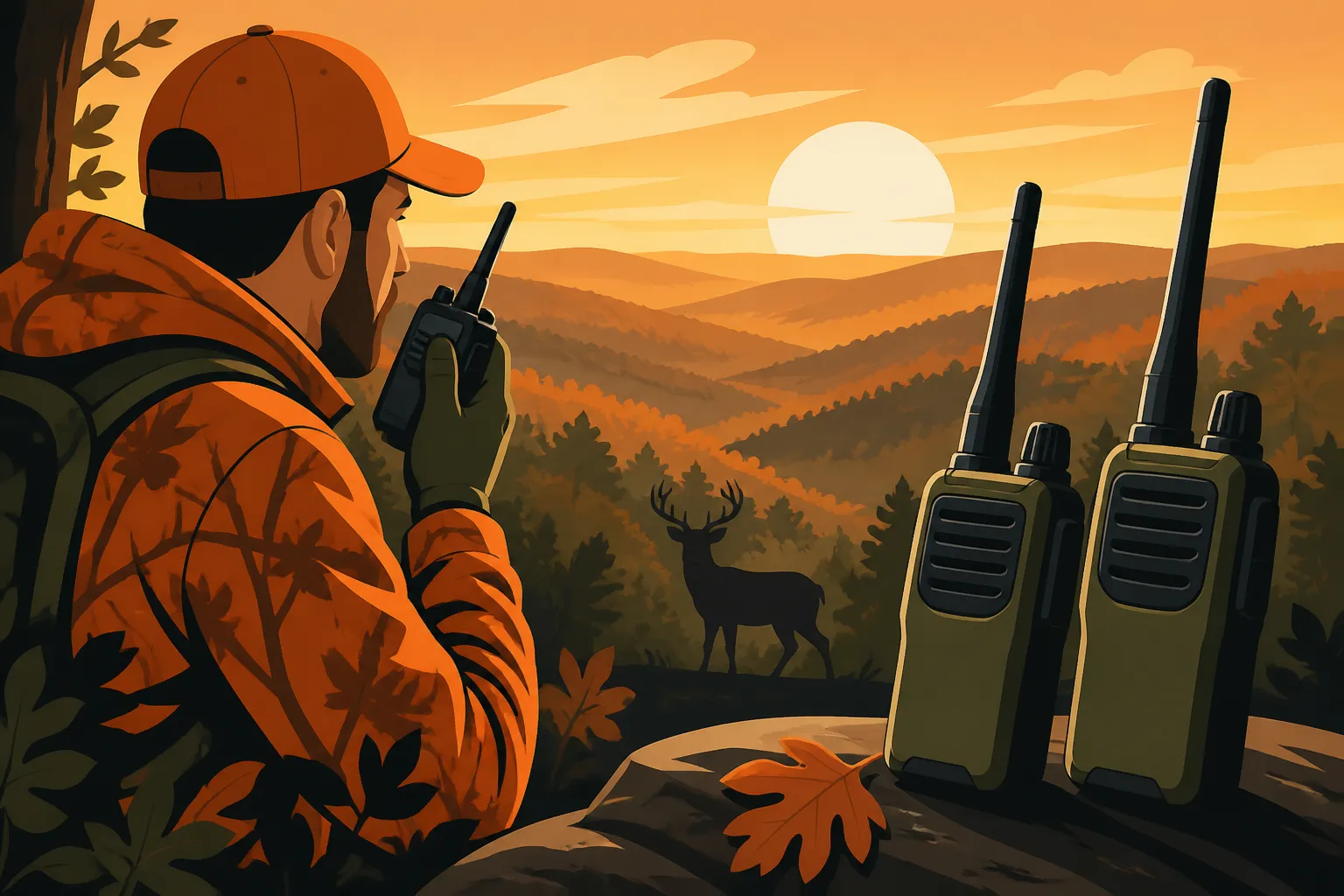
Hunting in the Missouri Ozarks is an experience unlike any other. The rolling hills, thick timber, and winding hollows offer incredible opportunities for deer and turkey, but they also create a serious communication black hole. You know the feeling: you split up with your group, head down into a deep draw, and suddenly your phone is just an expensive paperweight. That's where two-way radios step in, offering a reliable way to talk when cell towers are just a distant dream.
The Frustration of No Cell Service
Let's be honest, we've all been there. You're trying to figure out if your buddy jumped that deer or if they're still working a hot turkey gobbler, and all you get is silence on your phone. It’s frustrating, right? The Ozarks, with their deeply cut valleys and dense tree cover, are notorious for chewing up cell signals. Even if you get a bar or two on a high ridge, stepping a few yards into a hollow can plunge you back into communication darkness. This isn't just an annoyance; it can seriously impact your hunting strategy and even your safety, especially if someone needs assistance. Trying to coordinate a push through a thick cedar patch or determine who's going to work Hunting Turkeys in Ozark Hollows becomes nearly impossible without a direct line of communication.
You rely on being able to tell your partner, "Hey, I just bumped a group of deer heading your way," or "I'm going to set up on this bench above the creek, any sign over there?" Without that immediate feedback, you're essentially hunting as a series of individuals, even if you’re trying to work as a team. This is particularly true when you’re exploring some of the more remote sections of Mark Twain National Forest Hunting or other public lands where infrastructure is minimal. A good radio allows for that instant, tactical communication that cell phones simply can't provide in these challenging environments.
Safety and Coordination for Groups
Beyond the hunting advantage, safety is paramount, especially when you’re out in wild country. What if someone takes a bad fall, twists an ankle, or needs help field dressing a deer miles from the truck? In an area with no cell service, a simple accident can become a serious emergency. Two-way radios provide that crucial link to call for help, even if it’s just to let your hunting partners know you’re okay or need an extra hand getting a deer out of a steep ravine. Just imagine trying to get Getting a Deer Out of a Hollow Alone without being able to tell someone where you are.
For groups, radios are indispensable for coordination. Whether you're planning a deer drive on public ground or simply want to stay in touch while still-hunting different sections of a property, radios keep everyone on the same page. You can easily communicate about deer movement, changing wind conditions, or where everyone plans to meet up for lunch. It reduces the need for shouting (which spooks game, of course) and ensures everyone knows the plan, no matter how spread out you are. Companies like GoHunt offer great resources and gear lists that often highlight the importance of reliable communication for safety and success in remote areas, echoing this very sentiment.
Understanding Your Two-Way Radio Options
When you start looking into two-way radios, you'll quickly realize there's a spectrum of choices, each with its own strengths and limitations. The best option for you depends on how far you need to talk, how rugged you need the device to be, and whether you're comfortable with licensing requirements. Don't just grab the cheapest option; consider your typical hunting scenario in the Ozarks.
FRS/GMRS Radios for Shorter Ranges
Family Radio Service (FRS) and General Mobile Radio Service (GMRS) radios are probably what first comes to mind when you think of two-way radios. They're usually affordable, user-friendly, and require little to no setup. FRS radios operate on a set number of channels and typically have a range of up to a couple of miles in ideal conditions. The big upside? No license is required for FRS. GMRS radios use the same frequencies but can transmit at higher power, often boasting ranges of 5 to 10 miles or more, which means they can sometimes punch through more of that Ozark timber or reach across a wider valley. However, GMRS radios do require a relatively inexpensive license from the FCC, which covers your entire family for a period of years.
While convenient, it’s important to manage expectations for FRS/GMRS radios in the Ozarks. That "up to X miles" range is almost always an optimistic figure based on perfectly flat, open terrain with no obstructions. In the real world of rolling hills, dense foliage, and deep hollows, your effective range will be significantly less, often under a mile or two. Think of these as reliable tools for keeping in touch with a partner who is within sight or just over the next ridge, ideal for close-range team hunting or keeping tabs on younger hunters in your group. For longer distances or truly challenging topography, you might find them struggling. GoHunt frequently reviews popular outdoor communication devices, and they often highlight this practical range discrepancy.
The Power and Reach of Handheld Ham Radios
If you need serious range and reliability, especially when you're hunting expansive public land like Missouri Ozark Public Land Worth Walking or planning to be truly far apart from your partners, handheld amateur (ham) radios are a significant step up. These devices operate on a much wider range of frequencies and can often transmit at higher power levels than GMRS radios. This increased power, combined with better antennas and the ability to choose less congested frequencies, can make a dramatic difference in signal penetration through thick woods and over varied terrain. Many ham radios also offer advanced features like dual-band reception and the ability to program specific frequencies, which can be invaluable for clearer communication.
The trade-off? Ham radios require an amateur radio license, which involves passing an exam. While this might sound daunting, the Technician class license is relatively easy to obtain and focuses on basic radio operation and regulations. It’s a worthwhile investment if dependable long-range communication is a priority for your hunting trips. Furthermore, ham radios are often more rugged and built to withstand the rigors of the outdoors, making them a durable choice for serious hunters. While they have a steeper learning curve, the enhanced performance and flexibility they offer in the challenging terrain of the Ozarks can be truly unmatched.
Practical Considerations for Ozark Use
Having a good two-way radio is only half the battle. To truly leverage their power in the rugged Missouri Ozarks, you need to understand how the environment affects their performance and how to keep them running in the field. Ignoring these practicalities can lead to frustration, even with the best gear.
Terrain and Signal Penetration
The Ozark landscape is beautiful, but it's a signal killer. Those picturesque hills, deep hollows, and dense forests act like natural Faraday cages, absorbing and blocking radio waves. Unlike cell signals that rely on tall towers, two-way radios typically operate on line-of-sight principles, meaning the fewer obstacles between you and your receiver, the better. When you're in a deep hollow, surrounded by thick oak and hickory timber, or tucked behind a tall ridge, even powerful radios can struggle to connect. Understanding Wind and Thermals in Ozark Hills is crucial for hunting, but also for knowing how sound and radio waves might travel.
To maximize your range, always try to get to the highest ground possible. A few extra feet in elevation can make all the difference, allowing your signal to "hop" over obstacles. If you're trying to talk to someone in a hollow, try to find a rise or a saddle on a ridge where you have a clearer shot. Even moving 20-30 yards can sometimes dramatically improve your signal. This isn't just theory; it’s something you learn quickly when you're navigating areas like the Irish Wilderness or other parts of Mark Twain National Forest Hunting where cell service is non-existent.
Battery Life and Charging in the Field
There’s nothing worse than needing to communicate and realizing your radio's battery is dead. Modern two-way radios, especially GMRS and ham models, can have excellent battery life, but heavy use, cold weather, and continuous transmission will drain them faster. Always start your hunting day with a fully charged battery. For longer trips, especially multi-day excursions where you might be Camping in Mark Twain National Forest, bringing spare batteries is a must. If your radio uses standard AA or AAA batteries, carrying extra packs is easy. For proprietary batteries, consider a portable power bank or a solar charger.
Many radios now come with USB-C charging options, making it easier to top them off with the same power banks you use for your phone or other electronics. However, remember that cold weather significantly impacts battery performance, so keeping your radio (and spare batteries) close to your body heat can help prolong their life. A reliable radio is only as good as its power source, so make this a critical part of your pre-hunt gear check, especially if you're venturing into remote territory where a First Aid Kits for Remote Ozark Ground is also a necessity.
Integrating Radios into Your Hunting Strategy
Just like any other piece of gear, from your rifle to your boots, two-way radios become most effective when you have a plan for how to use them. Simply having them on your hip isn't enough; you need communication protocols and an understanding of the rules to make them a truly invaluable asset for your Missouri hunting adventures.
Communication Protocols for Hunting
Effective radio communication isn't just about pressing a button and talking; it's about clear, concise messaging. Before you even hit the woods, establish some basic protocols with your hunting partners. Decide on specific channels or privacy codes to avoid interference from other users (though in remote Ozark areas, this is often less of an issue). Agree on a system for checking in periodically – every hour, or when reaching a new landmark. Use clear and unambiguous language, avoiding slang or overly technical terms that might confuse someone. For instance, instead of "I see something," say "I have eyes on two deer, headed northeast from my position on the oak ridge."
It’s also smart to establish some simple codewords or signals for common situations. Maybe "Code Green" means everything is good, "Code Yellow" means a minor issue, and "Code Red" means an emergency. Teach everyone how to use the "squelch" feature to minimize static and improve clarity. And, critically, keep transmissions brief. Radios aren't phones; they're for getting essential information across quickly and efficiently. Practicing these protocols beforehand, even just chatting around the house, can make a huge difference when you're out in the field and conditions are less than ideal. This clear communication can be the difference between connecting on a deer that’s Reading an Ozark Hollow for Deer Movement and missing an opportunity because of a misunderstanding.
Legalities and Licensing
Understanding the legal aspects of two-way radios is crucial. As mentioned, FRS radios are license-free and generally fine for basic use. GMRS radios require a license, but it's a one-time fee for a period of years and covers your immediate family, making it a good option for hunting groups. Ham radios, on the other hand, require an individual to pass an exam for a license. The important thing is to make sure you're operating within the rules to avoid any issues. For instance, transmitting on certain frequencies without the proper license can lead to fines.
Beyond the radio itself, be mindful of noise regulations on public land. While radios are generally acceptable, be considerate of other hunters and wildlife. Keep your volume low, especially when game is nearby. No one wants their hunt ruined by a loud burst of static or chatter. Additionally, be aware that some specific public hunting areas might have unique rules regarding electronic devices, though two-way radios are broadly permitted for communication. Always check the area-specific regulations, often found in Missouri Area Brochures and Local Rules or through the GoHunt platform, to ensure you're in compliance.
| Radio Type | License Required | Typical Max Power (Watts) | Stated Range (Ideal) | Real-World Ozark Range (Approximate) | Best Use Case |
|---|---|---|---|---|---|
| FRS | No | 0.5 – 2 | 1-2 Miles | 0.5 – 1 Mile | Close-range communication, simple family use |
| GMRS | Yes (Family License) | 5 – 50 (Handhelds typically 5-8) | 5-35 Miles | 1-3 Miles | Enhanced range over FRS, small hunting groups |
| Handheld Ham | Yes (Individual License) | 5 – 8 | 5-35+ Miles | 2-5+ Miles (with good antenna/position) | Maximum range, advanced features, serious backcountry |
Disclaimer
This article is for general informational purposes only and does not constitute professional advice. Laws, prices and regulations vary by location and change over time. Consult a qualified professional for guidance on your specific situation.