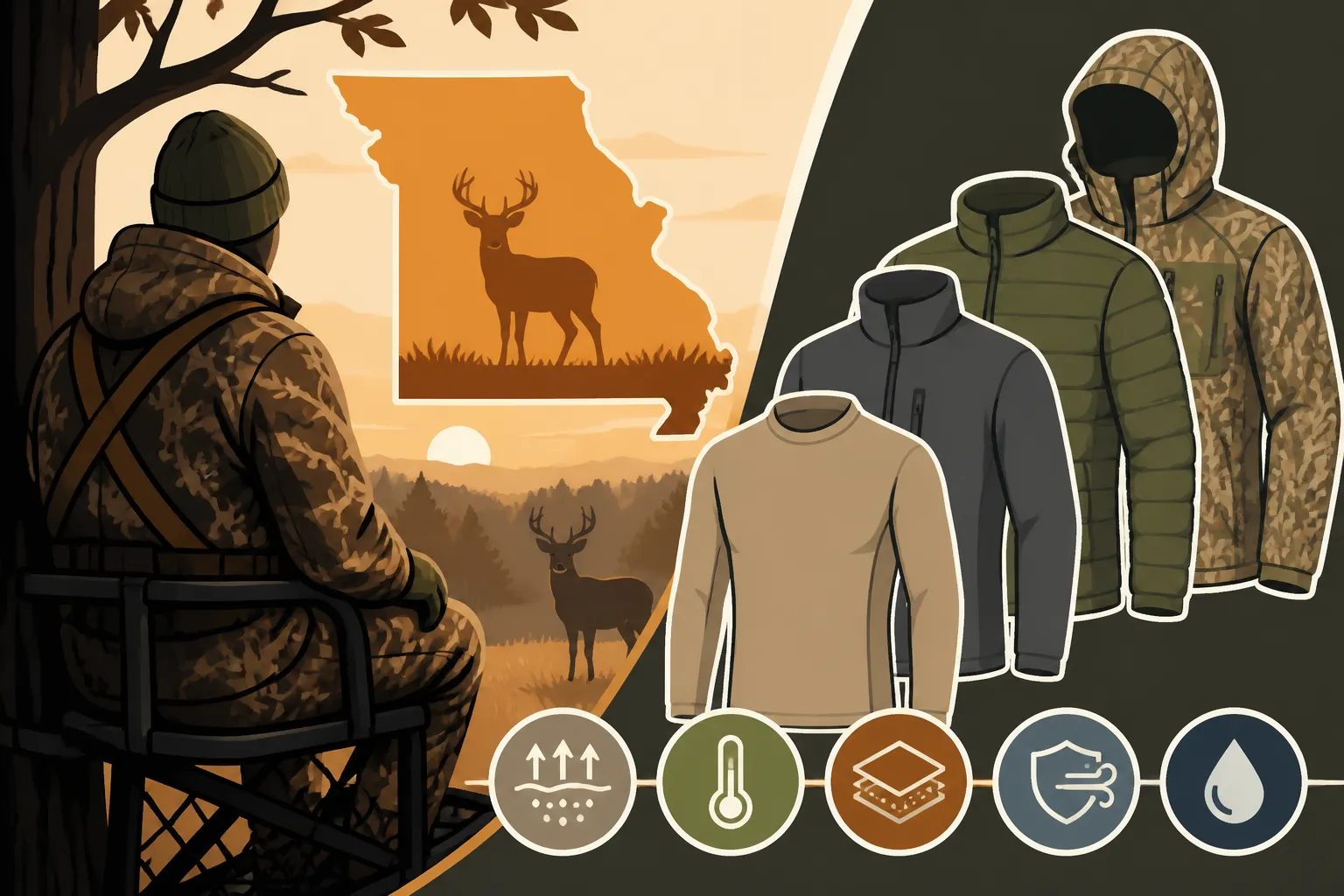
Layering for a Missouri Deer Stand
Oh, the infamous Missouri weather! If you've spent any time at all in a deer stand around here, you know exactly what I'm talking about. You wake up to a crisp, clear morning, perfect for hunting, only to have the wind shift, the clouds roll in, and a chilling drizzle start by noon. Or maybe you had a beautiful, mild opening day of archery, only to be hit with a surprise cold front and bone-chilling temps just a few days later. It's enough to make you throw your hands up in exasperation and wonder if there's any way to stay comfortable and focused in the woods. This guide is all about tackling that exact frustration by mastering the art of layering for a Missouri deer stand, ensuring you're prepared for whatever Mother Nature decides to throw at us.
Understanding Missouri's Variable Weather
Missouri weather isn't just a challenge; it's practically a personality trait of our hunting seasons. We live in a state where the forecast can be a suggestion rather than a steadfast promise, especially when you're perched thirty feet up a tree or tucked into a ground blind for hours on end. It's not uncommon to experience all four seasons in a single week, or even a single day, particularly during the critical deer hunting months. This extreme variability is precisely why a "one-and-done" hunting outfit just doesn't cut it here.
Early Season Swings: From Warm to Cool in a Day
Think about the early archery season, typically running from mid-September. You might start your morning hunt in temperatures that feel more like late summer, with a heavy dew and a rising sun that promises a warm day. You’re trying to stay cool on the walk in, avoid sweating, and deal with pesky mosquitoes, all while hoping for a buck to cruise by. But then, as the sun dips towards the horizon for your evening sit, a cool front might push through. Suddenly, that comfortable morning breeze has teeth, and you find yourself shivering, wishing you'd packed an extra layer. This isn't just about discomfort; shivering burns calories and makes it incredibly hard to stay still and focused on scanning the woods. It can completely derail a hunt.
It's a common scenario: you layered light for the walk in, knowing the daytime highs would be in the 60s or even low 70s. You chose lightweight, moisture-wicking materials for your Bowhunting Missouri's Four-Month Archery Season efforts, which is smart for managing sweat. But as the afternoon gives way to evening, and the sun drops behind the timber, that same light layer that kept you comfortable during the exertion of your walk now feels woefully inadequate. A calm evening can quickly turn breezy, especially if you're on a ridge or an exposed field edge, amplifying the chill factor. Many hunters have packed up early, teeth chattering, simply because they underestimated how quickly the mercury could drop and how much colder it feels when you’re stationary.
Peak Rut Chills: The Bitter Cold of November
Then there's November. Ah, November in Missouri, the heart of the firearms season and often the peak of the rut. This is when things can get seriously cold. We're talking about mornings where the thermometer struggles to get above freezing, and the wind feels like it's cutting right through you. You can have days that start frosty and stay that way, or days where a seemingly mild morning gives way to a brutal north wind by lunchtime. Imagine sitting in a treestand during the Missouri's Eleven-Day November Firearms Deer Season, hoping to catch a big buck cruising for does. Your enthusiasm is high, your heart is pounding with anticipation, but if your core temperature drops, that focus quickly fades into a desperate plea for warmth.
Many hunters plan their precious vacation days around Hunting the Missouri Rut in Early November, knowing it's prime time for deer activity. But those active deer don't care if you're freezing! You need to be able to sit absolutely still for hours, from before dawn until well after sunrise, and then again from mid-afternoon until dark. Those long sits, especially when you're stationary in a treestand or ground blind, demand a robust layering system that can trap warmth while also allowing for some breathability so you don't overheat during a short walk or a moment of excitement. The true challenge during these colder periods isn't just getting warm, but staying warm and dry for extended periods, despite the wind and often, dampness.
Late Season Extremes: Snow, Ice, and Freezing Rain
And let's not forget the late season, typically December and early January. This is when Missouri can really show off its winter prowess. We're talking snow, ice, and that dreaded freezing rain that coats everything in a slick, miserable glaze. If you're still out there, chasing that elusive second deer or taking advantage of the Missouri Late Antlerless Portion Dates, you're a dedicated hunter. But dedication alone won't keep you warm and safe. The late season can bring single-digit temperatures, brutal wind chills, and conditions that demand serious insulation and waterproof protection.
Hunting late season often means less deer movement during daylight, especially during harsh weather, making your ability to stay comfortable and persistent even more critical. You might be keying in on Late-Season Food Sources for Whitetails, which often means sitting on exposed field edges or in timber where the wind can howl. The ground might be frozen solid, or worse, covered in slush. If your boots aren't up to the task, or your outer shell isn't truly waterproof, your hunt will be over quickly. This isn't just about comfort; severe cold and wet conditions can lead to hypothermia, which is a serious safety concern in the remote corners of the Ozarks or vast farmlands. A robust layering strategy isn't just nice to have; it's absolutely vital for staying safe and effective when the weather turns truly nasty.
The Core Principles of Layering
Layering isn't just about throwing on a bunch of clothes. It's a strategic approach to managing your body's temperature and moisture levels, allowing you to adapt to changing conditions without sacrificing comfort or mobility. Think of it like building a house: you start with a foundation, then add insulation, and finally, a protective exterior. Each layer has a specific job, and when they work together, they create an incredibly versatile system. This method is especially crucial in Missouri, where, as we just discussed, the weather rarely stays consistent for an entire day.
The Base Layer: Managing Moisture
The base layer is your first line of defense, the one closest to your skin. Its primary job isn't necessarily warmth, but rather moisture management. When you walk to your stand, climb a tree, or even just get excited when a deer appears, your body produces sweat. If that sweat stays on your skin, it cools down and can make you feel miserably cold, even when surrounded by insulating layers. This is the exact opposite of what you want when you're trying to stay put for hours.
A good base layer wicks moisture away from your skin, transferring it to the outer layers where it can evaporate. This keeps you dry and, consequently, much warmer. For early season, you might choose a lighter weight, short-sleeved or long-sleeved base layer. As the season progresses into the colder months, a heavier weight base layer becomes essential. Materials matter here: avoid cotton at all costs! Cotton absorbs moisture and holds it against your skin, making you feel clammy and cold. Instead, look for synthetics (polyester, polypropylene) or merino wool. Synthetics are excellent at wicking and drying quickly, while merino wool offers superb warmth-to-weight ratio, wicks moisture, and has natural odor-fighting properties—a huge bonus for stealth. Base Layers for a Missouri November are often thicker, designed to not only wick moisture but also provide a noticeable amount of initial warmth.
The Mid-Layer: Insulating for Warmth
Once your base layer is doing its job of keeping you dry, the mid-layer steps in to provide the bulk of your insulation. This is where you trap warm air close to your body, creating a thermal barrier against the cold. The thickness and type of your mid-layers will vary wildly depending on the temperature and how active you plan to be. On a mild late-October day, a single lightweight fleece might be enough. But come peak November rut or deep into the late season, you might be stacking multiple mid-layers.
Common mid-layer materials include fleece, down, or synthetic puffies. Fleece is versatile, relatively inexpensive, and retains some insulating properties even when damp. Down offers incredible warmth-to-weight but loses most of its insulating power when wet. Synthetic puffies are a great alternative, providing good warmth even when damp, though they tend to be bulkier than down for the same warmth level. The beauty of multiple mid-layers is adjustability. If you start to warm up on your walk to the stand, you can shed a puffy vest or jacket. If the wind picks up or the temperature plummets, you can quickly add another fleece. This modular approach is key to staying comfortable from predawn to post-sunset.
The Outer Layer: Protection from the Elements
The outer layer, often called your shell, is the final barrier against the elements. Its primary purpose is to protect you from wind, rain, and snow, while also allowing moisture from your inner layers to escape. Without an effective outer layer, even the best base and mid-layers will struggle. Wind can strip away your body heat incredibly quickly through convection, and rain or snow saturating your insulation is a surefire way to get dangerously cold.
For Missouri hunting, your outer layer needs to be robust. Look for materials that are windproof and water-resistant or fully waterproof. A soft shell jacket offers good wind protection and some water resistance, making it suitable for drier, cooler days. For truly nasty weather—think freezing rain or heavy, wet snow—you'll want a hard shell that is fully waterproof and breathable. The breathability is crucial; if your outer layer seals in all moisture, your base and mid-layers will get wet from your own sweat, defeating the purpose of wicking. Look for features like adjustable cuffs, hoods, and drawstrings to seal out drafts and precipitation. Quiet fabrics are also paramount in an outer layer, especially when trying to stay concealed in a Treestand Setups in Hardwood Timber. No one wants to sound like a crinkling chip bag when a deer is walking by!
| Layer Type | Primary Function | Ideal Materials | Avoid | Key Benefit for Hunters |
|---|---|---|---|---|
| Base Layer | Moisture Management | Merino wool, Synthetic (polyester, poly) | Cotton | Keeps you dry, prevents chill from sweat |
| Mid-Layer | Insulation / Warmth | Fleece, Down, Synthetic Puffy | Cotton | Traps warm air, easily adjustable for temp |
| Outer Layer | Element Protection | Waterproof/Windproof membranes, Softshell | None (if not functional) | Blocks wind, rain, snow; keeps inner layers dry |
Essential Layering Components for a Missouri Deer Stand
When you're preparing for a full day in a Missouri deer stand, it's not just about the jacket and pants. True comfort and endurance come from a holistic approach, considering every part of your body. Hunters often focus so much on their core that they forget the crucial role our extremities play in overall body temperature regulation.
Head, Hands, and Feet: The Often-Overlooked Extremities
Let's be real: how many times have you been miserable in a stand, not because your chest was cold, but because your fingers were numb, your toes were blocks of ice, or your ears felt like they might snap off? The head, hands, and feet are critical for maintaining core body temperature, and heat loss from these areas can quickly lead to overall discomfort. Your body prioritizes keeping your vital organs warm, so it shunts blood away from your extremities first, making them feel the cold more acutely.
For your head, a good warm hat is non-negotiable once temperatures drop. A wool or fleece beanie that covers your ears is excellent. For extreme cold, a balaclava or a neck gaiter paired with a hat provides full coverage and can make a massive difference, especially when there's a biting Wind and Thermals in Ozark Hills. Hands are tricky because you need warmth and dexterity. A system of thin liner gloves (wool or synthetic) under heavier, insulated mittens or glomitts (fingerless gloves with a mitten flap) works wonderfully. You can pull off the mittens for shooting or fine tasks while still having some protection. And when it comes to feet, a quality pair of Insulated Boots for Long Sits is paramount. Layering wool or synthetic socks (again, no cotton!) is key. A thin wicking liner sock paired with a thicker, insulated outer sock provides both moisture management and warmth. Many hunters even invest in insulated boot covers or chemical foot warmers for those truly frigid days. Don't forget, a warm head, hands, and feet are often the difference between a successful, long sit and an early, shivering retreat. GoHunt often features reviews of these specialized items.
Specialized Gear: Scent Control and Quiet Fabrics
Beyond just warmth and protection, Missouri deer hunting demands attention to other critical factors: scent and noise. Whitetails have an incredible sense of smell and hearing, and ignoring these aspects of your gear can blow a hunt faster than a poorly placed grunt call. This is where specialized layering components truly shine.
Scent control is a massive topic, and it starts with your base layers. Many base layers, especially synthetics, are now treated with antimicrobial agents to inhibit odor-causing bacteria. Some hunters take it a step further, investing in full layering systems from brands that incorporate activated carbon or zeolite technology, designed to absorb human odor. While no system is 100% foolproof, minimizing your scent signature is a huge advantage, especially when you're spending hours in a confined space like a ground blind or an elevated stand. Using a quality scent control spray on your outer layers and gear before heading to the stand is also a good practice. Furthermore, selecting quiet fabrics for all your layers, not just your outer shell, is crucial. Fleece, brushed tricot, and wool blends are generally much quieter than crisp nylon or polyester. Imagine drawing your bow or raising your rifle, only to have the rustle of your sleeve alert a wary buck. Every movement counts, and quiet fabric ensures that the only sound a deer hears is the wind, not your clothing. This also applies to external layers like your backpack; make sure its fabric is also quiet to avoid startling game when you reach for a snack or a rangefinder.
Adapting Your Layers for Different Stand Types and Activities
The beauty of a true layering system is its adaptability. You wouldn't wear the same gear to run a marathon as you would to sit on a park bench in winter, right? The same principle applies to deer hunting. Your activity level, and the type of stand you're in, should heavily influence your layering choices. Missouri offers diverse hunting scenarios, from stationary treestand sits in the timber to mobile still-hunting in creek bottoms, and each demands a slightly different approach to your clothing strategy.
Static Treestand Hunting: Maximizing Warmth While Stationary
This is arguably the most challenging scenario for staying warm. When you're sitting perfectly still for hours on end, high up in a tree, your body isn't generating much heat, and you're often exposed to the wind from all directions. This is where a robust layering strategy becomes absolutely critical. For Treestand Setups in Hardwood Timber, you need to prioritize maximum insulation, especially in your mid and outer layers.
You'll want a heavier base layer, likely a mid to heavyweight merino wool or a substantial synthetic, to really lock in that initial warmth and manage any sweat from the walk in. For mid-layers, think about a combination. A thick fleece jacket or vest over your base, and then perhaps a synthetic puffy jacket for additional warmth. Some hunters even bring a large, insulated "parka" style jacket or an insulated hunting blanket to throw over their legs and lap once they're settled in the stand. Remember that often-chilly climb into the stand? Many seasoned hunters will actually carry their outermost, bulkiest insulating layers in a pack, putting them on only after they're securely in their stand and have cooled down from the exertion. This prevents sweating out your clothes on the way in, which is a common mistake that leads to getting cold later. Don't forget your Cold Weather Sitting Strategy for extended comfort.
Mobile Hunting and Still-Hunting: Balancing Warmth and Mobility
On the flip side, if your hunting style involves more movement – perhaps still-hunting through a thick Ozark hollow or carefully stalking along a fencerow – your layering needs shift. Here, you're constantly generating body heat, and the risk of overheating and sweating becomes the primary concern. Your goal is to balance warmth with breathability and freedom of movement.
For mobile hunting, start with a lighter base layer, perhaps a mid-weight synthetic that excels at wicking moisture quickly. Your mid-layers should be lighter and more easily shed. A lightweight fleece jacket might be your main insulation, with a thin puffy vest that can be quickly added or removed from your pack as your activity level or the temperature changes. Your outer layer should be breathable but still offer protection from light rain or wind. A soft-shell jacket and pants often work well here, as they provide some weather resistance without the bulk or heat retention of a full waterproof shell. The key is to avoid getting sweaty, because as soon as you stop moving, that sweat will chill you to the bone. This means being proactive: if you feel yourself starting to get warm, shed a layer before you start sweating heavily. It’s better to be slightly cool while moving than soaking wet.
Ground Blinds: Utilizing Enclosures for Comfort
Ground blinds offer a unique layering challenge and opportunity. While they provide fantastic concealment and break up your silhouette, they can also be surprisingly cold due to a lack of sunlight and often sitting on the ground. However, they also shield you from the wind, which is a huge advantage.
Inside a Ground Blinds on Crop Field Edges, you can often get away with slightly less bulky outer layers because you're protected from the direct assault of wind and precipitation. Your base and mid-layers are still crucial for insulation. Many hunters find that a heavier base layer and substantial mid-layers (like thick fleece or a puffy jacket) are perfect here. The biggest benefit of a ground blind is the ability to bring in extra gear. You can pack a heavier sleeping bag-style blanket or even a small portable heater (with proper ventilation, of course!) that you wouldn't dream of taking into a treestand. Insulated bibs or pants are excellent for ground blinds, as they provide warmth to your lower body, which is often in contact with the cold ground. Since you're typically not moving much, focus on static warmth. Consider bringing extra hand warmers and foot warmers, as well as an insulated mug with a hot beverage, to capitalize on the enclosed warmth a blind provides. Just be mindful of noise; zippers and crinkly fabrics are amplified in a blind!
Practical Tips for Layering Success
Even with the right gear, the art of layering takes a bit of practice and foresight. It's not just about what you wear, but how you wear it, and how you adapt it throughout your hunt. Over the years, I've learned a few tricks that can make a world of difference when you're out in the Missouri woods, trying to stay warm, dry, and focused.
Testing Your System: Practice Makes Perfect
You wouldn't head into the backcountry with brand new hiking boots you've never worn, right? The same logic applies to your layering system. Don't wait until opening morning of the Missouri's November Firearms Portion to test out a completely new set of gear. Take your layers for a "test drive" before the season or on a less critical hunting day.
Wear your full layering setup for a walk around your property, or even just sitting outside in similar temperatures. Pay attention to how quickly you warm up during exertion and how long you stay warm once you stop moving. Do your boots feel comfortable with your chosen sock combination? Can you quietly access everything in your pockets with all your layers on? Does your bow string hit your sleeve when you draw? Are your binoculars getting fogged up between layers? Identify any pinch points or areas where you might get too hot or too cold. This might mean adjusting the weight of your base layers, swapping a bulky mid-layer for a thinner one, or realizing you need better Rain Gear for an Ozark Downpour or a heavier hat. Pre-season scouting trips are perfect opportunities to test your gear in real-world conditions without the pressure of a full-blown hunt. The more comfortable and familiar you are with your system, the less you'll have to think about it when that big buck finally steps out.
Packing Smart: Be Prepared for Anything
Missouri's unpredictable weather means that "being prepared for anything" isn't just a cliché; it's a necessity. Even if the forecast calls for clear skies and mild temperatures, a sudden cold front, an unexpected shower, or a stronger-than-predicted wind can completely change your experience. This is where smart packing comes into play.
Always pack at least one extra insulating layer, even if you don't think you'll need it. A lightweight puffy jacket or vest that can compress down small in your pack is an excellent "just in case" item. Same goes for a pair of thin liner gloves or an extra beanie. A small, packable rain jacket, even if it's not your heaviest shell, can save you from a miserable afternoon if a pop-up shower surprises you. Consider carrying a few Hand Warmers That Last a Full Sit for those unexpected drops in temperature or when your fingers just won't warm up. An insulated sitting pad, while not technically a layer of clothing, can drastically improve comfort and warmth in a treestand by isolating you from the cold metal or wood. When packing your hunting bag, organize your layers so the most frequently accessed ones (like a light mid-layer you might shed or add) are easily reachable. Use dry bags or waterproof stuff sacks for critical items like extra socks and gloves, ensuring they stay dry even if your pack gets wet. The goal is to have options, allowing you to fine-tune your comfort throughout the day without having to trek back to the truck. This strategic approach ensures you can stay in the stand longer, increasing your chances of success, no matter what Missouri's notoriously fickle weather decides to do.
Disclaimer
This article is for general informational purposes only and does not constitute professional advice. Laws, prices and regulations vary by location and change over time. Consult a qualified professional for guidance on your specific situation.