Hunting the Irish Wilderness on Foot
There are places in Missouri that truly test your mettle as a hunter, and the Irish Wilderness in the Mark Twain National Forest is absolutely one of them. If you've ever felt overwhelmed by the sheer scale and lack of clear trails in vast public lands, you're not alone. This rugged, remote corner of the Ozarks demands a different approach than your typical timber block, and this guide is here to walk you through what it takes to successfully hunt the Irish Wilderness on foot.
Embracing the Untamed: What is the Irish Wilderness?
Before you even think about stepping into the Irish Wilderness, it’s crucial to understand what you’re getting yourself into. This isn't just another section of national forest with a few logging roads; it's a designated wilderness area, meaning it's intentionally kept wild and undeveloped. It’s part of the vast Mark Twain National Forest and truly embodies the "wilderness" in its name. Think dense, unbroken timber, steep hollows, rocky drainages, and very, very few established trails. Cell service is spotty at best, and human encounters are rare once you venture beyond the very edge. This is the kind of place where you learn a lot about yourself, and probably more than a little about your sense of direction!
The Unique Geography and Terrain
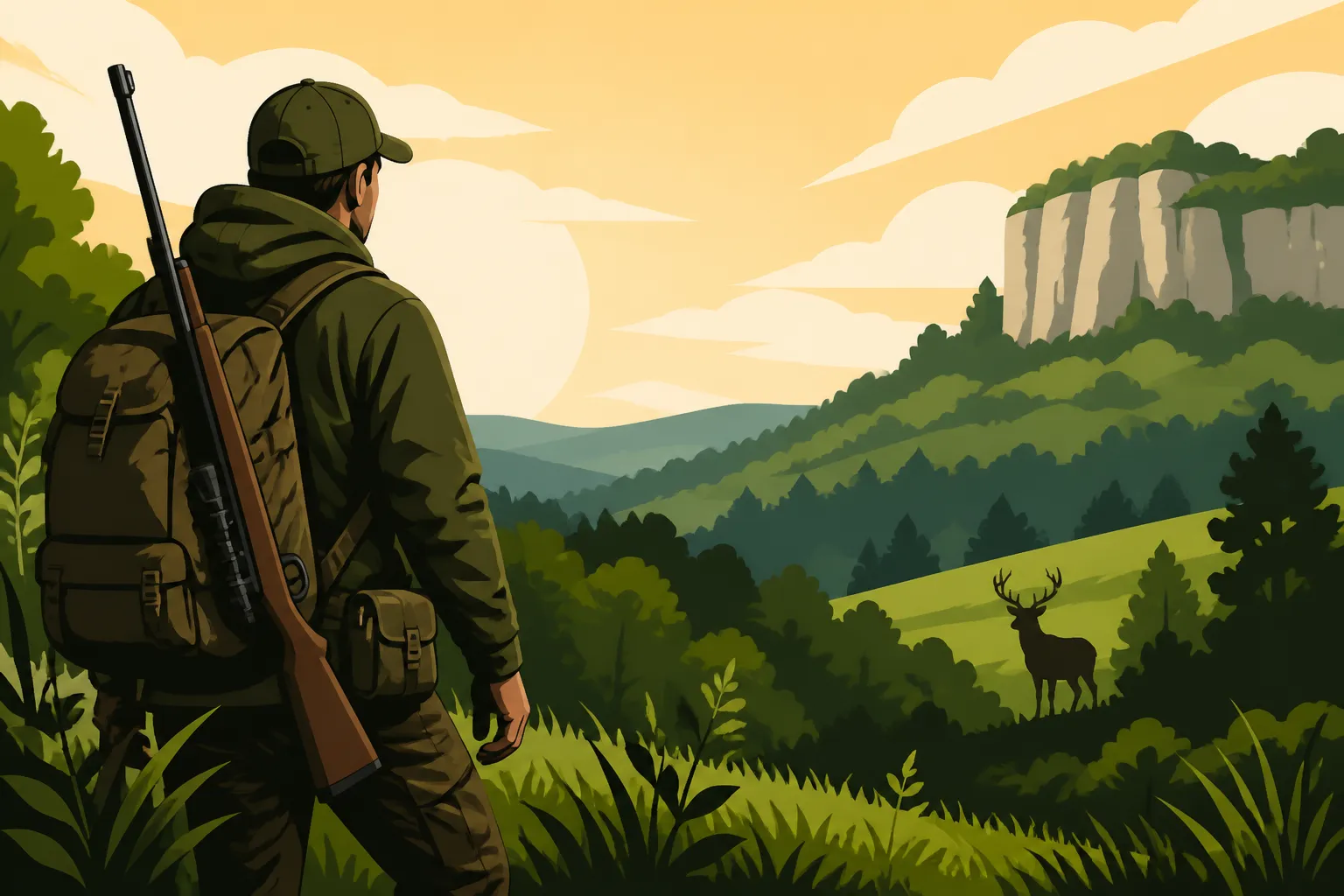
The Irish Wilderness, primarily located in Oregon County, is characterized by its dramatic topography. You'll find deep, winding hollows, often with small, clear streams carving through limestone and chert rock formations. The ridges are often steep and unforgiving, requiring significant physical exertion to traverse. Forest cover is predominantly mixed hardwoods, with oaks, hickories, and pines, often interspersed with thick cedar glades or impenetrable greenbrier thickets that can make progress feel impossible. It’s a landscape that both inspires awe and demands respect, a true testament to the rugged beauty of the Missouri Ozarks.
Navigating this terrain means constant ups and downs, climbing over downed timber, and pushing through dense underbrush. Expect your pace to be significantly slower than what you might experience in more manicured hunting areas. Water sources are generally available in the hollows, especially after rains, but always consider carrying ample water or a reliable filtration system. Understanding the nuances of these features, like how deer might travel a specific ridge saddle or a bench above a creek, is critical to success.
Why Hunt a Wilderness Area on Foot?
So, with all these challenges, why would anyone choose to hunt the Irish Wilderness on foot? The answer, for many of us, lies in the unparalleled sense of solitude and the opportunity to pursue genuinely wild animals in their natural habitat. In a world where hunting pressure seems to be increasing on every accessible piece of public land, the Irish Wilderness offers an escape. It's a place where you can feel like you've truly earned your game, relying solely on your skill, perseverance, and woodsmanship.
Deer and turkey in these remote areas tend to be less accustomed to human presence, often exhibiting more natural patterns of behavior. This can make for incredibly rewarding encounters, even if they are few and far between. It's an opportunity to truly immerse yourself in the hunt, free from the distractions of ATVs, crowds, or even well-worn hiking paths. If you're looking for an adventure that combines serious physical challenge with the thrill of backcountry hunting, then the Irish Wilderness might just be your calling. It's not for the faint of heart, but for those who embrace it, it's an unforgettable experience.
Essential Gear for the Backcountry Hunter
Hunting the Irish Wilderness on foot isn't just about showing up with your rifle or bow. It's about being entirely self-sufficient, prepared for anything, and making sure your gear doesn't fail you miles from the nearest road. Every item in your pack needs to earn its spot, striking a balance between necessity and weight. This is where meticulous planning makes all the difference, because forgetting a crucial piece of equipment or bringing too much can quickly turn a challenging hunt into a miserable ordeal.
Navigation Tools: Your Lifeline in the Wild
In an area with minimal cell service and few landmarks, reliable navigation is not just an advantage; it's a non-negotiable requirement. While a traditional map and compass are excellent backups, a modern GPS unit or a robust smartphone app like onX Hunt is absolutely essential. These tools allow you to pinpoint your location, mark waypoints, track your movements, and pre-plan your routes, which is vital when you're trying to Read an Ozark Hollow for Deer Movement or pick out a promising ridge.
Before you go, download offline maps to your device. Cell signal is a luxury you won’t have. Practice using your chosen navigation tool extensively at home, not just in the field. Know how to mark your truck, your potential stand locations, and any significant terrain features. A portable power bank (or two!) is also critical to keep your devices charged, as the cold and constant use can quickly drain batteries. Remember, even the best technology is useless if it's dead or you don't know how to operate it under pressure.
Survival and Safety Essentials
Beyond navigation, a core set of survival and safety items can prevent a bad situation from becoming catastrophic. This includes a reliable headlamp with extra batteries, a high-quality knife, a small first-aid kit tailored to common hunting injuries (cuts, blisters, sprains), and a fire-starting kit (waterproof matches, lighter, fire starter). A whistle can be invaluable for signaling if you get separated from a partner or need help.
Carrying enough water is paramount, especially during early season hunts. If you plan to spend multiple days, a water filter or purification tablets are a must. High-energy snacks that don't spoil easily, like jerky, nuts, and energy bars, will keep you fueled. Always let someone know your detailed hunting plan, including your expected return time and the specific area you'll be in. A satellite communication device, such as a Garmin inReach or a Zoleo, can provide a lifeline for emergency communication when cell service is nonexistent, allowing you to send messages or trigger an SOS signal if things go south. This is particularly important when hunting alone in such remote areas.
Clothing, Footwear, and Shelter
Your clothing and footwear choices are critical for comfort and safety. Layers are key for Missouri's unpredictable weather, allowing you to adapt to changing temperatures throughout the day. Moisture-wicking base layers, insulating mid-layers, and a waterproof/windproof outer shell are standard. Given the thick brush, durable pants are a must – consider briar-resistant options. Boots for Walking Ozark Rock need to be sturdy, waterproof, and provide excellent ankle support. You’ll be traversing uneven, rocky ground, and a twisted ankle could end your hunt quickly.
For extended stays, a lightweight tent or bivy sack, along with a sleeping bag appropriate for the expected night temperatures, is necessary. Even for day hunts, consider carrying an emergency shelter, like a lightweight tarp or space blanket, in case you get caught out after dark or an unexpected storm rolls in. A small, but capable pack will carry all these essentials without becoming a burden on long treks.
Here’s a quick overview of essential gear versus items that are good to have but not strictly necessary for every trip:
| Category | Essential Gear | Highly Recommended (Optional but very useful) |
|---|---|---|
| Navigation | GPS device (with offline maps) / onX Hunt app | Map and compass (physical backup) |
| Power bank(s) for electronics | ||
| Safety/Survival | Headlamp (extra batteries) | Satellite communicator (Garmin inReach, Zoleo) |
| Knife | Bear spray (check regulations/necessity) | |
| First-aid kit | Whistle | |
| Fire starter (waterproof matches, lighter) | Signal mirror | |
| Hydration/Food | Water (ample supply) | Water filter/purification tablets |
| High-energy snacks | ||
| Clothing/Shelter | Layered, weather-appropriate clothing | Lightweight tent/bivy sack (for multi-day) |
| Durable, waterproof, ankle-support boots | Emergency tarp/space blanket | |
| Rain gear | Sleeping bag (for multi-day) |
Navigation and Safety in Remote Missouri
Navigating the Irish Wilderness successfully means more than just knowing how to read a map. It's about being constantly aware of your surroundings, understanding the subtleties of the terrain, and having a plan for when things inevitably go sideways. The sheer scale and lack of human infrastructure here amplify every small decision you make. You're truly responsible for yourself, and that feeling, while liberating, also demands a high degree of preparedness and caution.
Mastering Your Map and Compass Skills
While digital navigation tools are incredibly powerful, they are electronic and can fail. A physical map and compass remain the ultimate backup. Before you ever leave the truck, orient your map to north and identify prominent features. Understand contour lines – how closely spaced lines mean steep terrain, while widely spaced ones indicate flatter ground. Practice taking bearings and walking a straight line through dense cover. This skill is paramount when trying to maintain your direction in seemingly endless timber.
The beauty of a map and compass is their simplicity and reliability; they don't run out of battery. Use them in conjunction with your digital tools to confirm your position and develop a deeper understanding of the landscape. For instance, when you're Scouting Missouri Public Land Before Season, use aerial photos on your phone, but then cross-reference those features with a paper topo map to better understand elevation changes and potential natural travel corridors that might not be obvious from the air.
The Role of GPS and Digital Mapping Apps
Modern GPS devices and smartphone apps like onX Hunt have revolutionized backcountry navigation. They provide real-time location tracking, allow you to mark waypoints for your vehicle, stand locations, and any game you harvest. The ability to switch between satellite imagery, topo maps, and hybrid views is invaluable for understanding both the lay of the land and the ground cover. Before your trip, dedicate time to digitally scout the Irish Wilderness. Identify potential pinch points, natural funnels, bedding areas, and water sources. Save these as waypoints and routes.
One feature I particularly appreciate is the ability to track your movement. If you find yourself disoriented, you can simply follow your track back to a known point. Another fantastic use of these apps is to define property lines. While much of the Irish Wilderness is public land within the Mark Twain, knowing precisely where you are in relation to any private parcels can prevent accidental trespassing – even if you didn't mean to. While these tools are incredibly helpful, always remember to carry a physical backup and a way to charge your devices.
Planning for Emergencies and Communication
Given the lack of cell service, a detailed emergency plan is non-negotiable. Inform someone reliable of your exact hunting area, your planned entry and exit points, and your expected return time. Give them a copy of your route. If you're delayed, they know when and where to start looking. A satellite communication device, such as those offered by brands like GoHunt, is a wise investment for hunters venturing into truly remote areas. These devices allow you to send and receive text messages or, more critically, send an SOS signal that connects you directly to emergency services, even without cell service.
Pack a small, bright piece of cloth or flagging tape for marking your trail if you have to leave your pack or a harvested animal to go get help. Know basic first aid. Understand how to manage minor injuries and how to treat hypothermia or heat exhaustion. Remember, help could be many hours away, and being able to care for yourself and communicate your situation is paramount. The Irish Wilderness is beautiful, but it's an unforgiving place for the unprepared.
Hunting Tactics for Deep Woods Deer and Turkey
Hunting in the Irish Wilderness isn't about setting up on a food plot or waiting by a well-traveled trail. It's about adapting your strategy to the wild, unpressured environment. Here, success often hinges on your ability to cover ground silently, understand subtle animal movements, and be incredibly patient. The deer and turkeys might not be "spooked" by human presence in the same way urbanized animals are, but they are incredibly wary and accustomed to the deep cover.
Still-Hunting and Scouting on the Go
For deer, still-hunting is an incredibly effective tactic in the Irish Wilderness. This involves moving slowly, deliberately, and silently through the timber, stopping frequently to scan, listen, and glass the woods ahead. Think of yourself as a predator, flowing through the landscape, always ready to freeze at a moment's notice. Focus on areas where changes in topography create natural funnels or pinch points, like narrow ridge saddles or the benches just above steep creek bottoms. These are natural travel corridors, even if no visible trail exists. Hunting Missouri Ridge Saddles and Benches can be particularly productive.
When still-hunting, pay attention to the wind and thermals. In the Ozarks, thermals tend to rise as the sun warms the air and fall as it cools. This means your scent will lift uphill in the morning and fall downhill in the evening. Understanding Wind and Thermals in Ozark Hills is crucial for not alerting game. Look for fresh sign: rubs, scrapes, tracks, and droppings. Since deer aren't concentrated around agricultural fields, finding these signs can be more challenging, but they indicate recent activity and potential bedding areas.
Calling Tactics for Wilderness Turkeys
Spring turkey hunting in the Irish Wilderness offers a unique challenge and reward. Gobblers here can be incredibly vocal, especially at dawn, often sounding off from the steepest hollows. The vast, open timber means your calls can carry a long way, but also that turkeys have plenty of space to strut away if they aren't convinced. "Run-and-gun" tactics, moving from ridge to ridge, stopping to call and listen, can be very effective here. You might have to cover a lot of ground to find an interested bird.
When you do get a response, be prepared to move quickly and set up aggressively. Try to get ahead of the bird or get between him and his preferred strutting or breeding grounds. locator calls, such as owl hoots or crow calls, are excellent for getting a gobbler to shock gobble without giving away your exact location. Once you locate a bird, use soft, realistic hen yelps and clucks to draw him in. Remember, these birds aren't used to seeing many hunters, so a natural-sounding call and a well-hidden setup are often more important than loud, aggressive calling. Run-and-Gun Turkey Tactics in the Missouri Ozarks are practically designed for this kind of terrain.
Recovering Game in Challenging Terrain
Perhaps one of the most significant challenges of hunting the Irish Wilderness on foot is the recovery of a downed animal. If you successfully harvest a deer or turkey, the real work often begins. The terrain that makes the hunting so unique also makes hauling out game incredibly difficult. This is where planning ahead truly pays off. Consider the nearest feasible extraction point before you even start hunting, and always have a plan for how you'll get an animal out.
For deer, the gutless method is highly recommended. This involves field dressing and quartering the animal in the woods, allowing you to carry out manageable loads. This is far less strenuous than dragging an entire deer over steep, rocky terrain. Game bags are essential for keeping the meat clean and cool. If you are hunting alone, even smaller sections can be heavy. Consider a sturdy frame pack designed for hauling meat. For turkeys, a game vest with a large pouch will suffice. Remember, early season hunts, especially during Missouri's archery season, can mean warm temperatures, so quickly Getting Deer Meat Cooled Quickly is crucial to prevent spoilage. Always be prepared for a long, arduous pack-out, and never take a shot you're not confident you can recover.
Disclaimer
This article is for general informational purposes only and does not constitute professional advice. Laws, prices and regulations vary by location and change over time. Consult a qualified professional for guidance on your specific situation.