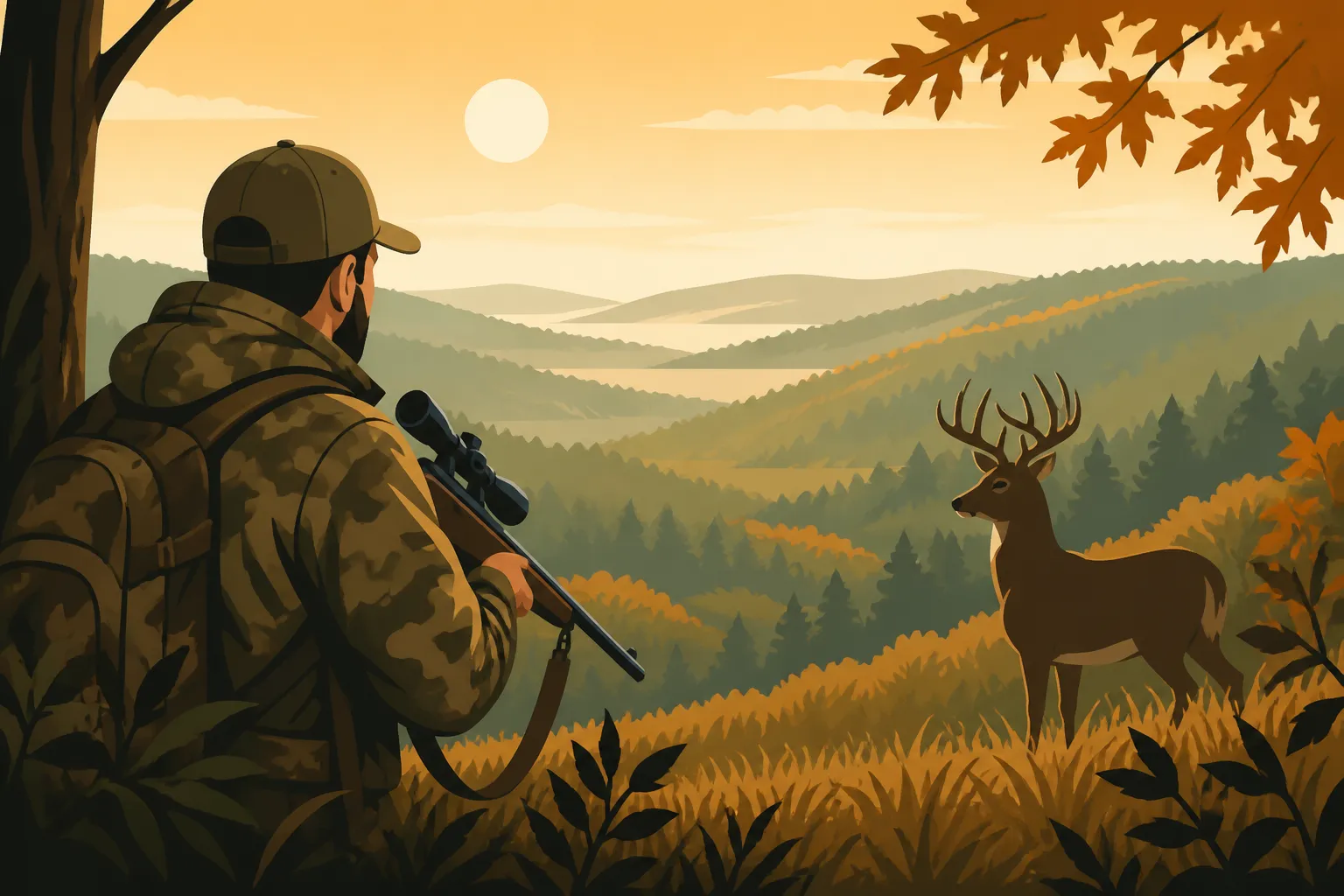
Hunting Paddy Creek Wilderness
Hunting in a designated wilderness area in Missouri can feel like stepping back in time, away from the well-trodden paths and managed fields you might be used to on many Conservation Areas. The sheer lack of infrastructure and the wild, untamed nature of places like Paddy Creek Wilderness can be intimidating for any hunter, making you wonder how to even begin to approach such a vast, rugged landscape. This guide will walk you through what to expect when hunting Paddy Creek Wilderness, offering insights into its unique challenges and opportunities, and helping you prepare for a truly self-reliant hunting experience in the heart of the Ozarks.
Understanding Paddy Creek Wilderness
Paddy Creek Wilderness, nestled within the vast expanse of the Mark Twain National Forest, is a special designation that sets it apart from other public hunting grounds in Missouri. It's not just another timber block; it's a place managed specifically to preserve its wild character, meaning you won't find roads, permanent structures, or even marked trails in many areas. This wildness is precisely what draws many hunters looking for a challenge and a deeper connection to the natural world, but it also demands a unique level of preparation and respect.
Location and Terrain Features
Paddy Creek Wilderness is situated in Texas County, a classic slice of the Missouri Ozarks. When you look at a map, you'll immediately notice the winding Paddy Creek itself, carving a path through the landscape, flanked by steep, rocky hillsides, deep hollows, and dense hardwood timber. It's not flat country by any stretch of the imagination. You'll encounter elevation changes that will test your legs and your resolve, with ridges and benches offering potential travel corridors for deer and turkeys. Water sources, primarily the creek and its feeder springs, are vital, especially during drier periods, and knowing where they are can be key to understanding wildlife movement. This rugged topography means that every step you take is a deliberate effort, and scouting becomes less about finding well-worn trails and more about reading the natural flow of the land.
The timber here is predominantly oak and hickory, providing crucial mast crops for deer, turkeys, and squirrels. Expect mature forests with thick undergrowth in some areas, especially along creek bottoms or where recent timber stand improvement hasn't occurred. These dense areas provide excellent bedding cover for deer, making them challenging to hunt but potentially rewarding if you can navigate them silently. Understanding the nuances of the terrain, from the rocky outcrops to the shaded north-facing slopes, is paramount. You might consider using advanced mapping tools like onX Hunt to study the topography and create custom waypoints before you even set foot in the woods, helping you visualize the elevation changes and potential funnel points that simply aren't apparent on a flat paper map.
Designated Wilderness Status and Rules
The "wilderness" designation isn't just a pretty name; it carries specific rules and regulations designed to maintain the area's primitive character. This means no motorized vehicles, no mechanized equipment (like chainsaws), and typically no developed facilities like campgrounds or picnic areas within the wilderness boundaries. For hunters, this translates to a truly walk-in experience. You park outside the boundary and carry everything you need on your back. This can be a stark contrast to hunting a Missouri Conservation Area, where vehicle access to certain points or even primitive camping sites might be available.
The philosophy behind wilderness management is to minimize human impact, so "leave no trace" isn't just a suggestion; it's an imperative. This affects everything from how you set up a temporary camp to how you dispose of waste. You won't find trash cans or pit toilets, so plan to pack out everything you pack in. Understanding these rules is critical not only for compliance but for safety and ethics. It means relying on yourself completely and being prepared for situations where outside assistance is not readily available. Familiarize yourself with the specific regulations of Mark Twain Wilderness Areas before your trip to avoid any surprises.
Species to Hunt and General Strategy
Paddy Creek Wilderness is primarily known for its deer and turkey hunting, offering a taste of hunting truly wild game in a wild setting. The remote nature of the area means animals may be less pressured than those found on easily accessible public land, but it also means you'll have to work harder to find them. Don't expect to see deer at every turn; these animals are masters of using the rugged terrain and dense cover to their advantage.
Deer and Turkey Hunting Opportunities
For deer hunters, Paddy Creek Wilderness offers a chance at mature whitetails that have grown up largely unmolested by constant human presence. The strategy here often revolves around understanding the natural travel corridors created by the terrain. Look for saddles between ridge tops, benches along steep hillsides, and the confluence of hollows where deer are likely to move between bedding and feeding areas. Hunting Missouri Ridge Saddles and Benches can provide excellent insight into these types of tactics. Food sources will be natural, primarily acorns, hickory nuts, and browse. Pay close attention to mast crops in the fall, as deer will concentrate where the food is. Because of the vastness, still-hunting and slow, deliberate movements are often more effective than sitting for long periods in a single spot, though carefully chosen ambush points can certainly pay off.
Turkey hunting in Paddy Creek Wilderness is equally rewarding but demanding. Spring gobblers will roam these hollows and ridges, often sounding off from distant roosts. The key is often to get in close silently and set up strategically, being mindful of the steep terrain that can make quick maneuvers difficult. Knowing how Calling a Missouri Gobbler Off the Roost works in this kind of environment is crucial. Fall turkey hunting offers a different challenge, often involving breaking up flocks and then calling them back together, a tactic that requires patience and a good understanding of turkey vocalizations. Regardless of the season, these animals are truly wild, making success a hard-earned badge of honor.
Small Game and Predator Potential
While deer and turkey are the primary draw, Paddy Creek Wilderness also holds populations of small game and predators for those interested in a different kind of hunt. Squirrels are abundant in the oak-hickory timber, offering a fun and challenging hunt, particularly in the early fall. Reading the "cuttings" (gnawed nut shells) under oak trees can quickly tell you where the squirrels are active. Rabbit hunting can be productive in areas with thicker undergrowth, though the sheer scale of the wilderness means finding consistent concentrations might require more effort than in smaller, more managed tracts. You'll need to be prepared for substantial walking, as described in Squirrel and Rabbit Hunting in Missouri.
Predator hunting, primarily for coyotes and bobcats, is also an option. The rugged, remote nature of the wilderness means these animals have plenty of cover and aren't as accustomed to human activity. Calling can be effective, but success often hinges on patience, stealth, and a deep understanding of predator behavior in this type of environment. Tracking in softer ground along creek bottoms might reveal their travel patterns. Keep in mind the self-reliant nature of hunting in such an area; if you do harvest an animal, you'll be packing it out over challenging terrain.
Access and Navigation Challenges
Getting into and around Paddy Creek Wilderness is arguably its biggest challenge and its greatest appeal. There are no paved roads leading directly into the heart of the area, no designated parking lots with information kiosks, and certainly no marked trails guiding your way once you step off the forest service road. This means planning your entry and exit is just as critical as planning your hunt itself.
Entry Points and Parking Considerations
Access to Paddy Creek Wilderness is typically from the surrounding Mark Twain National Forest roads, which are often gravel, can be rugged, and may not be well-maintained, especially after heavy rains. Before heading out, always consult a current forest service map or use a robust digital mapping application like onX Hunt to identify legal access points and potential parking spots. You'll likely be parking along the shoulder of a gravel road at a point where the wilderness boundary begins. Remember, you cannot drive into the wilderness area. This means whatever you bring in, you carry. Consider the security of your vehicle, as these remote parking areas are often isolated.
Your starting point should be carefully chosen based on the area you intend to hunt. A longer walk from the vehicle might mean fewer other hunters, but it also increases the physical demand and time commitment. Always leave a detailed plan with someone back home, including your entry point, intended route, and expected return time. Cellular service can be spotty or non-existent in many parts of the Ozarks, so don't rely on your phone for emergency communication once you're deep in the woods. This is where a reliable GPS unit or a downloaded map on your smartphone (using an app like onX Hunt) becomes an indispensable tool.
Navigating Without Trails and Modern Tools
One of the defining characteristics of wilderness hunting is the absence of marked trails. This demands strong navigation skills and a keen sense of direction. Relying solely on a smartphone can be risky due to battery life and signal issues. A traditional compass and a detailed topographic map are essential backups, and knowing how to use them is non-negotiable. Topo maps reveal elevation changes, which are critical for understanding terrain features like ridges, hollows, and drainages that funnel animal movement. Studying these maps beforehand can help you visualize your route and identify key navigational landmarks.
Digital mapping apps, especially those with satellite imagery and downloadable offline maps, are incredibly useful. Brands like onX Hunt offer layers that can show wilderness boundaries, public land ownership, and topography, allowing you to mark your vehicle, potential bedding areas, and travel routes. Many serious hunters also use platforms like GoHunt for advanced research into public land strategies and habitat analysis, which can be adapted to specific wilderness areas by helping you identify general ecological patterns and historical success factors in similar terrain, even if the primary focus of GoHunt isn't always Missouri-specific. Practice navigating with your chosen tools before your hunt, perhaps on a smaller, less remote tract of land. Getting disoriented in a wilderness area, especially as darkness falls, can quickly turn a challenging hunt into a dangerous situation.
Essential Gear and Preparation
Hunting Paddy Creek Wilderness demands a different level of preparation than hunting a typical public land parcel with easy access. Your gear needs to be reliable, lightweight, and capable of supporting you entirely, often without immediate assistance. This isn't the place to realize you forgot something crucial or that your gear isn't up to snuff.
Packing for Self-Sufficiency
When packing for a wilderness hunt, think self-sufficiency. Your pack should contain everything you need for the duration of your trip, plus emergency supplies. This includes ample water (or a reliable water filter/purifier, which is often preferable to carrying all your water), high-energy food, a first-aid kit, fire-starting supplies, a headlamp with extra batteries, an emergency shelter (even a lightweight tarp can be a lifesaver), and signaling devices like a whistle. Lightweight Boots and Packs for Ozark Country are critical, as you'll be covering many miles over uneven ground.
Consider how you will pack out game. If you plan to harvest a deer, you'll be quartering it in the field and packing it out on your back. This requires game bags, a sturdy knife, and potentially a frame pack if you don't already use one. The "gutless method" for field dressing is especially useful in wilderness areas, reducing weight and mess. Remember that even in Missouri, conditions can change quickly. A warm, sunny morning can turn into a cold, wet afternoon, so layering your clothing is essential. Refer to Staying Dry Through an Ozark Rain for advice on proper rain gear.
Understanding Regulations Specific to Wilderness Areas
Beyond the general statewide hunting regulations, there might be specific rules unique to wilderness areas within the Mark Twain National Forest. While the broad strokes of Missouri deer and turkey regulations will apply, such as How Many Deer You Can Take in Missouri or Missouri Spring Turkey Bag Limit, nuances related to campsite location, fire restrictions, or even where you can hang a treestand might exist. Always check the Mark Twain National Forest regulations for the specific district where Paddy Creek Wilderness is located. Some areas might have restrictions on tree stands that penetrate the bark or on leaving unattended equipment.
It's also important to understand the concept of "fair chase" in a wilderness setting. Because of the limited access and primitive nature, many hunters feel an even stronger connection to ethical hunting practices. This means respecting the environment, other users, and the wildlife. Being prepared means not only having the right gear but also understanding and abiding by all regulations, ensuring that future generations can also enjoy the unique experience of hunting in a Missouri wilderness area. Using comprehensive platforms like GoHunt for an initial deep dive into regulations and general public land ethics can be a valuable preparatory step, providing a framework for how to approach challenging hunts in pristine areas.
Here's a quick comparison of what to expect between hunting a Missouri Conservation Area and a wilderness area like Paddy Creek:
| Feature | Typical Missouri Conservation Area (CA) | Paddy Creek Wilderness Area |
|---|---|---|
| Access | Often paved or well-maintained gravel roads, multiple parking lots, sometimes internal vehicle trails. | Limited access via rugged forest service roads, strict walk-in only past boundary. |
| Trails | Developed, marked hiking or multi-use trails common. | No developed or marked trails; navigation relies on natural features. |
| Infrastructure | May have campgrounds, restrooms, picnic areas, managed food plots. | No facilities; primitive, undeveloped environment. |
| Hunting Pressure | Can be moderate to high, especially near access points and popular spots. | Generally lower, especially deep within the interior, due to difficult access. |
| Navigation | Easier with trails; maps often highlight features and access. | Demands advanced navigation skills (map, compass, GPS like onX Hunt), self-reliance. |
| Game Animals | Deer, turkey, small game. May be accustomed to human presence. | Deer, turkey, small game. Often wilder, less pressured, more elusive. |
| Gear Required | Standard hunting gear, sometimes less emphasis on extreme self-sufficiency. | Extreme emphasis on self-sufficiency: water filtration, emergency shelter, robust pack-out gear. |
| Experience | Can be good for beginners or those seeking convenience. | Best for experienced, physically fit hunters seeking a challenge and solitude. |
Disclaimer
This article is for general informational purposes only and does not constitute professional advice. Laws, prices and regulations vary by location and change over time. Consult a qualified professional for guidance on your specific situation.