Prescribed Burns on Missouri Conservation Areas
It's incredibly frustrating to plan a perfect hunting trip to your favorite Missouri Conservation Area, only to arrive and find a section of timber or a prime field edge looks completely scorched. Many of us have been there, pulling up to a familiar spot only to be met with the stark reality of a recent prescribed burn. This guide is here to demystify those controlled fires, explaining why they happen, how they impact your hunting, and most importantly, how you can use this knowledge to your advantage rather than letting it derail your season.
Understanding Why Missouri Burns
When you see a large section of a Conservation Area blackened by fire, it's easy to assume the worst. "There goes my hunting spot," is a common thought, often followed by a feeling of despair that the habitat is ruined. But the truth is, these prescribed burns are not acts of destruction; they are carefully planned ecological tools, essential for maintaining healthy ecosystems and, by extension, robust game populations. They're a long-term investment in the very wildlife we cherish.
The Ecological Purpose of Fire
Think about Missouri's history. Before widespread settlement, natural fires, often started by lightning or Native Americans, were a regular occurrence across much of the landscape. These fires weren't always massive, raging infernos; many were low-intensity ground fires that swept through woodlands and prairies, clearing out dead undergrowth and preventing dense, choked forests. Over time, as we suppressed all fires, our forests and grasslands changed dramatically. We ended up with overgrown timber stands, a thick layer of duff on the forest floor, and invasive species taking over. This dense, stagnant environment isn't ideal for many native plants and animals.
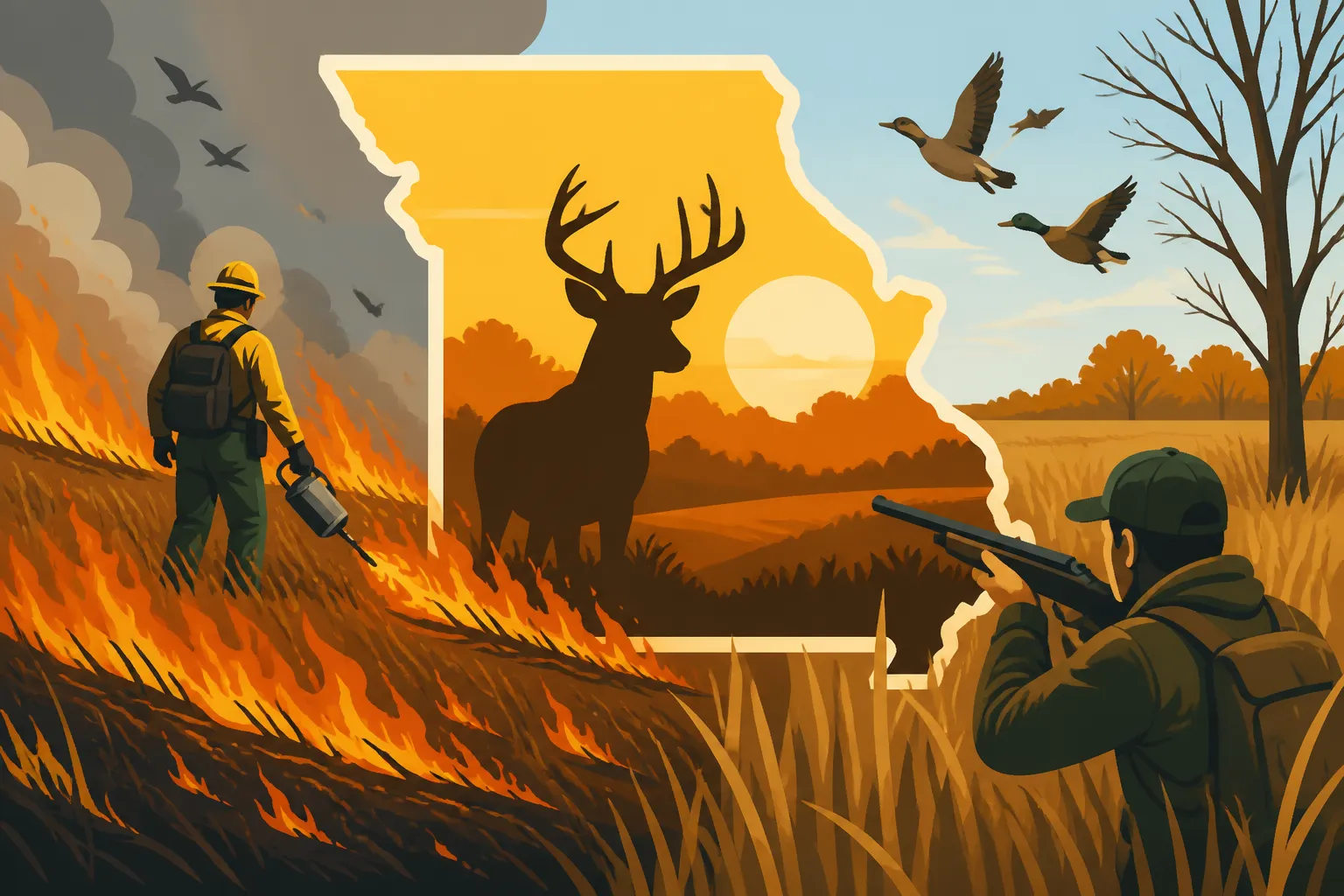
Prescribed burns, conducted under very specific conditions by trained professionals, mimic these historical fires. They reduce fuel loads like dead leaves, branches, and invasive cedars, which prevents much more destructive wildfires from occurring. They also stimulate the growth of beneficial native grasses and forbs by exposing the soil to sunlight and allowing seeds to germinate. This process is a crucial part of what makes our Conservation Areas so productive. It's about restoring a balance that was lost, and ensuring the land can support diverse wildlife for generations to come.
Habitat Benefits for Key Game Species
While a newly burned area might look barren, it quickly transforms into a smorgasbord for wildlife. Deer, turkeys, quail, and rabbits all benefit immensely from properly managed fire. For deer, the immediate flush of new, nutrient-rich forage that emerges post-burn is incredibly attractive. Grasses and forbs that were once shaded out by dense undergrowth now burst forth with tender shoots, providing highly digestible food sources that are packed with protein. This means better nutrition for does, healthier fawns, and bucks with the potential for larger antler growth. You might be surprised at how quickly deer move into a recently burned area once that fresh growth begins.
For turkeys, burns create critical open spaces in the understory, making it easier for them to move, find insects, and raise poults. The fire also exposes acorns and other seeds on the forest floor, making them more accessible. Quail and other small game thrive in the diverse cover that emerges after a burn, with open ground for foraging and new thickets for escape cover. If you've ever walked through a choked stand of timber and wondered where the birds went, a prescribed burn is often the answer to bringing them back. It literally clears the way for life to flourish. You can really see the difference in areas managed for small game, such as those mentioned in Walking Missouri Quail Restoration Landscapes.
How Prescribed Burns Affect Your Hunting Strategy
It’s one thing to understand the ecological benefits, but quite another to figure out how these burns impact your actual hunting plans. The good news is that while burns can temporarily displace game, they often create incredible long-term hunting opportunities. The key is knowing what to expect and how to adapt.
Immediate Post-Burn Impacts on Deer and Turkeys
Right after a burn, especially a hot one, the area can look like a wasteland. Most ground cover is gone, and the air might still carry the scent of smoke. Deer and turkeys will typically avoid these areas for a short period. Imagine being a deer and suddenly having all your bedding and hiding cover stripped away – you’re going to look for somewhere else to go. Turkeys, similarly, prefer areas with some cover for security and will often shift their roosts and feeding patterns. This immediate displacement usually means game moves to adjacent unburned cover, which can be an excellent tip for hunters. Look for pinch points or travel corridors leading out of the burned area into thicker, untouched timber or fields nearby.
However, this avoidance doesn’t last long. As soon as green shoots start pushing through the blackened soil, often within weeks, deer will begin to filter back in to browse on the fresh growth. Turkeys will follow, picking through the exposed ground for seeds and insects. The period immediately after the green-up, before the vegetation gets too tall, can be fantastic for spotting deer and turkeys, as they're often highly visible against the stark backdrop of the burn. Think about how exposed food sources become, and how quickly animals will exploit them. This is where scouting the fringes of the burn can really pay off.
Long-Term Attraction for Game
The long-term effects of prescribed burns are where the real hunting advantages kick in. After a few months, and certainly by the next hunting season, a burned area can become a magnet for game. The rejuvenated understory provides both food and cover that was previously absent or degraded. You'll see new sprouts of oaks and other browse species, alongside a healthy mix of grasses and forbs. This diversified vegetation creates a mosaic of habitat – areas for feeding, areas for bedding, and easy travel lanes between them.
For deer, this means more consistent food sources throughout the year, especially if the burn was timed to promote growth during the late summer or fall. Those fresh sprouts are high in protein, critical for antler growth and fawn development. For turkeys, the more open understory makes for fantastic bugging areas in spring and summer, and the overall improved habitat supports healthier populations. Late-Season Food Sources for Whitetails can certainly be found in these rejuvenated areas. The combination of easy movement and abundant forage makes burned areas, once recovered, prime locations for setting up a stand or still-hunting. The improved visibility in the woods can also give you an edge, allowing you to spot game from further away.
Finding and Navigating Burned Areas on Missouri CAs
Knowing that burns are beneficial is great, but how do you actually find them and make them part of your hunting plan? It's not always obvious from the road, and you don't want to hike miles into a CA just to discover your chosen area is a recent burn you weren't ready for. Luckily, there are resources to help you anticipate and locate these areas.
Locating Burn Units Before You Go
The Missouri Department of Conservation (MDC) is generally quite transparent about its management activities, including prescribed burns. The absolute best place to start is the individual Conservation Area's webpage on the MDC site. Many CAs will post management plans, maps, or even news releases detailing upcoming or recent burns. These area-specific brochures, which you can often download, are invaluable. Reading a Missouri Area Brochure can tell you a lot about the specific management goals for that tract of land, including fire regimes.
Another powerful tool is a mapping app like onX Hunt or GoHunt. While these apps may not show active burn units in real-time, they often have satellite imagery layers that are updated periodically. By comparing current satellite views with older ones, you can sometimes identify areas that have been recently burned. Furthermore, these apps allow you to mark potential burn units you've scouted or heard about, and then navigate them safely. When planning a hunt, it's wise to always check aerial photos and recent satellite imagery before you even leave home. This can save you a lot of wasted time and frustration. Downloading Missouri Area Maps from the MDC site and overlaying them with your GPS or mapping app is also an excellent proactive step.
Safety and Ethics in Burned Terrain
Hunting in a recently burned area requires a few extra considerations, both for safety and ethical hunting. First and foremost, be aware of your footing. Stumps, fallen trees, and hidden holes can be common in burned areas, especially if the ground fire was intense. Ash can be surprisingly deep in spots, and walking through it can leave you covered in soot, which isn't ideal for scent control! Wear sturdy boots and watch your step.
Visibility can be both a blessing and a curse. While you might see game better, game might also see you better. Use the remaining structure – unburnt islands of cover, creek bottoms, or the edges of the burn – to your advantage for concealment. When it comes to stands or blinds, be mindful. If the burn was very recent, the ground might still be too soft or unstable for a ground blind, and finding suitable trees for a treestand might be challenging if all the lower branches are gone. Consider using a saddle or a mobile setup that allows you to adapt. Always remember to check Blinds and Stands on Missouri Public Land rules before setting up, as some areas have specific regulations regarding temporary structures.
Timing Your Hunts Around the Burn Schedule
The secret to truly leveraging prescribed burns for better hunting lies in understanding their typical timing and how to react to them. This isn't just about avoiding a burn, it's about anticipating the benefit a burn creates.
Predicting Burn Seasons and Their Impact
Prescribed burns are generally conducted during specific windows, primarily in late winter/early spring before green-up, or in the late summer/early fall when conditions are right. Spring burns typically focus on preparing areas for new growth ahead of the summer browse season, benefiting deer, turkeys, and quail. These burns might affect your spring turkey scouting or early archery season plans. Fall burns, on the other hand, are often used to remove thatch and make mast crops more accessible, or to set up areas for fresh browse during the late season. Knowing these general timeframes can help you predict where and when MDC might be conducting burns.
For example, if you know a particular block of timber on a Conservation Area is notoriously thick with cedars and heavy leaf litter, it's a prime candidate for a burn during one of these windows. The impact on hunting varies. A burn in early spring might mean exceptional turkey hunting in that area by late spring, as the birds utilize the opened-up woods. A late summer burn might make the area less desirable for early archery, but by November, the new growth could make it a hotspot for Hunting the Peak Rut Week in Missouri. The timing dictates the immediate disruption versus the long-term gain.
| Burn Season | Typical Timing | Primary Impact on Habitat | Hunting Implications |
|---|---|---|---|
| Spring Burn | Late Winter / Early Spring | Removes old growth, exposes soil, stimulates new green-up | Immediate displacement, then strong attraction for deer/turkeys once green-up starts |
| Fall Burn | Late Summer / Early Fall | Reduces fuel, exposes mast, promotes cool-season forages | Short-term displacement, then excellent late-season food/cover, especially for deer |
Scouting and Adapting to Recent Burns
The real work starts after a burn. You need to get out there and scout the area, even if it looks uninviting at first. Look for the edges of the burn, where unburned cover meets the new growth. These transition zones are often travel corridors. Pay attention to how quickly the vegetation responds. Areas with fertile soil and good moisture will green up much faster. Look for tracks, droppings, and fresh rubs or scrapes appearing as deer begin to revisit the area. Scouting Missouri Public Land Before Season is always important, but it's absolutely critical in post-burn areas.
When you're out there, use tools like your mapping app to mark the perimeter of the burn. Add waypoints for areas showing signs of renewed activity. The "satellite imagery" layer on platforms like onX Hunt can be incredibly helpful for seeing the extent of a burn and identifying areas of unburnt cover nearby. Don't be afraid to put boots on the ground in a newly burned area. While it might seem counterintuitive to hunt a "burnt-out" spot, the animals' resilience and adaptability, coupled with the land's rapid recovery, mean that smart hunters can find incredible success by understanding and leveraging these prescribed burns. Reading Aerial Photos for Ozark Deer after a burn can reveal surprising travel patterns or newly opened visibility.
Disclaimer
This article is for general informational purposes only and does not constitute professional advice. Laws, prices and regulations vary by location and change over time. Consult a qualified professional for guidance on your specific situation.