Flooding and Access on Missouri Rivers
Ask any hunter who spends time along Missouri’s incredible river systems, and they'll tell you that water levels are a constant, often frustrating, wildcard. One week you’re walking across dry ground to your favorite deer stand, and the next, that same path is under three feet of murky, fast-moving water. This isn't just an inconvenience; it can completely derail your hunting plans, close access points, and even create dangerous situations. This guide is all about helping you understand the dynamics of flooding on Missouri rivers, how it impacts your hunts, and how to stay safe and effective when the water starts to rise or fall.
Understanding Missouri's River Systems and Their Flood Cycles
Missouri is truly a water-rich state, blessed with two of the nation's greatest rivers – the Missouri and the Mississippi – and countless tributaries that carve through our landscape. But with all that water comes the potential for dramatic changes, especially when it comes to flooding. Understanding why and when these rivers typically flood is the first step in learning to hunt them effectively.
The Major River Basins and Their Characteristics
Our state's hydrology is dominated by the Missouri River and the Mississippi River. The Missouri River, a true titan, flows across the northern and central parts of the state, eventually joining the Mississippi north of St. Louis. Its vast watershed, stretching far to the west and north, means that snowmelt from the Rocky Mountains and heavy rains across the plains states can have a huge impact on our local river levels weeks later. When you combine that with localized downpours, you get serious potential for widespread flooding. This river often features broad floodplains and fertile bottomland, much of which is prime hunting ground.
The Mississippi River, forming our eastern border, is another beast entirely. It collects water from an even larger drainage basin, and its flood stages are often influenced by weather events far to our north and east, as well as local contributions from major tributaries like the Illinois and Ohio Rivers. Hunting islands and sandbars along the Mississippi requires a constant watch on forecasts upstream. Then there are our vital internal river systems, like the Osage, Gasconade, Meramec, and the incredible spring-fed rivers of the Ozarks such as the Current and Eleven Point. While generally smaller, these rivers can flash flood incredibly quickly after heavy local rainfall, turning placid streams into raging torrents in a matter of hours. The Ozark rivers, fed by springs, tend to be more stable, but even they can swell significantly after intense storms, sometimes washing out low-water bridges and access roads. Missouri River Sandbar Access and Mississippi River Island Hunting are often directly impacted by these flows.
Seasonal Flood Patterns
You might think of flooding as a random event, but our rivers tend to follow somewhat predictable seasonal patterns, though Mother Nature always throws curveballs.
- Spring Snowmelt (March-April): This is a classic flood season, particularly for the Missouri and Mississippi rivers. As winter snowpacks in the northern states and Rockies melt, that water makes its way downstream, often peaking in Missouri during late March and April. A rapid warming trend after a heavy snow year can lead to significant and prolonged high water.
- Late Spring/Early Summer Heavy Rains (May-July): This is perhaps the most common and often destructive period for flash flooding across smaller watersheds and can exacerbate high water on the larger rivers. Missouri's notorious spring and early summer thunderstorms, capable of dumping several inches of rain in a short period, can quickly overwhelm river banks, especially in areas with saturated soils from previous rains.
- Fall Rains (October-November): While less frequent, fall floods can occur, especially if hurricane remnants or strong cold fronts bring sustained, heavy rainfall. This can be particularly frustrating for deer hunters, as it often coincides with prime season dates.
- Drought and Low Water: On the flip side, prolonged drought can lead to extremely low water levels, which also impacts hunting access, particularly for waterfowl hunters relying on specific water depths in sloughs and backwaters.
Understanding these cycles helps you mentally prepare for what might happen on your favorite Public Hunting Land in Missouri or even private river bottom ground.
Impact of Flooding on Hunting Access and Strategy
Flooding isn't just about water; it's about a complete transformation of the hunting landscape. It reshapes terrain, alters game movement, and forces hunters to rethink their entire approach.
How High Water Changes the Landscape
When the rivers swell, everything changes. What was once a dry access road might become impassable, forcing you to find alternative entry points or even abandon a hunt. Timbered areas, especially bottomland hardwoods, can become Flooded Timber Duck Hunting in Missouri havens for waterfowl, but completely inaccessible for deer or turkey hunters. This can be a boon for duck hunters, but a bust for those chasing upland game.
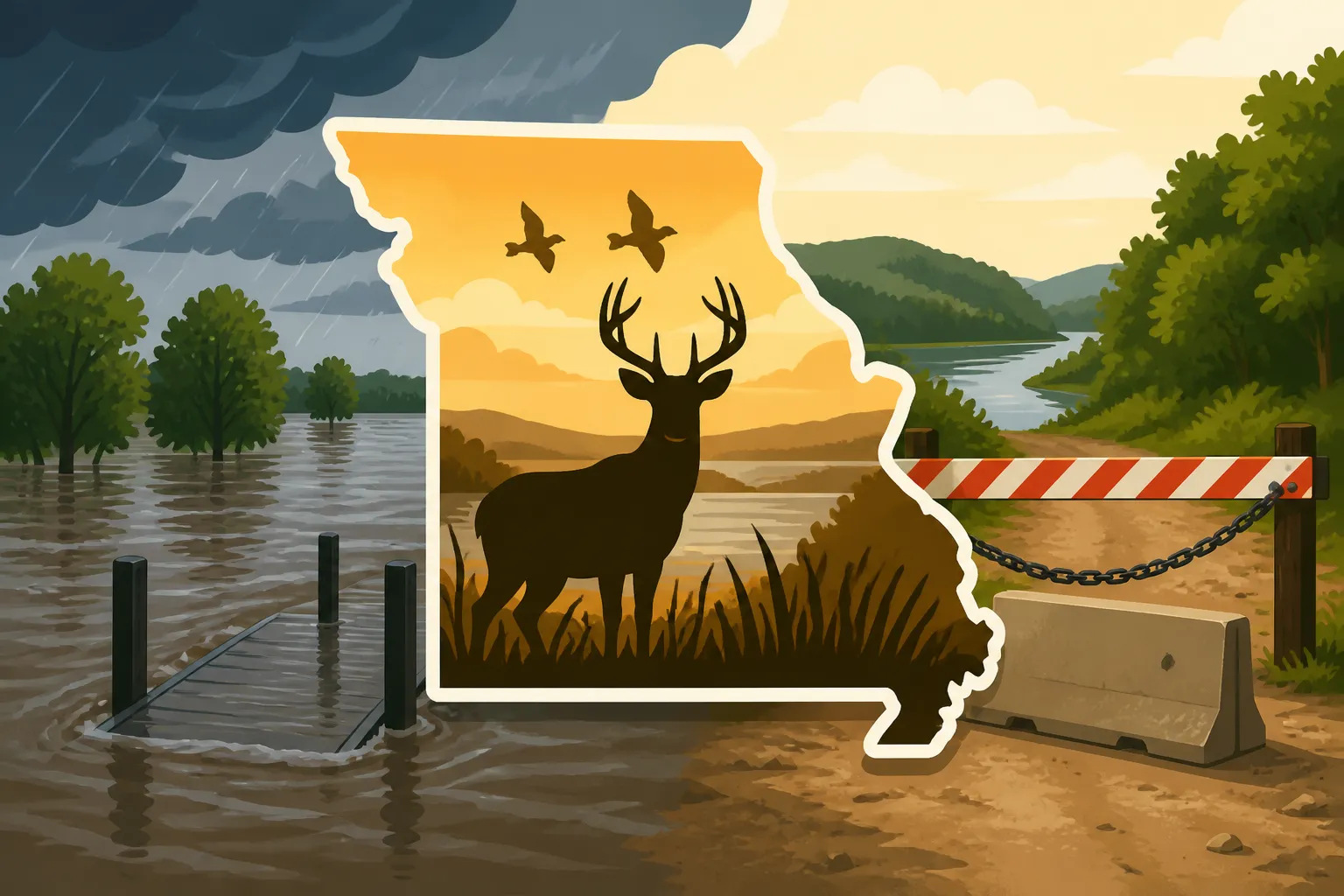
- Access Road Closures: Low-water crossings, gravel roads, and even paved routes that run through floodplains can be completely submerged and become incredibly dangerous. Never attempt to drive or walk through moving water if you can't see the roadbed, as unseen washouts and strong currents can be deadly.
- Altered Game Trails and Bedding Areas: Deer, in particular, are creatures of habit. They use established trails to travel between bedding and feeding areas. When these trails are underwater, they are forced to seek higher ground. This might concentrate deer on isolated ridges or smaller pockets of dry land, creating new opportunities for a smart hunter. Conversely, it can scatter them to unexpected places. Turkeys also prefer higher, drier ground for roosting and foraging, so flooded river bottoms will push them to adjacent uplands.
- New Water Features: Flooding can create temporary sloughs, oxbows, and sheet water that weren't there before. These can attract ducks and geese, creating entirely new hunting opportunities. For deer hunters, these new water barriers might funnel deer movement in predictable ways, or make a previously accessible area now unreachable without a boat.
- Erosion and Debris: High water also brings significant erosion, reshaping sandbars and cutting new channels. It also carries a lot of debris – logs, trash, even small outbuildings – that can make navigation hazardous and alter habitat dramatically.
Species-Specific Considerations
The impact of flooding isn't uniform across all game species.
- Deer: For whitetails, flooding often means displacement. They'll move to the nearest high ground. This can be a double-edged sword: they might be concentrated in smaller, more predictable areas, making them easier to pattern. Or, they might scatter to private land that isn't flooded, making public land hunting tougher. Look for deer sign on the fringes of floodwaters, on terraces, and on any island of dry ground. These spots become pinch points. Hunting a Timbered Draw in Row-Crop Country or Hanging a Stand on a Ridge Saddle can become prime spots when lowlands are under water.
- Turkey: Wild turkeys prefer dry ground for roosting and foraging. While they can fly across water, extensive flooding will push them out of river bottoms onto adjacent hillsides and uplands. Scouting during high water should focus on these higher elevations. If you had a gobbler patterned in the bottomland, he’s likely moved to higher ground.
- Waterfowl: This is where flooding can be a blessing. Rising river levels often mean flooded timber, agricultural fields, and sloughs become accessible to ducks and geese. This creates fantastic opportunities for Flooded Timber Duck Hunting in Missouri. However, too much water, or rapidly rising water, can also spread birds out too much, making them harder to find and decoy. Missouri Flooded Timber Duck Tactics heavily rely on these conditions.
- Small Game (Rabbits, Squirrels): Rabbits and squirrels are also heavily impacted by high water. Rabbits will seek any available brush pile or higher ground, often concentrating in dense pockets on the edges of flooded areas. Squirrels will be forced to move to unflooded timber, potentially leading to higher concentrations in those areas. This can make for some exciting hunting if you know where to look. Squirrel Hunting in Hickories might be pushed to higher ground, while Rabbit Hunting Brush Piles will be concentrated on dry land.
| River System | Typical Flood Triggers | Impact on Hunting (General) |
|---|---|---|
| Missouri River | Upstream snowmelt, widespread rains | Displaces deer/turkey to uplands; creates vast waterfowl habitat. |
| Mississippi River | Upstream snowmelt, sustained rains | Similar to Missouri, crucial for duck/goose hunting on islands. |
| Ozark Rivers (e.g., Current, Eleven Point) | Intense local rainfall | Flash flooding, temporary access issues, pushes game to high ridges. |
| Prairie/Farm Rivers (e.g., Osage, Grand) | Local heavy rains | Floods crop fields, displaces game, creates new duck habitat. |
Navigating Flood-Affected Areas Safely and Legally
When the rivers are up, the allure of finding concentrated game can be strong, but safety and legal considerations must always come first. The risks associated with floodwaters are serious.
Safety First: Dangers of Floodwaters
Hunting near or within floodwaters demands extreme caution. It's not just about getting your feet wet; it's about life and limb.
- Strong Currents and Undertows: Even seemingly slow-moving water can have powerful currents, especially after a heavy rain event. A strong undertow can pull a wader-clad hunter off their feet in an instant. This is why you should never try to wade through water where the current is strong or where you can't be sure of the bottom.
- Submerged Obstacles: Floodwaters hide a multitude of dangers: old fences, fallen trees, deep potholes, sharp debris, and even entire vehicles. Stepping or boating into these unseen obstacles can lead to serious injury or capsizing a boat. This is where a good mapping app like onX Hunt, with its topographic and satellite layers, can be invaluable for understanding the terrain under the water, especially if you've scouted the area when dry.
- Hypothermia: Even in warmer months, prolonged exposure to cold river water can lead to hypothermia. If you fall in, or spend hours wading, your body temperature can drop dangerously fast. Always dress in layers, carry extra dry clothing in a waterproof bag, and consider a personal flotation device (PFD) if you're using a boat or crossing deep water.
- Getting Stranded: Rapidly rising water can cut off your exit route, leaving you stranded on an island or patch of high ground. Always have an escape plan, especially if you're venturing deep into a floodplain. Check forecasts frequently and know the rate at which the water is expected to rise. Remember, Rain Gear for an Ozark Downpour is good, but you need more than just a raincoat when you're dealing with serious floods.
Legalities of Access and Property
Floodwaters can blur the lines, quite literally, between public and private land. It's crucial to understand how this impacts your hunting rights.
- Shifting Property Lines: While survey lines don't physically move, the accessibility and interpretation of those lines can change. Generally, in Missouri, navigable waters are considered public. However, if water spreads onto private land, that private land typically remains private, even if it's temporarily flooded. You cannot simply float across someone's flooded field and assume you have hunting rights. Always respect private property boundaries, even when submerged. Your Missouri Conservation Atlas or a robust mapping app can help you visualize these boundaries.
- Hunting from Watercraft: Rules often dictate what you can and cannot do from a boat, particularly concerning shooting from a moving vessel or within a certain distance of residences. Always check the current regulations regarding hunting from watercraft in Missouri. These rules can sometimes be different for migratory birds versus big game.
- Avoiding Trespass: The best way to avoid accidental trespass is to know exactly where you are at all times. Use GPS, mapping apps, and pre-scouted knowledge of the area to stay on public land or land where you have explicit permission. If in doubt, err on the side of caution and avoid the area.
Planning Ahead: Tools and Resources for River Hunters
The key to successful river hunting, especially when water levels are a factor, is diligent planning and knowing your resources. You can't control the weather, but you can certainly control how prepared you are.
Monitoring Water Levels and Forecasts
Staying informed is your best defense against unexpected high water. There are excellent tools available to help you track river conditions.
- NOAA River Gauges: The National Oceanic and Atmospheric Administration (NOAA) offers real-time river stage data and forecasts for hundreds of locations across Missouri. A quick online search for "NOAA river gauge [your river name] Missouri" will usually bring up a page with historical data, current levels, and projected crests. This is an absolutely essential tool for anyone hunting near a major river or even a significant tributary. Learn to interpret the flood stages and what they mean for your specific hunting spots.
- MDC Alerts and Information: The Missouri Department of Conservation (MDC) often posts alerts and information regarding access closures on Conservation Areas (CAs) due to flooding. It's a good practice to check the specific CA's webpage or call the local office if you plan to hunt an area known for flooding. They will often have the most up-to-date local information on what areas are accessible.
- Local News and Weather: Don't underestimate the power of local news. Regional weather forecasts will give you a good heads-up on heavy rain events that could impact river levels. Local radio or TV stations often report on specific road closures due to flooding, which directly impacts your access.
- Mapping Apps: Tools like onX Hunt are indispensable here. You can look at satellite imagery of your hunting area in normal conditions and then compare it to the current river gauge data. If you know the elevation of your stand or access point, you can estimate if it will be flooded based on the forecasted river stage. Their property line layers are also critical for avoiding trespass, especially when water obscures physical boundaries. Similarly, GoHunt provides detailed mapping and information that can help you understand terrain, especially for Reading Aerial Photos for Ozark Deer to identify high ground.
Pre-Season Scouting and In-Season Adaptations
Even with the best tools, nothing beats boots-on-the-ground knowledge and the ability to adapt.
- Scout for High Ground and Escape Routes: When you're scouting during normal water levels, pay close attention to the highest points in the river bottom. Identify potential escape routes if water rises quickly. Look for elevated logging roads, old railroad beds, or natural ridges that stay dry. Note where deer trails converge on these higher spots. Scouting Missouri Public Land Before Season should always include this consideration in river bottoms.
- Mark Key Elevations: If you have a GPS or a mapping app, mark the elevations of your stands, access points, and potential game crossings. This way, when you see a river forecast, you have a better idea of what will be under water.
- Identify Alternate Access Points: Always have a Plan B (and C!). If your primary access road is flooded, are there other ways to get into the area? This might involve a longer walk, a different parking spot, or even using a small boat.
- Adapt Your Strategy: If the river is rising, deer will be moving to higher ground. Focus your efforts on the edges of the floodplain, on the first ridge systems above the water, or on isolated islands of dry land. For waterfowl, a rising river means new feeding and roosting areas. You might need to change your decoy spreads or call sequences to match the new conditions. Hunting Pressure on Missouri Public Ground will often shift during flood events, as many hunters simply stay home, opening up opportunities for the prepared and adaptable.
- Gear Up Appropriately: Waders, a sturdy boat, extra dry clothes, and a waterproof pack are crucial for hunting around flooded rivers. Boots and Packs for Ozark Country and Waterfowl Gear for Missouri Flooded Timber are not just suggestions; they're necessities when you're dealing with high water. Always have a fully charged phone and a backup communication device or plan.
Hunting Missouri's incredible river systems when water levels are fluctuating can be some of the most challenging, yet rewarding, experiences. By understanding the dynamics of flooding, prioritizing safety, and utilizing the excellent planning tools available, you can turn a potentially frustrating situation into a successful adventure.
Disclaimer
This article is for general informational purposes only and does not constitute professional advice. Laws, prices and regulations vary by location and change over time. Consult a qualified professional for guidance on your specific situation.