Prairie Remnants Where Chickens Still Boom
There's a unique kind of magic in Missouri's wild places, but none quite capture the imagination like the vast, waving sea of native prairie. For many hunters, though, finding these true "prairie remnants" – spots where the iconic greater prairie-chicken still thrives and, in limited circumstances, can be hunted – feels like searching for a needle in a haystack. It’s a pursuit that demands specific knowledge, respect for the land, and a deep understanding of conservation. This guide will walk you through where these incredible birds can still be found, what it takes to access their shrinking habitat, and the unique challenges and immense rewards of pursuing them.
The Vanishing Prairies: Why Missouri's Grasslands are So Special
Missouri was once a prairie state, a sea of tall grasses stretching across much of its northern and western expanses. Imagine standing in a place where the horizon was unbroken by trees, just endless grass swaying in the wind, alive with bison, elk, and, of course, the booming call of the greater prairie-chicken. It's a landscape nearly lost, but the remnants that survive are critical ecosystems and a testament to what once was.
The Historical Landscape of Missouri Prairies
Centuries ago, before the plow broke the sod and settlements spread, Missouri boasted millions of acres of tallgrass prairie. This wasn't just open land; it was a complex, resilient ecosystem shaped by fire and grazing, supporting an incredible diversity of life. Think of a prairie as an inverted forest – its true depth and richness are underground, in the dense root systems of big bluestem, switchgrass, and Indian grass that can extend ten feet or more. This ecological foundation made the soil incredibly fertile, which, ironically, led to its demise as agriculture boomed.
Today, only a tiny fraction of that original prairie remains, often in small, isolated patches or carefully managed restoration areas. These remnants are more than just pretty scenery; they are living laboratories, genetic reservoirs, and crucial habitat for species that can't survive anywhere else. For hunters, these areas represent a chance to connect with a truly wild Missouri, to experience a hunt that harks back to an earlier era.
Why Greater Prairie-Chickens Are Special and Challenging
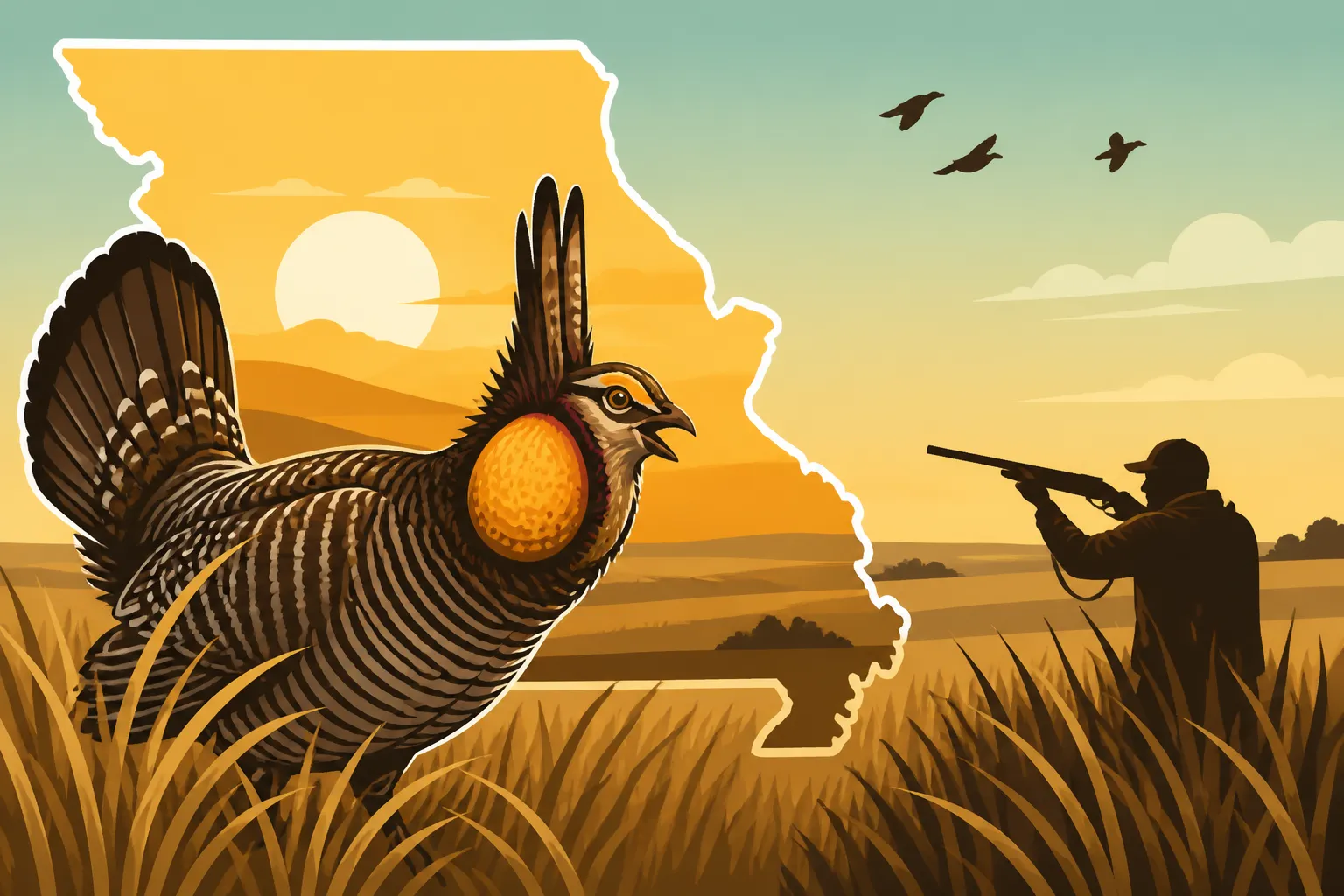
The greater prairie-chicken is perhaps the most iconic symbol of Missouri's tallgrass prairies. These birds are known for their spectacular springtime booming displays on ancestral breeding grounds called leks, where males gather to dance, inflate their orange air sacs, and emit their distinctive "boom" call to attract females. It's an unforgettable spectacle, and a clear indicator of a healthy prairie ecosystem.
But why are they so challenging to hunt, even where populations exist? First, their numbers are low. Despite diligent conservation efforts by the Missouri Department of Conservation (MDC) and private partners, prairie-chickens are rare. Second, they are incredibly wary birds, perfectly camouflaged in their grassland homes. Unlike pheasants that might hold tight in cover, prairie-chickens often flush wild, far out of range, making for a challenging dog hunt or a difficult stalk. Their behavior is intrinsically linked to the open prairie environment, meaning that traditional hunting methods for other upland birds often need significant adaptation. It’s a truly unique pursuit that requires patience, skill, and a deep appreciation for the bird and its dwindling habitat.
Finding the Boom: Key Areas for Prairie Chicken Hunting
Given their rarity and specific habitat needs, finding legal hunting opportunities for greater prairie-chickens in Missouri is a specialized endeavor. It's not like deer hunting where you can find whitetails in almost every county. Prairie chickens are tied to specific, often protected, prairie remnants.
Key Conservation Areas Known for Prairie Chickens
The vast majority of Missouri's remaining prairie chickens reside on protected lands, primarily Missouri Department of Conservation (MDC) areas and some private lands managed specifically for prairie habitat. These aren't vast, sprawling hunting grounds teeming with birds. Instead, they are often smaller, intensely managed parcels that strive to replicate historical prairie conditions.
Some of the most prominent areas where prairie chickens are known to exist include specific conservation areas in western and northern Missouri. Places like Taberville Prairie Conservation Area, Wah'Kon-Tah Prairie Conservation Area, and areas within the Prairie Conservation Opportunity Area in counties such as St. Clair, Cedar, and Barton are critical. It's important to remember that not all of these areas may be open to hunting, or if they are, the seasons and harvest limits will be extremely restricted to protect the fragile populations. Checking the specific area regulations through the Missouri Conservation Atlas or directly on the MDC website for these individual areas is absolutely crucial before planning a trip. You can often download detailed maps and brochures that outline permitted activities, including hunting.
When you're looking at these areas, tools like onX Hunt can be incredibly valuable. Its layers can help you distinguish between public and private land, understand boundaries, and even identify different habitat types within a larger area. While it won't tell you exactly where the chickens are booming, it's an indispensable planning tool for understanding the landscape.
Understanding Permit and Access Rules
Hunting greater prairie-chickens in Missouri is tightly regulated, and for good reason. The populations are sensitive, and management aims for preservation first and foremost. This means that general small game permits often aren't enough, or the season may be incredibly short, or even closed in many years, depending on population surveys.
Typically, if a season is open, it will fall under the small game regulations and require a valid Missouri Resident Small Game Permit Cost or Missouri Nonresident Small Game Permit Cost. However, specific rules for prairie-chickens often involve additional restrictions, such as a limited number of permits issued via a lottery system, or even a complete closure of the season to allow populations to rebound. The Missouri Department of Conservation maintains detailed regulations online, and it's your responsibility as a hunter to consult the current Missouri Wildlife Code booklet each year. Don't rely on information from previous seasons, as rules can change dramatically based on population assessments. Access might also be limited to certain portions of a conservation area, or require specific check-in procedures. Always read the signboards at the entrance to any conservation area, and respect any closures or restrictions posted there.
Stalking the Prairies: Tactics for a Successful Hunt
Even when a season is open, success in hunting prairie chickens is never guaranteed. These birds are the epitome of wild, challenging game, and require specialized tactics and a healthy dose of humility.
Scouting the Open Landscapes
Scouting for prairie chickens isn't like looking for rubs or scrapes in a timbered draw. It's about understanding the prairie itself. Early season scouting, even before a hunt, is vital. Look for areas with a mix of tall, dense native grasses for cover and nesting, interspersed with shorter, sparser areas for foraging. Topographic maps, especially those found in apps like onX Hunt, can reveal subtle depressions or rises in the land that might offer a slight thermal advantage or windbreak for birds. Historical lek locations, while protected and not for hunting, can indicate prime surrounding habitat. You won't find traditional "sign" in the way you would for deer, but you might find droppings or dusting bowls in specific areas.
Driving gravel roads at dawn or dusk, observing from a distance with good binoculars, might reveal birds flying to or from roosting areas. Pay attention to how the birds use the wind; they often flush into it or orient themselves to gain lift. Scouting Missouri Public Land Before Season is crucial here, but it's a different kind of scouting, focusing on subtle changes in grassland height and composition, and understanding the general patterns of the birds. Remember, these are vast, open spaces, and identifying patterns often means observing from a distance to avoid educating the birds.
Approach Strategies and Shooting Opportunities
Hunting prairie chickens typically involves covering a lot of ground, often on foot, in search of scattered coveys or single birds. Due to their tendency to flush wild, a good bird dog can be an invaluable asset, but even then, long flushes are common. Without a dog, still-hunting through appropriate cover, slowly and deliberately, while constantly scanning ahead, is your best bet.
When a bird flushes, it's often a sudden, explosive burst from the grass, followed by a strong, direct flight. They are surprisingly fast and large birds, and it's easy to misjudge their speed and distance in the open prairie. Shooting opportunities are fleeting. A good, open choke and a relatively heavy load of smaller shot (like 5 or 6) are generally preferred to give you a decent pattern at the extended ranges you might encounter. Your setup, whether it's a 12 gauge or a 20 gauge, should be one you're comfortable swinging quickly and accurately. Best Shotgun Gauge for Missouri Quail discussions often apply here, as similar challenges exist in fast-flushing upland birds.
Consider a multi-person approach if allowed, with hunters walking in a line to push birds towards others, but always prioritizing safety and clear communication in these open environments. This is a hunt where patience is more than a virtue; it's a necessity, as you may walk for hours to get a single opportunity.
Ethical Hunting and Regulations
Ethical hunting for prairie chickens goes beyond just following the law; it extends to understanding and respecting the delicate nature of their populations. Due to their limited numbers, every bird harvested is significant. When a season is open, harvest limits are usually extremely conservative, often one bird per hunter for the season, if any at all. This isn't about filling a cooler; it's about the experience, the challenge, and the connection to a truly wild and rare piece of Missouri's natural heritage.
Important Regulations to Remember:
| Regulation Aspect | Key Considerations for Prairie Chickens |
|---|---|
| Permit | Valid Small Game Permit required; check for specific lottery or special permit needs for prairie chickens. |
| Season Dates | Extremely limited, often short (e.g., a few days in October) or completely closed. ALWAYS check current MDC regulations annually. |
| Bag Limit | Usually one bird per hunter for the season, or zero if the season is closed. |
| Shooting Hours | Generally, ½ hour before sunrise to sunset, but always confirm for small game. |
| Weapon Restrictions | Shotguns are typical, but check for any specific shot size or gauge restrictions. Nontoxic shot may be required on some public lands. |
| Hunter Orange | Missouri Hunter Orange Square Inches requirements apply during firearms deer portions and other specific times. Confirm for small game. |
| Retrieval | Ensure swift and ethical retrieval of any downed bird to minimize waste. |
Beyond the rules, always be mindful of your impact on the habitat. Leave no trace, respect any ongoing habitat management efforts, and understand that these areas are crucial for many other rare prairie species as well. This hunt is a privilege, not a right, and maintaining that privilege requires the highest standards of conservation and ethics.
The Future of the Flock: Conservation and the Hunter's Role
The ability to even consider hunting greater prairie-chickens in Missouri is a direct result of decades of dedicated conservation work. Their future, and the future of Missouri's remaining prairies, depends on continued effort and the support of hunters and non-hunters alike.
MDC Efforts and Habitat Management
The Missouri Department of Conservation, often in partnership with private landowners and organizations like Pheasants Forever and Quail Forever, invests heavily in prairie restoration and management. This work includes prescribed burns, which mimic natural fire regimes to prevent woody encroachment and stimulate native grass growth. It also involves planting native forbs and grasses, controlling invasive species, and carefully managing grazing to create a diverse and healthy prairie structure.
These efforts are not just for prairie-chickens. A healthy prairie benefits an entire suite of grassland birds, pollinators, and other wildlife. When you learn about projects to expand Missouri Prairie Conservation Areas or create new restoration landscapes, you're seeing the direct result of this ongoing commitment. Programs that incentivize private landowners to manage their property for prairie habitat are also crucial, as much of Missouri's land is privately owned. The knowledge and mapping tools from platforms like GoHunt, while often associated with western big game, can offer insights into the broader ecological strategies employed by wildlife agencies and inform how hunters can support similar land management efforts closer to home, even if it's just understanding the principles of habitat creation.
Hunters' Role in Supporting Prairie Chickens
Hunters play a vital role in the conservation of prairie-chickens and their habitat, even if they never get to pull a trigger on one. First and foremost, purchasing your hunting permits and stamps directly funds the conservation efforts of the MDC. Every dollar spent on a Missouri Resident Small Game Permit Cost helps support the staff and programs that protect and manage Missouri's wildlife and wild places.
Beyond financial support, hunters are often the first to notice changes in wildlife populations or habitat conditions. Reporting observations of prairie chickens, or even just general grassland bird numbers, to the MDC can provide valuable data. Participating in volunteer habitat improvement projects on conservation areas, or simply being an advocate for prairie conservation in your community, all contribute significantly. Respecting regulations, especially when it comes to bag limits and season closures, is also paramount. A hunter who understands the fragility of the prairie-chicken population recognizes that a "closed" season isn't a failure, but a necessary step to ensure these magnificent birds continue to boom on Missouri's prairies for generations to come.
Disclaimer
This article is for general informational purposes only and does not constitute professional advice. Laws, prices and regulations vary by location and change over time. Consult a qualified professional for guidance on your specific situation.